

19 Inch System Integration Cabinet: The Ultimate Guide for Efficient Rack Solutions
2026-05-11
When building a robust and scalable electronic infrastructure, the choice of enclosure can make or break your system’s performance. Enter the 19-inch system integration cabinet—a cornerstone of modern rack solutions that seamlessly blends standardization with customization. At TPS, we understand that every project has unique demands, which is why our cabinets are designed not just to house equipment, but to optimize airflow, simplify maintenance, and withstand the harshest environments. This guide dives deep into what sets a truly efficient integration cabinet apart, shedding light on the engineering nuances that can save you time, money, and headaches down the line. Whether you’re outfitting a data center or an industrial control room, get ready to rethink what a rack can do.
The Backbone of Modern Infrastructure: Demystifying 19-Inch Racks
In the world of IT and telecommunications, few things are as ubiquitous yet misunderstood as the 19-inch rack. Originally designed for railway signaling equipment in the early 20th century, this simple metal frame has evolved into the invisible skeleton supporting everything from server farms to audio studios. Its dimensions might seem arbitrary—why 19 inches?—but this standardization has become a silent agreement that drives global connectivity.
What makes the 19-inch rack so enduring isn't just its physical form, but the ecosystem it spawned. Mounting rails spaced 465 mm apart, with vertical hole patterns conforming to EIA-310, ensure that gear from different manufacturers seamlessly slides into place. This interoperability is the unsung hero of scalability; when you need to add a server or switch, you don’t question whether it will fit. The rack itself becomes invisible, letting the technology shine.
Yet, the rack is far from static. Modern demands for cooling and power density have pushed it beyond a mere chassis. Today’s racks integrate intelligent power distribution, cable management arms that prevent spaghetti chaos, and even liquid cooling manifolds. As edge computing pushes hardware into unconventional spaces, the 19-inch format adapts—sometimes shrinking into half-rack cabinets or morphing into ruggedized enclosures. It’s a testament to an unassuming design that’s quietly holding our digital world upright.
Beyond the Metal Box: What Makes an Integration Cabinet Truly Efficient
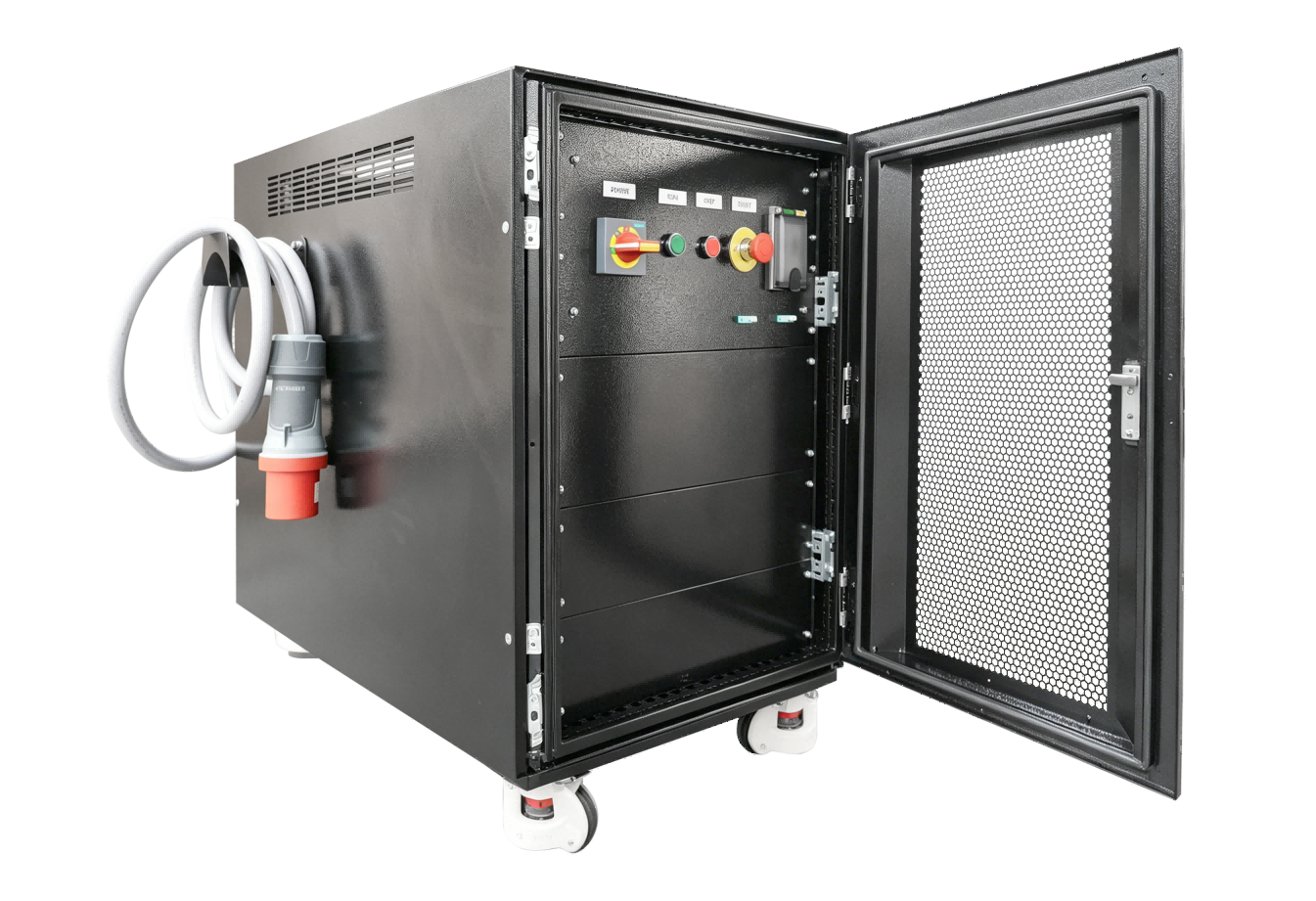
Efficiency in an integration cabinet is rarely about the enclosure itself. The true differentiator lies in how well the internal components communicate and stay cool under pressure. A well-designed cabinet optimizes airflow paths, not just by adding fans, but by using computational fluid dynamics to eliminate hot spots before they form. This proactive approach reduces downtime and extends equipment life far better than reactive cooling ever could.
Modularity is another silent champion of efficiency. When components slide in and out without a tangle of cables, maintenance becomes a matter of minutes, not hours. But true modularity goes beyond tool-less designs; it means hot-swappable modules that allow upgrades without shutting down the entire system. That kind of freedom transforms how enterprises scale their operations.
Lastly, intelligence woven into the cabinet’s fabric turns it from passive storage into an active management hub. Sensors that monitor temperature, humidity, and vibration feed data into analytics platforms, enabling predictive maintenance. The result is a cabinet that does not just house equipment—it actively protects it, cutting energy waste and preventing failures before they disrupt service.
Crafting the Perfect Layout: Space Optimization Secrets
A flawless layout starts by questioning every assumption about how a room should function. Instead of pushing furniture against walls, pull pieces a few inches forward—this simple shift creates the illusion of breathing room and makes the perimeter feel more expansive. Look up and down: walls are often underutilized, while the ceiling line can draw the eye upward when painted a slightly lighter shade than the walls. Even awkward corners or under-stair crannies become focal points with a slim console or a cluster of vertical plants. The secret isn't more square footage; it's training your eye to treat every inch as valuable real estate.
Perception shapes reality more than we realize. Diagonal sightlines trick the brain into reading a space as larger, so angle a bed or desk away from a corner rather than squaring it off. Mirrors are classic for a reason, but placing one opposite a window doubles natural light without a major renovation—and tucking a tall, narrow mirror behind a door uses dead space while expanding the visual field. Hallways transform into mini galleries or reading nooks with floating shelves and a slender bench. The golden rule: if you can't see the floor beneath a furniture piece, the room shrinks. Leggy designs and wall-mounted units keep the floor visible and the room breathing, turning tight quarters into a cleverly crafted retreat.
The Silent Guardians: Materials and Construction for Durability
Buildings must stand for generations, yet the forces that wear them down are often invisible until it’s too late. Moisture creeps into unseen cracks, freeze-thaw cycles pry apart surfaces from within, and chemical reactions slowly corrode key structural elements. True durability isn’t about adding more material—it’s about understanding how each component silently guards the whole. The right choices at the material level, paired with construction techniques that respect these vulnerabilities, create a protective system that works unnoticed for decades.
Modern concrete mixes, for instance, incorporate supplementary cementitious materials like fly ash or slag, densifying the matrix and closing off the capillary pathways that allow water and chlorides to infiltrate. High-performance steel reinforcement—sometimes coated with epoxy or galvanized—resists the onset of rust even in marine environments. But even the best materials can be undermined if placed or cured improperly. Temperature control during curing, proper consolidation to avoid honeycombing, and precise cover depth over reinforcement are all quiet, deliberate acts that determine whether the structure will age gracefully or require premature repairs.
Joints and connections are often the unsung heroes of long-lasting construction. Expansion joints, carefully detailed and sealed, absorb thermal movement without tearing. Waterstops embedded in concrete at construction joints block the smallest seepage paths. Roofing membranes and flashing, when installed with meticulous overlapping and adhesion, direct water away from vulnerable edges. These are not the visible features celebrated in architectural photography, but they are the silent guardians—every overlap, every bead of sealant, every properly cured pour—that keep the elements at bay and let the structure endure.
Taming the Heat and Chaos: Smart Cooling and Cable Strategies
Overheating servers aren't just a warning light—they're a slow burn toward hardware failure and throttled performance. The old approach of cranking up AC isn't cutting it anymore. Smart cooling now leans on real-time sensor data to adjust airflow and liquid cooling circuits exactly where heat builds up. By pairing hot aisle containment with targeted rear-door heat exchangers, you can slash energy costs without creating cold spots that waste power.
Cable spaghetti doesn't just make maintenance a nightmare; it blocks airflow and traps heat. Shifting to high-density fiber trunks and overhead cable trays cleans up the rack interior. Combine that with color-coded power cords and managed PDUs that report energy draw, and you're not just organizing cables—you're building a system that tells you when a circuit is overloaded before it trips. The goal isn't just neatness; it's about letting every piece of equipment breathe and communicate without physical interference.
From Data Centers to Edge Computing: Versatile Deployment Scenarios
Modern computing architectures are no longer confined to massive, centralized data centers. While these facilities remain vital for heavy-duty processing and long-term storage, a significant shift is underway toward distributed models. The rise of the Internet of Things, real-time analytics, and latency-sensitive applications has pushed computation closer to where data is generated: the edge. This evolution doesn’t mean abandoning data centers but rather complementing them with a spectrum of deployment options that balance performance, cost, and resilience. From regional micro-data centers to on-premises server rooms, and from factory-floor gateways to 5G base stations, organizations can now weave together a fabric of resources that spans from the cloud to the device.
Each deployment scenario brings its own trade-offs and design considerations. A retailer might process video feeds inside the store to detect inventory gaps instantly, using local servers that only sync aggregated insights to the cloud. A wind farm operator could run predictive maintenance algorithms directly on turbines, sending alerts when anomalies appear rather than streaming all sensor data to a distant facility. Healthcare providers, constrained by privacy regulations, often deploy edge nodes within hospital networks to process patient data on-site, minimizing exposure. These patterns highlight a key advantage: workloads can be positioned exactly where they deliver the most value, whether that’s a hyper-scale data center for massive batch jobs or a ruggedized edge device in a remote oil field.
The versatility also extends to hybrid and multi-cloud strategies that integrate edge footprints seamlessly. Containers and orchestration platforms allow a consistent operational experience across environments, so an application tested in a public cloud region can be deployed to a retail shelf-edge server with minimal reconfiguration. Network advancements, such as private 5G and Wi-Fi 6, further expand the reach, enabling mobile assets like autonomous vehicles to dynamically shift compute tasks between onboard hardware and nearby edge clusters. The result is a fluid, responsive infrastructure where data and processing move in harmony with business needs, rather than being shackled to a single location. This continuum from core to edge is reshaping how we think about deployment, making infrastructure as adaptive as the services it supports.
FAQ
It's a standardized metal enclosure designed to house and organize electronic equipment modules, with a width of 19 inches for the mounting rails. These cabinets are the backbone of data centers, server rooms, and industrial settings, providing physical protection, efficient cable management, and uniform mounting for hardware like servers, switches, and power distribution units.
While open racks are simpler and cheaper, a system integration cabinet offers enclosed security, superior dust and debris protection, and controlled airflow for cooling. It also hides cable clutter, reduces noise, and provides a professional, finished look that's essential for client-facing or office environments. For long-term reliability and equipment safety, the cabinet is usually the smarter investment.
Focus on load capacity to support your gear, depth to fit deeper servers, and ventilation or fan options for heat management. Adjustable rails, lockable doors, removable side panels, and cable entry points at top and bottom make installation and maintenance much easier. Also check the material gauge—thicker steel resists bending over time.
Start by organizing cables to avoid blocking airflow. Use blanking panels to fill unused rack spaces, which forces cool air through the equipment instead of recirculating hot air. If passive ventilation isn't enough, integrate fan trays or consider perforated front and rear doors. In high-density setups, you might need active rack-level cooling units or direct exhaust routing to an external heat management system.
Absolutely. They're popular in industrial control systems, audio/video installations, laboratory instrumentation, and even home office clusters. The 19-inch form factor is universal, so you'll find equipment from many industries that fits. Ruggedized versions with weather seals or shock absorption are available for harsh environments like factories or outdoor telecom sites.
Underestimating future growth. Many people size the cabinet perfectly for current equipment, but forget to leave spare rack units and extra space for additional devices, cables, and power strips. This leads to costly replacements or stacked gear that's hard to service. Also, ignoring power and cooling requirements at the planning stage can cause overheating and unplanned downtime.
We're seeing wider cabinets for better cable management, integrated intelligent monitoring for temperature and power, and modular designs that adapt to changing needs. Some now include built-in liquid cooling interfaces or containment systems for direct hot/cold aisle flow. Materials are also shifting toward lighter yet stronger composites, and tool-less assembly features make deployment faster than ever.
Conclusion
A 19-inch system integration cabinet is far more than a standardized metal enclosure—it forms the literal backbone of modern infrastructure. The 19-inch rack format demystifies complexity by providing a universal mounting platform for servers, networking gear, and power distribution, ensuring interoperability across countless hardware generations. Efficiency, however, lies not just in the dimensions but in how the cabinet integrates into the environment. Smart space optimization starts with a layout that considers airflow, weight distribution, and accessibility, while robust materials like cold-rolled steel and aluminum alloys silently guard against physical stress and corrosion. These cabinets are engineered to thrive in demanding conditions, making them indispensable for everything from humming data centers to rugged edge computing sites.
Taming internal chaos is equally critical: intelligent cable routing channels and brush strips keep fibers and copper organized, while active cooling components dissipate heat from high-density deployments. Without such strategies, even the most advanced setup succumbs to thermal throttling or signal interference. Versatility further defines these solutions—the same design philosophy enables seamless scaling across hyperscale clouds, telecom exchanges, and industrial IoT enclosures. By harmonizing structural integrity, thermal management, and modular flexibility, a well-thought-out 19-inch integration cabinet becomes not just a rack but a tailored efficiency backbone, ready to adapt as technology evolves without missing a beat.
Contact Us
Contact Person: Lily
Email: [email protected]
Tel/WhatsApp: +49 (0) 2161 49526-0
Website: https://tps-elektronik.com/en/