

Aluminum Work Boat Company Builds Rugged Vessels for Commercial Marine Work
2026-11-24
Saltwater doesn’t care about your schedule, and neither do the docks, rigs, and job sites that depend on a workboat showing up ready. Aluminum work boats have become the quiet backbone of commercial marine operations because they take that abuse and keep working. At Allheart, that toughness isn’t a feature listed on a spec sheet; it’s the reason the hull leaves the shop in the first place.
Aluminum Hulls That Take a Beating and Keep Working
A hull that cracks under pressure isn't worth the metal it's stamped from. These aluminum builds shrug off submerged logs, gravel beaches, and dock scrapes that would leave fiberglass looking like a spiderweb. The alloy isn't the soft stuff from soda cans either—it's marine-grade plate with enough yield strength to flex instead of fracture, so a hard hit leaves a shallow dent rather than a split seam.
Fatigue is the quiet killer of most welded structures. Riveted and welded joints on these hulls are reinforced at the chines and transom corners, the exact spots where constant wave pounding concentrates stress. Owners who run rocky rivers or tow through rough terrain report years of abuse without leaks springing from stress cracks. The bottom thickness matters more than the sides, and that's where the extra material goes.
When the hull finally does show wear, it doesn't mean retirement. A gouge can be ground out and patched with a TIG torch in an afternoon, restoring full strength without exotic materials or climate-controlled shops. That repairability is why commercial dive operators and remote lodge owners keep choosing aluminum after trying lighter, flashier alternatives.
Commercial-Grade Fabrication From Keel to Console
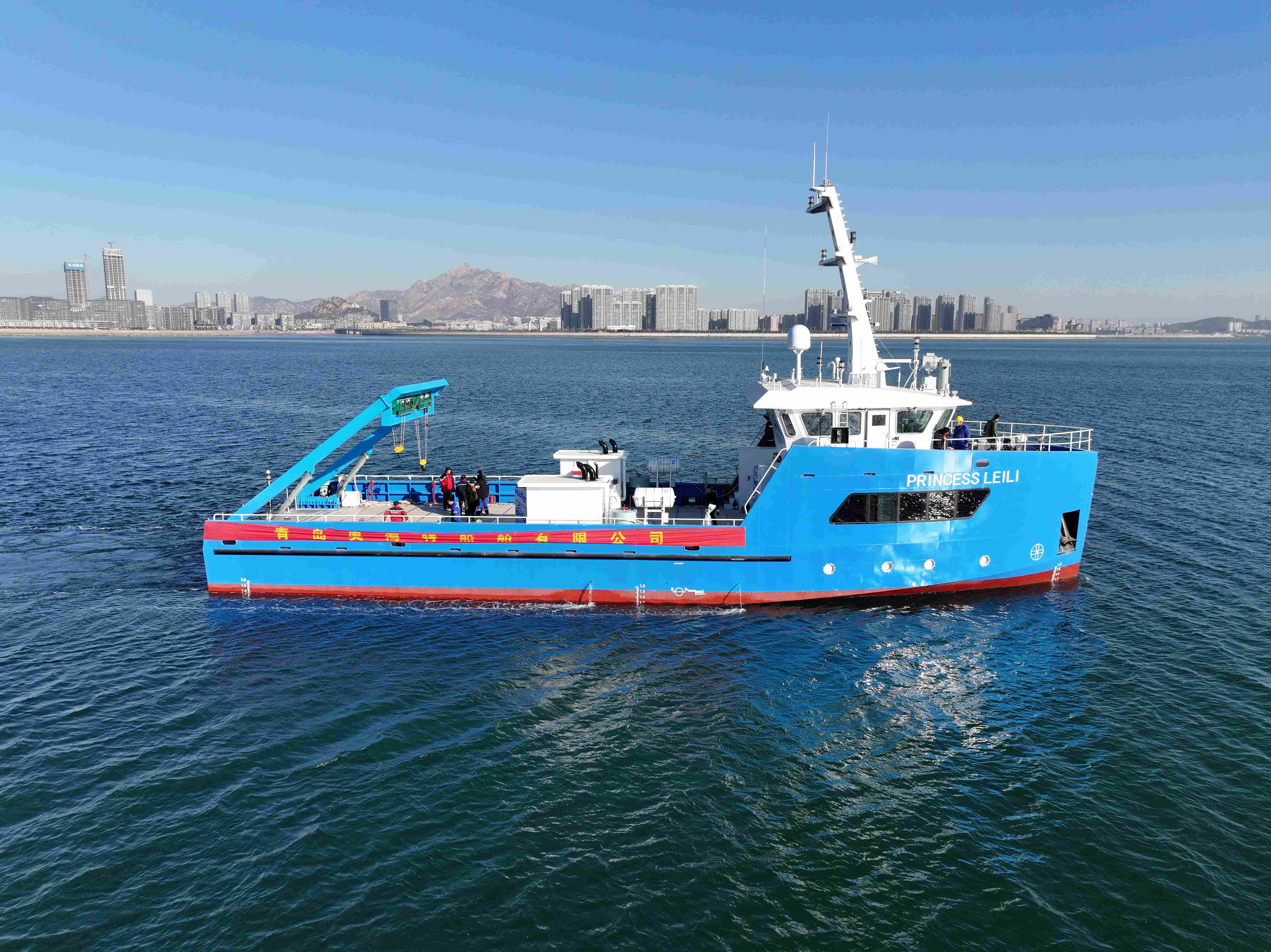
The keel is set first, not as a symbolic starting point but as the straight-line reference that drives every frame, stringer, and bulkhead after it. Plates are cut and fit to that line, then welded in sequence so the hull grows as one aligned structure instead of a collection of forced joints. Small deviations get corrected at the keel stage because they become expensive problems once decks and consoles are in place.
From the structural shell, the work shifts into systems that operators actually touch. Helm consoles are built on reinforced mounting points, with wire runs, hydraulic lines, and cable paths planned before interior panels close off access. That sequencing matters more than the parts themselves—it means later repairs, additions, or replacements can be made without tearing out finished surfaces.
The finish work still gets attention, but it sits on top of a build process that values fit, alignment, and repeatability. Vessels coming out of this kind of program tend to behave the same at the helm from hull number to hull number, which is what commercial buyers notice after the first hard season of use.
How Plate Thickness and Welding Change Vessel Lifespan
Thicker plate usually buys time in corrosive service, but that extra steel does not behave the same once a weld is introduced. Local heat input alters grain structure near the seam, leaving the heat-affected zone more vulnerable than the base metal around it. A vessel can be built from generous plate yet still fail early if the weld toes carry sharp notches, undercut, or incomplete fusion. The real service life often hinges less on the original wall thickness and more on how cleanly the weld profile transitions into the plate.
Welding also locks in residual stress, which can pull a vessel out of tolerance or open microcracks during thermal cycling. Multi-pass welds on heavier sections amplify this because each pass reheats and restrains the layers below, creating a deeper network of stress rather than a simple surface defect. In cyclic duty, those residual stresses can drive crack growth even when the operating pressure stays below the design envelope. A thinner, well-fitted shell with controlled heat input frequently outlasts a thicker one built with aggressive welding parameters.
The practical takeaway is that lifespan is decided at the intersection of thickness and welding discipline. Plate thickness should supply enough corrosion allowance and stiffness, but welding must avoid abrupt geometry changes and excessive heat concentration. Post-weld stress relief, smooth cap profiles, and back-gouged roots often add more dependable years than simply specifying the next heavier plate. When fatigue or stress corrosion is the failure mode, improving the weld detail tends to matter more than increasing the wall dimension.
Deck Layouts Built Around Real Crew Tasks
Most deck plans look tidy on paper but fall apart the first time a mooring line needs to run from the winch to the chock without crossing a ladder or a vent. A layout built around real crew tasks starts with the sequence of work, not the arrangement of hardware. It asks where someone stands, which hand grabs the line, how far they walk to reach the next bitt, and whether they can see the winch operator without shouting over machinery.
That kind of thinking shifts details that seem minor in the drawing phase. Handrails get placed where a person actually braces during a turn, not just along the edge. The gap between a deck locker and the bulwark is set by the width of a shoulders-and-gloves reach. Stretches of open deck are kept clear because that is where a crew member swings a heaving line or rolls a hose, not because the space looks balanced.
The payoff is subtle but constant. Crews stop inventing workarounds, gear stays within arm’s reach of where it is used, and routines run shorter because the deck itself follows the rhythm of the people on it.
Power, Weight, and Stability in Shallow Water
A hull that runs well in thin water rarely gets there by accident. The relationship between horsepower, displacement, and balance decides whether a boat lifts cleanly onto a plane at modest rpm or digs its stern into the mud. Extra power helps, but only when the platform can use it without squatting. On many shallow-draft designs, a lighter rig with a well-matched propeller will outrun a heavier, over-powered setup simply because the transom stays higher and the keel line keeps its angle through the hole shot.
Weight placement matters more than total weight in this environment. Moving batteries, fuel, and console position a few inches forward or aft changes how the bow reacts when the throttle is eased back in a winding creek. A skiff that balances slightly aft at rest may settle too hard when the tide drops, while one trimmed too far forward will push water instead of lifting over it. The goal is not just light weight, but weight that stays low and centered so the chine can find clean water early.
Stability in a foot of water comes from hull shape as much as beam. A wide, flat bottom feels solid at rest but can slap and slide in a chop, while a moderate vee softens the ride at the cost of a little draft. The better shallow-water hulls blend a narrow entry with flattened aft sections, keeping the boat predictable when someone steps to the rail or a cast shifts weight suddenly. That balance lets you pole, drift, or idle over bars without the hull leaning hard, which is what actually keeps the propeller out of the bottom.
Service Life Beyond the First Launch
A strong debut only proves a product works on day one. What matters more is whether it still earns its place a year or three later. Thoughtful updates, replaceable parts, and compatibility with newer accessories keep the original purchase useful long after the initial excitement fades.
Repairability often separates tools that age well from those that quietly become obsolete. When worn components can be swapped without replacing the entire unit, the cost of ownership drops and the item stays in service longer. Ongoing support through firmware refinements and available spare parts turns a one-time transaction into a durable relationship.
Designing with future flexibility in mind also changes how long something remains relevant. Open mounting standards, modular layouts, and backwards-compatible connections allow the product to adapt as needs shift. Fewer replacements, less waste, and a stronger sense of reliability follow naturally when the first launch is treated as a beginning rather than the finish line.
FAQ
They build primarily with marine-grade aluminum, which takes hard impacts without cracking the way fiberglass can. The hulls are designed with reinforced bottoms and welded seams so they stay watertight even after repeated groundings or contact with docks and debris.
Most of the demand comes from marine construction, dredging support, crew transfer, surveying, and port maintenance. You also see them used by tug assist operations and waterfront contractors who need a stable platform that can carry tools, pumps, and small equipment.
Each build starts with a conversation about the kind of work being done, the water conditions, and the deck layout the crew needs. From there, they adjust beam, freeboard, console placement, and storage so the vessel fits the job instead of forcing the crew to work around a stock design.
Heavy rub rails, full-length longitudinal stiffeners, and thick bottom plate are standard. Deck surfaces get a non-skid finish, and critical areas around cleats, towing posts, and lifting eyes are reinforced so concentrated loads don't cause cracks over time.
Aluminum gives a good balance of weight and strength. It is lighter than steel, so the boat drafts less and burns less fuel, but it can still shrug off impacts that would puncture or delaminate fiberglass. Repairs are also straightforward, since a cracked weld can be cut out and replaced without major structural work.
Yes, the builder regularly adds reinforced mounting pads for cranes, A-frames, winches, and dive ladders. They plan the under-deck structure around those loads during the build, so owners are not retrofitting heavy equipment onto a deck that was never designed for it.
After the initial discussion, the company prepares a preliminary layout and a price range. Once the contract is signed, they move into detailed drawings and a build schedule. Customers usually get progress photos at key stages, and the boat goes through sea trials and a final inspection before it leaves the shop.
Conclusion
A commercial hull earns its reputation in the places most boat brochures ignore—against pilings, over oyster bars, and under a deck load of tools that never travels light. That is why this company starts with aluminum plate sized to the abuse it will actually see, not a uniform thickness meant to save material cost. Welds are sequenced so heat distortion stays low and stress lines do not converge at the same corner. The keel, stringers, console base, and transom are treated as one continuous structure, which matters more than a long warranty. When a boat takes a hard hit, damage tends to stay local instead of traveling through a poorly tied joint.
Layouts follow the crew, not the other way around. Scuppers go where water pools, cleats sit where a deckhand can reach them without stepping over a hatch, and controls are placed so the operator can see the bow while working a line. In shallow water, the boat has to stay level with a full load and not squat when power comes on. Plate weight below the waterline is balanced against reserve buoyancy above it, and chine shape keeps spray down without making the hull pound. The real measure is how the vessel behaves years after delivery—whether tank access plates still open, rub rails can be swapped, and welds hold through thousands of load cycles. That kind of service life is designed in, not promised after the fact.
Contact Us
Contact Person: Benny Hu
Email: [email protected]
Tel/WhatsApp: +8618354225697
Website: https://www.allheartmarine.com/