

Android Radio Manufacturer for Custom Automotive Audio Solutions
2026-11-02
Custom automotive audio isn't about compromise. Yet most Android radio options force a choice between bloated features and missing essentials. lisheng flips that script, manufacturing Android radios from the ground up for your exact project—whether it's a single prototype or a full production run.
Why Custom Builds Start With the Right Android Head Unit Partner
Jumping into a custom Android head unit project without a solid partner is like building a house on a shaky foundation—everything looks fine until the walls start cracking. The right partner brings more than just a spec sheet; they understand the quirks of thermal management in a double-DIN chassis, how to route audio without introducing ground loop noise, and which touch panels actually survive a summer parked in direct sun. A partner who has already burned through those failures saves you months of trial-and-error, which matters when your reputation depends on delivering a unit that doesn't reboot randomly or lose steering wheel controls after a firmware update.
Beyond hardware reliability, the real value shows up in the software layer. Custom builds often need tweaked system images, specific boot animations, pre-installed apps, or even a custom launcher that matches a vehicle brand's interior design language. A knowledgeable partner can provide clean BSPs, signed OTA update packages, and proper documentation for the MCU communication protocol. They've already mapped the CAN bus for common car models and know which radio chips play nicely with Android's audio stack. Without that behind-the-scenes engineering, you're left hacking together binaries and hoping the unit doesn't brick on the first over-the-air push.
Finally, the right partner acts as a buffer between your brand and the messy realities of component sourcing. Screen shortages, chip revisions, Android version deprecations—these hit every project eventually. A partner who maintains strong relationships with panel and SoC suppliers can lock in consistent builds for longer product lifecycles, so you're not forced to redesign the PCB every six months. They also handle regional certifications, EMC testing, and packaging logistics that quietly eat a small company's time. In short, a custom build succeeds not because of the components you choose, but because of who helps you put them together.
From Prototype to Production: What Actually Happens Inside the Factory
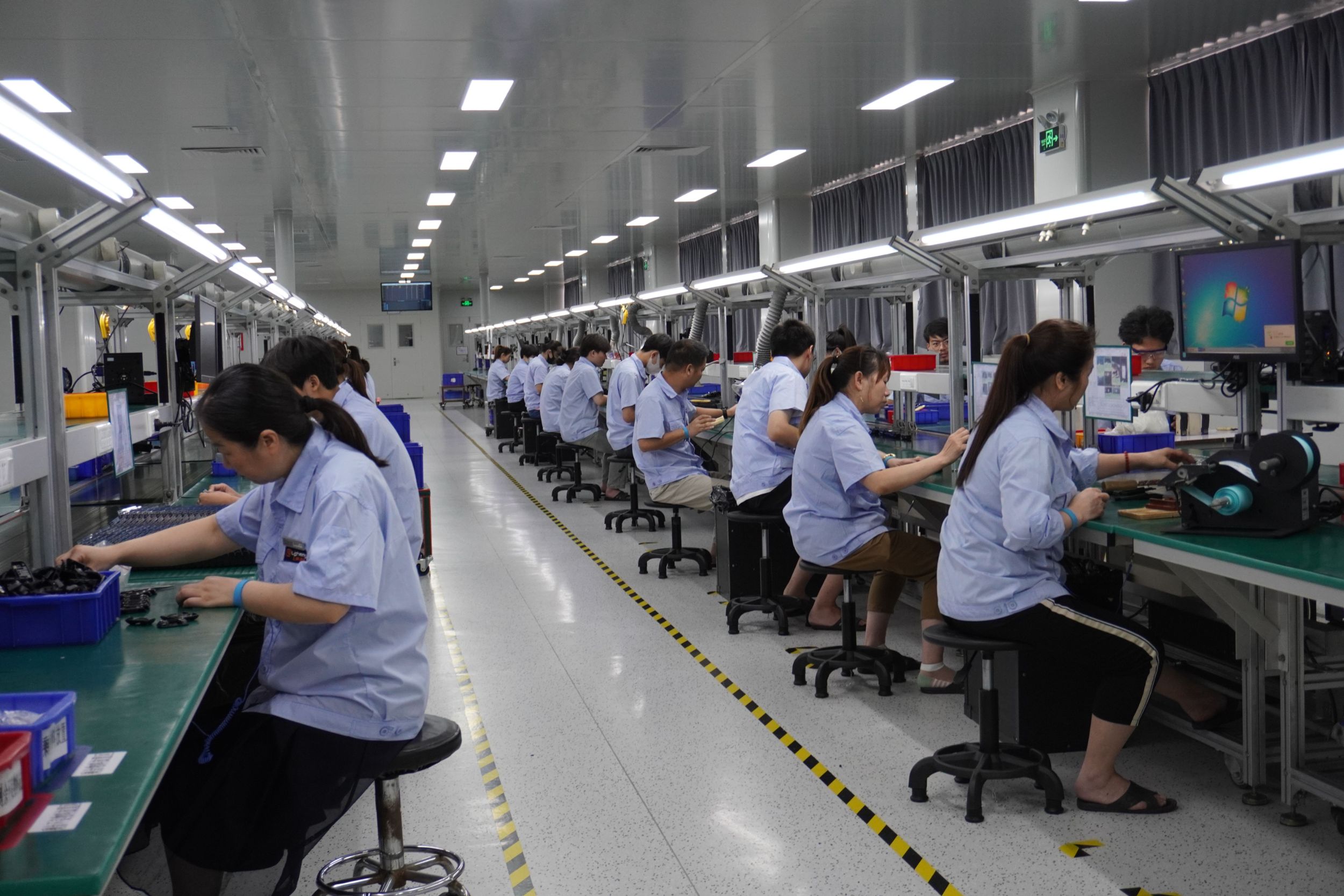
The hand-built prototype always looks flawless in the lab, but the first day it hits the assembly line is a different story. Tolerances that were fine for a one-off suddenly stack up when you're making two hundred units a day. Fixtures get realigned, pneumatics get adjusted, and a few operators figure out small workarounds they never write down. It's messy, and that's normal.
Before any full-speed run, the engineering team usually walks a pilot batch through every station with stopwatches and torque wrenches. They find the step that takes four times longer than estimated, the connector that's impossible to reach with the specified tool, and the one screw that keeps crossthreading because the pre-drilled hole is a hair off. Those fixes happen on the floor, not in a CAD file. Only after the line can hit steady output without constant rework does production actually start.
Ditching One-Size-Fits-All: Tailoring Android Auto Interfaces for Niche Vehicles
The stock Android Auto layout assumes a conventional cockpit: a wide touchscreen within easy reach, a dashboard angled toward the driver, and a cabin quiet enough for voice prompts. Step into a lifted 4x4 with a seven-inch display perched high above the windshield line, or a classic restomod where the screen is squeezed into a single-DIN slot, and that assumption collapses. Buttons become tiny targets, navigation cards disappear behind steering wheel spokes, and the system’s polite chimes drown in the drone of a utility van with no sound insulation. Tailoring starts with measuring the driver’s actual sightlines, arm reach, and ambient noise—not with a template screenshot.
Niche vehicles also carry input hardware that touch-first interfaces never planned for. A tractor might rely on a rotary encoder bolted to the armrest; a motorhome could use steering-wheel stalks that were designed for cruise control, not media browsing. Mapping those controls to Android Auto means treating the vehicle’s CAN bus and physical knobs as first-class citizens. It often requires stripping away nonessential cards and surfacing only what matters in that machine: one-tap camera feeds for a delivery van reversing into a tight dock, or a gloved-hand-friendly zoom control for a side-by-side crawling through mud. The goal is fewer taps, not more features.
The real payoff shows up in trust. A shuttle driver who can change a playlist without lifting their eyes from a gravel switchback, or a food-truck operator who reads a turn-by-turn route while parked at a stoplight, starts to feel the interface as part of the vehicle’s own character. That fit doesn’t come from a universal layout. It comes from building outward from the controls the driver already knows, and letting the screen adapt to the vehicle—not the other way around.
Amp Up the Acoustics: Hardware Choices That Survive Extreme Temperatures
Most off-the-shelf acoustic panels and speaker enclosures start to warp, crack, or lose their damping properties once temperatures swing past 40°C or dip below freezing. For installations in desert monitoring stations, arctic research labs, or even outdoor stadiums with direct sun exposure, standard MDF and polyester fill simply won't hold up. The real workhorses are materials like closed-cell melamine foam, fiberglass boards with high-temp binders, and aluminum-honeycomb cores wrapped in powder-coated steel. These aren't just heat-resistant—they maintain consistent sound absorption coefficients across a wide thermal range, so a room's reverberation time doesn't drift when the HVAC fails.
Speaker drivers and crossover components demand equal scrutiny. Ferrite magnets lose strength above 80°C, but neodymium with high coercivity ratings can keep working past 150°C if the voice coil former uses a material like Kapton or fiberglass rather than standard paper. Capacitors in the crossover should be polypropylene film types rated for at least 105°C continuous, and all solder joints need to be lead-free with a higher melting point—otherwise you’ll get intermittent dropouts on a hot afternoon. For sub-zero conditions, look for rubber surrounds instead of foam, as foam turns brittle and shatters at -20°C, while treated rubber stays flexible down to -40°C or lower.
Mounting hardware is the silent failure point nobody talks about. Standard zinc-plated brackets rust and seize, but 316 stainless steel or marine-grade aluminum with stainless inserts will shrug off thermal cycling and salt spray. Use silicone gaskets between any metal-to-metal contact to prevent rattles that develop as materials expand and contract at different rates. If the space sees repeated freeze-thaw cycles, avoid rigid epoxy anchors and opt for spring-loaded clips or slotted mounting rails that allow for a few millimeters of movement without transferring stress to the enclosure. These small choices add up to a system that sounds the same in a heat wave as it does in a blizzard.
How We Handle Firmware Updates Without Bricking Your Dashboard
We run every firmware update through a shadow deployment first — a small subset of dashboards receive the new build while the rest stay on the stable version. This lets us catch driver conflicts and memory spikes that only show up on real hardware, not in CI. If the canary group stays healthy for 48 hours, we expand the rollout gradually. No big-bang pushes, ever.
Each update is split into two parts: the core OS image and a rollback partition. Before flashing anything, we compute a cryptographic checksum and verify it against the manifest on the device itself. The dashboard only marks the new image as bootable after a successful self-test. If power drops mid-write, the bootloader automatically reverts to the previous working image. Bricking becomes a scenario we simulate in the lab, not something customers experience.
We also keep the update payload tiny — under 3 MB — by using delta compression against the last known good version. The dashboard downloads it in the background, checks for sufficient battery or connected power, and then asks the user for a maintenance window. If the install fails for any reason, a detailed error code is logged locally and the device stays on the old firmware. No forced reboots, no surprise downtime.
The Silent Specs That Matter: Boot Times, CAN Bus, and Heat Dissipation
Boot time rarely shows up on a spec sheet, but it defines the first few seconds of every drive. A unit that takes eight seconds to wake leaves you waiting for the reverse camera or navigation while you are already trying to move. The faster systems often keep a low-power standby mode alive instead of going through a full cold boot each time. That small architectural decision matters more than a slightly faster processor on paper.
CAN bus support is the quiet bridge between aftermarket hardware and the car's existing controls. When it works properly, steering wheel buttons, climate display data, door status, and reverse triggers all keep functioning. When it is incomplete, you lose functions you did not realize depended on vehicle data. A good CAN decoder handles the quirks of specific models rather than just reading generic OBD parameters. This is often the difference between feeling factory-installed and feeling like a downgrade.
Heat dissipation gets ignored because it cannot be shown in a screenshot. Inside a parked car in summer, dashboard temperatures easily exceed 70°C. Without proper heatsinking or airflow, chips throttle, screens dim, or the whole unit reboots mid-drive. Some designs trap heat behind the display for the sake of a slim bezel. The better ones use passive heatsinks, ventilation paths, and thermal pads that you never see but notice after months of reliable use.
FAQ
We build every unit around the specific dimensions, connector types, and software features your project needs. Instead of forcing a generic radio into a dash, we adapt the hardware and firmware so it feels like it came with the vehicle.
Yes. We regularly produce runs as small as ten units, and we've done single prototypes for restorations and show cars. The process stays the same: confirm the fitment details, finalize the interface, then manufacture and test.
We map the CAN bus signals and audio system architecture for each vehicle platform during the design phase. That lets us supply plug-and-play harnesses or pre-configure the radio so buttons, amps, and camera feeds work without extra adapters.
We typically ship with Android 12 or 13, depending on the chipset. RAM options range from 2GB to 8GB, storage from 32GB to 128GB, and displays from 6.8 to 12.3 inches, including IPS and QLED panels.
Absolutely. We can load a custom boot logo, skin the launcher, restrict or whitelist apps, and even pre-configure navigation, telematics, or streaming services. For fleet customers we often set up remote management tools before shipping.
Every unit runs a 48-hour burn-in that cycles through temperature changes, voltage fluctuations, audio output, touch response, and GPS signal lock. We also simulate vehicle shutdown and restart conditions to catch boot issues early.
We offer a two-year warranty on the mainboard and display. Support starts with direct contact to the engineer assigned to your project, and we keep spare parts and firmware images on file for at least five years after delivery.
Yes, that's often the fastest route. Send us the CAD or scan data, and we'll match the mounting points, button placement, and screen angle to your design. If you only have a sample part, we can reverse-engineer the fitment as well.
Conclusion
Finding an Android radio manufacturer that actually understands custom automotive audio means looking beyond flashy spec sheets. The right partner gets involved early, when decisions about interface layout, vehicle-specific controls, and hardware constraints are still being shaped. In our facility, a prototype moves through a defined sequence—board bring-up, thermal validation, signal testing—before any unit reaches a dashboard. That process lets us build head units for niche vehicles without forcing a generic Android Auto skin onto every install. We adapt button mapping, screen resolution, and system behavior to the vehicle, not the other way around.
Acoustic performance and long-term reliability come down to component choices that rarely appear in marketing copy. We select amplifiers, capacitors, and connectors rated for extreme cabin temperatures, and we test audio paths under load rather than on a bench at room temperature. Firmware updates follow a staged, failsafe approach with rollback protection so an OTA patch never leaves a customer staring at a bricked screen. Boot times, CAN bus integration, and heat dissipation get the same attention as watts per channel—because in custom automotive audio, the quiet specs are often the ones that determine whether a unit survives its first summer.
Contact Us
Contact Person: andrea
Email: [email protected]
Tel/WhatsApp: (+86)13960400802
Website: https://www.lishengradio.com/