

Best GMP Cleanroom Construction: Expert Guide to High-Performance Cleanrooms
2026-08-04
When it comes to pharmaceutical and biotech manufacturing, the backbone of product purity and regulatory compliance lies in one critical environment: the GMP cleanroom. Whether you’re expanding your facility or building from the ground up, getting the construction right can make or break your operational success. But where do you start? In this expert guide, we’re peeling back the layers of high-performance cleanroom construction — from design and materials to validation — with insights from GENO Pharmatech, a trusted name in turnkey cleanroom solutions. Let’s explore how to build a cleanroom that exceeds GMP standards and accelerates your path to market.
Core Principles of GMP Cleanroom Design and Layout
Designing a GMP cleanroom starts with a thorough understanding of the product and process vulnerabilities. The layout must enforce a logical flow of materials and personnel to prevent cross-contamination. Every surface, from floors to ceilings, should be smooth, impervious, and easy to clean, eliminating any ledges or crevices where particles might accumulate. The selection of air handling systems is equally critical, as they must deliver properly filtered air with controlled temperature and humidity, maintaining positive or negative pressure cascades as needed to isolate different cleanliness zones.
Zoning is a fundamental concept that translates directly into physical barriers and operational protocols. By clearly defining areas for raw material reception, processing, and finished product packaging, designers can minimize risks of mix-ups and contamination. Airlocks and pass-through chambers serve as transitional spaces, allowing materials to move between zones without compromising environmental conditions. These elements are not mere architectural choices but are mandated by good manufacturing practices to uphold the integrity of the entire facility.
Attention to detail in utility placement and drainage can make or break a cleanroom’s performance. Concealed piping, flush-mounted fixtures, and sloped floors with adequate drains prevent the buildup of moisture and microbial growth. Lighting fixtures should be sealed and energy-efficient, reducing heat output while providing uniform illumination for inspection tasks. In essence, GMP cleanroom design is a balanced exercise in engineering, materials science, and regulatory compliance, where every component works together to create a controlled environment that consistently protects product quality.
Material Selection for Contamination Control and Durability
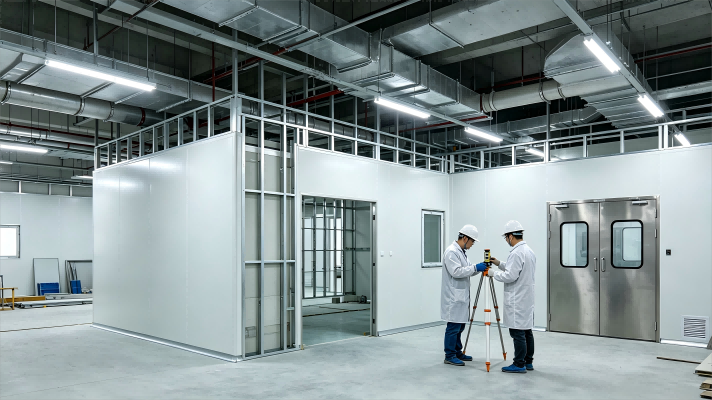
Selecting the right materials is fundamental to minimizing contamination risks and ensuring long-term durability in sensitive environments. Every surface in a controlled setting—from cleanrooms to medical device manufacturing—must resist particle shedding, outgassing, and chemical degradation. Polymers like PTFE and PEEK often excel due to their low friction, high purity, and stability across wide temperature ranges. Metals such as electropolished stainless steel remain popular for their cleanability and corrosion resistance, but even minor scratches can harbor microbes or release ions, so surface finish and hardness are critical factors during specification.
Durability alone isn’t enough if a material promotes biofilm formation or reacts with cleaning agents. For example, some elastomers break down when exposed to hydrogen peroxide vapor, a common sterilant, leading to particulate contamination and seal failure. Therefore, compatibility with sterilization methods—whether autoclaving, gamma radiation, or chemical disinfectants—must be verified early in the design phase. Advanced composites and ceramic coatings are increasingly used to combine wear resistance with inert surfaces that prevent adsorption of process chemicals. These materials often undergo rigorous testing, including outgassing analysis per ASTM E595 and resistance to acids, bases, and solvents.
Real-world longevity also hinges on understanding the interplay between material selection and operational conditions. A valve seat that performs perfectly in dry nitrogen might erode rapidly when exposed to aggressive slurries or high-cycle demands. By mapping the entire lifecycle—installation, routine use, cleaning protocols, and potential misuse—engineers can identify materials that maintain surface integrity and avoid contaminant generation. Ultimately, the goal is not just to choose a robust material, but to select one that actively contributes to contamination control without becoming a source of failure over time. This holistic approach reduces maintenance intervals, extends equipment lifespan, and safeguards product quality.
HVAC and Air Filtration Systems for Strict Particle Control
Maintaining an environment with minimal airborne particles demands more than just heavy-duty filters. It requires a carefully designed HVAC system that controls airflow patterns, pressure relationships, and temperature and humidity levels—all of which influence particle behavior. Even slight oversights in system layout can lead to contamination risks that compromise sensitive processes or patient safety.
High-efficiency filters like HEPA and ULPA are often the backbone of strict particle control, trapping particles as small as 0.1 micron with impressive efficiency. But their performance hinges on proper housing, sealing, and integration with the broader air handling strategy. For instance, achieving ISO Class 5 cleanliness typically means implementing unidirectional airflow with hundreds of air changes per hour, something that puts real strain on equipment if not engineered correctly.
Beyond installation, consistent monitoring and proactive maintenance separate operational excellence from costly failures. Verifying filter integrity, checking pressure drops, and auditing airflow velocities aren't just regimen—they're the only way to confirm the system continues to perform day after day in the face of changing loads, external pollutants, and gradual component wear.
Integrating Cleanroom Technology and Automation
Merging cleanroom protocols with automated systems reshapes how sensitive manufacturing processes unfold. Instead of relying solely on human oversight, smart robotics and conveyor systems now handle material transfer, reducing particle generation at every step. This shift isn't just about speed—it’s about creating a closed environment where contamination risks are mapped and mitigated in real time, allowing production to flow without the traditional interruptions of manual intervention.
Automation thrives when it complements the strict airflow and filtration regimes of a cleanroom. For instance, robotic arms equipped with particle sensors can adjust their movements to avoid disrupting laminar flow, while automated guided vehicles follow predetermined paths that don't intersect with critical zones. These integrations demand a deep understanding of both microelectronic principles and contamination control, but the payoff is a facility that self-regulates, continuously balancing throughput with cleanliness.
The real challenge lies in the seamless orchestration of hardware and data. Connecting equipment to a centralized monitoring system means every fluctuation in pressure, humidity, or particle count triggers an immediate, automated response—whether that's adjusting fan speeds or rerouting work-in-progress to a safer area. It’s a living ecosystem where technology and standards evolve together, pushing cleanrooms from static spaces into adaptive, self-optimizing production hubs.
Validation, Documentation, and Regulatory Compliance
Keeping processes aligned with regulatory expectations often comes down to the integrity of your documentation and the clarity of your validation approach. When documentation is treated as a living record rather than a one-time chore, it naturally supports compliance by capturing decisions, deviations, and the rationale behind each step. This kind of thorough record-keeping makes audits less stressful because the story of your work is already laid out in a way that inspectors can follow without constant clarification.
Validation, meanwhile, shouldn't be viewed as a simple checkbox exercise. It works best when it's integrated into the daily workflow, with team members understanding why specific tests matter and how they connect to patient safety or product quality. By tying validation activities directly to potential risks and real-world usage scenarios, you create a system that not only meets regulatory standards but also genuinely improves the reliability of your outcomes. This practical alignment between daily work, documentation, and compliance requirements is what ultimately builds trust with regulators and end users alike.
Common Pitfalls and How to Avoid Them in Cleanroom Projects
Every cleanroom project starts with a clear vision, but things often go sideways when the planning phase gets shortchanged. A major misstep is treating the cleanroom as a standard construction job rather than a tightly controlled environment. For instance, skipping a thorough risk assessment early on can lead to contamination sources being overlooked until they’re baked into the design. To dodge this, assemble a cross-functional team—facilities engineers, quality managers, and end-users—to map out every material and personnel flow before a single drawing is finalized. This upfront collaboration prevents costly rework and ensures the cleanroom actually meets its performance targets.
Another trap lurks in the procurement stage, where budget pressure tempts teams to accept seemingly minor material substitutions. Replacing a specified high-grade filter with a slightly cheaper alternative or choosing a different sealant might seem harmless, but these decisions ripple through the entire control system. One project saw a 30% spike in particle counts simply because a contractor used a non-approved gasket material that off-gassed inside the finished space. The fix is rigid adherence to a pre-qualified vendor list and a strict change control process that mandates multidisciplinary review for any deviation. It adds a bit of bureaucracy, but it beats tearing out walls later.
Finally, handover and commissioning often get rushed, creating gaps that surface during validation. A common blunder is treating the cleanroom as fully functional right after construction, ignoring the need for a step-by-step buildup of cleanliness levels. For example, starting deep cleaning before the HVAC system has been properly balanced and run for an extended period just spreads contamination. The better approach is a phased commissioning plan: first, verify the building envelope integrity, then bring the air systems online in stages, followed by graduated cleaning and environmental monitoring. This method exposes weaknesses while they’re still simple to correct and gives operators confidence that the space will perform day one.
FAQ
A GMP cleanroom is a controlled environment designed to meet Good Manufacturing Practice standards, primarily used in pharmaceutical and biotech industries to prevent contamination and ensure product purity. It's critical because even minor particle or microbial contamination can compromise drug safety and efficacy, leading to regulatory failures or health risks.
The main differences lie in the maximum allowable particle counts per cubic meter. An ISO 5 cleanroom (Class 100) permits far fewer particles than ISO 7 (Class 10,000) or ISO 8 (Class 100,000). This affects everything from airflow design and filtration to gowning requirements, with stricter classes demanding more rigorous contamination controls.
Material selection focuses on non-shedding, easy-to-clean surfaces that resist chemical degradation. Common choices include stainless steel, epoxy or vinyl flooring, and smooth, monolithic wall panels. It's essential to verify that all materials meet fire safety codes and don't outgas substances that could contaminate the product.
HVAC is the backbone of cleanroom performance, controlling temperature, humidity, and most importantly, air purity. The system must deliver proper air changes per hour, maintain positive or negative pressure cascades, and incorporate HEPA or ULPA filtration. Poor HVAC design leads to hot spots, particle buildup, and potential batch failures.
Frequent pitfalls include underestimating the importance of early-stage risk assessment, using standard construction materials that shed particles, neglecting proper sealing of joints and penetrations, and failing to integrate the HVAC system with the cleanroom design from the start. Another big mistake is not allowing enough time for commissioning and certification before production begins.
Verification involves a structured commissioning and qualification process. This includes installation qualification (IQ) to confirm equipment is installed correctly, operational qualification (OQ) to test systems under load, and performance qualification (PQ) to simulate production conditions. Particle counts, airflow velocity, filter integrity, and pressure differentials are all rigorously tested and documented.
Conclusion
Building a high-performance GMP cleanroom goes far beyond simply putting up walls and installing filters—it demands a rigorously planned ecosystem where every design choice directly supports contamination control. The core starts with a layout that enforces unidirectional workflows for personnel and materials, physically separating critical zones while ensuring smooth, logical movement that minimizes cross-contamination. Materials play an equally foundational role: surfaces must resist microbial growth, withstand aggressive cleaning agents, and remain durable over years of operation. Floors, walls, and ceilings are chosen not just for aesthetics but for seamless, non-porous integrity that denies particles any place to hide. This physical framework then dovetails with an HVAC system engineered for precision, using HEPA or ULPA filtration, carefully calculated air changes, and precise pressure cascades to continuously sweep contaminants away from sensitive areas without introducing dead zones or turbulence.
Yet the cleanroom truly shines when it integrates smart technology and automation. Real-time environmental monitoring sensors, automated door interlocks, and building management systems keep conditions locked within specified limits while reducing human intervention—a leading source of contamination. But even the most advanced setup falls short without thorough validation and documentation. Every component, from airflow patterns to cleaning protocols, must be tested, qualified, and recorded to prove consistent compliance with regulations like EU GMP Annex 1. Many projects stumble by overlooking early-stage risk assessment, underestimating commissioning timelines, or neglecting operator training. Avoiding these pitfalls means treating the cleanroom as a living system that evolves through regular requalification. In the end, the best cleanroom construction balances robust engineering with operational realism, resulting in a controlled environment that reliably protects product quality and patient safety without unnecessary complexity.
Contact Us
Contact Person: Amy Yang
Email: [email protected]
Tel/WhatsApp: 008619330882686
Website: https://www.genopharmatech.com/