

Best Insulated Clean Panel Production Line for High-Performance Facilities
2026-08-13
What if the biggest bottleneck in your high-performance facility isn't the materials you source, but the line that turns them into precision insulated clean panels? Most production systems chase speed and lose the micron-level consistency that clean environments demand. At YI ZHOU TECHNOLOGY, we engineered a different answer — a production line built from the ground up for stability, cleanliness, and repeatability. Here’s what that means for your next project.
Foam Injection Precision for Consistent Panel Cores
Getting the foam to fill every corner of a panel without creating density swings comes down to controlling injection pressure, temperature, and flow path rather than simply adding more material. Small shifts in nozzle position or timing can leave soft spots near the edges or overpack the center, which shows up later as warped faces or uneven insulation values. We map the cavity pressure during trials and adjust the injection profile until the rise pattern matches the panel geometry, not just the total fill weight.
On the production line, that means calibrating the mix head and monitoring back pressure at multiple points instead of relying on a single gauge. When the foam is metered with a tight ratio and the panel is held at a stable temperature, the core develops a uniform cell structure that repeats from one board to the next. This repeatability is what prevents callbacks for delamination or inconsistent R-values, especially on long runs where small errors multiply quickly.
Modular Tooling That Adapts to Any Panel Width
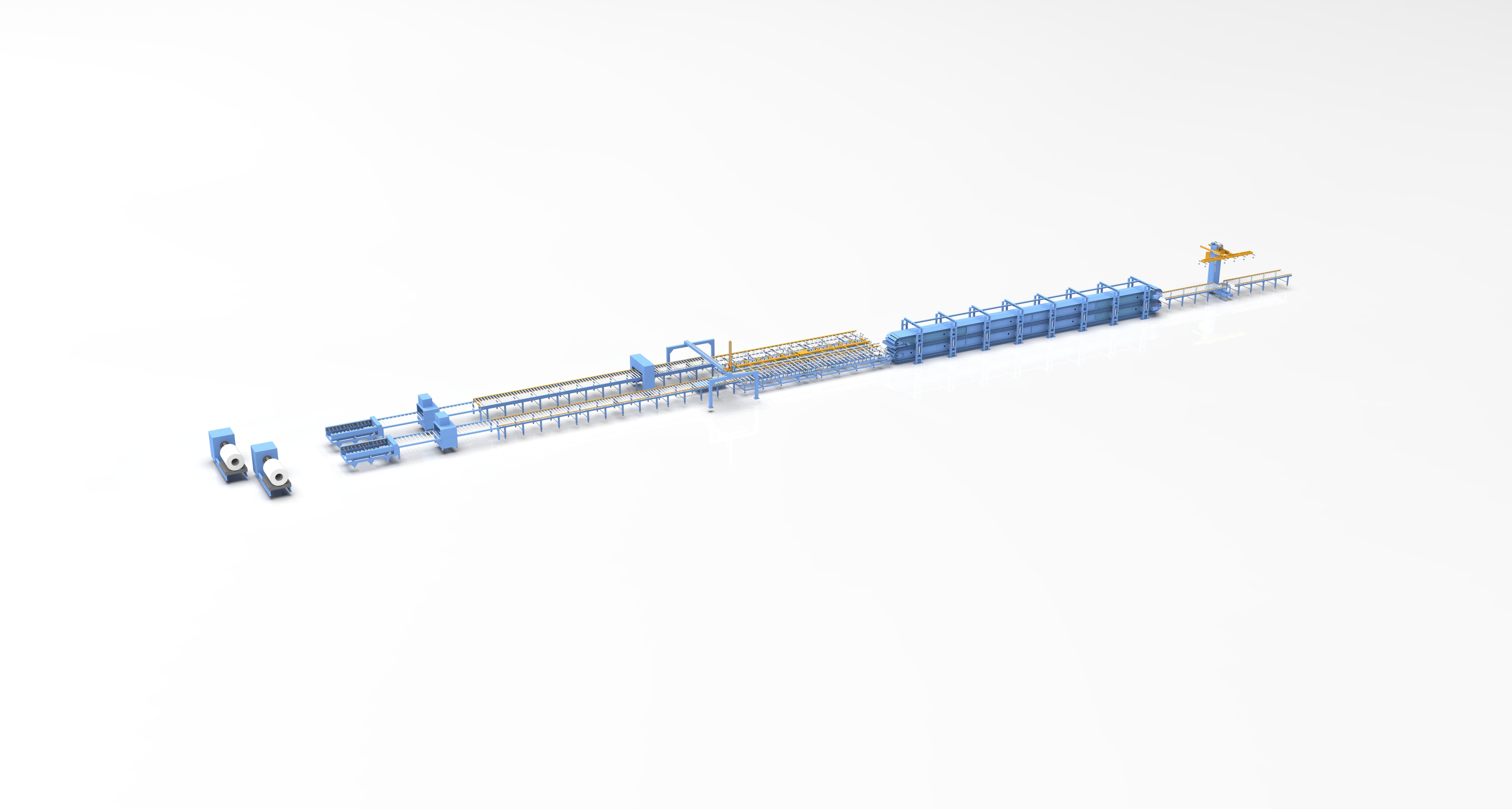
Unlike fixed-width tooling that locks you into a single panel size, modular systems use standardized mounting points and adjustable clamping elements to accommodate a wide range of widths. Each module snaps into a common rail, letting you add or remove segments in seconds—no custom machining, no wasted material, just a tool that flexes with your production needs.
On the shop floor, this means a single modular setup can handle everything from narrow trim panels to full-width cabinet sides. Operators simply reposition the side guides or swap out a few spacer blocks, and the tool is ready for the next run. Downtime between panel size changes shrinks from hours to minutes, keeping your line moving without the usual headache of retooling.
The real payoff comes in long-term flexibility. Instead of storing a wall of dedicated tools for every panel dimension, you maintain one modular base and a handful of interchangeable components. When a new panel width enters your product mix, you adapt rather than invest in new equipment—future-proofing your operation without overcomplicating the present.
Inline UV Curing for Faster Turnaround
Bringing UV curing directly into the production line removes the waiting game that typically slows down print jobs. Instead of moving materials to a separate station, the lamp sits right after the print heads, hardening inks and coatings almost instantly. This inline approach means operators can handle, stack, or finish pieces within seconds, not minutes or hours.
The real payoff shows up in mixed-run schedules. When a rush order lands mid-day, inline UV lets you switch from a slow-drying job to a fast one without rescheduling the floor. There is no need to reserve drying racks or keep a buffer zone for air-dry inks. The continuous flow keeps every machine busy, so turnaround drops without adding extra shifts.
Many shops notice fewer handling defects too. Because the surface is cured before it touches the next roller or stack, smudges and offset marks become rare. That reliability feeds the speed advantage: you spend less time reprinting, and customers get clean, ready-to-use output on the same day.
Automatic Stacking Without Surface Damage
Achieving automatic stacking while preserving surface integrity demands a careful blend of mechanical precision and material awareness. The first line of defense lies in the end-of-arm tooling: soft-contact grippers, vacuum cups with adjustable suction, or magnetic arrays tuned to avoid abrupt snap-down forces. By controlling approach speed and using compliant mounting, the stacker can place each part with near-zero impact, preventing micro-abrasions that accumulate into visible wear.
Beyond the gripper, the stacking algorithm itself plays a pivotal role. A well-designed control system accounts for part tolerances, surface friction, and even ambient vibration. Instead of dropping layers from a fixed height, it dynamically adjusts the release point based on real-time sensor feedback, ensuring that each new layer settles gently onto the previous one. Air bearings or temporary levitation fields can also be introduced for ultra-sensitive materials, eliminating contact until the final positioning is confirmed.
Finally, the choice of stack pattern influences surface protection. Alternating orientation, introducing interleaved protective sheets, or adopting a honeycomb alignment reduces concentrated pressure points. For high-gloss or coated surfaces, static dissipative materials and ionizing bars prevent dust attraction during stacking. The result is a fully automated process that maintains throughput without sacrificing the flawless finish of every stacked item.
Real-Time Data Logging for Complete Traceability
Every production event is captured the moment it happens, with a timestamp, machine ID, operator badge, and relevant sensor readings attached. This creates an unbroken digital chain from raw material intake to final packaging, so a single serial number can reveal the exact batch, shift, station, and tooling used for that unit. No more waiting for end-of-line reports or digging through handwritten logs when a defect shows up in the field.
Complete traceability also changes how recalls and audits are handled. Instead of pulling entire lots based on a vague date range, quality teams can filter records by work order, material lot, or specific test result. If a torque deviation is logged at station 4 at 10:42, the system immediately links it to the individual product, the operator who was signed in, and the batch of fasteners from that feeder. This level of granularity reduces the scope of containment and speeds up root cause analysis.
On the plant floor, the logging layer is built to survive real-world interruptions. Edge devices buffer entries locally if the network drops, then sync automatically when connectivity returns, so there is no traceability gap. Event triggers can be adjusted per station, and logs are stored in a tamper-evident format that supports regulatory submissions without extra manual compilation.
Low-Maintenance Conveyor Systems for Continuous Runs
Many continuous-run operations end up fighting downtime because components were picked for upfront price rather than long service intervals. The low-maintenance approach starts with sealed bearings, direct-drive motors without belts or chains, and modular plastic belting that holds tension on its own. These conveyors often include self-cleaning wear strips and automatic tensioners, so weekly manual adjustments drop off the schedule.
In high-cycle environments, the hidden cost is usually small part replacements and constant tweaking. A simpler conveyor design cuts that burden by using fewer moving parts and making wear components easy to swap without pulling the frame apart. Some lines now use tool-less rail removal or clip-on side guides, letting an operator restore normal function in minutes instead of waiting for a maintenance crew.
For plants running around the clock, the benefit is predictable uptime. Corrosion-resistant materials and drive units rated for 24/7 duty stretch lubrication intervals to quarterly or semi-annual checks rather than weekly greasing. Maintenance doesn't disappear, but it shifts from reactive fixes to planned inspections, which keeps continuous runs moving without surprise stoppages.
FAQ
It integrates precision temperature control, continuous lamination, and automatic trimming to hold tight thickness tolerances. The line is built around modular stations, so facilities can scale output without reworking the entire setup.
Panels move through enclosed forming and curing sections with filtered air circulation. Edges are sealed before cutting, which minimizes particle release and keeps the core material fully encapsulated.
It handles polyurethane foam, rock wool, EPS, and honeycomb cores. Quick-change roller guides allow switching between materials without lengthy downtime.
Yes. Width, length, and thickness are adjusted through servo-driven sizing stations. Operators can store recipes, so repeat orders run with the same parameters in minutes.
Pharmaceutical cleanrooms, food processing plants, cold storage warehouses, and battery dry rooms. Any facility that needs consistent thermal performance and low particulate shedding gets strong value.
The heating zones use insulated platens and heat recovery from the curing ovens. Depending on core type, energy use per square meter is typically 15 to 20 percent lower than older multi-stage lines.
Daily checks cover conveyor belt tension and roller alignment. Weekly tasks include cleaning adhesive applicators and inspecting temperature sensors. Most wear parts are accessible from the side, so technicians do not need to enter safety zones.
For a standard configuration, installation takes about four to six weeks. Commissioning and staff training usually add another two weeks, but the modular design shortens that if utility connections are already prepared.
Conclusion
The line stands out for how well it controls the foam pour. Instead of a single broad setting, the injection head adjusts volume and speed based on the exact width and thickness of each panel, which keeps the core density uniform from the first board to the last. That level of control matters in clean environments where even small voids can trap moisture or compromise insulation. The tooling is just as flexible; swapping to a new panel width takes minutes because the side rails and guides slide into calibrated stops, and no one has to re-level the bed. Once the foam sets, the panel moves under high-output UV lamps that cure the facing without holding up the line, so turnaround stays short even on custom orders.
Downstream, the stacker uses non-marring contact pads and places each panel edge-first to avoid dragging one surface across another, which means finished boards leave the line without scuffs or dents. Every cycle is logged automatically—temperature, pressure, and conveyor speed are all recorded, so a shift supervisor can trace any batch to its exact production window. The conveyor itself is built with sealed bearings and snap-in wear strips, which keeps routine maintenance to a few minutes rather than a full shift. Taken together, the system delivers the consistency and cleanliness that high-performance facilities expect without demanding constant operator intervention.
Contact Us
Contact Person: Sophia Jiang
Email: [email protected]
Tel/WhatsApp: +86 17367381818
Website: https://yzwelding.com/