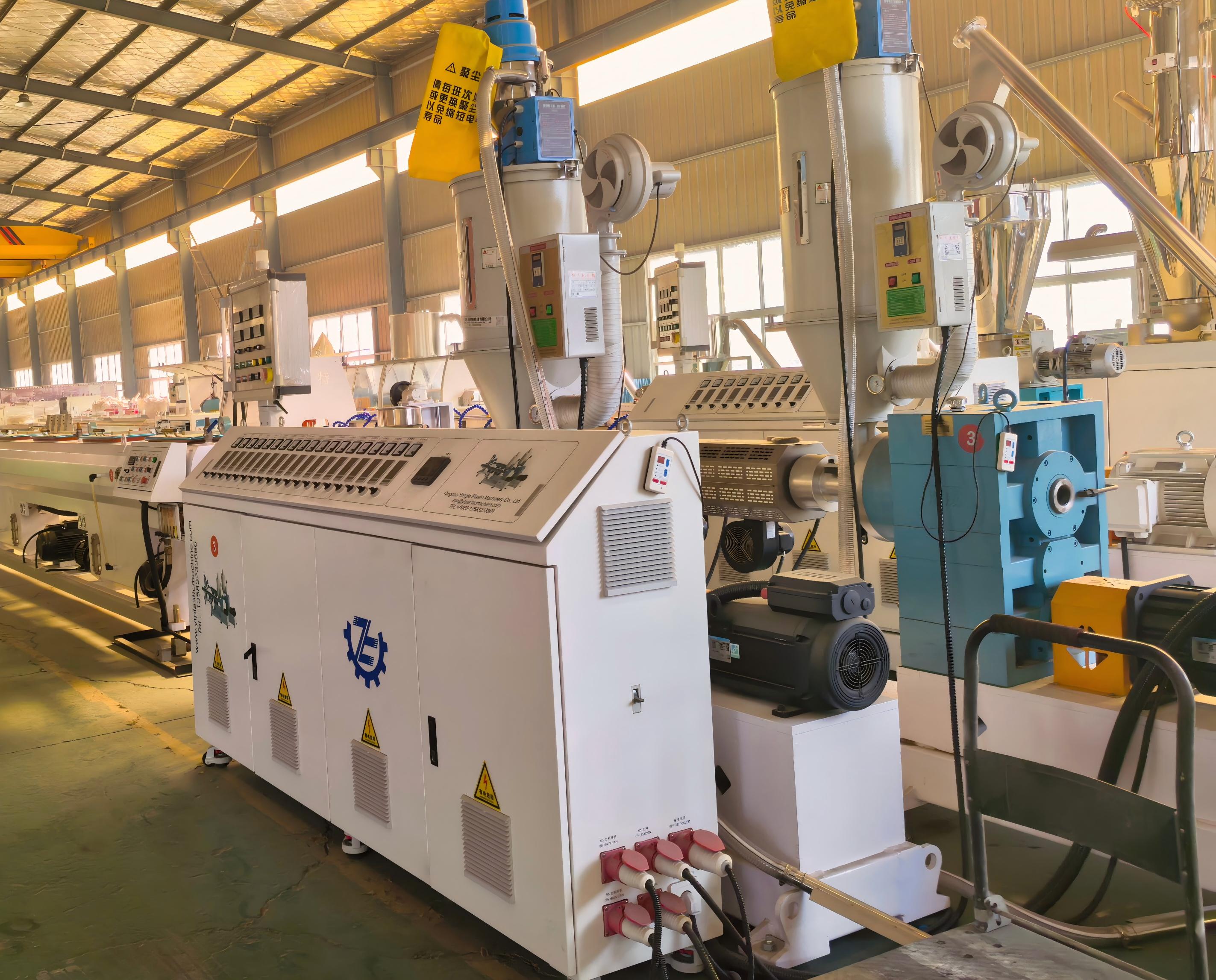

Best Plastic Pipe Machine for Efficient Production Lines
2026-05-09
In today’s competitive manufacturing landscape, efficiency is everything. When it comes to plastic pipe production, the right machinery can make or break your bottom line. But with so many options available, how do you choose a machine that truly delivers speed, precision, and durability? Enter Yongte—a name synonymous with cutting-edge extrusion technology. In this post, we’ll explore what sets Yongte’s plastic pipe machines apart and how they can transform your production line into a powerhouse of productivity.
How Modern Extrusion Tech Cuts Plastic Pipe Production Time in Half
Older extrusion lines often crept along at speeds that made larger orders a test of patience. Now, gear pumps and optimized screw designs feed material more steadily into the die, allowing line speeds to jump without risking wall thickness variations. It's not just about pushing plastic faster; it's about controlling melt temperature and pressure so precisely that the pipe emerges consistent at nearly double the old rates.
Cooling used to be the real bottleneck. Tanks full of chilled water would slowly draw heat out of the pipe wall, and if you rushed it, the pipe would bow or develop internal stress. Modern systems use multi-stage spray cooling and calibrated vacuum calibrators that lock the hot tube into shape almost instantly. The result is a rigid, dimensionally accurate pipe in a fraction of the distance, freeing up floor space and slashing the time from pellet to finished product.
Changeovers once meant hours of downtime while operators swapped dies and re-threaded the line. Today’s quick-change die heads and automated sizing adjustments can switch dimensions in minutes. Combined with centralized controls that monitor every parameter in real time, these systems eliminate the constant tweaking and guesswork that used to eat away at production schedules. It’s a shift from reactive adjustments to proactive flow that keeps output humming without the usual pauses.
The Real Cost of Inefficient Pipe Machines Most Buyers Overlook
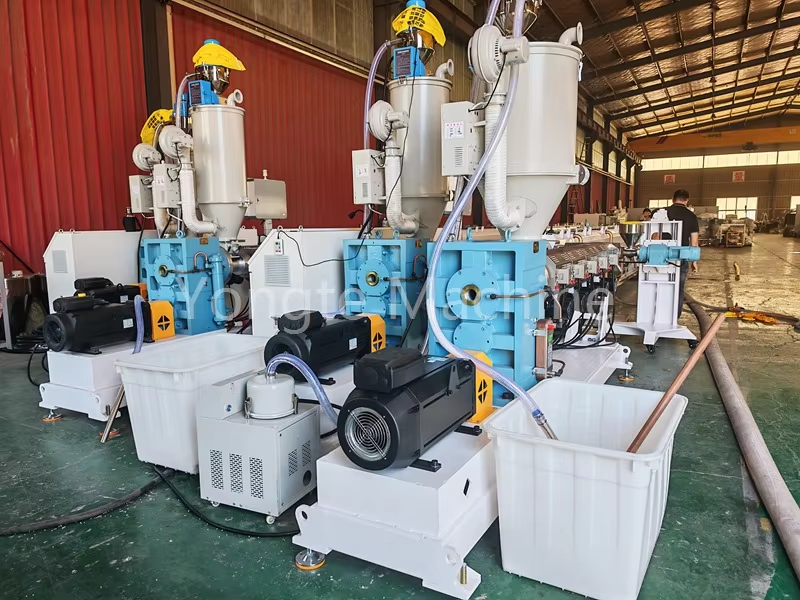
When assessing pipe manufacturing equipment, purchase price often steals the spotlight. Yet the deeper financial drain comes from machines that consume excessive power, demand frequent part replacements, and quietly inflate operational budgets month after month. These ongoing outflows, rarely reflected in a spec sheet, steadily erode what initially looked like a smart investment.
The less obvious toll shows up in production rhythm. Inefficient systems generate more scrap from inconsistent wall thickness or ovality issues, forcing rework that eats into both time and material margins. Every unplanned stoppage—whether from jams, calibration drift, or slower cycle speeds—creates a ripple effect that delays downstream processes and disappoints customers waiting on orders.
Beyond the immediate floor-level headaches, there's a compounding drain on human resources. Operators waste hours nursing temperamental machinery instead of optimizing output, while maintenance teams divert attention from improvement projects to emergency fixes. Over a machine's lifespan, these aggregated inefficiencies can outstrip the initial equipment cost several times over, yet they remain invisible on a purchase order comparison.
Matching Machine Specs to Output Goals Without Overpaying
Every production line has a sweet spot where performance and cost intersect. Too often, buyers get fixated on top-tier numbers—faster speeds, heavier duty cycles, larger capacities—without asking whether those specs actually translate into meaningful output gains. The first step is to diagnose your true bottleneck: if downstream processes can’t keep up, a faster machine won’t add value, just idle time. Write down your daily, realistic target volume, not the aspirational maximum, and work backward from there.
With your output number in hand, scrutinize the few specs that directly impact it. For a CNC router, spindle power and rapid traverse rates might steal the spotlight, but if you’re cutting sheet goods all day, work envelope and tool-change speed matter far more. Talk to operators—they’ll tell you about the minor stops that cumulative kill throughput: material loading, chip clearance, software quirks. Sometimes a mid-range machine with better ergonomics or simpler maintenance outproduces a flagship model simply because it stays running.
Finally, resist the upsell to “future-proof” your purchase unless you have a concrete plan for scaling. A slight over-spec can be smart if it unlocks a new material or product line, but paying 30% more for capacity you won’t use for three years rarely pans out. Ask vendors for a total cost of ownership breakdown over your expected lifespan—energy, consumables, service contracts—not just the sticker price. The machine that hits your exact targets with the least excess is the one that ends up making you money from day one.
Why Single-Screw Extruders Still Dominate High-Speed Pipe Lines
Despite the growing presence of twin-screw machines in compounding, single-screw extruders remain the backbone of high-speed pipe production for a simple reason: they deliver unmatched reliability and cost efficiency at throughputs that few alternatives can match. The straightforward design—a single rotating screw inside a heated barrel—means fewer moving parts, reduced wear, and lower maintenance expenses. In an industry where unplanned downtime can erase profit margins, the mechanical simplicity of a single-screw system translates directly to longer uninterrupted runs, which is critical when lines are pumping out pipe at speeds exceeding 30 meters per minute.
Another overlooked factor is how well modern single-screw extruders have evolved to handle today’s demanding materials. Advances in screw geometry, barrier flight design, and grooved feed sections have dramatically improved melting efficiency and output consistency, even with high-viscosity grades or recycled content. Unlike the perception of being “old technology,” these machines now rival the mixing capabilities of twin-screw systems in many pipe applications, all while avoiding the complexity and higher energy costs of counter-rotating intermeshing screws. Operators find that a well-tuned single-screw line can process everything from HDPE to PP-R with minimal changeover hassle, keeping the line versatile without sacrificing speed.
Perhaps the biggest edge, though, lies in the sheer operational familiarity that the industry has with single-screw platforms. From shop-floor technicians to process engineers, the knowledge base is vast, making troubleshooting and optimization faster. Spare parts are universally available and inexpensive, and the machines themselves have a decades-long track record in pipe plants worldwide. When a manufacturer is running a high-speed line that must meet tight dimensional tolerances and surface finish requirements around the clock, betting on a proven, forgiving extruder design isn't just a safe choice—it’s often the only commercially viable one.
Hidden Bottlenecks That Slow Your Plastic Pipe Workflow
When you map out a plastic pipe installation, you probably account for the obvious things—cutting times, joint preparation, and cure schedules. But the real delays often come from places you don’t expect. For instance, inconsistent wall thickness in seemingly identical pipe batches can throw off alignment during solvent welding, forcing rework that eats up hours. Another culprit: the temperature sensitivity of lubricants and sealants that nobody thinks to check until a cold morning turns what should be a quick push-fit into a stubborn wrestling match. These small surprises add up, turning a streamlined plan into a stop-start mess.
Then there’s the paperwork and handling side. How many times have you had a crew standing around because the right reducer or flange was buried at the back of a delivery truck, or because the job ticket didn’t match the actual inventory? Mislabeled fittings and poorly organized staging areas aren’t just annoyances—they quietly drain productivity before a single tool is picked up. Addressing these hidden snags often means rethinking how materials flow onto the site, not just how they’re joined together.
Scaling Production Without Sacrificing Wall Thickness Consistency
When you push cycle times down and cavitation up, wall thickness often becomes the first casualty. It’s not just a cosmetic issue—uneven walls create stress concentrations, warp parts during cooling, and quietly eat into your scrap rate. The real challenge isn’t making parts faster; it’s making them identical at speed, shot after shot, across every cavity.
Most shops compensate by over-packing or slowing down, but that’s a trade-off, not a solution. What works instead is a hard look at the thermal balance of the tool: uniform cooling circuits, strategic gate placement, and material-drying consistency that borders on obsessive. We’ve found that even a 2°C variation across the mold surface can shift wall distribution measurably, especially with thin-walled geometries. Process monitoring that tracks fill pressure at each nozzle—not just overall injection pressure—gives you the data to spot drift before it becomes a reject.
One approach that consistently outperforms traditional methods is combining real-time cavity pressure transducers with a robust, validated simulation model. Instead of chasing barrel heats, we adjust injection velocity profiling cavity-by-cavity during the fill phase, compensating for slight viscosity shifts without letting the pack phase hide the problem. The result is parts that measure the same from first shot to last, without dialing back throughput. Once you’ve seen a month’s worth of Cpk data above 1.67 on wall thickness while running at full speed, you realize “scaling” doesn’t have to mean “settling.”
FAQ
A machine optimized for high-output production combines rapid extrusion with precise cooling systems. Look for models with high screw speeds and efficient temperature controls to maintain consistent wall thickness at fast line speeds.
Material selection directly influences throughput and energy consumption. For example, processing HDPE requires different screw designs and temperature profiles than PVC, so machines with modular barrels and adaptable feeds can switch materials with minimal downtime.
Regularly inspect and clean the screw and barrel, check die alignment, and replace worn heaters or thermocouples. Keeping the vacuum calibration tanks clean prevents blockages that can slow production. A preventive schedule minimizes unplanned stops.
Modern machines with quick-change die heads and adjustable calibration sleeves can switch between sizes in under an hour. Look for systems with digital adjustment settings to reduce manual tweaking and maintain precise dimensions across different pipe sizes.
Energy-efficient machines use servo motors and optimized heating zones to reduce power consumption, often by 20-30% compared to old hydraulic models. Lower energy use cuts operational costs significantly over the machine's lifespan.
Automation integrates real-time monitoring of wall thickness, diameter, and surface quality. Automated saws and stackers sync with extrusion speed to eliminate idling, ensuring continuous output without manual intervention.
Advanced vacuum cooling tanks with segmented water flow can rapidly cool pipes without warping, allowing speeds of over 30 meters per minute for small pipes. Uniform cooling is critical to prevent internal stresses that compromise pipe strength.
Conclusion
Modern extrusion technology has dramatically reshaped plastic pipe manufacturing, cutting production time by half while maintaining precision. Single-screw extruders continue to dominate high-speed lines thanks to their reliability, simple maintenance, and ability to handle a wide range of materials. However, even the best hardware can be undermined by hidden bottlenecks—poor cooling, inconsistent feeding, or outdated downstream equipment—that quietly throttle output. Buyers often fixate on the sticker price without realizing that energy losses, frequent downtime, and scrap from inferior machines can drain budgets far more than the initial investment. Choosing a machine means looking beyond spec sheets to how each component interacts in a real production environment.
Matching machine capabilities to actual output goals is the key to avoiding overpayment. A line designed for 500 kg/h won't magically deliver 700 without risking wall thickness variation or surface defects. Instead of oversizing, smart manufacturers focus on fine-tuning temperature control, screw geometry, and haul-off synchronization to push throughput without compromising quality. This balance becomes even more critical when scaling production: ramping up speed should not come at the cost of dimensional accuracy. The best pipe machines offer consistent melt pressure and closed-loop control that automatically compensate for viscosity shifts, ensuring every meter meets spec. Ultimately, genuine efficiency is a blend of rugged hardware, intelligent process control, and a clear-eyed view of total lifecycle cost—not flashy promises but measurable, repeatable output.
Contact Us
Contact Person: Ms Qin
Email: [email protected]
Tel/WhatsApp: 8613583233866
Website: https://www.yongteplast.com