

Best Stainless Steel Hex Nuts: The Ultimate Guide to Choosing the Right Fasteners
2026-11-02
Selecting the right stainless steel hex nuts can make or break a project—corrosion, thread tolerances, and load capacity all hide in plain sight. This guide cuts through the confusion so you can choose fasteners with confidence. As Wanluo knows from years in the hardware industry, the best hex nut isn't always the most expensive one. It's the one that matches your specific application without compromise. Read on to discover what to look for and what to avoid.
304 vs. 316: Which Grade Actually Survives Outdoors?
Most people assume any stainless steel is weatherproof, but outdoors isn’t a single environment. 304 holds up fine in dry or mildly polluted air—think inland fences, light fixtures, and trim. However, once salt spray, de-icing chemicals, or constant coastal humidity enter the picture, 304 often starts showing rust spots within the first year or two.
That’s where 316 pulls away. The addition of roughly 2–3% molybdenum gives it far better resistance to pitting and crevice corrosion, the exact failure modes that kill 304 in marine or roadside settings. If the part sits within a few miles of the ocean, sees winter road salt, or gets washed by chlorinated water, 316 is the minimum grade that will actually survive without ugly staining.
For purely inland, low-humidity use, 304 can still be a reasonable budget choice, but if the outdoor exposure includes any chloride source, paying extra for 316 avoids early replacement and visible corrosion.
Decoding Thread Pitch and Diameter Without a Caliper
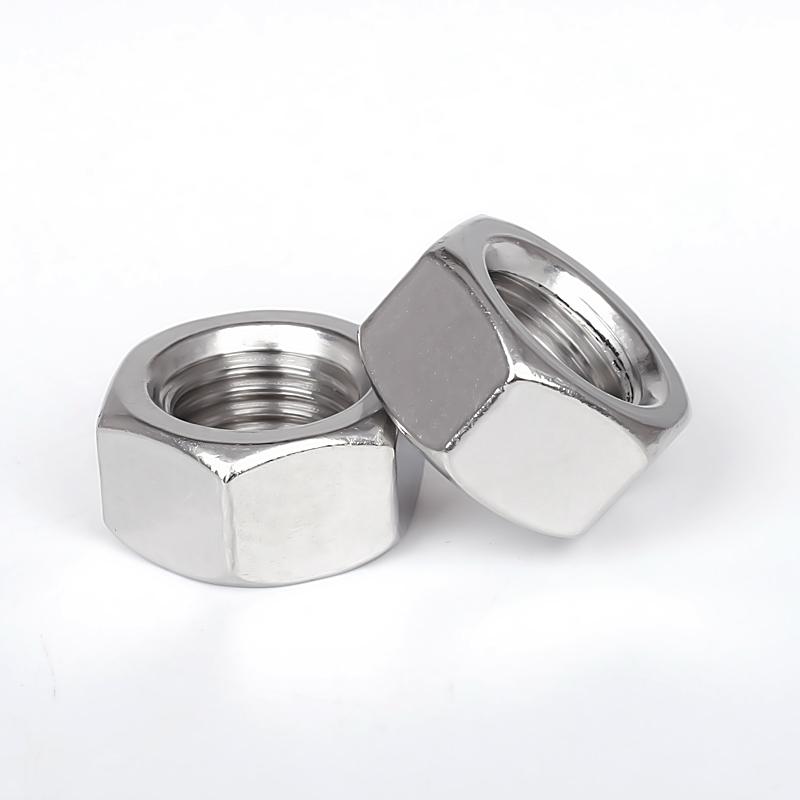
A lot of thread identification comes down to matching what you have against something you already know. Grab a few bolts or screws from your junk drawer—especially ones with a known pitch like common M6x1.0 or 1/4-20—and see if the threads interlock cleanly. If they do, you've just identified both the diameter and pitch without measuring anything. For a more precise pitch read, press a strip of paper against the threads to get an impression, then count how many bumps fit in a centimeter on a ruler. Divide 10 by that count and you have the pitch in millimeters.
When you need to know the diameter and don't have a reference fastener, a wrench set can get you in the ballpark. Find the open-end wrench that just slips over the bolt's shank—not the head—and note that size. It won't equal the thread diameter, but comparing that wrench gap to standard bolt dimension tables will narrow it to one or two likely candidates. From there, you can test-fit with a nut or use a cheap thread pitch gauge to lock it down. It's slower than calipers, but it works in a pinch and costs nothing extra.
Locking and Flange Hex Nuts: When Basic Isn't Enough
A standard hex nut holds parts together by stretching the bolt and creating clamp force. That works fine until vibration, thermal cycling, or impact starts working the threads loose. Once the preload drops, the joint can shift or fail entirely. Locking hex nuts step in here: they add a nylon insert or deformed thread section that grips the bolt to resist rotation. Flange hex nuts tackle the problem from a different angle, using a built-in washer-like face to spread bearing pressure and reduce the chance of embedment or loosening on soft surfaces.
Choosing between them often comes down to the joint conditions. Locking nuts are useful in engines, suspension parts, or conveyor systems where repeated motion would shake a basic nut free. Flange nuts shine on oversized holes, thin sheet metal, or plastic assemblies where a separate washer would be awkward or easy to lose. In many cases, a flange lock nut combines both features, eliminating the need for extra washers and keeping torque steady over time.
If you've ever had to retighten the same bolt twice, you already know when basic isn't enough. The upgrade isn't complicated, but it saves hours of rework and prevents failures that start as a barely visible loosening.
Galling: The Hidden Enemy of Stainless Fasteners
Stainless steel fasteners carry a reputation for corrosion resistance, but they hide a less obvious weakness that can bring an assembly to a sudden stop. Galling occurs when two metal surfaces under pressure rub together and microscopically weld, tearing material from one thread and depositing it on the other. The result is a fastener that seizes partway through tightening, often snapping before it reaches the intended torque. What makes it so insidious is the absence of warning: the threads look perfectly fine on the outside, yet inside they have already begun to fuse.
Unlike carbon steel, stainless steel has poor thermal conductivity, so friction heat stays localized at the thread contact points. This heat strips away the thin oxide layer that normally protects the surface, exposing raw metal that instantly bonds under load. Galling rarely announces itself with a squeak or a change in resistance; it simply locks the joint solid or breaks the fastener, leaving behind a mess of distorted threads. For maintenance crews and manufacturers alike, this silent failure costs hours of drilling out broken bolts and replacing damaged components.
The good news is that galling is largely preventable once you understand its triggers. Slowing down installation speed, using a proper lubricant or anti-seize compound, and selecting fasteners with different hardness levels between the nut and bolt all reduce the risk. Some engineers also opt for electropolished or coated stainless parts, which maintain a smoother surface under pressure. Treating galling as the hidden enemy it is means planning for it before the first turn of the wrench, not after the damage is done.
Bolt, Washer, Nut: Creating a Joint That Won't Loosen
Most bolted joints fail not because the fastener breaks, but because clamp force quietly disappears. A bolt works like a stiff spring: torque stretches it slightly, and that tension squeezes the washer and nut against the mating surfaces. If the clamped parts settle, paint wears away, or temperature cycles cause expansion and contraction, that stretch relaxes. Once residual tension drops below the service load, the joint can slip and the nut begins to back off.
To keep the assembly tight, treat the washer as more than a spacer. A hardened flat washer distributes bearing stress and prevents the nut from digging into soft material, while a conical or wedge-lock washer uses geometry instead of friction to resist rotation. Pair that with a prevailing-torque nut or a nylon insert if vibration is constant. For critical joints, specify a through-hardened washer under a flanged nut and verify clamp load with a torque-plus-angle method rather than torque alone.
Finally, remember that loosening is a system problem. If the bolt is too short, thread engagement suffers; if the grip length is too small, there is not enough elastic stretch to absorb micro-movements. Clean threads, correct lubrication, and a controlled tightening sequence matter as much as adding another locking device. A joint that stays tight is designed, not just assembled.
Fake Stainless Steel: Easy Ways to Spot It
Most people assume that if a metal looks shiny and silver, it's stainless steel. But the truth is, a lot of items labeled as stainless are actually cheap alloys with a thin coating that wears off fast. One of the quickest ways to tell is to grab a magnet. Real stainless steel—specifically the 300 series like 304 or 316—is generally non-magnetic or only weakly magnetic. If a magnet sticks firmly to your pan, sink, or jewelry, you're probably dealing with a lower-grade stainless blend or even plated steel pretending to be the real thing.
Another dead giveaway is how the surface ages. Authentic stainless resists rust and corrosion, but fake versions often develop tiny orange spots, especially around edges, welds, or scratch marks. Take a close look at the finish too: real stainless has a consistent, slightly grainy texture, while fakes might show bubbles, uneven plating, or a painted look that chips away to reveal a dull gray metal underneath. Run your fingertip over suspicious areas—if it feels rough or flaky, that's not the smooth, dense surface you'd expect from quality stainless.
You can also test with a simple acid or saltwater solution if you're still unsure. Put a drop of lemon juice or vinegar on a hidden spot and wait a few minutes. Genuine stainless won't react much, but a fake with exposed base metal will start to darken or leave a stain. For everyday buyers, the easiest move is to check the weight: real stainless is heavy and solid, while many imitations feel suspiciously light. If the price seems too good to be true, it probably is—because cheap knockoffs cut corners on both materials and durability.
FAQ
Stainless holds up much better against moisture and salt spray. Zinc plating eventually wears off or gets scratched, exposing the underlying steel. A good stainless nut keeps its corrosion resistance all the way through, so you won't see rust streaks after a few rainy seasons.
Grab a thread pitch gauge and check the bolt you plan to use. Don't guess based on the wrench size, because a 10 mm wrench can fit both M6 coarse and M6 fine threads. Once you know the diameter and pitch, match the nut exactly—mixing fine and coarse threads is a quick way to strip everything.
Yes, and it mostly comes down to chloride exposure. 304 works fine for most indoor and mild outdoor settings. If the nuts will sit near saltwater, swimming pools, or heavy road salt, go with 316. The extra molybdenum in 316 gives it a clear edge against pitting.
You can, but watch out for galvanic corrosion. Stainless is more noble than plain steel, so the bolt may corrode faster in damp conditions. If you want a durable assembly, use stainless bolts and stainless nuts together. Adding a barrier like anti-seize also helps reduce the risk.
There's no universal magic number, but you should reduce torque by about 20-30% compared to a dry steel fastener of the same size. Stainless is softer and galls easily. Lubricate the threads, tighten slowly, and stop if you feel any resistance building unevenly.
Washers aren't always mandatory, but they're smart in two cases: when the mating surface is soft or uneven, and when you need to spread the load to prevent the nut from embedding. A flat washer under the nut also gives a more consistent clamp force and can reduce galling at the bearing face.
Slow down the installation speed, use a nickel-based anti-seize or a PTFE lubricant, and avoid power tools on final tightening. Galling happens when the oxide layer gets scraped off and metal-to-metal contact welds the threads. If you feel heat or sudden resistance, back off immediately and inspect the threads.
They handle moderate heat well, but the exact limit depends on the grade. 304 and 316 can typically manage continuous temperatures around 800-900°F before losing strength. For sustained high heat, look at high-temperature alloys or ceramic coatings instead of relying on standard stainless.
Conclusion
Choosing stainless hex nuts that will actually hold up outside starts with understanding the real difference between 304 and 316 grades. While 304 handles mild conditions, coastal or de-icing salt exposure quickly pits it, so for anything near saltwater or heavy road spray you want 316’s molybdenum content. But even before you trust a spec sheet, learn to read thread pitch and diameter by eye: compare the nut against a known bolt, count threads over a short length, or use a coin edge as an improvised gauge. And don’t assume shiny means stainless—many fakes are cheap zinc-plated steel. A quick scratch test, magnet check (some stainless is slightly magnetic, but strong pull is a red flag), or weighing the nut against a known genuine one can reveal a counterfeit before it corrodes in place.
Once you have the right material and threads, the joint itself needs more than a basic hex nut. If vibration or thermal cycling is present, a nylon-insert lock nut or a flange nut with a serrated bearing face prevents loosening far better than a plain nut and split washer. However, stainless-on-stainless threads tend to gall—cold weld under torque—so use a nickel-based anti-seize, slow your installation speed, and avoid over-tightening. For a durable connection, pair the nut with a flat washer under the turning part and a properly sized bolt; the washer spreads load and prevents the nut from digging into softer surfaces. Finally, revisit the torque after the first thermal cycle or a few hours of vibration, because even the best setup settles over time.
Contact Us
Contact Person: Shane
Email: [email protected]
Tel/WhatsApp: 8613357785029
Website: https://www.wanluohardware.com