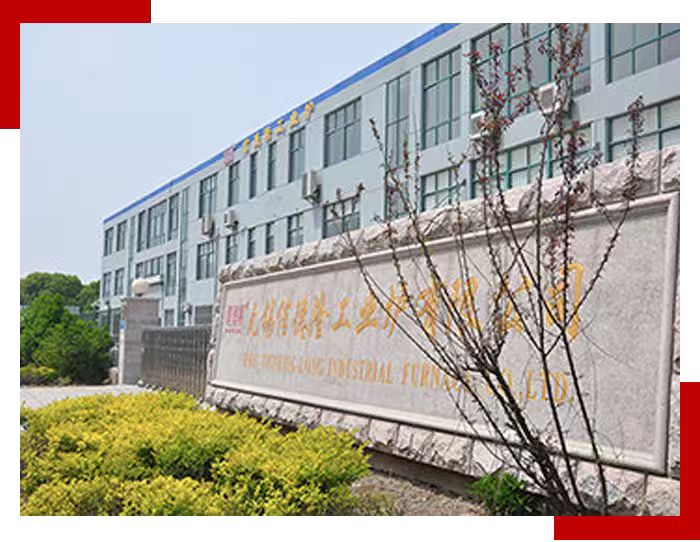

Bogie Hearth Furnace Factory: A Look at Precision Manufacturing for Industrial Heat Treatment
2026-08-28
Behind every reliable industrial heat treatment process lies a piece of equipment that rarely gets the spotlight: the bogie hearth furnace. In this post, we step inside a factory dedicated to crafting these massive, precision-engineered workhorses. From the careful selection of refractory materials to the exacting tolerances of the moving hearth, every detail matters. If you’ve ever wondered how thermal uniformity and operational longevity are built from the ground up, you’re in the right place. And as THINKING-LONG continues to push the boundaries of what’s possible in furnace manufacturing, this deep dive offers a rare, ground-level view of the craft behind the heat.
From Plate Steel to a Precision-Welded Frame
Every frame begins as flat sheets of high-grade steel, laser-cut with tolerances that would make a machinist nod in approval. The pieces look deceptively simple scattered across the shop floor, but each one carries a specific role in the final structure. From there, the real work begins: bending, notching, and fitting until the skeleton starts to take shape.
Welding isn't just a joining process here—it's where the frame gains its character. The welders work with a steady hand, laying down beads that are as consistent as they are strong. Heat management is critical; too much and the steel warps, too little and the joint lacks penetration. The result is a frame that feels solid without being overweight, with joints you could inspect for hours and still find nothing to complain about.
After welding, the frame goes through a careful straightening and stress-relief pass. Any residual tension from the heat gets worked out, so the final piece sits true on a flat table. It's a quiet, methodical process—one that turns raw plate steel into a frame that's ready for years of hard use without a single creak or flex out of place.
Keeping Distortion Out of the Weld Seams
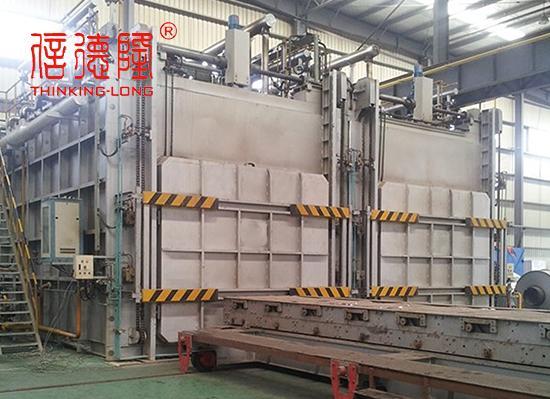
Distortion often shows up the moment the weld pool solidifies, not after the job is finished. Instead of depending only on heavy clamps, pay attention to how heat moves through the joint. Long continuous passes can pull the metal more than expected. Breaking the weld into shorter balanced segments and alternating direction keeps shrinkage from stacking up in one area. You can also set the parts with a slight offset against the expected pull so they settle closer to the final shape after cooling.
Fixtures do more than hold parts in place; they guide where stress goes. Use strongbacks or removable braces near the seam, but leave enough room at the edges for the metal to move without buckling. On thin sheet, a copper backing bar pulls heat out quickly enough to reduce twist. For repairing a long crack, start at the center and work outward with short stitch welds, giving short pauses between each pass.
Distortion can appear even after the weld looks complete. Check the piece while it is still warm and use small corrective taps or heat straightening passes before it cools fully. Keep a flat straightedge nearby to catch a bow early. Over time, you will learn which joints on your own jobs tend to pull the same way, and you can plan the weld sequence around that instead of struggling with it later.
Insulation Layers That Shape Heat Distribution
The way heat moves through a building rarely follows a straight line. Insulation layers act as subtle gatekeepers, redirecting thermal energy along paths that might surprise even seasoned builders. In a wall cavity, for instance, the sequence of materials—foam board against the sheathing, fiberglass batts between studs—creates a kind of thermal choreography. Warmth doesn't simply stop at the first barrier; it slows, spreads, and sometimes sneaks around edges where two insulation types meet. This interplay matters more than R-values alone suggest, because real-world performance hinges on how those layers handle moisture, air movement, and the uneven pressures of daily temperature swings.
Consider a roof assembly in a cold climate. A continuous layer of rigid insulation above the deck shifts the dew point outward, keeping the structural sheathing warmer and drier. Meanwhile, the fluffy insulation below the deck traps air but allows vapor to drift upward if the interior humidity climbs. The result is a gradient—not a wall—where heat distribution follows the path of least resistance. Builders who understand this sometimes stagger seams or add a thin reflective foil to break up convective loops. Those small choices ripple through the entire thermal envelope, changing where condensation forms and how evenly rooms stay warm.
Practical lessons emerge once you look past catalog specs. An attic with blown-in cellulose over fiberglass batts doesn't just add R-value; the heavier cellulose presses down on the lighter batts, reducing their loft but also blocking air channels that would otherwise short-circuit the insulation. Similarly, a basement wall with closed-cell spray foam against the concrete and mineral wool in the stud bays manages both cold bridging and sound transfer. The key is to treat insulation not as a single product but as a layered system, each stratum nudging heat toward a more predictable, even distribution. That perspective turns a mundane construction detail into a quiet science of comfort.
Wheel and Rail Alignment for True Load Movement
Getting the wheel and rail to line up isn't just about avoiding squeal on curves—it's the difference between a load that rolls true and one that fights the track every inch of the way. When the contact patch sits dead center, the forces stay balanced, and the rail head wears evenly instead of developing that telltale one-sided shine. A slight mismatch in gauge or flange angle can throw the whole assembly into a constant micro-shimmy, which shows up later as loose fasteners, heat at the bearings, or freight that arrives with shifted cargo. So the first thing any serious check should do is look at how the tread actually meets the crown, not just whether the wheels fit the gauge.
Alignment doesn't stop at the wheelset either. The truck side frames, the bolster, even the way the rail is canted all play into whether the load path runs straight down through the rail web. On a well-tuned setup, you can watch a car glide through a switch and see almost no lateral hang-up—the wheels steer themselves because the profile and the rail shape are working together. But throw in a worn wheel profile that's gone hollow, or let one rail be a few millimeters high at a joint, and suddenly that smooth roll becomes a series of hard impacts. Those impacts don't just fatigue the steel; they walk the load sideways and can actually pull the rail out of line over time.
The real test comes under load. Empty cars can mask alignment issues that only show up when the springs compress and the wheel geometry changes. So it pays to check alignment both at tare and under full gross weight, because the way a wheel rides an empty car says little about how it'll behave with twenty tons pushing down. If the contact band stays narrow and centered through the full range of suspension travel, you've got true load movement. If it wanders toward the flange or the field side, you're not moving freight efficiently—you're scrubbing away steel and burning extra energy just to stay on track.
Burner and Airflow Tuning on the Factory Test Stand
Getting a burner to hold a steady flame on the factory test stand is less about following a chart and more about listening to what the fire tells you. We start by setting the gas pressure to the midpoint of the design range, then crack the air damper open just enough to hear a soft, rolling combustion rumble instead of a sharp roar. A quick glance through the sight glass shows a blue flame hugging the diffuser, not lifting off or yellowing at the tips. Small adjustments to the damper linkage—sometimes no more than a half-degree of rotation—make the difference between a flame that looks right and one that actually carries stable heat across the full firing range.
Airflow tuning on a factory stand has its own quirks because the test cell rarely matches the installation site. We compensate by measuring differential pressure across the burner inlet and comparing it against the blower curve from the same batch. If the curve says 2.3 inches of water column at 60 Hz but the gauge reads 1.9, we know the test duct is stealing some velocity. Rather than chase the number, we adjust the inlet vanes until the flame transfers cleanly from low fire to high fire without puffing or dropping out. It's a hands-on loop: adjust, observe, repeat. The goal is repeatability, not perfection, because the final field setup will still need its own trim.
One trick that gets overlooked is letting the burner heat-soak for at least twenty minutes before fine-tuning. Cold metal expands, gaskets settle, and the air-fuel ratio shifts enough to throw off an otherwise solid setting. We also keep a log of every adjustment—damper angle, gas valve position, stack temperature—so the next unit off the line can start from a known-good baseline. When the flame stays crisp and the carbon monoxide reading stays under 50 ppm across the turndown range, that's when we tag the burner as ready for shipment.
Custom Bogie Designs for Loads That Defy Standard Specs
Standard bogies assume a reasonably uniform load distribution and a low center of gravity. Put a 320-ton transformer with an offset core on that frame and the primary springs compress unevenly, wheels unload, and the derailment coefficient climbs. Custom designs reverse that logic: the load envelope, not the catalog, sets the starting point. Footprint, torsional stiffness, and how the mass shifts under braking and in curves are mapped first. Spring rates, side bearer clearance, and bolster geometry are then tuned until wheel loads return to safe margins.
For out-of-gauge or high-center-of-gravity cargo, lateral stability often matters more than raw vertical capacity. A bogie can carry 200 tonnes of slab steel without complaint, then oscillate under a 150-tonne reactor whose center of gravity sits two meters above rail. Widening the spring base, adding yaw dampers, or splitting the frame into articulated halves changes the hunting behavior more than thickening the steel ever would. Sometimes the real fix is kinematic: let the wheelsets steer through curves instead of resisting them. Flange wear drops, and the load stops creeping toward the edge.
Non-standard wheelbases have been used to spread a point load across weak bridge decks. Duplex frames carry skid-mounted generators without twisting the side frames. Sacrificial wear plates protect areas where an overhanging vessel might scrape platform edges. Each design is instrumented and run on the actual revenue route, not just a test oval. That is how a bogie ends up feeling as settled loaded as it does empty, even when the load sheet says 'non-standard.'
FAQ
A bogie hearth furnace is a batch-type unit where the entire hearth rolls out on rails, allowing heavy or awkward loads to be loaded outside the heating chamber. In industrial heat treatment it handles stress relieving, annealing, normalizing, and sometimes tempering for large weldments, castings, forgings, and bundled bar stock.
Precision manufacturing focuses on burner placement, recirculation fan sizing, and hearth sealing. Many shops use computational fluid dynamics during design to map airflow, then verify with multi-point thermocouple surveys on a fully loaded test bogie. Adjustments to baffles or burner firing rates are made until the spread stays within a narrow band, often ±10°F or better across the workspace.
Common workloads include steel plates, pressure vessel sections, large gear blanks, turbine casings, pipe spools, and stress-relieved fabrications. Some units also handle non-ferrous alloys like titanium or aluminum, though those often require tighter atmosphere control and lower temperature ceilings.
Yes, customization is common. Factories typically offer variable hearth dimensions, weight capacities from a few tons to over 200 tons, multiple heating zones, optional recirculation for low-temperature uniformity, and quench tanks or cooling hoods integrated into the same rail line. Buyers often specify door styles, loading clearances, and control recipes for multi-step cycles.
Because the load sits on a movable car that rolls out, cranes or forklifts don't have to reach deep into a hot chamber. This reduces collision risks, speeds up loading, and allows one bogie to be loaded while another is heating. It also means heavy parts can be placed directly onto support blocks or fixtures outside the furnace, improving ergonomics and reducing setup time.
Advanced PLC or SCADA systems ramp temperatures in precise steps, hold at setpoints, and log data for traceability. Combined with lightweight ceramic fiber modules or dense refractory linings, they cut heat loss and shorten cycle times. Some factories use variable-speed combustion air blowers or electric heating elements with SCR control, which can reduce fuel or power use by 15–25% compared to older on/off systems.
Most builders run a full cold test of the bogie movement, door interlocks, and safety circuits, followed by a dry-out or hot test. Temperature uniformity surveys, pressure tests on gas lines, and insulation inspections are standard. Some manufacturers also perform a loaded test with sacrificial material to confirm the furnace meets the specified heating rate and soak uniformity before shipment.
Conclusion
At the heart of industrial heat treatment lies the bogie hearth furnace, a workhorse whose reliability depends on precision manufacturing from the very first cut of plate steel. In the factory, builders begin by transforming raw plate into a welded frame that must hold its shape under extreme thermal cycling—any distortion in the weld seams is engineered out through controlled sequences, preheating, and post-weld stress relief. Once the skeleton is true, insulation layers are installed not as a one-size-fits-all blanket but as a carefully mapped system that shapes how heat flows across the chamber, ensuring uniform temperature distribution rather than hot spots. Meanwhile, the movement of massive loads demands exact wheel and rail alignment, so carriages glide without binding or skewing, a detail often overlooked until a furnace jams mid-cycle.
Beyond the steel and refractory, final tuning happens on the factory test stand, where burners and airflow are balanced to match the furnace’s intended thermal profile—flame shape, excess air, and exhaust draft are adjusted by hand, not left to theory. And for loads that refuse to fit standard specs, custom bogie designs come into play: reinforced decks for uneven weight, lower profiles for overhead clearance, or special alloys for corrosive atmospheres. Each furnace leaves the shop as a one-off marriage of heavy fabrication and thermal engineering. The result is not just a heated box but a precision instrument for transforming metal—proof that in this niche of manufacturing, the difference between good and exceptional lies in how carefully the boring details are executed.
Contact Us
Contact Person: Qian Xijun
Email: [email protected]
Tel/WhatsApp: 8613961736750
Website: https://www.thinkinglong.com/