

Bulk Rubber Mixing Mill Guide for High Volume Production Efficiency
2026-08-22
High-volume rubber mixing punishes weak equipment. The moment your mill’s roll temperature drifts or the nip gap loses consistency, you’re not just fighting quality defects—you’re leaking profit by the hour. That’s why this guide focuses on the engineering details that actually keep a bulk mixing line moving: thermal stability, frame rigidity, and automated controls that don’t need constant babysitting. We’ll look at what to check before you invest, and where a purpose-built system like SFC fits into the equation. Whether you’re upgrading a single unit or planning a full-scale compounding cell, the next few sections will help you separate real throughput from marketing noise.
Nip Gap, Batch Size, and the Hidden Cost of Overfilling
The nip gap is often treated as a set-and-forget parameter, but its interaction with batch size quietly shapes material behavior, energy draw, and part consistency. A narrow gap forces every gram of feedstock through intense shear, which can be valuable for dispersion but turns punishing when batch volumes creep upward. Operators tend to compensate for a tight nip by slowing the line or accepting higher torque spikes, both of which erode throughput without ever appearing on a standard cost sheet. Conversely, widening the gap to accommodate a larger batch reduces shear intensity and can leave agglomerates intact, pushing defects downstream where they cost far more to fix.
Overfilling a mixer, calender, or extruder feed throat is rarely a deliberate choice—it starts as a small productivity gain, maybe an extra scoop to hit a shift target, a slightly deeper flight fill to reduce cycle count. Yet the hidden cost compounds quickly: material backs up at the nip, creating uneven pressure profiles that accelerate roll or screw wear, drive up energy consumption per kilogram, and produce thermal gradients no downstream control loop can fully correct. The real penalty shows up in rejected lots, unplanned downtime for cleaning hardened deposits, and the slow drift of process capability that forces quality teams to widen spec limits just to keep shipping.
A better approach ties nip gap and batch size to the material’s rheological fingerprint rather than to historical habit. Run a short design-of-experiments sweep at three gaps and three fill levels, then measure not just output rate but specific energy, melt temperature variation, and post-shear dispersion quality. The optimum usually sits where the gap is wide enough to avoid overfill-induced backpressure but narrow enough to deliver the required shear work. Operators who adopt this balance often find they can reduce batch size slightly, tighten the nip, and still hit higher first-pass yield—because the hidden cost of overfilling was never about the extra material itself, but about fighting the physics of a gap that was never sized for the load.
Temperature Drift on Long Runs: Catch It Before QC Does
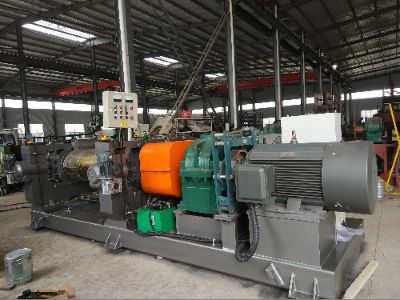
Temperature drift rarely shows up as a sudden failure. It creeps in over hours, shifting baselines and retention times by small increments that stay just under the threshold of a typical QC sample. By the time a late-run QC falls out of spec, you have already lost a batch of data.
The trick is to stop relying on QC samples as your only early warning. Place a system suitability or drift check standard at the start, middle, and end of long sequences—and plot those values before the run finishes. Watch for a steady slope even when individual points are still in range.
Also, log ambient temperature around the instrument. A drifting lab thermostat or a blocked vent can raise the internal temperature enough to shift retention times without setting off any alarm. Catching that trend early lets you pause, correct the airflow, and rerun only a few samples instead of explaining a failed QC to your manager.
Why Your Mill Speed Settings Are Leaving Tonnage on the Table
Most milling crews treat speed as a set-and-forget dial. But ore hardness, liner wear, and circulating load all shift over weeks, and the conservative rpm from commissioning rarely matches current conditions. Running just a few percent below the optimal tip speed can cut impact energy enough that coarse particles survive the chamber, only to reappear in the classifier and pile up as recirculating load. That hidden tonnage never reaches the product bin.
On the flip side, overspeeding has its own penalty. When the shell spins too fast, the media can stick to the liner for too long or get thrown across the mill without tumbling properly. You end up burning energy on motion instead of breakage, and the product comes out with an inconsistent size distribution. Operators often misinterpret this as a hardness problem and start changing feed rates, when the real issue is that the speed setting no longer matches the load.
A quick audit of power draw, bearing pressure, and circulating load at different speeds usually reveals a sweet spot that adds 5 to 10 percent throughput without any capital spend. Even small adjustments—half a revolution per minute—can translate into several extra tons per hour. The trick is to stop treating speed as a fixed constant and start treating it as an operating variable that needs tuning as conditions change.
Feed Sequencing That Keeps the Bank Cool and the Line Moving
A feed sequence that ignores thermal load can turn the bank into a heat trap. When similar parts run back-to-back, the same spindles and tooling stay engaged while others idle, and that concentrated duty cycle pushes temperatures up fast. Spreading the work across different stations—mixing light and heavy cuts, alternating part families—lets the bank shed heat between cycles. The result is a lower, more stable operating temperature that doesn't trigger slowdowns or premature wear.
The line moves when nobody is waiting on a hot spindle or a jammed conveyor. By sequencing feeds so that downstream operations never starve and upstream buffers never overflow, the whole flow stays smooth. Short, predictable bursts of high-intensity work followed by cooler intervals keep every machine in its comfort zone without forcing idle time. It's not about slowing down—it's about arranging the work so the line never has to stop and wait for the bank to recover.
Operators who dial in this kind of sequencing notice the difference in shift-end temperatures and hourly throughput. Cooler banks mean less thermal expansion, tighter tolerances, and fewer emergency stops for overheating alarms. And because the line keeps moving without those small interruptions, the daily count climbs without pushing any single component past its limit. That balance is what keeps both the equipment and the schedule healthy over the long run.
Maintenance Windows That Actually Protect Throughput
Most maintenance windows are scheduled around the calendar, not the load balancer. Teams pick Sunday 2 a.m. and hope for the best, but a quiet clock hour doesn’t mean quiet traffic in every region or for every service. The result is often a planned outage that quietly eats into request rates and latency percentiles, and nobody notices until a dashboard turns red the next morning.
A window that actually protects throughput starts by keeping enough capacity in rotation while work happens. Instead of taking half the instances out at once, drain a small slice, let traffic settle, then move to the next slice. Pair that with health checks that look at real work—error rate, queue depth, p99 latency—not just a process that’s still running. If those signals dip, pause the rollout or roll back before the window becomes an incident.
The measure of a good maintenance window isn’t that nothing broke loudly. It’s that throughput stayed inside its normal band the whole time. Track requests per second and tail latency before, during, and after the change, and compare the maintenance slice against a control group when you can. That turns maintenance from a risky calendar event into a routine capacity exercise.
Automation Upgrades Worth the Payback on a Busy Mixing Floor
When a mixing floor runs at full tilt, every manual step eats into both throughput and consistency. The upgrades that actually return their cost aren't the flashy robotic arms—they're the quiet fixes that remove repetitive strain and human variance. Automated ingredient dosing tied to barcode verification, for instance, eliminates the all-too-common mistake of adding the wrong resin or forgetting a stabilizer. Once operators stop double-checking with a clipboard and start trusting the system, the line speed rises without any safety compromise.
Payback often hides in the least glamorous corners. Auto-purge sequences on extruder screws, triggered by product changeover rather than a timer, cut purge material waste by a third or more on high-changeover floors. Similarly, adding simple load cells under day bins and linking them to the control system prevents dry-running the mixer, which used to mean spoiled batches and a half-hour of cleanup. These retrofits rarely require new machinery—just sensors, a small PLC program, and a couple of shifts for calibration. The real return comes over six to nine months, when scrap reports show a sustained drop instead of a spike after every shift change.
The hidden benefit is operator trust. When automation targets the tasks people hate most—manual sampling from a hot mixer, hand-cranking diverter valves, logging temperatures by hand—the floor staff stop fighting the system and start feeding it better data. One plant we studied paid back a modest upgrade to automatic temperature recording in under four months, mostly by avoiding the rework caused by a tired operator misreading a gauge by ten degrees. On a busy mixing floor, the upgrades worth paying for are the ones that make the next shift easier, not the ones that look good in a brochure.
FAQ
Focus on robust frame construction, large roll diameter relative to batch size, variable friction ratio, effective cooling channels, and a direct drive system that avoids gearbox losses. High-volume mills often include motorized nip adjustment and anti-friction roller bearings to keep cycle times short and consistent.
Every 5°C above the target range can change viscosity enough to alter dispersion quality and extend mixing time. For high-volume production, use drilled rolls with high-turbulence water passages rather than a simple single-pass chamber. This stabilizes the bank and lets you run tighter nip gaps without scorch risk.
Start with the friction ratio and nip gap. A higher friction ratio accelerates shear but increases heat buildup, so pair it with improved cooling. Then adjust batch size: most mills run most efficiently at 70–80% of theoretical fill volume. Finally, pre-blend or preheat the rubber to lower initial viscosity before it reaches the mill.
Daily checks of roll parallelism and bearing temperature, weekly lubrication of nip adjustment screws, and monthly inspection of the emergency stop bar and brake. Also replace worn scraper blades promptly because material carryover increases power draw and reduces effective cooling. Track roll surface wear with a profilometer every 500 hours.
A stock blender continuously cuts and re-feeds the batch across the roll face, which shortens dispersion time by 15–25% and improves batch-to-batch consistency. In high-volume settings, the labor savings and reduced scrap usually pay back the device within a year. It is especially useful for compounds with multiple fillers or viscosity-sensitive polymers.
Monitor the compound’s temperature history rather than just the roll surface temperature. Use a two-stage mixing approach: drop the batch slightly early from the internal mixer and finish on the mill with a wider nip to disperse without excessive heat. Add curatives late, keep the mill area well-ventilated, and never exceed the safe storage time for warm mixed stock.
Retrofit automatic nip gap control with recipe storage, install a vision system to monitor the rolling bank, and add motor current sensors as a proxy for viscosity. These changes reduce operator variation, cut setup time between compounds, and can increase total daily output by 10–20% without modifying the core mill.
In most cases, two smaller mills offer better flexibility and higher system uptime because one can be serviced while the other keeps running. One large mill reduces floor space and capital cost per kg of capacity, but a breakdown stops the entire line. Two mills also allow you to run different compounds or colors without cross-contamination between campaigns.
Conclusion
Operators often chase output by pushing nip gaps tighter and loading larger batches, but the real bottleneck usually hides in how those two settings interact. Overfilling a mill doesn't just strain the motor; it changes the pressure profile across the roll face, causing uneven shear and leaving uncut agglomerates that later show up as scrap. A better target is to keep the bank diameter steady and small enough to roll continuously, not surge. Long runs bring a second issue: temperature drift. As the rolls heat up, viscosity drops, and the same mechanical settings no longer deliver the same work input. Checking surface temperatures at multiple points—not just one spot near the gearbox—catches the drift before QC flags a bad batch. Mill speed settings get overlooked because faster seems better, but above a certain roll speed the bank stops folding properly, so throughput actually falls while energy costs climb.
Feed sequencing matters more than most managers admit. Dumping all ingredients at once forces the front roll to do too much early work, which spikes temperature and can cause the bank to stiffen or break apart. A staged sequence—rubber first, then fillers in smaller cuts, oil last after the batch has cohered—keeps the bank cooler and the line moving without manual intervention. On the maintenance side, the highest-value windows aren't the usual greasing intervals. Checking roll parallelism, bearing clearances, and nip adjustment mechanisms during short planned stops prevents the slow drift that quietly eats capacity. Automation upgrades deserve a hard look only when they shorten changeover time or reduce operator variability in feed timing. Retrofits that merely add data dashboards rarely pay back on a busy floor; better to automate the repetitive weighing and sequence calls so skilled operators can focus on the bank condition and roll temperature. That combination of disciplined manual control and selective automation is what actually protects high-volume throughput.
Contact Us
Contact Person: Chen Zhengwei
Email: [email protected]
Tel/WhatsApp: +86-13963975727
Website: https://www.sfcrubbermachine.com