

China Massage Gun Essentials: Unlock Deep Muscle Relief and Faster Recovery
2026-11-16
Unlocking deep muscle relief and speeding up recovery isn't just for elite athletes anymore. With the rise of high-performance China massage gun essentials, anyone can ease tension and bounce back faster. Among the top contenders, the XINGBU massage gun stands out by blending powerful percussion with thoughtful design—so you can get back to doing what you love, pain-free.
How Percussion Therapy Actually Speeds Up Muscle Repair
When a muscle is worked hard, tiny tears form in the fibers. That damage sounds alarming, but it’s exactly what triggers repair and growth. The catch is that waste products like lactic acid and metabolic debris can pool around the site, slowing down the very cleanup crew your body sends in. Percussion therapy applies rapid, concentrated pulses that physically jostle the tissue. This movement doesn’t just feel good—it helps loosen stagnant fluid, giving your lymphatic system a head start on flushing out what doesn’t belong. With less congestion, the real repair work can begin sooner.
Beyond clearing the mess, those rhythmic beats send a flood of sensory information to your nervous system. Muscle tightness often isn’t just about the muscle itself; it’s about the brain holding onto a protective tension pattern. The vibration acts like a reset signal, temporarily quieting the nerves that keep a muscle semi-contracted. As the firing rate slows, more fresh blood can slip past constricted vessels, delivering oxygen and the amino acids needed to patch up micro-tears. You’re not forcing the muscle to relax—you’re convincing it to stop guarding so tightly, which shifts it into a state where repair can accelerate naturally.
What’s often overlooked is how percussion therapy nudges the fascia, the clingy connective web that surrounds each muscle strand. After intense effort or long periods of stillness, fascia can become tacky and restrict movement at a deeper level. The wave-like pressure from a percussion device helps separate those adhesive spots, reducing sheer stress on the very fibers you’re trying to rebuild. This doesn’t just ease stiffness; it creates a more organized environment for new collagen and protein filaments to align properly. The result isn’t simply faster healing—it’s healthier, more resilient tissue that bounces back with less stiffness the next time around.
Picking a Motor That Won't Quit Mid-Session
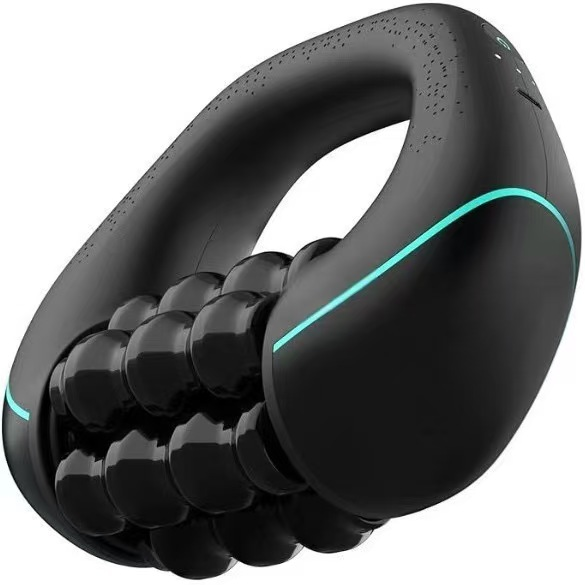
A motor that hums along for an hour and then sputters to a stop isn't just annoying—it can throw off your entire build. What you want is a drive system that matches your application's continuous torque demands, not just its peak numbers. Look past the headline horsepower and check the motor's current rating under load over time; a unit that barely hits its spec at stall may already be on the way to thermal shutdown ten minutes in.
Temperature is the silent session killer. Even a well-spec'd motor can cook itself if it's trapped inside a housing with no ventilation or if the duty cycle pushes it past its rated insulation class. Opt for motors with Class F or H insulation if you expect extended runs, and consider units that integrate thermal cutoff switches or linear current limiting rather than relying on external safeguards you might forget to program.
Finally, match the winding resistance and supply voltage to your real-world running conditions. A motor rated for 12V may fall short on a slightly drained battery pack, while one wound for lower voltage can draw dangerous overcurrent from a fully charged supply. Testing a candidate motor by running it loaded for a full session's duration before committing to the design will reveal whether it's really up to the task—or just another part that quits when you're deep in focus.
Attachment Heads You'll Actually Use (and the One You'll Ignore)
Let’s be honest: most vacuum cleaner attachments stay buried in the closet, still wrapped in plastic. But there are a couple that earn their keep every single week. The crevice tool, for instance, is the unsung hero of baseboards, car seats, and that impossible gap between the fridge and the counter. It slips into spaces your main head could never dream of reaching, and once you start using it, you’ll wonder why you ever tried to edge-clean with a bulky floor nozzle. Another game-changer is the dusting brush—soft bristles that gently lift grime from lampshades, bookshelves, and even delicate curtains without snagging or scratching. These two heads alone turn a basic vacuum into an all-over-the-house tool, not just a carpet drone.
Then there’s the upholstery tool, which often looks like a downsized floor head but works wonders on fabric. It pulls pet hair off sofas, mattresses, and dining chair cushions with shockingly little effort. I used to rely on lint rollers and sticky tape; now I just run this small marvel over the cushions and watch fur and crumbs vanish. It’s also brilliant for refreshing the inside of a car—especially the back seat, where crumbs seem to multiply on their own. If you have pets or kids, this attachment will quickly become a non-negotiable part of your cleaning arsenal.
And the one you’ll ignore? It’s almost always the turbo brush—the tiny, spinning roller designed for stairs or pet hair on low-pile surfaces. It promises deep-cleaning action, but in practice it jams if you look at it wrong, tangles with hair after three passes, and makes a noise like a dentist’s drill. Most people try it once, spend ten minutes cutting hair off the roller, and quietly slide it back onto the closet shelf. You’ll get better results from a rubber-bristle handheld tool or even a damp cloth. Save your time and just leave that one in the box.
The Stall Force Sweet Spot for Hard-to-Release Knots
Not all knots behave the same under load. Some bind so tightly after heavy tension that releasing them becomes a battle, while others slip dangerously with too little. The trick lies in recognizing the stall force sweet spot—the narrow range of pull where a stubborn knot temporarily loosens its grip just enough to be worked free. This zone often appears when you back off the load slightly, then apply gentle, pulsing tension that breaks the initial friction without re-seating the knot deeper.
Knots that gain a reputation for being difficult to untie usually depend on interlocking wraps that compress under load. Once the cord relaxes past a certain threshold, those wraps start to separate but may immediately lock again if the line goes slack. The sweet spot sits right where the cord’s elasticity still provides a small amount of expansion, allowing you to manipulate the knot’s structure without losing all control. Rock climbers and sailors both learn to hunt for this state intuitively, feeding line back and forth until they feel the knot breathe.
Dialing in that perfect stall force often separates a frustrating session from a clean, efficient one. It takes practice to read the subtle changes in a knot’s shape—a slight roll, a gap widening between strands—that signal it’s ready to yield. Instead of resorting to tools or brute strength, you work with the rope’s own mechanics, turning a potentially locked-up tangle into something that comes apart with deliberate, soft handling.
Battery Life Myths That Drain Your Recovery Routine
Chasing a full charge every single time feels responsible, but it quietly sabotages your recovery rhythm. Lithium-ion cells thrive on partial, mid-range cycling—keeping them constantly pegged at 100% actually accelerates chemical aging. The anxiety of watching for that green icon can override signals from your own body, turning a simple recharge into a low-grade stress loop that lingers well after you unplug.
Another persistent myth treats overnight charging as harmless background noise. Your device will sip power safely once full, but the real drain isn’t electrical—it’s the mental residue. A phone glowing with notifications, even silently, keeps fragments of your attention tethered to the day’s demands. Deep recovery requires a clean break, and that means breaking the habit of using your charging station as a digital anchor while you sleep.
Many of us believe that closing apps preserves battery and, by extension, protects our evening calm. In truth, force-quitting and relaunching tasks demands more energy than simply letting the system manage its own memory. The constant micro-managing eats into mental bandwidth, leaving less room for the genuine stillness recovery relies on. The drain you feel isn’t coming from the battery percentage—it’s coming from the tic of unnecessary control.
Why Your Warm-Up and Cool-Down Are Missing This Step
Most people still treat a warm-up as five minutes on a treadmill followed by a few half-hearted quad stretches, and cool-downs are often just an afterthought of static holds while checking a phone. What’s glaringly absent is any form of ground-based, primal movement that wakes up the nervous system and restores natural joint articulation. Without it, you’re only preparing muscles in isolation, leaving coordination, reaction time, and deeper stabilizers completely offline when you actually need them.
Integrating movements like crawling, rolling, and deep squat transitions does something that traditional routines cannot—it reconnects the brain and body through cross-body patterns and vestibular input. These primal patterns activate the smaller intrinsic muscles around the spine, hips, and shoulders that static stretching ignores, dramatically lowering the chance of injury once you ramp up intensity. They also teach your joints to move through full, controlled ranges rather than the limited, repetitive arcs most workouts reinforce.
Try bookending your session with just four to five minutes of floor work: slow bear crawls for shoulder and hip stability, segmental rolling to unlock the spine, and a controlled deep squat with overhead reach to open the ankles and thoracic spine. During the cool-down, revisit these same moves with an emphasis on breathing and unwinding tension instead of collapsing into passive stretches. This approach turns warm-ups and cool-downs into skill practice, keeping you mobile, reactive, and resilient session after session.
FAQ
It’s all about percussion therapy – the gun fires rapid bursts into the muscle, reaching layers that a foam roller never touches. I’ve found the key is a motor with consistent torque; cheap ones fade under pressure, but good machines keep hammering through tight spots, increasing blood flow and breaking up adhesions.
The manufacturing ecosystem there is massive, so you get high-end components like brushless motors at a fraction of the cost. I’ve used models that rival brands costing three times more, with quieter operation and longer battery life. It’s not about copying, it’s about refining the tech to be more user-friendly.
Amplitude. If the head only moves 6mm, you’re just vibrating the skin. You need at least 10mm to get that deep, satisfying thump. I learned this the hard way – my first gun tickled; my second one, with 12mm travel, actually untied the knots in my back after deadlifts.
Absolutely, but how you use it matters. I target the swollen muscles right after exercise for about 60 seconds per area, using a medium pace. It helps flush out metabolic waste and reduces next-day soreness. Contrast that with stretching alone – it’s a different level of preparedness for the next session.
Stay clear of the spine, throat, and any areas with varicose veins or recent injuries. I once saw a guy work on his hip bone – definitely not. Also, go easy around the knees. Stick to meaty parts and use a soft head on sensitive spots like the inner thigh.
People often jam the gun into a knot and hold it still, hoping it’ll melt away. That’s a recipe for bruising. You need to keep it gliding slowly over the muscle, like an iron. And don’t use the highest setting right out of the box; build tolerance.
Most newer ones have a ‘silent’ mode, but it’s not just about the decibels. I look for models with a stabilized drive and rubberized housing. Actually, a drop of lubricant on the shaft every few weeks can cut friction noise dramatically. I can use mine while my kid naps just down the hall.
Yes, the battery management system matters. I avoid running it to zero; I recharge when it hits 20%. Some guns have replaceable batteries which is a huge plus. I’ve had my current one for over a year and it still powers through three full body sessions before needing a plug.
Conclusion
A quality massage gun isn’t just a luxury gadget—it rewires how your muscles recover when used with purpose. Percussion therapy drives rapid-fire pulses deep into tissue, boosting blood flow and flushing out metabolic waste, which directly shortens the time it takes micro-tears to heal after a tough workout. But that promise hinges on a motor that can sustain consistent speed and amplitude without fading halfway through a session; a cheap brushless unit often overheats and loses rhythm, turning a targeted treatment into a feeble buzz. The real difference shows in the attachment heads that actually matter—a dense ball for large muscle groups, a bullet tip for trigger points, and a flat head for dense areas like quads, while the oddly shaped multi-prong accessory usually collects dust. When you’re working on a stubborn knot, the magic lies in stall force: too little and the gun stalls at the slightest pressure, too much and you risk bruising. The sweet spot lets you lean in just enough to coax the muscle into letting go.
Most people sabotage their recovery without realizing it, buying into battery life claims that don’t hold up at high intensity. A device that promises six hours on paper might barely last two when you’re grinding through deep tissue at top speed, so it’s smarter to check real-world runtime at the settings you’ll actually use. More importantly, missing the percussion step in your warm-up and cool-down leaves gains on the table: a brief sweep over activating muscle groups before exercise preps the nervous system and improves range of motion, while a slower pass afterward calms the sympathetic response and eases the transition into repair mode. Integrating these habits transforms the massage gun from a simple pain-relief toy into a non-negotiable performance tool that keeps you training harder with less downtime.
Contact Us
Contact Person: Hannah
Email: [email protected]
Tel/WhatsApp: +86 18266954198
Website: https://www.okmassager.com/