

Coal-Based Powdered Activated Carbon Manufacturer: Crafting High-Performance Purification Solutions
2026-07-20
Behind every sip of clean water and every breath of purified air lies a silent workhorse: coal-based powdered activated carbon. Yet not all carbon is created equal—the real difference is forged in manufacturing precision and material science. Tundrr has turned this intricate craft into a science, engineering bespoke high-performance solutions that push the boundaries of what purification can achieve. But how does a manufacturer transform something as simple as coal into a contaminant-trapping powerhouse? The answer might reshape how you think about clean.
Why Coal-Based Powdered Carbon Outperforms in Critical Filtration
Coal-based powdered activated carbon brings a unique set of physical properties to demanding filtration systems. Its highly developed microporous structure, with pore diameters often below 2 nanometers, creates an immense internal surface area—typically exceeding 1,000 m²/g. This vast landscape of adsorption sites traps dissolved organic contaminants that granular media simply miss. The material’s hardness also matters: it resists attrition during backwashing and handling, producing fewer fines that could otherwise foul downstream membranes.
In practice, this carbon form excels at removing disinfection byproduct precursors and taste-and-odor compounds from drinking water. Municipal plants rely on it to meet tightening regulations on trihalomethanes and haloacetic acids without overhauling existing infrastructure. The rapid kinetics mean a short contact time achieves target removal rates, making it ideal for emergency spill response and seasonal algae blooms. Unlike coconut-shell alternatives, coal-based types often show better performance on large-molecular-weight compounds like humic acids, which are pervasive in surface water sources.
Cost-effectiveness goes beyond the initial price tag. Coal-based powdered carbon offers a lower reactivation frequency when compared to some lignite grades, and its higher density settles faster, simplifying clarifier design. Industrial users in chemical and pharmaceutical sectors value its consistency—tight control over activation parameters yields a product with predictable performance batch after batch. When filtration integrity cannot be compromised, this reliability, paired with robust contaminant removal, explains why it remains the default choice for critical applications.
Inside the Manufacturing: How We Turn Raw Coal into High-Surface-Area Carbon
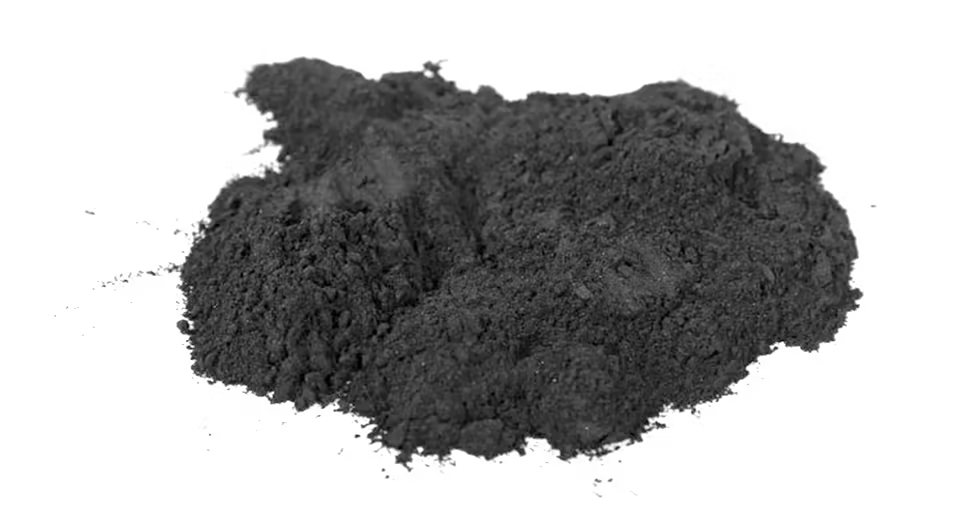
Our process begins with selecting the right grade of coal—typically bituminous or anthracite—which undergoes meticulous crushing and sizing to ensure uniform particles. This feedstock is then subjected to a controlled thermal treatment in an oxygen-starved environment, preventing combustion while driving off volatile compounds. The resulting char retains the carbon skeleton but with limited porosity, setting the stage for the real transformation.
The activation phase is where surface area explodes. We use a physical activation method, exposing the char to steam or carbon dioxide at temperatures exceeding 900°C. These gases etch away at the carbon structure from the inside out, creating an intricate network of micropores and mesopores. By precisely tuning the activation time, temperature, and gas flow, we can dial in surface areas that routinely surpass 1,000 square meters per gram—turning dense coal into a lightweight, sponge-like material.
Post-activation, the material is cooled, washed to remove any residual ash, and milled to the desired particle size distribution. Every batch undergoes rigorous quality checks, including BET surface area analysis and pore size distribution measurements. The end product is a high-purity, high-surface-area carbon ready for demanding applications like supercapacitors, water filtration, or advanced catalysis—where its vast internal landscape makes all the difference.
Tailoring Pore Structures for Specific Contaminant Removal
The relationship between pore geometry and contaminant capture is far from trivial—different pollutants demand distinct spatial accommodations. For bulky organic molecules like dyes or humic substances, mesopores in the 2–50 nm range provide the necessary accessibility, whereas microporosity below 1 nm becomes a bottleneck, excluding these larger species entirely. Conversely, volatile organic compounds or small gas molecules such as CO₂ are best trapped in ultramicropores, where overlapping potential fields drive physisorption at low partial pressures.
Designing sorbents with a bimodal pore network often yields superior performance for mixed contamination. A successful strategy involves creating interconnected micro- and mesopores that act in concert: the wider channels facilitate rapid intraparticle diffusion, reducing kinetic limitations, while the constricted micropores confer selectivity through size exclusion or enhanced binding energies. This hierarchy is particularly effective in water treatment scenarios where both trace pharmaceuticals and dissolved organic matter must be removed simultaneously without competitive displacement.
Precision in pore shaping extends beyond simple size control. Surface curvature, neck dimensions, and the connectivity of the void space can all be manipulated to favor one contaminant over another. For instance, carbonaceous adsorbents with slit-shaped micropores exhibit a marked preference for planar aromatic pollutants over non-planar analogs, a consequence of enhanced van der Waals interactions within the confinement. By tuning synthesis conditions—such as template selection or activation protocols—it becomes possible to engineer materials that discriminate at the sub-nanometer level, achieving removal efficiencies that generic porous solids cannot match.
The Sustainability Edge: Reactivation and Waste Reduction in Carbon Production
Reactivation breathes new life into spent carbon materials, slashing the need for virgin resources and curbing the mountains of waste that often end up in landfills. This process isn’t just a technical tweak—it’s a fundamental shift in how we view industrial byproducts. Instead of discarding used carbon, we thermally treat it to restore its porous structure, making it as effective as freshly produced material. The result? A closed-loop system that significantly lowers the carbon footprint of manufacturing operations, while preserving the high-performance characteristics industries rely on.
Waste reduction in carbon production goes beyond reactivation alone. By fine-tuning activation parameters and adopting lean manufacturing principles, producers are minimizing off-spec material and dust losses that were once considered unavoidable. Modern facilities now capture and reuse fine carbon particles, converting what was previously a disposal headache into a valuable input stream. This meticulous attention to material efficiency not only conserves resources but also reduces the environmental burden associated with mining and transporting raw materials. It’s a quiet revolution—one that turns waste into worth without compromising output quality.
The sustainability edge isn’t just an operational upgrade; it’s a strategic advantage. Companies embracing reactivation and waste reduction find themselves less exposed to volatile raw material markets and tightening environmental regulations. They’re also meeting the growing demand from downstream customers for greener supply chains. In an era where resource stewardship is no longer optional, mastering these techniques separates leaders from laggards. It’s proof that smart engineering and ecological responsibility can go hand in hand, delivering durable economic and environmental returns.
Beyond Water: Expanding Applications of Powdered Activated Carbon
Powdered activated carbon has long been synonymous with water purification, where its porous structure traps contaminants and improves taste and odor. Yet its potential reaches far beyond treatment plants. Industries are now harnessing its adsorption prowess in unexpected ways, from air filtration systems that strip volatile organic compounds out of indoor environments to medical applications where it acts as an emergency antidote for poisoning. The material’s high surface area and customizable pore sizes make it adaptable to a range of challenges that water alone cannot solve.
In the food and beverage sector, powdered carbon plays a quiet but critical role. It decolorizes sugar syrups, removes impurities from edible oils, and polishes wines and juices without altering their desired flavor profiles. Pharmaceutical manufacturing also depends on it to purify active ingredients and remove color bodies from intermediates. These processes leverage carbon’s ability to take out what is unwanted while leaving behind what is essential, often at a fraction of the cost of more complex separation methods.
Energy storage is another frontier where this humble black powder is making a difference. Researchers are engineering carbon materials for supercapacitors and battery electrodes, where porosity translates directly into higher performance. Environmental remediation projects use it to lock up soil contaminants or capture mercury from flue gas. Even automotive cabin filters and protective masks benefit from its ability to scrub air clean. As material science advances, the line between simple filtration and high-tech solutions continues to blur, proving that the value of powdered activated carbon lies in its versatility.
Choosing a Partner for Reliable Purification: What Sets Our Carbon Apart
Carbon isn’t just carbon—it’s a precision tool. In purification, the right pore structure transforms adsorption from guesswork into predictability. Our material is engineered with a tightly controlled distribution of micropores and mesopores, ensuring it captures target molecules while letting others pass. This isn’t about having the highest surface area on paper; it’s about having the surface area that actually works for your process, cycle after cycle.
Consistency is the silent promise behind every shipment. While many suppliers treat activated carbon as a commodity, we treat it as a performance material. Each batch undergoes rigorous testing against reference standards, not just for iodine number, but for particle size uniformity, abrasion resistance, and dynamic adsorption capacity under flow conditions that mimic your real-world setup. The result is a product that behaves identically whether you’re running your first bed volume or your ten-thousandth.
Choose a partner who understands that purification is a system, not just a consumable. Our technical team doesn’t disappear after the sale; we work alongside your engineers to optimize contact time, bed depth, and regeneration cycles. From residual odor removal in food-grade streams to trace metal scavenging in pharmaceutical intermediates, we bring a troubleshooting mindset that turns your toughest purity targets into achievable specifications. When the cost of failure is measured in batches, not pennies, that difference defines the partnership.
FAQ
We focus on precision activation processes that maximize porosity without compromising hardness. Our carbon consistently delivers higher iodine numbers and faster adsorption kinetics, which means fewer filter changeouts and lower operating costs for your purification systems.
Absolutely. Our products are widely used in water treatment facilities for removing organic contaminants, in the food and beverage industry for decolorization and purification, and in pharmaceutical manufacturing for API purification. We also supply to automotive emission control and air purification sectors.
We operate a full in-house quality control lab where every production batch undergoes rigorous testing for parameters like MB value, molasses number, and particle size distribution. We also retain samples for five years for traceability.
Yes, we regularly tailor our products—whether you need a finer particle size for faster dispersion or a specific surface area for targeted adsorption. Our technical team works closely with your engineers to develop a solution that fits your process.
We use carefully selected bituminous coal from consistent sources. This coal type provides a robust base with inherent mesopore structure, which is ideal for adsorbing mid-to-large molecular weight pollutants, offering an excellent balance between capacity and mechanical strength.
We’ve invested in advanced tail-gas treatment and energy recovery systems. Exhaust gases are purified through scrubbers, and waste heat is captured to pre-heat steam used in activation, significantly reducing our carbon footprint per ton of product.
Our support extends beyond delivery. We offer on-site adsorption isotherm testing, assistance with process optimization, and rapid troubleshooting. Think of us as an extension of your engineering team.
While we may not be the biggest, our agility allows us to respond faster to custom requests and urgent orders. We provide competitive pricing without skimping on quality, and you’ll always deal directly with our chemists and engineers—no bureaucratic layers.
Conclusion
Coal-based powdered activated carbon stands out in critical filtration due to its exceptional hardness, high density, and a naturally developed pore network that delivers rapid adsorption kinetics. Our manufacturing process begins with carefully selected bituminous coal, which is pulverized, blended with binders, and subjected to controlled carbonization and steam activation. This generates a product with an immense internal surface area—often exceeding 1000 m²/g—ideal for trapping a wide spectrum of contaminants. What truly differentiates our approach is the ability to fine-tune pore size distributions, creating predominantly microporous, mesoporous, or blended structures that selectively remove target molecules, from trace organics in drinking water to colorants in food processing. The result is a tailored purification tool that outperforms generic carbons in speed and capacity.
Beyond performance, we embed sustainability into every stage. Spent carbon can be thermally reactivated on-site or at our facilities, recovering up to 95% of its original adsorptive capacity while drastically reducing waste and fresh carbon demand. This circular model is particularly valuable in large-scale applications like municipal water treatment, where powdered carbon also controls taste, odor, and emerging contaminants. Its utility, however, extends far beyond water: our carbon purifies flue gases, decolorizes pharmaceuticals, and reclaims precious metals in mining. Partnering with us means gaining more than a material supplier—you access decades of technical expertise, consistent quality backed by rigorous testing, and a collaborative mindset that adapts our carbon to your evolving purification challenges. That is how we craft high-performance solutions that truly make a difference.
Contact Us
Contact Person: Ellen Zhang
Email: [email protected]
Tel/WhatsApp: +86(21) 2287 6756
Website: https://www.tundrr.com/en/