

Corrugated Box Factory Operations That Strengthen Packaging Supply Chains
2026-11-16
Most supply chain failures don't start on the highway. They start inside the corrugated box factory, where board caliper drifts, scores crack, or glue lines run thin. Those small shifts quietly weaken the cases that protect everything downstream. That is why box plant operations deserve a closer look. At Imagine Craft Packaging, we treat corrugated manufacturing as the quiet backbone of packaging supply chains—where operational discipline turns into stronger boxes, fewer damages, and more reliable delivery performance. Here is a look at the factory-floor details that keep supply chains from buckling.
Where Board Production Sets the Pace for Downstream Reliability
Reliability problems that surface during assembly or field use often have their roots in decisions made long before components touch the board. A laminate pressed with uneven heat rise can lock in internal stress that stays quiet through electrical test, then shows up as pad lifting or barrel cracking after a few hundred thermal cycles. The same is true for drilled holes: rough sidewalls, smear left in the barrel, or over-aggressive desmear can weaken the copper-to-resin bond in ways that simple continuity checks never expose. None of these conditions are dramatic on day one, yet they set the ceiling for how long the finished product can survive.
Copper distribution is another place where the board process quietly dictates downstream results. Panel plating that favors high-current-density edges produces traces with slightly different thicknesses from center to edge, which may pass a bare-board test but create impedance drift or uneven current handling once the board is loaded. Fabricators that control anode placement, bath chemistry, and pattern plating uniformity give designers a much more predictable canvas. It is less about meeting a single tolerance number and more about shrinking variation across every panel, every batch, and every layer.
Cleanliness and final finish chemistry tend to get attention only after a wetting failure or a corroded joint appears, but they are also governed upstream. Residues trapped under solder mask, inconsistent micro-etching before final finish, or an ENIG surface with the wrong nickel-to-gold balance can all undermine solder joint integrity without being visible in routine inspection. When board production treats these steps as process variables rather than cosmetic checkpoints, downstream assembly gains the margin it needs for consistent wetting, stronger intermetallic formation, and fewer latent field returns.
Converting Lines That Turn Corrugated Sheet into Ship-Ready Precision
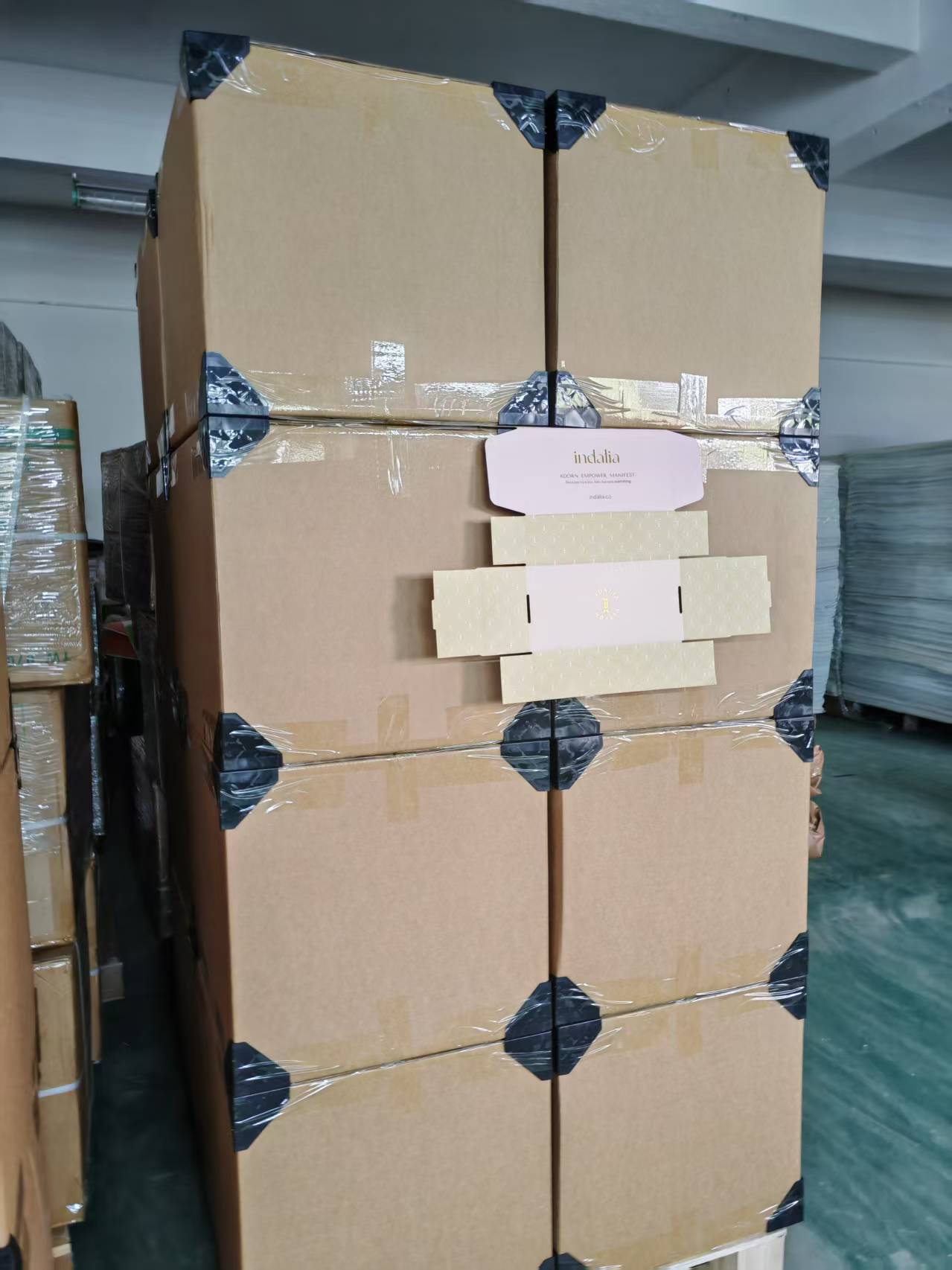
A stack of corrugated sheets enters the converting line as a raw, oversized panel, and within seconds it gets scored, slit, and trimmed to a footprint that matches the final carton exactly. The difference shows up in the fold registers: crease depths stay consistent across the full run, so the flaps stay square without needing a second pass. Operators tend to notice this most during mixed-order days, when the line moves from one box style to another without drifting out of tolerance.
The ship-ready part comes from what happens after cutting. Bundles leave the end of the line already counted, squared, and strapped in layers that fit a standard pallet or container without re-stacking. That removes the usual staging area chaos, where half-finished piles wait for someone to hand-count and re-align them. Instead, the stack heights and strap tension are set to survive a rough truck ride, not just look neat at the end of a shift.
What makes the precision hold across different board grades is the way the line adjusts for flute thickness and caliper without forcing the operator into constant fine-tuning. Short runs and rush jobs slot in without a lengthy setup ritual, and the waste from first sheets stays low because the machine positions its tools from saved job data rather than trial cuts. By the time the last bundle is wrapped, it already meets the loading dock’s expectations, which is a better finish line than a pile that merely fits the die.
How Quality Gates at Every Station Prevent Costly Supply Chain Drift
Quality gates work best when they are treated as tripwires, not as final inspection points. At station three, a small drift in bore diameter gets caught before welding hides it under new material. That stop may cost twenty minutes, but it prevents a week of chasing down defective housings that already made it through four downstream processes.
The larger effect is behavioral. Once operators know the next station can reject their output, they start adjusting earlier, often within the same shift. Responsibility moves out of a central quality office and onto the line, where the first signs of tool wear or temperature shift actually appear. The result is fewer quarantined batches, less rework, and steadier throughput.
Without those gates, drift tends to accumulate quietly. A new material lot, a dull insert, a slight change in coolant temperature—none looks significant at first. By the time a later station notices, the problem has already multiplied across orders. Gated checkpoints shorten that feedback loop, turning what could become a plant-wide shortage into a quick correction at one machine.
Inventory and Scheduling Tactics That Keep Packaging Flowing During Demand Swings
Static safety stock formulas rarely survive contact with real demand swings. A more practical approach is to recalculate buffer levels every week using recent order deviation and supplier lead time changes, then push those adjustments only to the SKUs that actually move. This keeps working capital from being tied up in packaging that sits while the volatile items get the coverage they actually need.
Scheduling works better when it leaves deliberate gaps for disruption instead of filling every hour. Grouping low-volume, changeover-heavy formats into one or two focused blocks prevents them from repeatedly breaking the rhythm of long high-volume runs. Where possible, build a small reserve of stable, fast-moving inner packaging during quieter periods so peak capacity can be pointed at the custom or promotional formats that tend to shift without much warning.
Supplier agreements can act as an overflow valve if they are structured around shared visibility. Send a rolling forecast six to eight weeks out and agree on holding semi-finished or unprinted packaging at specific stages. That way, when the demand picture changes, the supplier can complete final printing and converting quickly rather than starting from a blank schedule, which is often where weeks of lead time quietly disappear.
Maintenance Rhythms That Quietly Protect Delivery Commitments
Most teams treat maintenance as the work that happens when promises slip. The teams that rarely miss dates treat it differently: they give upkeep a tempo. Dependency bumps happen on Tuesday mornings, not after discovering a vulnerable library mid-sprint. Database index reviews ride along with feature work, and small refactors are folded into the same pull request as a bug fix. The rhythm is unglamorous, but it prevents the kind of surprise that eats a delivery window whole.
There is also a defensive rhythm around capacity and failure. Quiet teams rehearse failover paths before a big launch, run load tests on staging even when the feature is "just internal," and keep a short list of slow queries they revisit every other week. None of this announces itself in a roadmap. Yet each cadence removes an invisible risk from the critical path, so commitments survive contact with production instead of collapsing into emergency work.
Handoff notes and incident follow-ups form the third beat. When a fix is shipped, a small record gets written; when an alert fires, the response gets tuned. Over time, this produces a maintenance history that lets a new engineer see where the system bends under pressure. It is not glamorous, but it is why the delivery date stays honest.
Using Plant Data to Tighten Lead Times and Reduce Overproduction
Factories often run on plans built days before the work begins, which leaves little room for what actually happens on the floor. When a line slows down, material keeps arriving; when a cell speeds up, downstream stations get buried. Pulling live counts from machines, scanners, and test stands makes those mismatches visible within the shift instead of after the damage is done.
Lead time tightens when release decisions follow actual consumption rather than a fixed schedule. If the morning output is behind the required pace, the next batch can be held at the supermarket or staging area for an hour instead of being pushed into an already crowded line. That single adjustment keeps work-in-process from piling up and prevents finished goods from being made simply because the schedule said so.
Overproduction rarely shows up as a sudden event. It accumulates through small decisions to keep people busy, fill a truck, or use leftover setup time. Plant data gives supervisors a way to challenge those decisions with numbers from the current day, so the conversation shifts from "we always run this quantity" to "this is what the downstream process has actually used."
FAQ
Usually it is not the corrugator itself but the finishing and material staging areas. Die-cutting and flexo printing queues build up quickly when order sequencing is not tied to daily shipping windows. Shops that pre-stage liner and medium by reel width and schedule finishing changeovers around truck departure times tend to hold lead times steadier than those that run purely by order date.
One approach is to monitor combining conditions rather than simply upgrading from 32 ECT to 44 ECT. Consistent starch pickup, proper preheating, and keeping flutes from leaning during the double-backer preserve a surprising amount of top-load strength. A plant that controls warp and caliper variation can often meet performance targets with lighter basis weights.
Because a pallet of boxes sitting between the flexo and the strapper is not available inventory. When operators scan completed units as they leave each work center instead of only at final shipping, planners can reallocate capacity before a late order becomes an emergency. It turns the plant floor into a live scheduling input.
Roll stock ties up both space and working capital, and its quality varies by mill and basis weight. A plant that accepts poor roll hardness or inconsistent moisture will pass those problems downstream as warp, crush, and jam-ups. Building tighter receiving checks around roll condition and matching mill run data to corrugator settings reduces that hidden variability.
Many keep a proportion of daily capacity unassigned until closer to the run window. Instead of filling every slot a week ahead, they hold some flex hours for re-runs, blank repairs, or rush jobs. Combined with short setup times on flexo folder-gluers, this gives the scheduler room to swap jobs without reshuffling the entire board line.
It is less about avoiding catastrophic breakdowns and more about preventing slow drift in registration, glue application, and slot depth. Small misalignments create boxes that are hard to erect on the customer's line, which can disrupt their packing operation as much as a late truck. Regular condition-based checks keep output consistent enough for automated filling equipment.
Finished boxes are bulky and often customer-specific, so excess stock becomes obsolete quickly when artwork or dimensions change. Keeping buffer stock in the form of standard liner and medium grades lets a plant delay final conversion until the exact spec is confirmed. That reduces write-offs while still shortening reaction time.
Often the problem starts before the box is packed, with poor pallet patterns, weak unitizing, or moisture absorbed during staging. Switching to edge protectors, adjusting strap tension, and wrapping pallets closer to dispatch can lower damage rates more effectively than double-walling every order.
Conclusion
Reliability in a corrugated box plant starts with the wet end, not the shipping dock. Board production sets the tempo because starch penetration, tension control, and moisture balance determine whether sheets stay flat and run clean through converting. When the corrugator drifts, downstream lines inherit warp, misregistration, and jam-ups that no amount of finishing speed can fix. Converting lines only turn that sheet into ship-ready precision when scoring and slotting tolerances stay tight. Quality gates at each station work as short, deliberate pauses that catch dimensional drift, print misalignment, or weak bonds before they reach a customer's line, preventing the kind of costly supply chain corrections that show up later as returns or emergency reruns.
Behind the machines, plant data and scheduling choices hold the operation together during demand swings. Inventory is sized to real run rates and supplier variability, not static forecasts, so a sudden order spike does not gut the buffer. Changeover sequencing keeps small orders from strangling throughput, while maintenance follows a rhythm tied to actual wear rather than calendar guesses. This quiet consistency protects delivery commitments because unplanned downtime is the fastest way to miss a truck. Used well, production data exposes where extra speed creates overproduction, where a delay in one area will ripple into another, and where a small adjustment can shorten lead times without adding risk. The result is a factory that absorbs volatility instead of passing it down the supply chain.
Contact Us
Contact Person: Sunnie
Email: [email protected]
Tel/WhatsApp: +8615818596517
Website: https://www.imagine-craft.com/