

ESD Devices Company: Advanced Protection for Sensitive Electronics
2026-07-26
In the world of sensitive electronics, even a tiny static discharge can spell disaster. That's where TPS comes in—a company that redefines advanced protection with robust ESD devices. Forget one-size-fits-all solutions; TPS delivers precision-engineered safeguards that keep your circuits secure and your innovations on track. Ready to discover how they're shaping a more resilient future? Let's dive in.
The Tiny Sparks That Wreak Havoc on Chips
It’s almost invisible, a fleeting jolt that you might not even feel. Yet within the delicate architectures of integrated circuits, a single electrostatic discharge—often no more than a few dozen volts—can bore through oxide layers thinner than a soap bubble. The result is latent damage that escapes immediate detection, only to surface later as erratic behavior or sudden failure.
What makes these sparks so treacherous is their unpredictability. A factory worker’s fingertip, a poorly grounded tool, even the friction of a moving tray can generate enough charge to fry a nanometer-scale transistor gate. The chip might still function, but its reliability has already been compromised, turning every subsequent operation into a gamble.
Industry safeguards like ionized air and wrist straps have tamed the threat, yet complete immunity remains elusive. New materials and shrinking geometries keep pushing the threshold at which a tiny spark becomes a catastrophic event, ensuring that this invisible adversary stays one step ahead.
Why ESD Prevention Is Often an Afterthought
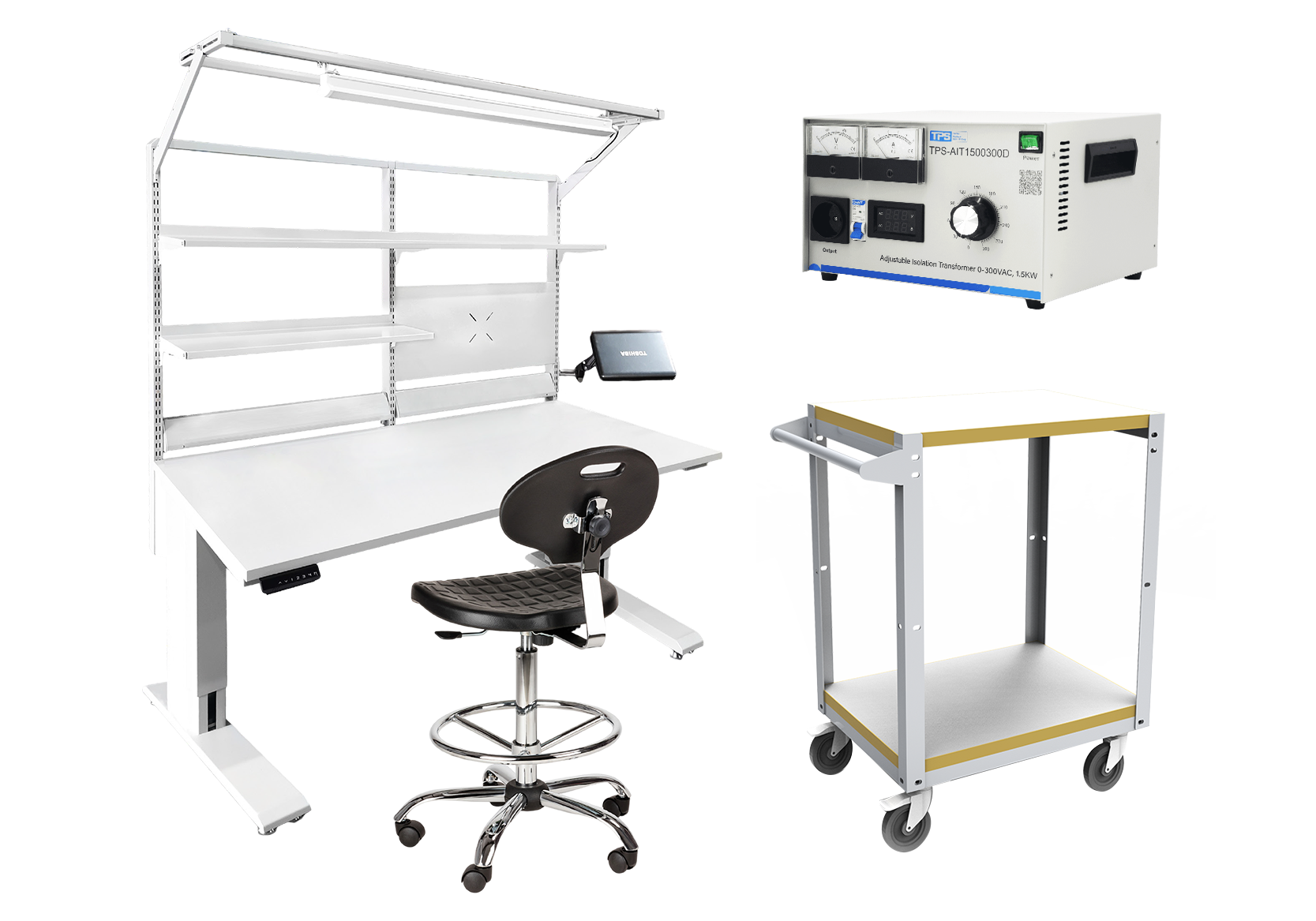
ESD protection tends to slip down the priority list simply because its consequences aren’t always immediate. A device can be damaged by a discharge and still pass initial testing, only to fail weeks or months later in the field. This latent failure mode makes it easy to underestimate the risk, especially when production schedules are tight and visible defects grab all the attention. Without a dramatic, instant failure, it’s tempting to treat static control as a nice-to-have rather than a must-have, until a costly field return forces a rethink.
Another reason is that ESD prevention can feel like an inconvenience on the factory floor. Wrist straps, grounded mats, special packaging—these all add steps and hassles that slow down a fast-moving workflow. Operators might skip protocol when managers aren’t looking, and over time a culture of cutting corners takes root. It’s human nature to focus on immediate throughput instead of invisible hazards, so ESD measures often get neglected until a major customer complaint or an audit reveals just how many corners were actually cut.
Budget conversations also push ESD to the background. Investing in proper flooring, ionizers, and continuous monitoring systems is a hard sell when the payoff is preventing problems that might never be traced back to static. Leadership often approves what delivers measurable ROI, and because ESD damage is notoriously difficult to quantify after the fact, it rarely gets the funding it deserves. Only after a spike in unexplained failures or a costly product recall does the conversation shift from “why spend so much?” to “why didn’t we do this sooner?”.
Rethinking Protection: Beyond the Wrist Strap
Protection for wearables has long been synonymous with the humble wrist strap—a simple loop that catches a fall. But as devices become smarter and more integrated into our lives, this one-size-fits-all approach feels increasingly insufficient. A strap might prevent a drop, but it does nothing against scratches, impacts, or the daily wear that dulls a screen and weakens seals. It's time to look beyond that single point of failure and consider how protection can be layered, adaptive, and even invisible.
Modern protection demands a rethink from the ground up. Instead of relying on a dangling tether, materials like self-healing polymers can absorb shocks and erase micro-scratches on their own. Engineers are exploring designs where the device shell flexes to deflect force, while internal damping systems cradle sensitive components. Even the way we interact with our gadgets is changing: gesture controls and haptic feedback reduce the need for constant physical contact, naturally lowering the risk of accidents. Protection shouldn't be an afterthought—it should be baked into how the device is worn and used.
The next frontier lies in smart protection that anticipates danger. Imagine a wearable that senses an imminent slip and releases a temporary adhesive back coating, or a case that changes texture when it detects a hard surface approaching. These aren't gadgets in themselves, but seamless extensions of the device, active only when needed. By moving past the wrist strap and embracing intelligent, multi-layered solutions, we can finally protect our devices in ways that match how we live with them—unobtrusively, elegantly, and effectively.
The Hidden Weak Points in Your Hardware Defense
Most organizations invest heavily in firewalls and endpoint detection, yet overlook the firmware that sits beneath the operating system. UEFI and BIOS-level implants can survive complete hard drive wipes and reinstallations, making them a perfect staging ground for persistent attackers. These low-level components rarely get the same auditing attention as software stacks, and few incident response plans account for compromises at this depth. Regular firmware integrity checks, signed update verification, and hardware root-of-trust mechanisms are not optional extras—they are essential for closing this gap.
Physical access is another blind spot that remote-first strategies often neglect. A misplaced USB drive, an unmonitored docking station, or a poorly secured server room can undo years of network hardening in seconds. Attackers who gain brief in-person access can deploy DMA attacks over Thunderbolt ports, manipulate boot order, or install keystroke loggers that evade software detection. Defenses like port disablement via group policy, tamper-evident seals, and strict visitor protocols rarely make it into the risk register, yet they address threat vectors no firewall can stop.
Supply chain interdependencies introduce one more layer of hidden risk. Even when an organization locks down its own infrastructure, it often inherits vulnerabilities from third-party hardware components—baseboard management controllers, network interface card firmware, or pre-installed management engines. These elements frequently ship with default credentials or outdated code, and they operate with elevated privileges that are invisible to most monitoring tools. Comprehensive hardware defense demands mapping every embedded controller, applying vendor-hardening guides, and treating OEM defaults as liabilities rather than neutral starting points.
How We Build Unshakeable Circuit Shields
Every shield starts with a relentless obsession over substrate integrity. We don’t just slap copper onto a board and call it protected. Our team painstakingly evaluates the thermal expansion coefficients, dielectric constants, and moisture absorption rates of every material—right down to the glass weave style. This granular approach eliminates micro-fractures before they have a chance to form, ensuring the shield itself doesn’t become a failure point under thermal cycling or vibration.
From there, we layer in a proprietary multi-stage deposition process that bonds the shielding alloy at a molecular level. Unlike conventional spray-on or adhesive films, our method creates a gradient interface that flexes with the board rather than fighting it. We then subject every batch to a gauntlet of torture tests—including 1,000-hour salt fog, rapid decompression, and high-G shock—until we’re satisfied that the only thing getting through is the signal you intended.
The final piece is our manual inspection protocol, which borders on obsessive. Automated optical systems get a first pass, but our senior technicians personally audit every critical trace under a microscope, looking for subtle grain boundary anomalies that algorithms still miss. It’s slow, it’s costly, and it’s exactly why circuits under our shields keep humming long after others have surrendered to the elements.
Future-Proofing Electronics Against Static Chaos
As electronic devices become more compact and integrated, their vulnerability to electrostatic discharge grows in ways that many designs still underestimate. A single spark, too faint to feel, can degrade sensitive junctions over time or cause instant, inexplicable failure. Future-proofing starts with acknowledging that static threats are not random accidents but predictable events in manufacturing, handling, and even daily use. By embedding protection into the earliest stages of component selection and board layout, engineers shift from reactive fixes to resilient architectures that keep functioning long after traditional safeguards would have failed.
One often-overlooked approach is the strategic use of transient voltage suppression not as a last-ditch clamp but as an integral part of signal integrity design. Pairing low-capacitance TVS arrays with intelligent routing can divert harmful currents away from critical nets without compromising data speeds. The physical placement of these protectors, down to the millimeter, determines whether a discharge gracefully shunts to ground or finds a destructive path through your processor. This kind of finesse separates designs that merely meet compliance from those that genuinely thrive in static-heavy environments like factory floors, automotive dashboards, or outdoor IoT nodes.
Beyond the board, a future-proof mindset also means anticipating the long-term drift in protection components. Varistors age, clamping voltages shift, and polymer-based suppressors can fatigue after repeated surges. Embedding small, real-time monitoring circuits that track leakage currents or residual pulse counters gives the system self-awareness—flagging protection degradation before it becomes a liability. In an era where electronics are expected to operate unattended for a decade, such precautions aren't over-engineering; they're the quiet foundation that prevents static chaos from ever becoming a crisis.
FAQ
We prevent costly damage from electrostatic discharge, which can silently degrade or destroy sensitive components during production and everyday use.
Our designs use ultra-low clamping voltages and multi-stage protection architectures, reacting in picoseconds to shield circuits without interfering with high-speed signals.
Automotive electronics, 5G infrastructure, medical devices, and IoT products rely on our components—anywhere miniaturization meets harsh real-world environments.
We embed proprietary active rail clamps within the protection path, giving system designers a single chip that handles both ESD and transient surges with fewer parts.
It’s about long-term reliability and signal integrity. Cheaper parts degrade and leak current after repeated strikes; ours maintain performance through thousands of ESD events, reducing field failures.
We provide reference layouts, system-level simulation models, and direct engineering review—essentially functioning as an extension of the customer’s design team.
All products exceed IEC 61000-4-2 Level 4 requirements, and many are qualified for AEC-Q100 for automotive use, with in-house testing that goes beyond the datasheet limits.
We develop near-zero capacitance structures that preserve signal eye diagrams up to 40 Gbps, ensuring super-speed data lines stay protected without sacrificing performance.
Conclusion
At the microscopic level, mere sparks can silently cripple advanced electronics—static discharges so small they often go undetected until a critical failure occurs. Despite the billions lost to latent damage and sudden malfunctions, ESD prevention is still treated as an afterthought in many design cycles, with reliance on basic wrist straps and grounding mats that leave glaring gaps. Modern hardware harbors hidden weak points in high-speed interfaces, sensor nodes, and power rails that cannot be shielded by conventional methods alone. Without a systematic approach, these vulnerabilities remain, quietly threatening the long-term reliability of sensitive components.
Our solutions transcend outdated measures by embedding multi-stage transient suppression directly into circuit pathways, creating resilient shields that adapt to the escalating demands of smaller geometries and faster data rates. We identify and fortify overlooked entry points—from connector bodies to firmware-handled resets—ensuring end-to-end immunity. By incorporating material science breakthroughs and predictive modeling, we not only harden today’s designs but also anticipate the static challenges of tomorrow’s technologies. This proactive engineering ethos transforms ESD protection from a compliance checkbox into a durable competitive advantage, securing performance across the product lifecycle.
Contact Us
Contact Person: Lily
Email: [email protected]
Tel/WhatsApp: +49 (0) 2161 49526-0
Website: https://tps-elektronik.com/en/