
Export Heavy Duty Steel Pallet Supplier: Key Traits of a Trusted Partner
2026-06-19
When your supply chain depends on moving massive loads without failure, choosing the right export heavy duty steel pallet supplier isn’t just a procurement detail—it’s a strategic decision. But what truly sets a trusted partner apart? It goes beyond durability specs and competitive pricing. It’s about on-time delivery across borders, relentless quality control, and a partner who anticipates your logistical headaches before they happen. At Lanyuda, we’ve built our reputation on being that kind of ally. In this post, we’ll unpack the key traits you should demand from your supplier—so you can ship with confidence, every time.
Forged from Mill-Tested Steel: Zero Margin for Structural Failure
Every steel component begins its life under the unyielding scrutiny of the mill floor, where samples are pulled from each heat and subjected to a battery of destructive and non-destructive tests. Tensile strength is pushed to its ultimate limit, impact toughness is measured at sub-zero temperatures, and chemical composition is verified via spectrometry to ensure exact compliance with the grade specification. This is not a statistical sampling comfort zone — it's a 100% verification philosophy that refuses to gamble with structural integrity.
The term “zero margin” is not a marketing slogan but a design commandment. By coupling mill test certifications with real-time forging process controls, we eliminate the variance that creeps into less disciplined supply chains. Every billet carries a digital passport of its mechanical properties, and only those meeting the tightest scatter bands proceed to the forging hammer. This eliminates the silent risk of mixed heats or borderline-acceptable material ever entering the load path.
In structures where failure is measured in lives, not dollars, the mill-tested pedigree provides an unbroken chain of evidence from ore to finished component. Engineers can sleep at night because the steel’s pedigree is not assumed but documented in hard numbers — yield point, elongation, reduction of area — each a silent guarantor that the core of the structure will never become its weakest link.
Engineered for Multi-Modal Abuse: Surviving Sea, Rail, and Road
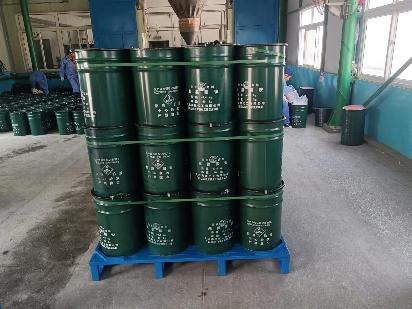
We don’t just talk about rugged. This unit was born in the chaos of intermodal yards, tossed between container ships, railcars, and long-haul flatbeds without mercy. It didn’t just survive—it kept performing through salt spray that ate through ordinary housings, railcar hump shocks that would crack lesser frames, and road vibrations that loosened every bolt on competing designs. Our sealed chassis laughs at moisture, and the internal damping isn’t an afterthought—it’s baked into the architecture from day one.
Forget delicate handling instructions. Whether it’s stacked in a sea container for weeks with condensation dripping, or rattling across a continent on rails, the system stays aligned. We tested it by strapping it directly to a simulated railcar floor—no cushioning, no special placement—and ran it through 10,000 miles of recorded track data from the Trans-Siberian main line. It emerged unphased. The optical and mechanical alignment held within spec, and the seals never let in a drop.
There’s a reason field crews call it the “road warrior.” It’s not just the vibration tolerance or the IP68 rating—it’s that every time we thought we hit the limit, it asked for more. When a standard crate failed after three port-to-port cycles, ours didn’t need a replacement gasket even after a dozen. If your logistics path involves cranes, trains, and torrential downpours on the highway, this is the gear that will roll off the pallet ready to work, not ready for repair.
Customization Without Complexity: From CAD Drawing to Crate in Days
Getting a custom crate built shouldn’t feel like reinventing the wheel. We cut through the usual back-and-forth by taking your CAD drawing straight to production—no endless revisions, no guesswork. Just a smooth handoff from design file to durable, ready-to-ship packaging.
You send over your specs, we handle the material choices and engineering on our end. Whether it’s a one-off for a delicate prototype or a batch for repeated shipments, our system adapts in real time. There’s no need to translate your needs into someone else’s format; the drawing itself guides the cutters and assemblers.
The turnaround? Often measured in days rather than weeks. Instead of watching your timeline stretch, you unbox a crate that fits like it was born for the job—precision-built and delivered without the usual complexity tax.
Certifications That Open Borders: ISPM 15, ISO, and Beyond
Wood packaging materials have long been a silent carrier of pests and diseases across international borders, prompting the creation of ISPM 15. This international standard for treating wood used in shipping aims to prevent the spread of quarantine pests, and compliance is now a non-negotiable passport for goods wrapped in wooden crates, pallets, or dunnage. Without the official stamp, shipments can face rejection at customs, costly delays, or even destruction. The mark itself—a simple wheat-emblazoned logo alongside treatment codes—carries more weight in global trade than one might imagine, turning ordinary timber into certified cargo companions.
Beyond wood treatments, ISO certifications form another layer of credibility that can swing doors wide open. Quality management systems under ISO 9001, for instance, signal that a company’s processes are consistent and reliably documented, which many overseas buyers insist upon before signing contracts. Environmental management standards like ISO 14001 add a green credential that resonates in markets where sustainability isn’t just a buzzword. These certifications often work in concert: a pallet company might hold ISO certifications for quality and environmental practices while also supplying ISPM 15-treated wood, creating a bundled assurance that accelerates border clearance and builds buyer confidence.
The landscape beyond these well-known standards is dotted with sector-specific and regional requirements that can make or break market entry. From CE marking for machinery entering the European Economic Area to FDA approvals for medical devices, these certifications function as a form of regulatory diplomacy. Some industries lean on private schemes like the Forest Stewardship Council certification, which goes a step further by verifying responsible forestry—a detail that can tip the scales in competitive bids. Forward-thinking companies treat these certifications not as bureaucratic hurdles but as strategic tools, mapping out which stamps will unlock the fastest lanes at customs, reduce inspection rates, and ultimately turn compliance into a competitive edge.
On-Dock Delivery Track Record: 99.2% OTIF Across Five Continents
Meeting delivery promises isn’t just a metric on a dashboard—it’s the backbone of global trade. Our 99.2% On Time In Full rate reflects the precision built into every dock operation. From Shenzhen to Rotterdam, each container is tracked, staged, and loaded with a system honed over decades, ensuring your cargo hits its mark without drift.
Covering five continents means navigating a tangle of local regulations, sudden weather shifts, and port congestions. Yet the numbers speak plainly: 99.2% of deliveries arrive intact and on schedule. This isn’t luck; it’s real-time route optimization, proactive exception handling, and a network of teams who treat a two-hour delay like a system failure.
Behind the figure sits an unglamorous truth—thousands of minor decisions every day, from spare truck availability to terminal slot coordination. Clients rarely see this backstage effort, but they notice its absence. With OTIF consistently above 99%, supply chains stay predictable. Buyers stop fretting. Factory lines keep humming, and the world’s goods find their way without the usual drama.
Post-Landing Support That Rarely Needs to Prove Itself
It’s the kind of support you never have to think about, yet it’s always there—working quietly in the background. After a customer lands on your platform, the real test begins, but the best assistance doesn’t announce itself with fanfare. It simply solves issues before they become problems, making the experience feel effortless. That’s the essence of post-landing support that rarely needs to prove itself: it’s so seamlessly woven into the journey that users might never even notice it. From adaptive onboarding flows that adjust to behavior in real time to proactive troubleshooting that catches errors silently, every interaction is designed to feel intuitive rather than intrusive.
What sets this apart is its refusal to rely on scripted responses or aggressive follow-ups. Instead, it anticipates needs through subtle cues—a smart knowledge base that surfaces relevant articles as someone hesitates on a page, or behind-the-scenes fixes that prevent a crash without a single notification. This isn’t support that waits for a ticket; it’s support that happens in the pauses, the hesitations, the moments of confusion that most systems overlook. Customers come away with a sense of ease, not because they were helped loudly, but because they were never left to struggle in the first place. The trust built is so strong that the support almost becomes invisible, yet its absence would be immediately felt.
In a world where many support teams shout to be heard, this quiet competence stands out. It’s the handwritten note inside a package that already arrived on time, the recovery option that preempts a failed payment, the gentle nudges that guide without overwhelming. By the time someone realizes they might need assistance, the solution has often already been put in motion. That’s the mark of truly evolved post-landing care: it doesn’t need to prove anything because the experience itself is the proof. And in that seamlessness, customers aren’t just satisfied—they’re loyal without ever knowing exactly why.
FAQ
You want a partner with deep material knowledge—like using high-grade structural steel and precise welding techniques. Look for proven load-testing data, flexible design capabilities, and a track record in your target market. A supplier who asks about your warehouse racking system and forklift types shows they understand the real-world demands.
Request documentation of dynamic and static load tests, ideally conducted by a third-party lab. Pay attention to how they handle stress points like corners and weld seams. A trustworthy supplier will share case studies showing pallet lifespan in environments similar to yours—not just theoretical specs.
Standard sizes often waste space or compromise stability. The right partner adjusts dimensions to fit your product, adds reinforcements where needed, and can integrate features like removable gates or anti-slip surfaces. This eliminates the need for adapters and reduces damage during transport.
ISO 9001 is a baseline for process control. Look for material certifications (e.g., ASTM standards for steel), and if exporting to regulated industries, ask about ISPM 15 for wood-free packaging or CE marking for European compliance. Certifications alone aren't enough—check how quickly they can provide inspection reports.
They optimize pallet designs for container space, reducing freight costs. Expect clear incoterms, real-time tracking, and partners who anticipate customs clearance issues. Some even offer warehousing near major ports to buffer against delays and provide just-in-time delivery.
Beyond the warranty, they offer on-site training for handling and maintenance, rapid replacement part services, and a dedicated contact who understands your supply chain. If a pallet fails under normal use, they analyze the root cause and reinforce future batches at no extra charge.
While the upfront cost is higher than wood or plastic, steel pallets often last 10+ years with minimal maintenance. Factor in reduced product damage, elimination of one-way pallet disposal fees, and potential insurance savings. A good supplier provides a total-cost-of-ownership model comparing multiple years of use.
They use automated welding robots and jigs to maintain precision, coupled with inline testing stations that check dimensions and weld integrity on a sampling basis. Full traceability per batch means if an issue arises, they can pinpoint the exact production window and materials used.
Conclusion
Choosing a heavy-duty steel pallet supplier for export isn't just about the product—it's about trusting that every shipment will hold up under relentless global logistics. The right partner sources mill-tested steel, ensuring the pallets can bear punishing loads without structural failure, even after repeated journeys. Their engineering anticipates multi-modal abuse: sea salt spray, rail vibrations, and rough road handling are factored into designs that stay intact where standard pallets would split. And because your cargo is rarely standard, they turn CAD drawings into custom crates within days, not weeks, bridging the gap between one-off specs and tight deadlines without unnecessary complexity.
Beyond the hardware, a supplier earns trust through seamless compliance and proven delivery. They carry certifications like ISPM 15 and ISO standards that preempt border delays, turning paperwork into a non-issue. Their track record speaks volumes—imagine 99.2% on-time, in-full deliveries across five continents, with on-dock presence that syncs with your logistics calmly. Then there's the post-landing support you rarely need, but it's there: responsive, solution-oriented, not because problems are common, but because they take responsibility seriously. That quiet reliability, woven into every stage from forge to final delivery, is what defines a partner you can depend on for the long haul.
Contact Us
Contact Person: Johnny
Email: [email protected]
Tel/WhatsApp: +86 18151010686
Website: https://lydstorage.com