

Food Trailers Company Ideas to Launch a Standout Mobile Kitchen
2026-11-24
Most food trailer conversations stall at menus and permits. The brands that actually turn heads on the street think earlier about how the trailer feels from thirty feet away. That means choosing a layout, exterior finish, and service flow that don’t just work—they pull people in before they read a single menu item. If you’re planning a food trailer company or refreshing an existing build, this guide breaks down the ideas that separate a forgettable mobile kitchen from one customers seek out. And when every inch has to earn its place, TUNE builds with that same obsession for standout detail.
Narrow the Menu Until Every Item Can Be Made With One Hand
Run the menu through a simple test: if the cook needs both hands to finish a plate, the dish is not done being simplified. The spare hand should be free to grab a ticket, wipe the rail, or open a lowboy. That only happens when sauces are pre-portioned, buns are pre-buttered, and garnishes are reduced to a single finishing move.
The fastest way to get there is to remove anything that requires pausing. A two-hand wrap, a delicate pile of herbs, a sauce that has to be ladled and then spread—each one steals time and attention. Replace those moves with components that can be scooped, squirted, or dropped from a six-pan. If a menu item still needs a cutting board and a bench scraper mid-service, it belongs on a different menu.
Cut the list until the remaining dishes share the same handful of containers and the same hand patterns. That repetition is what lets a small crew push out food at a steady clip without thinking. The menu gets shorter, the tickets get clearer, and the window stops backing up during the lunch pop.
Treat Your Route Like a Weekly Pop-Up Series
The easiest way to make a familiar loop feel worth lacing up for is to stop treating it as permanent. Give it a short run, a theme, and a reason to show up that week. Maybe one week it’s the early light version, and the next week it’s the after-dark cut through the empty market streets.
Pick a loose rule instead of a rigid plan. You could follow bakery windows, blue doors, hills you usually avoid, or the streets named after trees. The point is not to optimize anything. It’s to turn an ordinary route into something that exists for a few days, then gets replaced.
That temporary frame changes how you notice things. A street you’ve passed for years suddenly has a reason to be there. And because the series only lives in your head, you can break your own format whenever you want, skip a week, repeat a favorite, or let the route disappear once it stops being interesting.
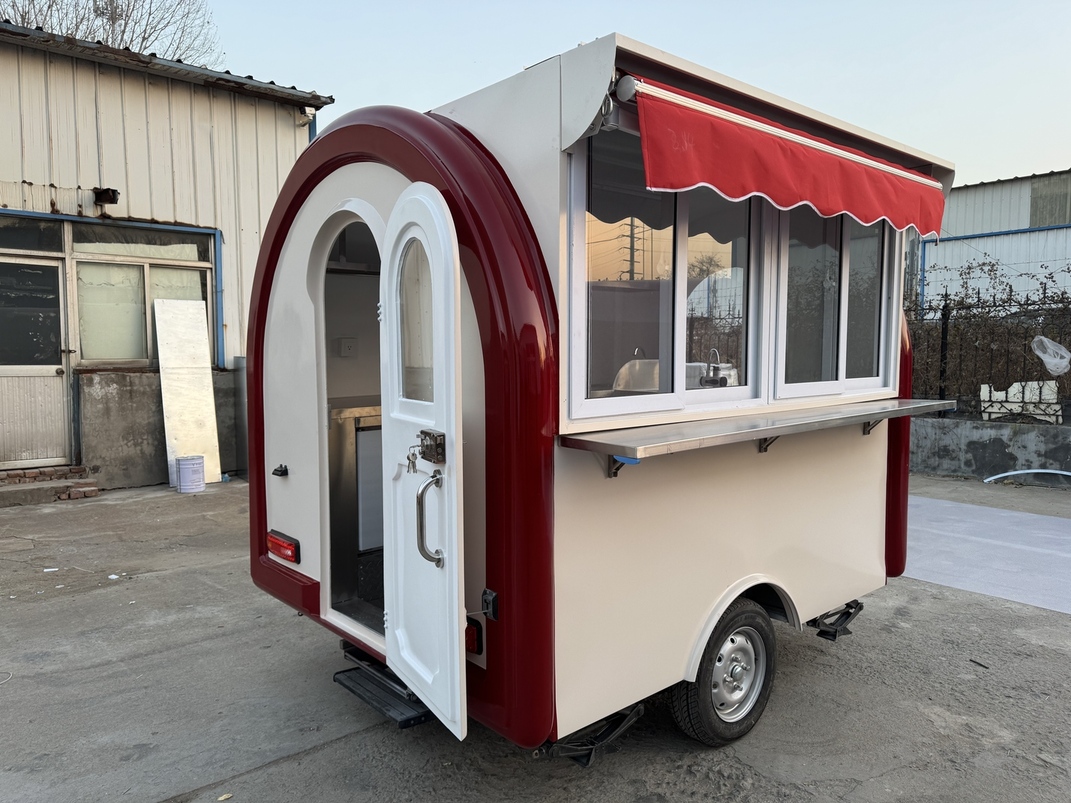
Give the Trailer a Face That Photographs Well From the Curb
A trailer's street-side presence starts with the front panel, the part people see before they ever step inside. If the nose is a blank wall of aluminum, it registers as a box. But a simple change like moving the clearance lights down low, adding a slim color break, or letting the tongue box sit slightly proud of the body gives the face some structure. The goal is to make the trailer look composed in a quick photo, not just clean.
Paint does a lot of the heavy lifting, but only when it follows the right lines. Instead of wrapping the whole shell in one color, pick out the wheel wells, the lower skirt, or the trim around the front window so the eye has somewhere to land. Soft contrast works better than loud graphics, especially in direct sun where high-gloss finishes can blow out. A matte band across the nose can keep reflections from hiding the shape.
Small details read bigger from the curb than they do up close. Replacing plastic corner caps with painted metal, aligning the rivet lines, and keeping the coupler area uncluttered all help the trailer look intentional. Before you take a photo, stand back and squint; if the front end still has a clear focal point, it will hold up in a thumbnail, a printed flyer, or a quick pass on the street.
Sell the Wait as Part of the Experience
A wait stops being dead time the moment it offers something to notice. Instead of a blank gap before the main event, build a small threshold—an unexpected detail, a shift in sound or temperature, a ritual that signals something is already underway. People settle into anticipation when the wait itself has texture.
The mechanics can be intentionally light. A kitchen left open to view, a chalkboard with the day's source notes, a short pour that releases an aroma before the first sip. These signals don't need to be dramatic; they simply need to suggest that the experience has already begun and the guest is part of it, not merely holding for access.
What changes is the memory. A delay that once felt like friction becomes a scene in the story, often the part people describe first. They recall the narrow hallway, the murmur, the glimpse of what was coming. When the wait carries that weight, it's no longer an inconvenience to manage—it's a piece of the experience you sell without having to say so.
Create a Rotation of Guest Cooks or Cross-Promotions
Inviting a rotating lineup of guest cooks changes the rhythm of your kitchen without forcing you to redesign the whole menu. Instead of one signature voice, you get short bursts of someone else’s instincts, whether that means a pastry chef taking over desserts on Thursdays or a friend from another city bringing their grandmother’s dumpling recipe for a weekend. The key is to treat these collaborations as small experiments rather than permanent commitments: give each guest a narrow window, a clear theme, and enough freedom to leave a fingerprint. This keeps the offer feeling fresh without turning your regular customers into strangers.
Cross-promotions work best when the exchange feels balanced and specific. Rather than simply swapping logos or posting each other’s menus, pick one dish, one drink, or one ingredient that both sides genuinely care about. A coffee roaster and a bakery might create a limited breakfast pairing where the roaster’s seasonal beans appear in a cake glaze while the bakery’s sourdough crumbs show up in a coffee rub. That kind of concrete overlap gives people a reason to visit both places in the same week, and it gives your staff a story to tell instead of a discount to recite.
To keep the rotation from turning into noise, set a loose rule for return visits: a guest cook might come back every six to eight weeks, or a cross-promotion might run for exactly ten days before disappearing. Announce the dates early but keep the details slightly under wraps until the week before, so regulars learn to watch for the rhythm. Collect small notes from each collaboration, what sold unexpectedly, what confused people, what made the team proud, and use those notes to shape the next invitation. Over time, this becomes less like a marketing calendar and more like a habit of borrowing good ideas from people you trust.
Set Up a Repeat Customer Habit Without a Points Program
Repetition beats rewards when the experience feels personal. Instead of points, build a small ritual only returning customers know about. That could be a barista who starts your drink when you walk in, a bookseller who sets aside new arrivals in your favorite genre, or a mechanic who sends a photo of your car's filter before replacing it. These micro-habits create a feeling of being recognized, which is harder to copy than a loyalty card.
Make the next visit easier than the first. Create a repeat routine that removes decision fatigue—a standing appointment, a restock reminder that arrives right before they run out, or a monthly menu that includes their defaults. When the path back is smooth and predictable, customers stop comparing you to competitors because leaving would mean rebuilding the whole rhythm somewhere else.
Let customers customize the habit themselves. Ask what they want to happen on every visit, then honor it without making them ask again. The habit forms around being listened to, not around accumulating points. Over time, the relationship feels less like a transaction and more like a place that already knows what they need.
FAQ
Pick one dish you can cook in a small space and test it at a weekend market with a pop-up tent. If the line forms without you begging people to stop, the trailer is worth it.
Start with a very specific memory or regional favorite instead of a broad category. Narrow menus like hot honey chicken skins or Lithuanian cepelinai stand out faster than another burger or taco truck.
Look for a simple, clean shell with working plumbing, ventilation, and a layout that lets one person cook without tripping. Fancy equipment is less important than easy access to the pass window and hand sink.
Set aside money for permits, a commissary kitchen, insurance, propane, a generator, and packaging before opening day. If your reserve is under twenty percent of the total budget, you are one slow month from trouble.
Show up at the same two spots on the same days every week and remember the customers who return. Let regulars vote on a weekly special or test a secret item before it hits the board.
Carrying too many items that don't share prep work. Five dishes built from the same core ingredients will be faster, fresher, and much easier to manage than a fifteen-item menu.
Waist-height counters, a wide pass window, a floor drain near the steam table, and storage you can reach without bending down. Bright, wipeable surfaces matter more than paint color.
Tie it to a small story, a mascot, or a weird family detail and keep it easy to say aloud. If a friend can repeat it after hearing it once over a noisy generator, you have a keeper.
Conclusion
A mobile kitchen gets its edge from what it refuses to do. Cut the menu down to a handful of dishes that can be assembled with one hand while the other handles tickets, the register, or a hot pan. That kind of restraint makes the trailer faster at a curb and easier to remember. Then treat each stop like a small event rather than a routine route. Pick different corners, pair with a brewery or a record shop, and announce the next appearance the way a pop-up would. The trailer itself should earn its place in photos, so a bold paint job, a clean sign, and a little consistency in color go further than a clever tagline.
When the line forms, don't apologize for the wait; give it a small moment, like a sample, a cold drink, or a cook who talks to the people closest to the window. Rotating guest cooks or partnering with a bakery or coffee cart keeps regulars curious without changing the whole concept. For repeat visits, skip the points card and build a quiet habit: remember a name, keep one off-menu item for people who show up early, or text a two-hour heads-up with the location. Those small repeated signals make people feel like insiders, and that feeling brings them back more reliably than a discount.
Contact Us
Contact Person: Yucui Yan
Email: [email protected]
Tel/WhatsApp: +86-15265226900
Website: https://www.tunevan.com/