

Heavy Duty Moving Pads Manufacturer: What to Look for in Durable Furniture Protection
2026-11-02
Not all moving pads are created equal—yet most people don't realize it until a dresser leg snaps or a glass tabletop arrives scratched. If you're sourcing from a heavy duty moving pads manufacturer, the difference between 'durable' and 'disposable' often comes down to a handful of details many buyers overlook. Top Packaging has spent years refining what true furniture protection should look like, and in this guide we'll walk through the features that actually matter before you place your next order.
Material Density Matters More Than Thickness Alone
When comparing acoustic panels or soundproofing barriers, the first number people glance at is usually thickness. A two-inch panel feels more substantial than a half-inch foam square, so it must block more noise, right? Not necessarily. Density plays a far more decisive role in how sound waves interact with a material. A thin but tightly packed layer of mass-loaded vinyl can outperform a fluffy, thick fiberglass batt simply because its particles are packed closer together. That compactness forces sound energy to work harder to pass through, converting more of it into heat through internal friction.
Think of it like pushing through a crowd. A thick but sparse crowd lets you weave between people easily, while a thin but dense wall of bodies stops you almost immediately. The same logic applies to materials: high density means more mass per cubic inch, which translates to greater resistance to vibration and airborne noise. Even a quarter-inch sheet of dense rubber can reduce impact noise more effectively than several inches of low-density open-cell foam. For real-world projects, checking the weight per square foot often gives a better prediction of performance than just looking at thickness.
This doesn’t mean thickness is irrelevant—it still affects low-frequency absorption and can improve overall attenuation when combined with high density. But if you have to choose between adding another inch of lightweight fluff or switching to a denser core, the density upgrade almost always yields a more noticeable drop in transmitted sound. The most effective barriers pair both: enough density to reflect and absorb energy, and enough thickness to broaden the frequency range. Yet when budgets or space are tight, prioritizing material density over raw thickness is the smarter move.
How Stitching Patterns Prevent Edge Blowouts
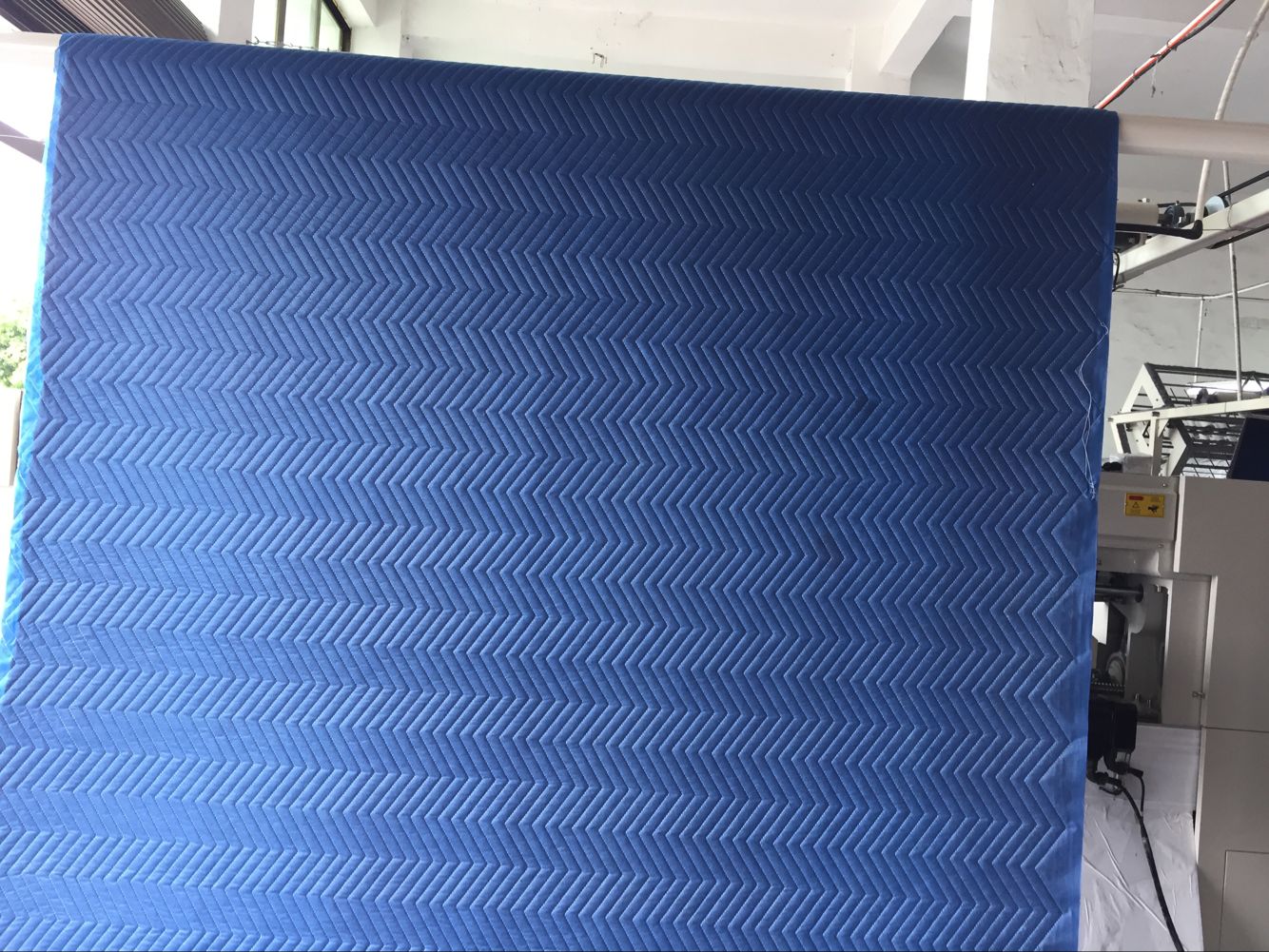
Edge blowouts happen when closely spaced stitching holes tear through the material under tension. A diagonal or zigzag stitching pattern changes how force travels along the seam. Instead of pulling straight against a single row of weak points, the thread crosses the edge at alternating angles, spreading the load over a wider area and keeping individual perforations from acting like a perforated tear line.
Using a backstitch or saddle stitch with slightly offset holes also helps. The overlapping thread paths create a braided effect on the back side, which acts as a continuous reinforcement rather than a series of independent loops. This means if one hole starts to elongate, the surrounding stitches take up the slack before the leather or fabric can rip to the edge.
Another practical approach is to vary stitch length near the edge. Shorter stitches near corners or curved sections put more material between holes, reducing the chance of a blowout. The pattern itself becomes a buffer, redirecting stress away from the weakest point where the material is thinnest.
The Real Difference Between Woven and Non-Woven Outer Shells
The real difference starts with how the fibers are arranged. A woven outer shell is built by interlacing yarns at right angles, creating a fabric with a defined grain and a predictable stretch profile. That structure gives it high tear strength, better drape, and a durability that holds up to repeated abrasion. Non-woven shells, by contrast, are formed by bonding or entangling fibers into a sheet, which means there's no grain to work with. This makes them cheaper to produce and easier to cut without fraying, but it also limits how much strain they can take before the material starts to fail.
The practical difference shows up most clearly in how each material handles moisture and pressure. Woven shells can be tightly calendered or coated to resist wind and water while still allowing some airflow through the weave. Non-woven shells often rely on meltblown or spunbond layers that create a tortuous path for particles, which is why they're common in medical gowns or filtration. But that same random fiber layout tends to tear more easily under point loads, and it doesn't recover its shape as well after being stretched.
That's why you rarely see non-woven outer shells on gear meant for hard outdoor use. They make sense when the priority is low cost, disposability, or a specific barrier property, not long-term toughness. Woven fabrics remain the default for anything that needs to survive real-world abrasion and repeated flexing without falling apart.
Why Weight Per Dozen Reveals Manufacturer Honesty
Many shoppers glance at the price per dozen without ever checking the actual weight, but that number can expose a lot about a manufacturer's integrity. Take work gloves or fasteners, for example—two brands might sell a dozen for the same price, yet one pack feels noticeably lighter in your hand. That difference often points to thinner materials, hollowed-out components, or rushed production methods that cut corners while keeping the count unchanged.
Honest manufacturers tend to keep their per-dozen weight steady and predictable, even when raw material costs fluctuate. They know that experienced buyers will eventually notice a lighter product and question durability. Dishonest ones, however, may swap in cheaper alloys, reduce coating thickness, or shrink dimensions slightly, hoping the visual similarity hides the drop in mass. Over time, that small weight reduction translates into faster wear, weaker performance, and a shorter service life.
A practical way to spot this is to compare the stated per-dozen weight across similar items or ask suppliers for that figure directly. If a manufacturer refuses to share it, or the number sits far below the norm for that product category, treat that as a red flag. Trustworthy brands rarely hide this basic specification because they know it reinforces their reputation.
Custom Sizes Without the Long Lead Times
Most suppliers treat custom dimensions as an afterthought, bolting weeks onto your timeline and charging a premium for the privilege. We took a different path. By keeping raw materials in standard stock and cutting to order with in-house equipment, we turn non-standard widths, lengths, and thicknesses into a routine part of the production day—not a special project that sits in a queue.
That means a door panel sized for a 1970s renovation or a tabletop built to fit an awkward alcove gets the same turnaround as our catalog items. You won't hear “that will need an extra three weeks” unless the material itself is genuinely rare. For everyday custom requests, lead times stay short because the process was designed around flexibility from the start.
The result is closer to working with a local workshop than a distant factory—without the usual trade-off of waiting until next season for something that should have been straightforward.
Spotting Hidden Fillers That Kill Cushioning Performance
Most runners never cut open a shoe to see what's actually inside the midsole, but that's where the truth hides. A foam that looks plush on the outside can be loaded with cheap inorganic powders like calcium carbonate or talc, which add weight and deaden the energy return you feel on the road. You can often spot this by pressing your thumb into the sidewall of a worn pair: if the indentation stays for a long time or the foam feels gritty under the nail, those are not signs of high-end EVA or TPU, but of filler doing the work instead of polymer chains.
Another giveaway is the wear pattern after a few hundred miles. Genuine cushioning compounds tend to compress evenly and bounce back slowly, while filled foams often develop a permanent set that makes the shoe feel flat under the ball of the foot. If you peel back the sockliner and see a whitish, chalky residue collecting in the strobel stitching, that's not just dust from the road—it's often the filler separating from the foam matrix. Manufacturers rarely advertise this because it keeps the retail price down, but your knees will notice the difference within a month.
The simplest test is to compare the shoe's weight against its stack height and claimed softness. A midsole that is thick but surprisingly heavy, yet feels mushy rather than resilient, almost certainly contains a high ratio of filler to polymer. High-quality foams like nitrogen-infused TPU or Pebax have a distinctive springy, almost rubbery rebound that cheap blends can't fake. Once you learn to read these tactile cues, you'll stop trusting marketing labels and start trusting what the foam actually does under load.
FAQ
A reliable manufacturer will be upfront about their materials and construction methods. Ask about the fabric weight, stitch count, and whether they use reinforced binding. You also want to see clear documentation like spec sheets or test results, not just marketing claims. Longevity in the industry and the ability to handle custom orders are good signs they understand real moving conditions.
Check the fabric density and thickness rather than relying on the label alone. Heavy duty pads usually weigh between 8 and 12 pounds per dozen and use a tightly woven polyester or cotton-poly blend. The binding should be double-stitched, and the pad should feel stiff enough to hold its shape when lifted from one corner.
Woven polyester outer layers with a polyester fiberfill or cotton batting core tend to hold up best. Polyester resists tearing and moisture, while a dense filler absorbs shock. Some manufacturers use a blend of recycled cotton and polyester for a softer touch, but pure cotton pads tend to break down faster under heavy use.
Stitching is what keeps the padding from shifting or tearing along the edges. Look for pads with double-needle stitching and reinforced corners. If the seams are loose or uneven, the pad will split open after a few moves and expose the furniture to scratches. Good stitching also means the binding won't fray when dragged across truck floors.
Yes, but you need to match the pad weight to the job. Residential moves usually work well with medium to heavy duty pads around 8 pounds per dozen, while commercial moves with larger, heavier items benefit from pads closer to 12 pounds per dozen or higher. A good manufacturer will offer a range so you can choose based on the load.
Request a sample first and test it yourself. Fold the pad, drag it across rough concrete, and check for tearing or loose threads. Ask about their defect rate and return policy. A manufacturer who is confident in their quality will have no problem sending samples or sharing details about their inspection process.
The outer fabric should be smooth enough to glide over polished wood but not so slippery that the pad slides off during transport. Some moving pads have a non-slip backing or a softer inner layer designed to contact the furniture. Others use a quilted pattern that keeps the filler evenly distributed, which prevents the pad from bunching up and exposing edges.
Conclusion
When you're moving heavy furniture, the pad's real protection comes from how tightly the fibers are packed, not just a thick label. A dense felt pad absorbs shocks better than a fluffy thick one that flattens under weight. Look for double-stitched edges and reinforced corners—those stop the outer shell from splitting open after a few drags across door frames. Also, don't fall for glossy marketing: woven outer shells tend to hold up against tears and snags far better than non-woven ones, which can shred when caught on a nail or splinter.
A straightforward way to judge a manufacturer is to check the weight per dozen. Honest makers list it clearly; if a pad feels surprisingly light for its size, it's probably stuffed with cheap fillers like shredded foam or mixed scraps that collapse under pressure. You want solid, uniform batting that keeps its cushioning over years of use. And if you need custom sizes for odd-shaped antiques or appliances, a good manufacturer should offer that without dragging the lead time out for weeks. Quick turnaround on custom cuts shows they actually run their own production line instead of middle-manning generic stock.
Contact Us
Contact Person: Shelly
Email: [email protected]
Tel/WhatsApp: 86-577-64286522
Website: https://www.topmovingpad.com/