

High Evaluation Air Circuit Breaker Key Benefits and Features
2026-08-29
Ask any facility engineer what keeps them up at night, and power distribution faults will rank near the top. Air circuit breakers are supposed to bring peace of mind—but only if they actually perform when it matters. High evaluation ACBs aren’t just about passing tests; they’re about surviving years of thermal stress, short circuits, and maintenance cycles. Chang Song has built a line of air circuit breakers focused on exactly that. Let’s explore the features and benefits that make the difference.
Fault Interruption That Leaves No Room for Second Guessing
In power distribution and industrial controls, a fault that lingers without a firm interruption can escalate from a minor anomaly into a full-scale failure. Equipment rated to handle such events cannot afford ambiguous tripping logic or delayed decision-making. Here, the interruption is designed to act on the first measurable deviation from normal operating parameters, cutting off current before the fault has a chance to evolve. There is no waiting period, no secondary confirmation loop, and no reliance on operator interpretation. The breaker or relay responds as soon as the fault signature matches a pre-set threshold, leaving no room for second guessing.
This kind of certainty comes from hardware-level detection rather than software polling. Current transformers and voltage sensors feed a dedicated trip circuit that compares real-time values against fixed limits. When the limit is crossed, the trip coil releases mechanically within a handful of milliseconds. Because the path from sensor to actuator is hardwired and independent of the central controller, even a communication failure or a software fault cannot delay the interruption. Every type of short circuit, ground fault, or overload has a distinct signature that the system recognizes instantly, so the response is never a judgment call but a predetermined action.
The operational benefit is a maintenance and safety environment where personnel no longer debate whether a fault should have been cleared sooner. After an event, the recorded trip logs show exactly which parameter triggered the interruption and at what instant. There is no post-incident second-guessing about missed opportunities or borderline decisions. The system either interrupts within its defined tolerance or it does not; when it does, the evidence is unambiguous. That kind of reliability changes how engineers approach protective coordination, because they can trust the interruption to be swift and final every single time.
Arc Flash Containment Designed for Tight Switchgear Spaces
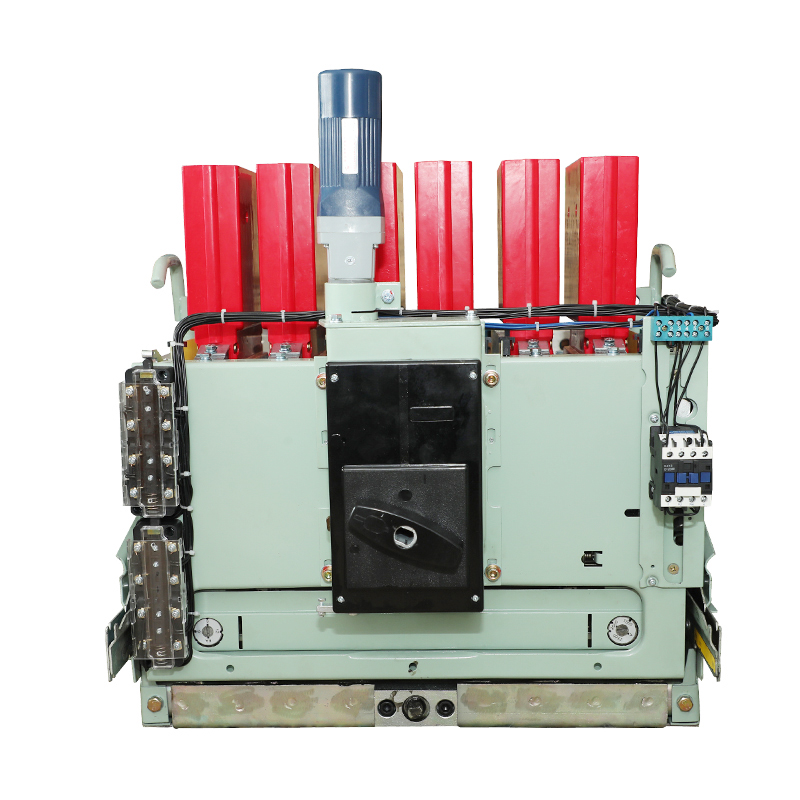
Retrofitting arc flash containment into an existing electrical room rarely leaves room to spare. Cable trays crowd the walls, bus ducts run overhead, and the switchgear lineup itself often sits within inches of the next piece of equipment. Standard containment hoods and ducting simply won’t fit without moving half the room. That’s where a slimmer chassis, tighter bend radii, and modular component cuts make the difference between a project that stalls and one that goes in cleanly.
Instead of relying on a one-size-fits-all plenum, the better designs use bolt-together sections that can be assembled around obstructing conduits and overhead cable ladders. The top panel depth is kept shallow enough to clear common ceiling obstacles, while side-mounted vent paths allow exhaust gasses to route away from adjacent equipment without stealing aisle space. For tight lineups, corner transition kits and low-profile damper housings let the pressure-relief path follow the actual wall or ceiling geometry instead of dictating it.
On the floor, that translates to fewer field modifications and no last-minute panic about door swing or cable pull clearance. The containment still does its main job — channeling arc flash energy away from personnel and preventing it from spreading to nearby compartments — but it does so without demanding a larger footprint. In many older buildings, that’s the only reason the upgrade happens at all.
Continuous Thermal Monitoring Without Extra Sensors
Most thermal protection schemes assume you'll bolt a sensor onto the heatsink or glue one to the board. But you can keep an eye on temperatures continuously without any of that. The trick is to reuse signals the system already generates—supply voltage, current draw, switching duty cycle, and workload intensity. These parameters track heat generation closely enough that a well-tuned thermal model can convert them into a real-time temperature estimate.
Instead of measuring temperature directly, this technique treats the device as a small network of thermal resistances and capacitances. Live electrical readings continuously update the model, letting you follow the temperature of the hottest junction without ever touching the silicon. Some implementations sharpen the estimate by periodically calibrating against known on-chip references, such as the forward voltage drop of an existing diode or the leakage current of a power stage—both already present in the design.
Dropping the extra sensors saves board space, cuts bill-of-materials cost, and removes a common failure point. A software-defined thermal observer doesn't age, detach, or drift the way physical components can. For compact consumer gadgets, sealed industrial drives, or any product where adding hardware is impractical, this sensorless approach delivers continuous thermal insight with nothing more than the data you're already collecting.
Mechanical Endurance Backed by 10,000 Operations
Every moving part in this assembly has been cycled through ten thousand full-range operations, not as a paper claim but as a physical verification. The test bench records wear at pivot points, checks for loosening at fasteners, and listens for changes in actuation force across the entire run. Anything that drifts beyond a narrow tolerance band gets pulled before it ever reaches a production line.
That kind of repeated cycling does more than prove the mechanism can move. It exposes the slow failures that only show up after hundreds or thousands of uses: a slight elongation in a linkage, a shift in spring rate, a micro-fracture in a stamped bracket. By the end of the test, the parts that remain are the ones that still return to zero, hold alignment, and require no re-adjustment.
For users, this translates into a control surface or actuator that behaves the same on day one as it does after years of routine use. The ten-thousand-operation benchmark is not a marketing number; it is a pass/fail gate that separates durable mechanisms from those that simply feel solid on first touch.
Selective Coordination That Keeps Critical Loads Running
In a hospital operating room or a data center, a short circuit downstream shouldn't bring down the entire electrical system. Selective coordination is what makes that possible. By setting protective devices so the one closest to the fault trips first, upstream breakers stay closed, and unaffected circuits keep working.
Achieving true selectivity requires more than matching amp ratings. Time-current curves need enough separation between series devices, and in complex systems zone-selective interlocking sends a restraint signal to the upstream breaker, letting the downstream device clear the fault without delay. That means a minor branch circuit issue stays exactly where it started.
The payoff shows up under real fault conditions. When coordination is done right, lights stay on in critical care areas, cooling keeps running for server racks, and emergency systems don't get dragged offline by one localized failure. It's a design choice that separates a nuisance outage from a controlled response.
Maintenance Windows You Can Actually Plan Around
Traditional maintenance windows feel like random interruptions. But when you shift from reactive scheduling to pattern-based planning, you can actually plan around them. Look at historical incident data and deployment frequency; many teams discover their 'quiet hours' are not midnight Sunday but Tuesday afternoons or right after a major release settles.
Build your calendar around those observed rhythms. Instead of asking 'when can we afford downtime?', ask 'when does downtime cost the least and who gets affected?' If your support load spikes on Mondays, don't schedule upgrades then. Choose a window that aligns with traffic lulls and internal team capacity. Then share it widely: a predictable maintenance schedule is one people can plan around, even if it's not perfectly convenient.
Stick to the schedule for a quarter, then review. If actual outages keep drifting outside the window, adjust. The goal isn't a perfect forecast, but a recurring block that your team, users, and stakeholders treat as a normal part of operations rather than a surprise.
FAQ
It comes down to breaking capacity, thermal stability, and selective coordination. A well-rated ACB can interrupt severe fault currents without damage and still coordinate with downstream devices, so only the closest breaker trips. That keeps critical loads running instead of shutting down an entire switchgear lineup.
The main safety gain is controlled arc extinction. High evaluation units use arc chutes and blowout coils to stretch, cool, and split the arc quickly, cutting the risk of flashover. They also include robust mechanical interlocks and optional arc flash mitigation settings, which reduce incident energy when maintenance is being performed.
Focus on adjustable trip settings, a high short-time withstand rating, and a solid stored energy operating mechanism. A good breaker should also offer modular accessories, clear position indication, and optional communication modules. These details matter more than a long datasheet because they determine how the breaker behaves under real fault conditions.
Yes, but only if the operating mechanism is built for it. High evaluation models typically use a stored energy spring mechanism that opens and closes the contacts at a consistent speed, not relying on the operator's force. That consistency limits contact erosion and extends mechanical endurance, often to tens of thousands of operations.
It is the core of the breaker's interrupting ability. When contacts separate, air alone is a poor insulator at high current, so the arc chute splits the arc into smaller segments and cools it with metal plates. The faster the arc voltage builds above the system voltage, the quicker the current is forced to zero. That is what allows a compact device to clear large faults safely.
They turn a protective device into a data source. Modern ACBs can report contact wear, operating counts, load current, and trip history over protocols like Modbus or IEC 61850. That lets maintenance teams replace parts based on actual wear rather than fixed calendar intervals, and it helps diagnose nuisance tripping without opening the panel.
You will find them as incoming or bus-tie breakers in main switchboards, large motor control centers, and generator paralleling systems. They are chosen where the available fault current is high, usually above 50 kA, and where the continuity of supply is critical, such as data centers, hospitals, and heavy industrial plants.
The big shift is from time-based to condition-based maintenance. Many high evaluation units have removable contacts, clear wear indicators, and front-facing test ports. Instead of dismantling the whole breaker for an annual check, you can run secondary injection tests, inspect contact erosion through a window, and replace arc chutes without disturbing busbar connections.
Conclusion
When a high evaluation air circuit breaker is specified, the real test comes down to what happens during a fault. This breaker interrupts without hesitation, clearing high-level short circuits in milliseconds and leaving no doubt about whether downstream equipment stayed protected. That decisiveness carries into arc flash containment as well. Even when switchgear space is tight, the design keeps incident energy low enough to reduce boundary distances and let operators work with a practical level of confidence. Selective coordination is built into that same mindset: rather than shutting down an entire facility over a localized issue, the breaker isolates only the affected circuit so critical loads keep running.
Beyond the fault event, operational life gets quieter and more predictable. Continuous thermal monitoring works through the breaker's existing sensing path, so there's no need to bolt on extra sensors or run additional wiring just to know if a connection is heating up. That early warning pairs with mechanical endurance rated for 10,000 operations, which means the breaker can handle years of routine switching without degraded contact performance. Maintenance becomes something you schedule rather than something that surprises you. Instead of guessing when wear might become a problem, you plan service intervals around real duty and known component life. Altogether, that shifts the breaker from a reactive safety device into an asset that supports uptime, protects people, and simplifies long-term planning.
Contact Us
Contact Person: Tonglun Chen
Email: [email protected]
Tel/WhatsApp: 8618906642555
Website: https://www.cncsele.com