
High Speed Baby Diaper Machine: Boosting Production with Cutting-Edge Technology
2026-05-10
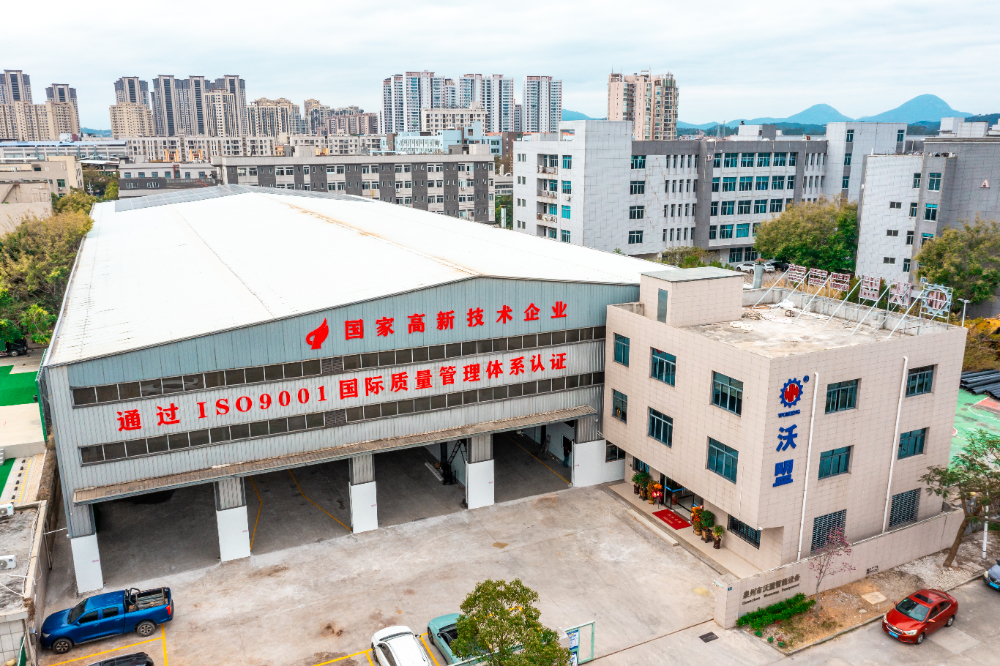
In today’s fast-paced hygiene products market, keeping up with skyrocketing demand for baby diapers means production lines must run smarter, faster, and without compromise. Enter the high-speed baby diaper machine—a game-changer engineered to maximize output without sacrificing precision or material efficiency. At the heart of this revolution is Womeng, whose cutting-edge technology is redefining what manufacturers can achieve. Whether you’re scaling up to meet seasonal surges or future-proofing your facility, the right machine doesn’t just accelerate production—it unlocks new levels of consistency and cost-effectiveness. Let’s explore how these advanced systems are reshaping the diaper manufacturing landscape and why Womeng stands at the forefront of this transformation.
Redefining Speed: How Advanced Servo Systems Double Diaper Output
In diaper manufacturing, cycle time reigns supreme, and moving from mechanical cam-driven setups to advanced servo systems represents a quantum leap. These intelligent drives optimize every motion phase—from precise material placement to ultra-fast sealing—synchronizing multiple axes at accelerations that leave traditional setups behind. Instead of a fixed mechanical rhythm, servo algorithms calculate the shortest, smoothest path for each cut and fold, eliminating wasteful dwell times and micro-stoppages. The result isn't just a marginal gain; it practically doubles the number of finished units coming off the line in the same shift, turning what was once a speed ceiling into a new baseline.
The secret lies in real-time torque and position feedback loops that adapt to material stretch or viscosity variations on the fly. Cam profiles are no longer constrained by physical gears; they're software-defined, allowing instant recipe changes across different diaper sizes without a wrench in sight. This agility means less idle time during changeovers and continuous throughput. Moreover, advanced servos recover braking energy and redistribute it, keeping power consumption surprisingly flat even as output spikes. It's a blend of speed and sustainability that reimagines how a converting line performs.
When a manufacturer switches to high-bandwidth servo networks, the entire production pulse shifts. Workout steps that once caused bottlenecks—like the final cutoff and stacking—are handled with nanosecond timing, eliminating misalignment rejects that previously ate into net output. Coupled with predictive maintenance alerts that flag bearing wear before it causes a jam, the line reaches a state of unprecedented uptime. In this environment, doubling diaper output isn't a gradual climb; it's a fundamental reset enabled by the quiet, relentless precision of modern motion control.
Minimizing Downtime with Intelligent Fault Detection
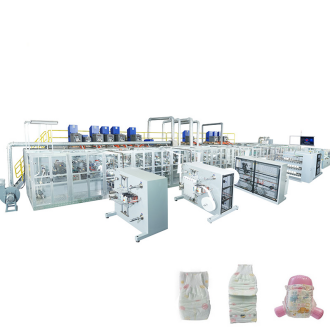
In modern industrial environments, unplanned outages can bleed revenue by the minute. Traditional reactive maintenance simply waits for something to break, turning minor glitches into full-scale emergencies. Intelligent fault detection flips this model on its head by continuously analyzing real-time sensor data—vibration signatures, thermal patterns, current harmonics—to spot anomalies before they cascade into failures. The moment a bearing starts to chatter in frequencies the human ear can't pick up, the system flags it, schedules a targeted intervention during a natural lull, and keeps the production line humming.
What separates clever fault detection from basic threshold alarms is its ability to learn what 'normal' looks like for each unique asset. A pump in a cold storage facility behaves differently than one in a desert refinery. By building dynamic baselines, the intelligence doesn't just scream when a temperature hits 80 degrees—it notices a slow drift from 72 to 78 over three weeks and correlates it with a slight pressure drop that maintenance logs previously missed. This contextual awareness enables early, low-cost fixes like cleaning a filter instead of replacing a seized motor next month.
Downtime isn't only about the minutes the machine is stopped; it's the chaotic scramble that follows. Intelligent systems tame this chaos by offering prescriptive guidance—not just 'vibration high,' but 'likely impeller damage due to cavitation; check suction valve and NPSH margin.' Technicians arrive with the right parts and a clear plan, slashing mean time to repair. Over time, these insights feed back into design and procurement decisions, creating a virtuous cycle where faults become increasingly rare and recovery increasingly swift.
Material Handling at 800 Diapers Per Minute: A Deep Dive
Handling 800 diapers a minute isn't just a number—it's a relentless rhythm that demands every conveyor, sorter, and stacker to operate in near-perfect sync. At these speeds, a single misfeed or mistimed transfer can cascade into minutes of downtime, so the material handling system has to be engineered with zero tolerance for lag. Think of it like a metropolitan subway during rush hour: trains arriving every few seconds, doors opening and closing without hesitation, passengers moving in fluid streams. Here, the 'passengers' are diapers, and they travel along high-speed belted conveyors that curve, incline, and merge with a precision that borders on choreography. The system doesn't just move product; it anticipates where each diaper needs to be next, using a combination of servo-driven diverters and optical sensors that track position without ever touching the product. It's this non-contact guidance that preserves the integrity of the diaper's delicate outer layer while maintaining blistering throughput.
The real magic happens in the accumulation and stacking zones, where the continuous stream of diapers gets grouped into packs without ever slowing down. Traditional gapping methods—those little spaces you see between items on a conveyor—simply can't keep up at 800 per minute. Instead, these lines use dynamic accumulation: air-float tables that lift and separate the diapers onto parallel tracks, then time their releases so precisely that three or four diapers can be layered into a stack while the next group is already forming. The stacking robots don't use grippers; they rely on vacuum cups placed strategically to pick up a full stack without disturbing the fold. And because every pack needs a consistent count, the system uses high-frequency counting beams that are so fast they can register each diaper as it passes, even when they're practically touching. The entire process feels less like a factory and more like a finely tuned instrument—one where mechanical and electronic components blend so seamlessly that you can't tell where one ends and the other begins.
Reliability at this scale doesn't come from just robust components; it comes from a design philosophy that assumes everything will eventually go wrong and plans accordingly. Motors are chosen not just for speed but for their ability to recover from power blips without losing position. Conveyor belts are reinforced with aramid fibers that withstand the constant flexing over small-diameter rollers, and the entire line is monitored by a network of accelerometers that listen for subtle changes in vibration. That data feeds into a machine-learning model that knows, for instance, that a slight wobble in a transfer plate today will likely turn into a jam in three shifts. Maintenance teams get alerts that are almost conversational: 'Left diverter on line 3 has a wear pattern; schedule replacement during the next tool change.' So while the line hums along at 800 diapers per minute, the real work is happening in the background, where every moving part is constantly negotiating its own longevity with the demand for absolute precision.
The Role of AI in Precision Diaper Folding and Packaging
In modern manufacturing, the delicate task of folding and packaging diapers demands a level of precision that human hands alone can no longer consistently provide. Artificial intelligence steps into this space by orchestrating robotic systems that handle each diaper with adaptive dexterity. Through continuous analysis of visual and tactile sensor data, AI-driven machines can detect minute variations in material texture, alignment, and size, adjusting their movements in real time to ensure every fold meets exact specifications. This not only reduces product defects but also enables a pace of production that far exceeds traditional methods, all while minimizing the wear and tear on mechanical components through predictive maintenance algorithms.
Beyond the physical manipulation of the product, AI revolutionizes the packaging stage by integrating quality-control checks that were once prone to human oversight. High-resolution cameras paired with deep learning models scan each folded diaper for irregularities—such as uneven cuffs or misaligned tapes—within milliseconds. Any item failing the inspection is instantly diverted, while the system simultaneously logs the anomaly to refine its own detection parameters. The packaging itself becomes smarter: AI adjusts adhesive application and film tension based on real-time humidity and diaper fluffiness, ensuring a snug, tamper-proof seal that preserves hygiene. This closed-loop feedback creates a manufacturing process that learns and improves with every cycle.
The strategic deployment of AI extends to resource optimization and supply-chain synchronization. By forecasting machine bottlenecks and raw-material usage patterns, manufacturers can dynamically schedule production runs, reducing both energy consumption and material waste. Furthermore, AI coordinates with downstream logistics to match output with demand fluctuations, so that precisely folded and packaged diapers arrive at distribution centers just in time. In this way, AI doesn't just perfect a single task—it weaves together the entire production tapestry, from initial fold to final shipment, with an intelligent thread that elevates both quality and sustainability.
Energy Efficiency Meets High-Volume Production
Striking a balance between energy efficiency and high-volume production has long been a manufacturing challenge. Yet modern facilities are proving that productivity need not come at the expense of resource consumption. By rethinking machine layouts, optimizing thermal cycles, and integrating smart sensors, factories can dramatically reduce energy waste without slowing output. The key lies in treating efficiency not as a constraint, but as a driver of streamlined workflows.
Advanced automation plays a pivotal role in this equation. Real-time monitoring allows production lines to adapt energy use based on actual demand, rather than running at constant full capacity. For instance, idle equipment can enter low-power states within seconds, and process parameters are fine-tuned to avoid overheating or overuse. Such precision not only cuts utility costs but also extends machinery lifespan, creating a compounding benefit that strengthens the case for sustainable, high-speed manufacturing.
From Raw Materials to Finished Product in Under a Second
In modern manufacturing, the leap from raw granules, pellets, or sheets to a functional product can happen in the blink of an eye. High-speed injection molding machines, for instance, heat plastic resin to a molten state and then force it into a precision mold under immense pressure—all within a few hundred milliseconds. The cooling and ejection that follow are timed to the millisecond, making the entire cycle faster than most camera shutters.
On the metalworking side, automated stamping presses deliver a comparable feat. A flat coil of steel unrolls into a die set, and a single stroke of the press—often lasting less than half a second—cuts, bends, and pierces the metal into a near-finished bracket, connector, or enclosure. Sophisticated servo-driven systems synchronize the material feed with the ram stroke so precisely that hundreds of these complex shapes emerge each minute without human intervention.
This sub-second transformation isn't just about raw speed; it's a careful choreography of thermal control, fluid dynamics, and mechanical timing. Sensors inside the tooling monitor pressures and temperatures in real time, making micro-adjustments on the fly to avoid defects. The result is a production line that can spit out a perfectly formed part every time the clock ticks, blurring the line between raw input and finished good.
FAQ
It runs at up to 800 pieces per minute while consuming less energy, thanks to servo-driven motion control and intelligent tension regulation. This cuts material waste and keeps rejection rates below 0.3%.
Absolutely. The quick-change module lets you swap sizes in under 15 minutes. Tool-free adjustments and saved recipes on the HMI make it simple even for junior operators.
A built-in condition-monitoring system tracks vibration, temperature, and wear on critical parts. You get alerts before anything fails, and all daily service points are reachable from the floor without climbing.
Yes. The ultrasonic bonding unit and zero-tension unwind work smoothly with thin-core wraps, stretch-prone backsheets, and bio-based films. There's no need to overspec materials just to handle machine stress.
Inline vision inspection scans every diaper for SAP distribution, alignment, and tape placement. Faulty units are shot out automatically, and the system adjusts process parameters in real time to stay within spec.
Most converters see a return within 14–18 months. Faster speed, less downtime, and material savings combine to push output up by roughly 30% compared to older lines, even with the same headcount.
Conclusion
Modern baby diaper manufacturing is hitting speeds once thought impossible, thanks to a new generation of servo-driven machinery. Advanced servo systems lie at the heart of this leap, precisely orchestrating every motion to push output beyond 800 diapers per minute—effectively doubling what older lines could manage. This isn't merely a matter of faster motors; it's about intelligent synchronization where material handling, from the delicate nonwoven webs to the absorbent cores, stays perfectly aligned even at breakneck pace. The result is a seamless, continuous flow that converts raw materials into a finished, packaged diaper in less than a second. Such velocity redefines production benchmarks, making high-volume orders achievable without sacrificing consistency or build quality.
Equally critical is keeping these lightning-fast lines running. Intelligent fault detection monitors key machine parameters in real time, using predictive analytics to flag potential failures before they cause downtime. This proactive approach dramatically reduces unscheduled stoppages. Meanwhile, AI vision systems refine the folding and packaging stages, ensuring every diaper meets precise shape and seal standards despite the relentless throughput. Energy efficiency isn't overlooked: regenerative drives and optimized thermal processes cut power consumption significantly, proving that sustainable practices can coexist with massive output. Together, these innovations forge a production system where speed, precision, and reliability coalesce—delivering unprecedented performance without the usual trade-offs.
Contact Us
Contact Person: Jessie Lai
Email: [email protected]
Tel/WhatsApp: 86-188594442931
Website: https://www.wm-machinery.com