

Honeycomb Shades Company Shares How Cellular Shades Improve Home Comfort
2026-11-02
Most homeowners focus on thermostats and insulation, but windows are often the weak link in home comfort. Honeycomb shades—also known as cellular shades—trap air in their distinct pockets to buffer against heat and cold. ROLLERGY, a honeycomb shades company, shares how this simple upgrade can stabilize indoor temperatures, cut energy waste, and make every room feel noticeably more livable. Here’s what to know before you buy.
What Happens Inside a Honeycomb Shade
The honeycomb shade owes its cleverness to a simple geometric trick. When you look at it from the side, the fabric forms a series of hexagonal cells, just like a beehive. These cells trap air in small pockets, creating a barrier between the window and the room. In winter, the trapped air slows down heat loss; in summer, it blocks some of the sun's warmth from sneaking inside. It's not magic—just physics with a touch of geometry.
What happens inside those cells depends on the time of day and the season. When sunlight hits the shade, the air pockets warm up slowly, reducing the sudden temperature swing you'd feel with a bare window. At night, the same pockets hold onto the room's heat, keeping the chill from creeping through the glass. This passive insulation works without any moving parts or energy input, which is why honeycomb shades are often called the quiet workhorses of window coverings.
There's also something happening on a smaller scale. The fabric itself is usually a non-woven polyester, sometimes with a metallic layer on one side to reflect heat. The honeycomb structure gives the shade its strength and flexibility, allowing it to fold up into a compact stack when raised. When you pull the cord or press the button, the cells collapse flat, but when the shade is down, they spring back to their hexagonal shape—ready to trap air again. It's a simple, elegant cycle that repeats every time you adjust the light.
Why Some Rooms Feel Drafty Even With Windows Closed
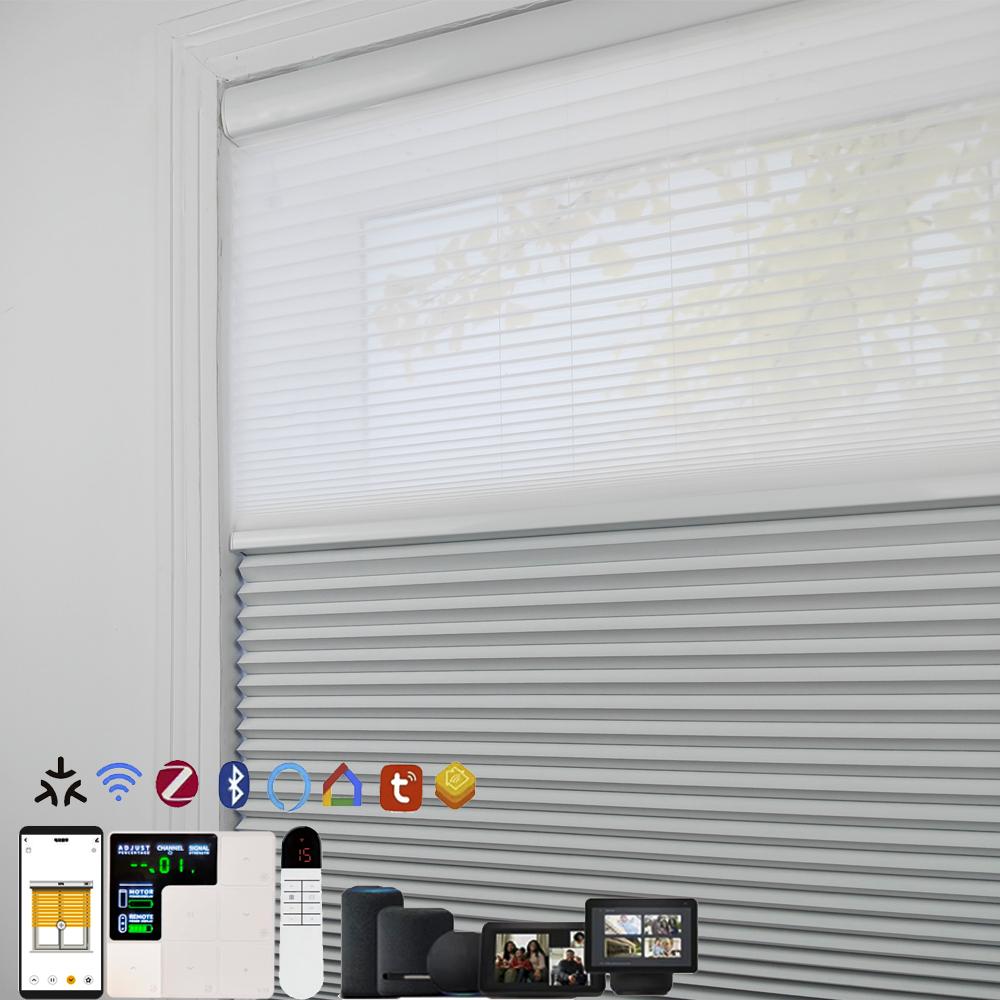
A room can feel drafty even when every window is sealed tight because air still finds a way to move. The most common culprit is the stack effect: warm air rises inside your home, escapes through upper-level cracks, and pulls cooler outside air in through lower gaps. This constant pressure difference doesn't need an open window—just small openings around baseboards, electrical outlets, recessed lights, or where the floor meets the wall.
Another overlooked source is the ventilation system itself. Supply ducts running through unconditioned spaces like attics or crawlspaces can leak, and when the fan cycles off, cold air settles into those ducts and seeps into rooms through registers. Even closed dampers don't always seal completely. Similarly, a fireplace with a worn damper or a range hood vent that lacks a backdraft damper can act like an open channel to the outdoors.
Finally, what you feel as a draft may not be moving outside air at all. Cold surfaces—large windows, poorly insulated exterior walls, or slab floors—create a convection current. Air near those surfaces cools, becomes denser, and sinks, pulling warmer room air toward the cold spot. Your skin senses that slow, chilly circulation as a draft, even though no outside air is entering the room.
The Kind of Quiet That Comes From Soft Layers
Quiet in a room isn't simply the absence of sound. It forms when hard, reflective surfaces give way to things that swallow noise before it can bounce. A thick wool rug underfoot, linen curtains gathered at the window, a worn cotton throw draped over the arm of a chair—each layer works like a soft baffle, turning sharp echoes into something closer to a murmur.
The effect builds gradually. Folded fabric, a second layer of sheers behind heavier drapes, upholstered panels set against a bare wall: all of these trap small pockets of air and break up the paths that sound would otherwise follow. What remains is a kind of quiet with weight and texture, one that makes a room feel settled rather than merely empty.
That is the difference. You notice it when a door closes with a dull, certain thud instead of a hard click, when conversation drops naturally to a lower register, when the rustle of a page turning becomes the loudest thing in the house. The quiet is not dead air; it is made, layer by layer, from materials that hold sound and give it no reason to linger as noise.
Natural Light That Doesn’t Overstay Its Welcome
Morning sun slips across the floor in a narrow ribbon, bright enough to make you glance up from your coffee but gone before the heat settles in. The windows here are placed with intention—not to flood every corner at once, but to let light pass through like a polite guest who knows when to leave. A south-facing transom catches the low winter angle, while deep eaves cut the summer glare, so the house feels warm without ever feeling exposed.
In the afternoon, the light shifts to the west wall, painting a soft parallelogram that climbs the plaster and then fades by dinner. There’s no need for heavy curtains or motorized shades; the architecture itself does the editing. A narrow vertical window beside the stairwell catches a sliver of late-day sun, just enough to guide your hand on the railing, then lets the hallway return to a cooler shade. It’s a rhythm you stop noticing until you realize you’ve never once reached for a light switch before sunset.
What stays with you is the quality of those brief appearances—the way a single patch of brightness can make a room feel larger without raising the temperature, or how a skylight over the kitchen sink turns dishwashing into a ten-minute meditation. The light doesn’t overstay, but it leaves an impression, like a stranger’s smile that you remember long after the street has emptied.
When Function and Style Share the Same Fabric
For decades, the assumption was that high performance meant sacrificing elegance. Fabrics built for endurance often looked utilitarian, while luxurious materials wilted under pressure. That line has quietly dissolved. Today’s most interesting textiles handle sweat, wind, and abrasion without broadcasting their technical pedigree. A wool-blend blazer stretches with you on a bike ride; a crisp cotton shirt wicks moisture and resists wrinkles through a long commute. The fabric does the work, but the silhouette stays sharp.
The real shift is sensory. Designers now treat stretch, breathability, and water repellency as invisible parts of the drape and hand of a garment, not as add-ons to be advertised with logos. You notice it when a jacket moves like a second skin but looks tailored, or when a pair of trousers keeps its crease from morning meetings to an evening walk. Function stops being a feature to show off and becomes a quiet layer of comfort, woven straight into the style itself. That’s when the two truly share the same fabric.
Comfort You Notice After a Week, Not a Renovation
The first night in a newly finished space rarely tells the truth. Fresh paint, perfect sight lines, and untouched surfaces make everything feel like a showroom. But that kind of comfort is visual, not physical. The deeper ease arrives later—when morning light falls across the same corner where you sip coffee, when the bathroom shelf is exactly where your hand expects it, when the silence of well-sealed windows becomes something you stop noticing because it simply works.
A true renovation isn't measured by the gasp at the reveal, but by the sigh a week in. It's the difference between a kitchen that photographs beautifully and one where you can cook without thinking. It's the hallway that doesn't just look wider but actually lets two people pass without choreography. These are the quiet details that reveal themselves only through use: the weight of a door, the reach of a faucet, the way a room holds temperature through the afternoon.
This is the comfort you can't rush or stage. It grows out of small decisions made for daily life, not for the camera. After a week, you won't think about the design. You'll just feel that nothing is in your way—and that is the rarest kind of luxury.
FAQ
The honeycomb pockets trap air and create a layer of insulation between the window and your living space. That slows down heat moving in or out, so rooms don't swing as much with the weather outside.
Yes, they reduce how hard your heating and cooling system has to work. By keeping conditioned air inside and outside air at bay, many households notice less frequent thermostat cycling, which tends to show up as a lower monthly bill.
They won't make a room silent, but the honeycomb structure does absorb some mid- and high-frequency sound. People often describe the difference as taking the edge off traffic or neighbor noise, especially with double or triple cell fabrics.
They let you control the glow without giving up the view entirely. Depending on the fabric opacity and whether you go top-down or bottom-up, you can shift from bright and open to soft and diffuse without harsh glare on screens.
Absolutely. In winter they help hold heat inside by slowing the draft that radiates off cold glass. Many customers put them in bedrooms or north-facing rooms where windows feel chilly even when the heat is running.
Yes, especially with blackout or room-darkening fabrics. Since the material is not slatted, there are no gaps for people to peek through once the shade is lowered, and you can still raise just the top section for airflow during the day.
Very little. A quick pass with a vacuum brush or a gentle wipe with a damp cloth usually keeps them clean. Because the pleats are structured, they tend to hold their shape and resist the bending or warping that can happen with certain blinds.
Many manufacturers offer custom sizing, so arched, angled, or extra-wide windows can be fitted. It's worth checking with the company about their measurement process, but honeycomb shades are more versatile than people expect.
Conclusion
A honeycomb shade is built around a simple but clever idea: rows of fabric cells that trap air before it reaches the window glass. That trapped air acts as a buffer, slowing heat loss in winter and heat gain in summer. It explains why some rooms feel drafty even with windows closed—the glass itself radiates cold, and air currents form along the window surface. The shade interrupts that flow. The same layered structure absorbs sound waves, so street noise or neighbor chatter doesn't bounce around as much. The result is a room that feels more settled, less hollow.
Natural light still gets through, but it's diffused rather than harsh. You can choose fabrics that filter light, or room-darkening options that block it almost completely, all without giving up the view entirely. Because the fabrics come in a wide range of colors and textures, the shades don't look like an afterthought—they blend with existing furniture and trim. The real payoff shows up after about a week: you notice the thermostat runs less, the room stays comfortable longer, and morning sun no longer turns the sofa into a heat trap. It's not a major renovation, just a quiet shift in how the house holds its temperature and sound.
Contact Us
Contact Person: Vivien Cheng
Email: [email protected]
Tel/WhatsApp: +86 13751758835
Website: https://www.rollergytech.com/