

How HDPE Geomembrane Factories Ensure Quality and Durability for Modern Projects
2026-07-10
Every modern infrastructure project relies on materials that can withstand time and stress. One critical component is HDPE geomembrane, yet not all are created equal. Factories today deploy advanced testing and manufacturing techniques to deliver liners that resist tearing, UV degradation, and chemical attack. At the forefront of this quality assurance is WEN FENG STONE, a provider that has turned precision engineering into a science. But what exactly happens behind factory doors to turn polyethylene resin into a barrier you can trust for decades? The process might surprise you—and it starts long before the first weld.
Raw Material Selection: The Foundation of Long-Lasting HDPE Geomembranes
The integrity of an HDPE geomembrane begins long before it is fabricated into a sheet—it starts with the resin. Premium-grade, high-density polyethylene resin with a narrow molecular weight distribution forms the backbone of a durable liner. When the polymer chains are uniform, the material exhibits consistent tensile strength and environmental stress crack resistance, two properties that directly influence how the sheet holds up under thermal cycling and mechanical loads in the field. Specifying virgin resin with minimal impurities is not a minor technical detail; it is the single most consequential choice an engineer makes when pursuing decades of reliable containment. Subpar feedstocks or recycled content inevitably introduce weak points that accelerate oxidative degradation once the liner is exposed to real-world conditions.
Beyond the base resin, the stabiliser package is what gives the geomembrane its long-term fight against oxidation. A well-formulated antioxidant and UV stabiliser blend acts as a sacrificial guard, intercepting free radicals before they can attack the polymer backbone. This is particularly critical for projects in harsh climates, where intense sunlight and high temperatures would otherwise embrittle an unprotected sheet within a few years. The ratio and type of hindered amine light stabilisers, phenolic antioxidants, and phosphites must be tailored to the expected exposure—there is no one-size-fits-all formula. Manufacturers who invest in careful, application-specific compounding create products that retain flexibility and strength long after generic equivalents have begun to crack.
Carbon black content, often overlooked, plays an equally decisive role. In most HDPE geomembranes, a precisely dispersed 2–3% carbon black loading provides opacity that shields the polymer from ultraviolet radiation. Yet loading percentage alone doesn’t tell the whole story; particle size and dispersion quality determine how evenly the protection is spread throughout the sheet thickness. Poor dispersion leaves translucent windows where UV can penetrate and initiate photo-oxidation, creating localised weak zones. Because these invisible flaws only reveal themselves after years in service, rigorous quality control at the raw material stage—including melt flow index testing, oxidative induction time analysis, and carbon black dispersion microscopy—remains the only way to ensure that a geomembrane lives up to its design life. Without this foundation, even the most sophisticated installation techniques cannot rescue a liner from the consequences of substandard ingredients.
Advanced Extrusion and Calendering Techniques for Uniform Thickness
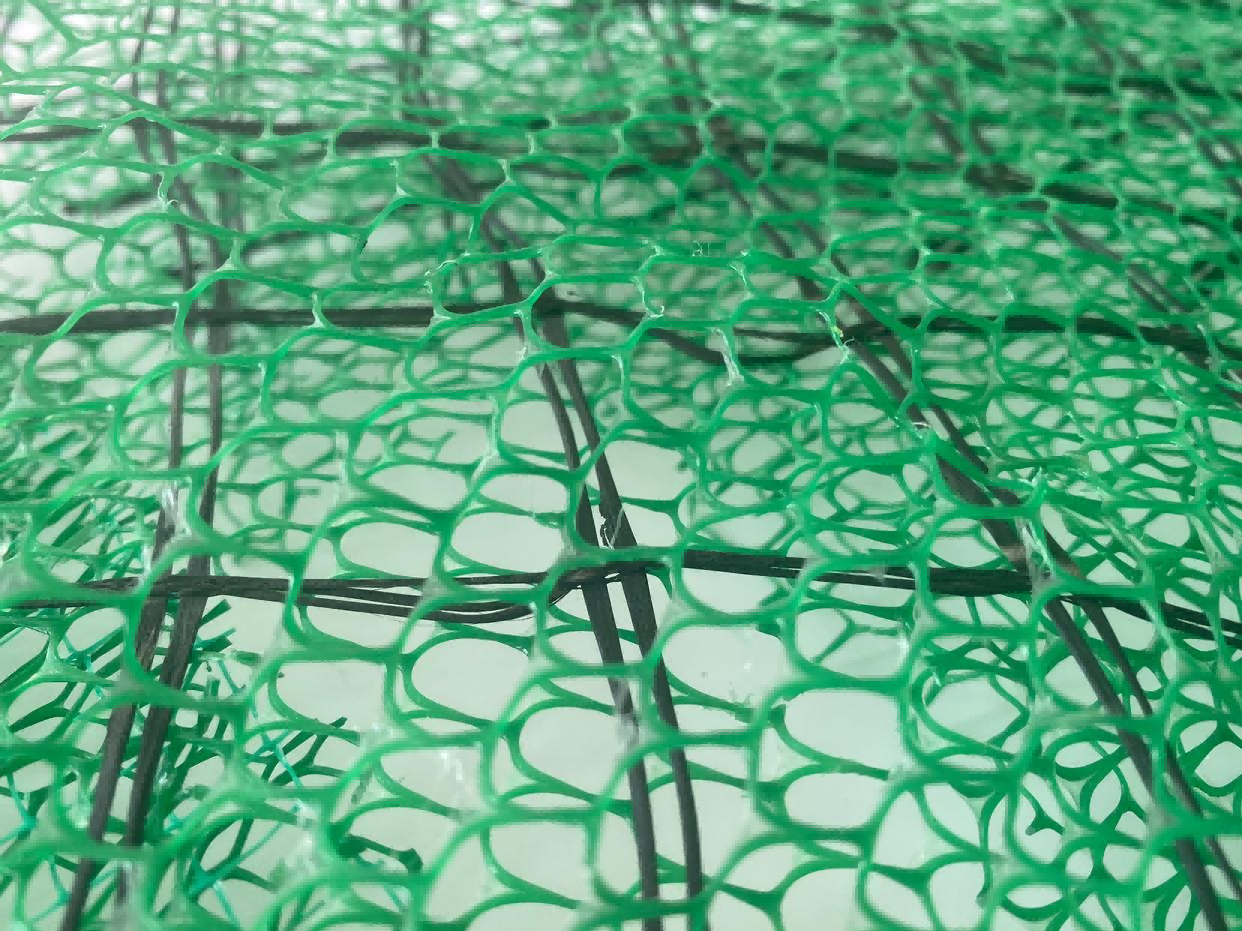
Modern extrusion lines now incorporate closed-loop control systems that continuously measure film thickness via laser or beta-gauge sensors. Real-time adjustments to die gaps, haul-off speeds, and melt temperatures happen automatically, often several times per second. This eliminates drift and maintains thickness within microns of target, even during long production runs. The key advancement lies in the predictive algorithms that preempt deviations before they manifest, learning from historical patterns and material behavior.
Calendering has evolved beyond simple roll gap settings. Multi-roll configurations with independent surface finishes and precise temperature zoning allow manufacturers to impart exact gauge profiles onto rubber or plastic sheets. Offsetting crown correction through roll bending, cross-axis adjustment, or individually controllable heating elements across the roll face ensures that even meters-wide webs emerge with minimal edge-to-center variation. Recent innovations use magnetostrictive or piezoelectric actuators embedded in calender rolls, enabling sub-micron adjustments at high speed without mechanical backlash.
The integration of inline rheometry and digital twin simulations transforms how we approach uniformity. By modeling the viscoelastic response of the material as it passes through the nip or die, engineers can set optimal conditions before a single meter is produced. When the physical equipment mirrors the virtual model through IoT connectivity, any deviation triggers an autonomous correction loop that considers both material memory effects and downstream processing constraints. This fusion of simulation and sensing elevates thickness control from a reactive measurement task to a proactive material shaping science.
Rigorous Multi-Stage Quality Testing Before Shipment
Before any product leaves our facility, it must pass through a series of demanding checks that leave no detail unchecked. Each stage is designed to catch potential flaws early, ensuring that only units meeting our strictest standards ever make it into a box.
From initial component verification to final assembly audits, our team combines automated precision with hands-on expertise. This layered approach means a single oversight is unlikely to slip through, as every test acts as a safety net for the one before it.
We don’t just test a sample batch—every single item undergoes this process. It’s a time-intensive commitment, but one that guarantees the reliability our customers have come to expect.
Certifications and Compliance: Adhering to Global Project Standards
In an era where projects span continents and regulatory landscapes shift without warning, our approach to certifications isn’t just about collecting plaques. We embed compliance into the DNA of every initiative—risk assessments, material traceability, and quality gates are woven into daily operations, not treated as afterthoughts. This proactive stance means that when a standard evolves, our processes adapt before deadlines loom, keeping your timelines intact.
Behind every certificate we hold is a living system of internal audits, peer reviews, and candid lessons-learned sessions that most firms shy away from. Our teams don’t just memorize checklists; they debate the intent behind requirements, catching edge cases that rigid interpretations miss. The result is a compliance record that’s both meticulously documented and realistically battle-tested, giving stakeholders genuine confidence rather than paper-thin assurances.
Global project standards are a moving target, and we’ve learned that the only constant is thoroughness paired with humility. When regulators dig deep, they find not just signed forms but a narrative of continuous improvement—one where every deviation is owned, analyzed, and prevented. That’s the difference between minimal compliance and the kind of reliability that lets you sleep at night when your project crosses borders.
Weathering and Chemical Resistance: Built for Harsh Environments
Materials exposed to relentless sun, salt spray, or industrial chemicals demand more than just surface toughness. Over time, UV rays can degrade polymers, while acid rain or cleaning agents slowly eat away at finishes. That’s why genuine resistance goes beyond lab tests—it’s engineered into the molecular backbone, creating a barrier that shrugs off oxidation and prevents the kind of micro-cracking that invites corrosion.
In coastal installations, salt fog mixed with humidity becomes a corrosive cocktail that ordinary coatings can't handle. Here, the formulation really matters: specific stabilizers and cross-linked densities fend off chloride ion penetration, while a carefully balanced pigment system reflects UV rather than absorbing it. The result is a surface that stays intact and color-true years after installation, even within meters of breaking waves.
Chemical spills present a different beast altogether. From accidental diesel splashes on warehouse floors to constant exposure to cleaning solvents in labs, the material must resist softening or discoloration without relying on fragile topcoats. By bonding protective elements throughout the entire thickness—rather than just on the surface—scratches don’t become weak points, and the material holds its own against a huge range of pH levels without peeling or staining.
On-Site Installation Support and Welding Integrity Checks
Having the right team on the ground makes all the difference during installation. Our field engineers work directly with your crew to make sure every component is placed, aligned, and secured according to the original design. They’re not just there to watch—they actively help solve problems that show up when real-world conditions stray from the drawings. That hands-on approach means fewer delays and a setup that’s ready for the next steps without extra rework.
Welding is where a lot of structural and piping systems either hold strong or fail, so we don’t treat it as a box to check. Every joint goes through a series of visual and non-destructive tests that go beyond what’s typically required. Our inspectors pay close attention to things like heat discoloration, bead consistency, and root penetration. When we find something off, we stop and fix it right there—no waiting for a report that shows up a week later.
Combining real-time installation support with strict weld scrutiny creates a feedback loop that catches issues before they turn into costly failures. This is especially critical in harsh environments where vibration, temperature swings, or corrosion can exploit even tiny flaws. We’ve seen how a handful of tight, clean welds and properly torqued bolts can mean the difference between a system that lasts decades and one that needs constant patching. That’s the kind of reliability our approach delivers.
FAQ
Before shipment, each geomembrane roll undergoes a series of rigorous checks. These include tensile strength and elongation tests, tear and puncture resistance evaluations, carbon black content and dispersion analysis, and oxidative induction time (OIT) testing. Factories also verify thickness uniformity and check for any surface defects or pinholes using non-destructive spark testing.
They source virgin polyethylene resin only from certified suppliers and require detailed certificates of analysis for every batch. Incoming resin is sampled and tested for melt flow index, density, and contamination before being approved for use. Many facilities also maintain long-term relationships with a limited number of suppliers to reduce variability and track resin performance historically.
The extrusion and flat-die or blown-film process must be precisely controlled. Factories monitor barrel temperatures, screw speeds, and cooling rates in real time to avoid internal stresses or microcracks. Multi-layer coextrusion is often used to incorporate antioxidants and UV stabilizers exactly where they are most effective, while a highly polished chill-roll unit ensures a smooth, uniform surface that resists environmental degradation.
Seams are the most vulnerable points in a geomembrane liner. Factories support installers by providing detailed welding parameters and dual-track wedge welders that allow air-channel testing. Destructive shear and peel tests are conducted on test seams made under actual site conditions, and the results must meet project specifications before production seaming begins. This real-time validation prevents premature seam failure.
They run accelerated stress crack resistance tests like the notched constant tensile load (NCTL) test per ASTM D5397. A sample is notched and immersed in a surfactant bath at elevated temperature, then subjected to a sustained static load. The time to failure indicates the material's resistance to slow crack growth. Only geomembranes exceeding minimum failure times—often hundreds of hours—are released, ensuring decades of service in rugged environments.
Reputable factories voluntarily submit to audits by independent bodies like the Geosynthetic Research Institute (GRI) or the International Organization for Standardization (ISO). These audits cover everything from raw material traceability and employee training to in-process inspection protocols and equipment calibration records. Some projects even require full-time, on-site third-party inspectors who monitor production and testing daily.
After production, rolls are wrapped in UV-resistant, opaque protective film and labeled with unique batch identifiers. Factories store them on clean, smooth surfaces away from sharp objects and excessive heat. During loading, nylon slings rather than chains are used to prevent bruising, and temperature-controlled containers are specified for long-distance shipping to avoid thermal cycling that might degrade the material prematurely.
Conclusion
HDPE geomembrane manufacturers prioritize quality and durability through a comprehensive approach that begins with meticulous raw material selection, using only high-grade polyethylene resins to form a robust foundation. Advanced extrusion and calendering techniques are then employed to achieve uniform thickness and consistent physical properties across the entire sheet, eliminating weak points. Once produced, every batch undergoes rigorous multi-stage quality testing—including tensile strength, tear resistance, and stress crack assessments—before being approved for shipment. Factories also maintain internationally recognized certifications and adhere to global project standards, ensuring their products meet the strict requirements of industries like mining, waste containment, and water management. This commitment to compliance guarantees reliability in diverse applications.
Beyond manufacturing, these facilities engineer products for long-term performance in harsh environments by incorporating robust weathering and chemical resistance, allowing the liners to withstand UV exposure, extreme temperatures, and aggressive chemicals without degradation. To maximize field performance, suppliers provide on-site installation support and conduct welding integrity checks, such as non-destructive air channel or spark tests, which verify seam continuity and prevent leaks. By integrating such end-to-end quality control—from resin to installation—HDPE geomembrane factories deliver solutions that safeguard modern infrastructure projects for decades.
Contact Us
Contact Person: Jennifer LEE
Email: [email protected]
Tel/WhatsApp: 8618553418999
Website: https://vip.e-baixing.com/wenfengshitong