

How to Choose the Right Oil-Free Air Blower
2026-07-11
Selecting an oil-free air blower that perfectly matches your needs doesn't have to be a guessing game. With clean, efficient air delivery becoming essential across industries—from wastewater treatment to pneumatic conveying—the right choice directly impacts performance, energy costs, and maintenance headaches. At Seize Air, we've seen how matching the right technology to the application transforms operations. In this guide, we'll walk you through the key factors that cut through the noise, helping you pinpoint a reliable blower without the oily mess or costly surprises.
Pin Down Your Exact Airflow and Pressure Needs
Many systems fall short simply because the airflow and pressure specs were guessed rather than measured. Start by mapping out every tool, valve, and actuator that will draw air simultaneously—peak demand rarely happens in isolation. A quick sketch of your piping layout and the distances involved can reveal pressure drops that catalogs won’t mention.
Once you’ve tallied the CFM at each point of use, add a healthy buffer for leaks and future expansion, but don’t go overboard. Oversized compressors cycle more often, wasting energy and inviting moisture problems. Instead, match the compressor’s duty cycle to your actual load pattern; a unit that runs 60–70% of the time under typical conditions tends to strike the best balance.
Pressure requirements deserve equal scrutiny. Most tools function perfectly at 90 PSI, yet shops often run lines at 120 PSI “just in case.” That extra 30 PSI increases power consumption by roughly 10% and accelerates wear on seals and hoses. Take a hard look at what your equipment really needs—your electric bill and maintenance schedule will thank you.
Efficiency That Goes Beyond the Spec Sheet
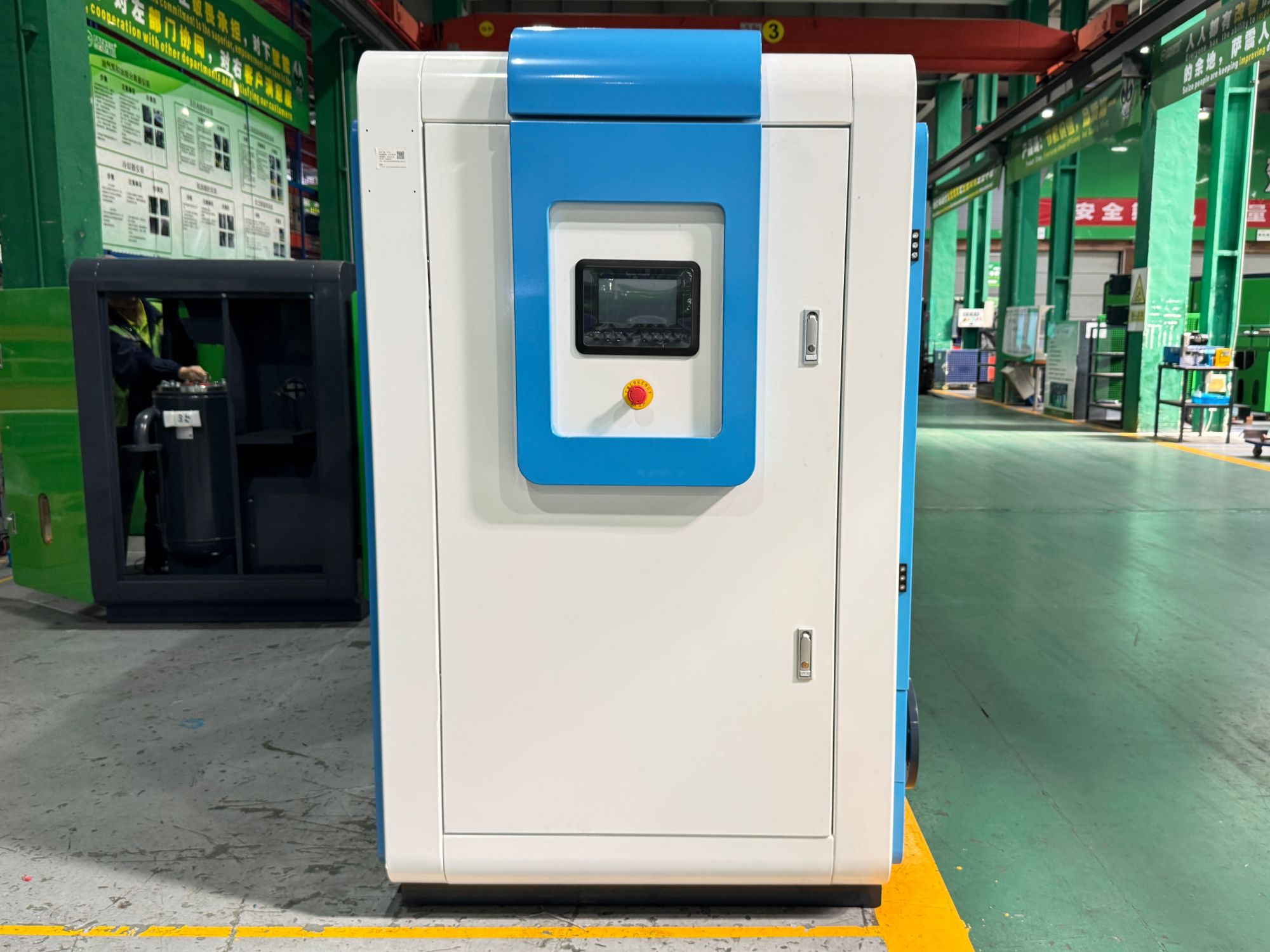
Real efficiency isn't captured by a single number on a label. It's the cumulative effect of well-thought-out engineering—the way a machine anticipates your next move, trims seconds off repetitive tasks, or hums along using less energy than its rating suggests. Spec sheets tell you the theoretical peak. Everyday use tells you what it actually feels like to work with a tool that never makes you wait.
This is where thoughtful design steps in. Instead of chasing a higher wattage or a faster cycle time just to impress a reviewer, the focus shifts to seamless operation. Components are tuned to work together, not just meet a benchmark. The result? You get work done sooner, with fewer interruptions, and the battery or power draw stays surprisingly low—even when pushed harder than the manual's recommended scenarios.
In the end, efficiency that disregards the spec sheet means you spend less time managing the tool and more time completing the project. It's the quiet confidence of a system that handles the small, overlooked things well: a startup sequence that's instant, a cooling path that prolongs life without throttling performance, and a user experience that simply gets out of your way.
Quiet Operation: More Than Just a Decibel Number
When manufacturers slap a decibel figure on a spec sheet, it rarely captures the full story of how a machine actually sounds in your space. A raw dB(A) reading might tell you the average loudness, but it glosses over the tonal annoyances—the whines, drones, or rattles that burrow into your concentration. Two devices can measure exactly the same on a sound meter, yet one feels intrusive while the other fades into the background. That discrepancy comes down to the quality of the noise, not just its quantity.
Real quietness means paying attention to pitch, consistency, and how sound carries across different loads. A steadily humming fan can be more tolerable than a sporadic, high-pitched screech from a cheap power supply. Designers who obsess over acoustic comfort often dampen vibrations at their source, reshape air pathways to avoid whistling, and select materials that don't amplify resonance. These refinements don't always improve the decibel rating by much, but they transform the character of the sound from distracting to unobtrusive.
In practice, a truly quiet device becomes something you stop noticing altogether. It doesn't just meet a threshold on a chart—it earns a kind of perceptual invisibility, letting you work, sleep, or create without ever reminding you it's there. That's the difference between a number on a box and a machine tuned for real-world stillness.
The Hidden Costs of Maintenance—and How to Avoid Them
Many organizations treat maintenance as little more than a line item on the budget, overlooking the quiet drain it can create. Beyond the obvious expenses of spare parts and labor, there are less visible costs: unplanned downtime that interrupts production, emergency repairs that demand premium rates, and the gradual erosion of asset life when minor issues are ignored. These hidden costs compound over time, eating away at profitability without ever appearing on a standard financial statement.
One of the most insidious hidden costs is the loss of operational knowledge. When maintenance relies heavily on a handful of veteran technicians who carry decades of undocumented know-how, the risk spikes whenever they're unavailable. Onboarding delays, repetitive troubleshooting, and inconsistent repair quality all stem from this silent dependency. Pair that with outdated inventory practices—where parts are either overstocked and tying up capital or missing when urgently needed—and the financial leakage becomes substantial.
Avoiding these traps requires a shift from reactive firefighting to proactive strategy. Start by capturing critical knowledge digitally, standardizing procedures, and cross-training teams. Adopt condition-based monitoring rather than rigid time-based schedules, so you service equipment when it actually needs attention. Also, refine inventory management with data-driven forecasting and vendor partnerships that guarantee quick access to essential parts. Small, consistent investments in planning and training pay back many times over by keeping hidden costs in check.
Build Quality and Longevity: What to Look For
A product that feels solid in your hands often hints at thoughtful engineering beneath the surface. Heft isn't everything—flimsy plastics can be weighted, after all—but the way seams meet, buttons click, and materials resist fingerprints or flex tells a more honest story. Look for subtle signs: uniform finishes, tightly fitted joints, and moving parts that glide without wobble. These details rarely make it into spec sheets, yet they separate items destined for a drawer from those you'll reach for daily, year after year.
Longevity leans heavily on components that are easy to forget about until they fail. Pay attention to things like hinges, ports, seals, and the kind of screws used—cross-head fasteners suggest consumer-grade repair hostility, while Torx or standard hex heads often signal that someone considered long-term maintenance. Modular design isn't just a buzzword; it's the difference between replacing a worn-out battery in five minutes and tossing the entire device because a glued-in cell gave up. Even the way packaging is designed can be a clue: excessive glue and single-use plastic are not the hallmarks of a manufacturer expecting you to keep what's inside.
Warranties are part of the equation, but the fine print matters more than the year count. A ten-year guarantee that excludes moving components or normal wear is just marketing. Instead, check if the company stocks replacement parts directly, offers out-of-warranty repair services, or publishes disassembly guides. Brands that stand behind their products long-term don't hide these resources—they treat them as a point of pride. Ultimately, the most durable item is one you can maintain yourself, keeping it out of the cycle of replacement and waste.
When ‘Oil-Free’ Actually Matters
Oily skin types have long heard the mantra: go oil-free. But the truth is, not all oils are foes. The real concern emerges when formulas are loaded with heavy, occlusive oils that suffocate the skin, trapping dirt and bacteria. For those with a history of congestion or breakouts, a genuinely oil-free moisturizer can be the difference between clarity and a fresh wave of blemishes. It’s not about avoiding every lipid—it’s about dodging the ones that feed the fire.
What many don’t realize is that some products labeled “oil-free” simply swap traditional oils for silicones or synthetic emollients that can be just as problematic. These fillers may sit on the surface, creating a false sense of hydration while clogging pores over time. If your skin struggles with cystic acne or perpetual shine, a stripped-back, truly oil-free approach lets active ingredients like niacinamide and salicylic acid work without interference, balancing oil production rather than masking it.
There’s also an under-discussed factor: texture and wearability. Even if your skin can handle certain oils, a heavy finish under makeup or in humid weather can feel unbearable. A lightweight, oil-free gel formula disappears into the skin, reducing midday greasiness and allowing your complexion to breathe. For anyone sweltering through a heatwave or living in a tropical climate, oil-free isn’t a trend—it’s a practical, comfort-driven choice that just happens to keep breakouts at bay.
FAQ
An oil-free air blower compresses air without using oil for lubrication in the compression chamber. This means the output air is completely free of oil contaminants, which is a big advantage in sensitive settings like food processing or medical labs. Traditional blowers often use oil to reduce friction, but even with filters, trace oil can carry over into the airflow.
The main reasons are cleaner air output, lower long-term maintenance costs, and environmental compliance. You avoid the hassle of oil changes, disposal, and the risk of oil leaks. They're also quieter in many designs because they often use sound-dampening materials and lack the mechanical noise of oil pumps.
Start by checking the CFM (cubic feet per minute) and PSI (pounds per square inch) requirements of the tools or processes you're running. Look at the peak demand, not just average. Then add about 20-30% headroom so the blower isn't constantly maxed out. It's better to oversize slightly than to undersize and risk equipment strain.
Many are, but it depends on the design. Look for models with integrated silencers, acoustic enclosures, or those labeled 'low-noise.' If you're installing near workstations, you might want something below 70 dB(A). Ask the manufacturer for sound level data at your operating pressure.
They do need less routine upkeep compared to oil-lubricated units. Typically, you'll need to check and replace air filters periodically, inspect valves and seals, and keep the cooling fins clean. Some have sealed bearings that last for years. The absence of oil changes simplifies things a lot.
Absolutely. Variable speed drives (VSD) can make a big difference by matching motor speed to demand. Also, look for blowers with high-efficiency motors and optimized impeller designs. An energy-efficient unit might cost more upfront but will pay for itself in reduced electricity bills over time.
Yes, but you need to pick a model rated for those conditions. Check the IP (Ingress Protection) rating for dust and moisture resistance. For high ambient temperatures, ensure the blower has adequate cooling and maybe a high-temperature motor class. In dusty areas, extra filtration on the intake is wise.
Conclusion
Choosing the right oil-free air blower starts with a clear understanding of your operational demands—particularly airflow and pressure. Don’t just glance at the maximum figures; match them precisely to your system’s steady-state requirements, because oversizing can waste energy, while undersizing leads to poor performance. Beyond the spec sheet, real efficiency comes from how the blower handles your specific application, including part-load conditions and total cost of ownership. A genuinely efficient unit maintains consistent output with minimal power draw, not just a high peak efficiency number that’s rarely reached in daily use.
Noise is another factor that can’t be judged by a single decibel rating alone—pay attention to the sound quality and frequency, as a lower-pitched hum may be less intrusive than a high-pitched whine, even at the same level. Maintenance costs often hide in plain sight; oil-free designs eliminate oil changes and disposal, but also inspect bearing life, filter accessibility, and the simplicity of routine checks to minimize downtime. Build quality matters: look for robust housings, corrosion-resistant materials, and proven sealing technologies that ensure longevity, especially in dusty or humid environments. Finally, when cleanliness is non-negotiable—in food processing, pharmaceuticals, or electronics—oil-free isn’t just a preference; it’s a safeguard against contamination, making the choice clear for critical applications.
Contact Us
Contact Person: Mia
Email: [email protected]
Tel/WhatsApp: +86 19821985894
Website: https://www.seize-air.com