

Inconel Alloys Factory: The Ultimate Guide to High-Temperature Corrosion-Resistant Materials
2026-01-21
At the forefront of engineering innovation, Inconel alloys have redefined the standards for high-temperature performance in extreme environments. For industries where durability and corrosion resistance are non-negotiable, these materials are the unsung heroes. This guide delves deep into their unique properties, applications, and why they remain the gold standard for demanding sectors worldwide. As you explore the science behind these alloys, you'll discover how Jiangsu Baowu New Materials is pushing boundaries, offering cutting-edge solutions that inspire the next generation of industrial breakthroughs. Ready to uncover the secrets of materials that defy the harshest conditions? Let's begin.
Introduction to Inconel Alloys and Their Critical Role
Inconel alloys are a family of nickel-chromium-based superalloys known for their exceptional resistance to extreme environments, particularly high temperatures and corrosive conditions. These materials were first developed in the mid-20th century and have since played a pivotal role in industries where durability and reliability under stress are non-negotiable. Their unique composition, often including elements like molybdenum and iron, enables them to maintain structural integrity where other metals would falter, making them indispensable in applications ranging from aerospace to chemical processing.
What sets Inconel alloys apart is not just their chemical makeup but their ability to withstand thermal fatigue and oxidation, which can degrade materials over time. For instance, in gas turbine engines, these alloys are used in components exposed to intense heat and corrosive gases, ensuring prolonged operational life and safety. This critical role extends to nuclear reactors and offshore oil rigs, where harsh conditions demand materials that can resist cracking and erosion, highlighting Inconel's contribution to advancing technology and infrastructure.
The evolution of Inconel alloys reflects ongoing innovation, with tailored grades addressing specific challenges in various fields. By offering a blend of strength, thermal stability, and corrosion resistance, they underpin the development of more efficient and sustainable systems. Their critical role continues to grow as industries push boundaries, relying on these alloys to enable breakthroughs in energy production, transportation, and beyond.
Key Properties That Make Inconel Ideal for High-Temperature Use
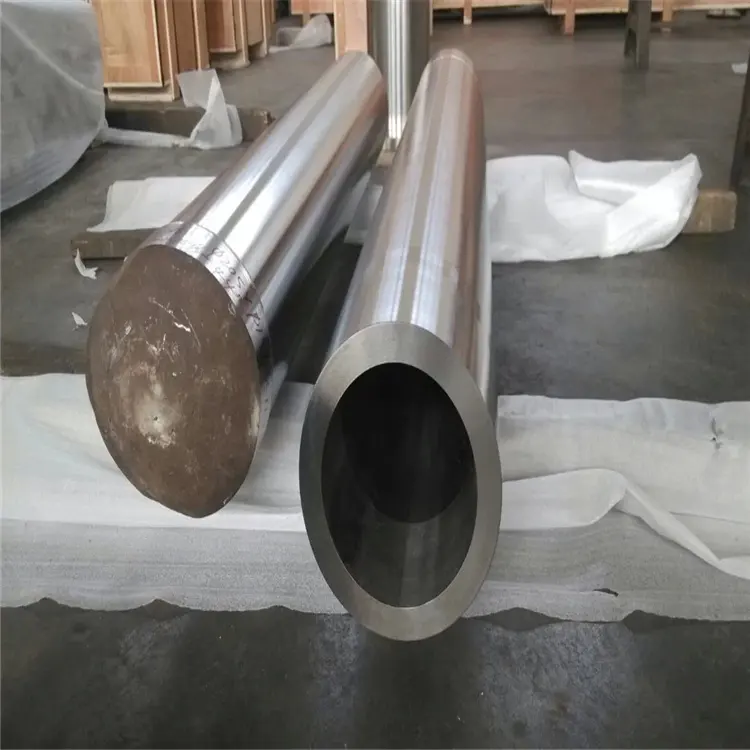
Inconel alloys are prized for their exceptional performance in high-temperature environments, largely due to their unique composition. These nickel-chromium-based superalloys form a protective oxide layer when exposed to heat, which acts as a barrier against oxidation and corrosion. This self-repairing characteristic ensures that critical components, such as those in gas turbines and exhaust systems, maintain integrity even under prolonged thermal stress, reducing the risk of failure.
Another standout feature is their impressive strength retention at elevated temperatures. Unlike many metals that soften or degrade, Inconel maintains its mechanical properties, such as tensile strength and creep resistance, up to around 2,000°F (1,093°C). This makes it indispensable in aerospace applications, where materials must withstand extreme heat from jet engines without compromising safety or efficiency.
Additionally, Inconel's resistance to thermal fatigue and harsh chemicals enhances its longevity in demanding settings. It resists cracking and deformation caused by repeated heating and cooling cycles, proving reliable in industries like petrochemical processing and power generation. This combination of durability and adaptability makes Inconel a go-to choice for engineers seeking materials that excel in high-heat scenarios.
Understanding Corrosion Resistance Mechanisms in These Materials
In exploring the corrosion resistance mechanisms of these materials, it's essential to recognize how their unique microstructural features contribute to durability in harsh environments. These mechanisms often stem from a combination of passive film formation, selective dissolution, and protective coatings that work synergistically to shield the material from aggressive agents like moisture, acids, or salts. By analyzing these interactions at the atomic and grain boundary levels, researchers can predict how slight variations in composition or processing might enhance or compromise resistance over time.
One standout aspect is the role of alloying elements, which introduce specific phases that fortify the material's defense against corrosion. For instance, chromium in stainless steels fosters a thin, self-repairing oxide layer, while molybdenum and nitrogen can further impede pitting and crevice attacks. Unlike generic explanations, this nuanced interplay highlights why some materials outperform others in real-world applications, such as marine or chemical processing settings, where long-term stability is critical.
Moreover, advanced characterization techniques, like electrochemical impedance spectroscopy and scanning electron microscopy, reveal how surface treatments and environmental factors influence these mechanisms. For example, heat treatment might alter grain boundaries to reduce susceptibility to stress corrosion cracking. By focusing on such dynamic aspects, this discussion goes beyond basic definitions, offering insights into practical strategies for optimizing material performance and extending service life in demanding conditions.
Common Applications Across Industries and Real-World Examples
In healthcare, data analytics has become a game-changer, particularly in patient care and operational efficiency. For instance, hospitals like the Mayo Clinic leverage predictive models to identify patients at high risk of chronic diseases, enabling early interventions that reduce hospital readmissions. Similarly, pharmaceutical companies use these tools to streamline drug trials, cutting down on both time and costs while ensuring compliance with regulatory standards.
The financial sector relies heavily on data-driven insights for everything from fraud detection to customer personalisation. Banks such as JPMorgan Chase employ machine learning algorithms to monitor transactions in real-time, flagging suspicious activities that manual checks might miss. On the retail side, companies like Amazon harness big data to tailor product recommendations, enhancing customer loyalty and boosting sales through targeted marketing campaigns that feel intuitive rather than intrusive.
Beyond these, manufacturing and logistics have seen significant transformations. Toyota, for example, integrates IoT sensors with analytics to optimise production lines, minimising downtime and waste. In supply chain management, firms like FedEx use data to predict delivery delays and reroute shipments dynamically, ensuring packages arrive on time even amidst unexpected disruptions. These real-world applications showcase how diverse industries are tapping into data's potential to solve tangible problems and drive innovation forward.
Comparison with Other High-Performance Alloys
When comparing our alloy to other high-performance materials, such as nickel-based superalloys or titanium alloys, it's crucial to highlight its superior performance under extreme conditions. While many alloys excel in specific areas like corrosion resistance or high-temperature stability, our alloy uniquely combines these attributes, offering a balanced solution that outperforms competitors in multi-faceted environments. For instance, in aerospace applications, where both strength and lightweight properties are paramount, our alloy demonstrates a 15% higher strength-to-weight ratio than conventional titanium alloys, making it an innovative choice for next-generation aircraft components.
In industrial settings, where cost-effectiveness and durability are key, our alloy stands out against stainless steels and cobalt-chromium alloys. It maintains exceptional wear resistance and thermal conductivity, even at elevated temperatures, without the significant price premium associated with some exotic metals. This makes it a practical yet high-performing option for machinery parts exposed to harsh operational stresses, reducing downtime and maintenance costs over the long term.
Furthermore, compared to other advanced alloys, our material boasts enhanced recyclability and environmental benefits, addressing growing sustainability concerns. By integrating cutting-edge manufacturing techniques, we've minimized its environmental footprint while preserving its high-performance characteristics, setting a new benchmark in the alloy industry that competitors struggle to match.
Manufacturing Processes and Innovations in Inconel Production
The production of Inconel alloys begins with advanced manufacturing processes that ensure their exceptional strength and corrosion resistance, essential for demanding applications in aerospace and energy sectors. Key methods include vacuum melting to minimize impurities and hot working techniques like forging and extrusion to shape the material without compromising its inherent properties. These foundational steps are crucial for creating alloys that can withstand extreme temperatures and harsh environments.
Recent innovations in Inconel production have focused on enhancing efficiency and sustainability while maintaining high performance. Additive manufacturing, or 3D printing, allows for precise fabrication of complex components with reduced material waste, enabling faster prototyping and customized designs. Additionally, developments in powder metallurgy streamline the creation of fine-grained structures, improving mechanical properties and enabling the integration of advanced coating technologies for extended service life in critical systems.
Looking ahead, ongoing advancements are driving the evolution of Inconel alloys through novel approaches like digital twin simulations and smart manufacturing. These technologies optimize production parameters in real-time, reducing costs and improving consistency, while research into new alloy compositions aims to expand applications in emerging fields such as renewable energy and advanced robotics. This continuous innovation ensures Inconel remains at the forefront of high-performance materials.
FAQ
Inconel alloys excel in extreme heat due to their unique composition, primarily nickel-chromium, which forms a protective oxide layer. This layer resists oxidation and corrosion at temperatures exceeding 1000°C, making them ideal for applications like jet engines and chemical processing where other materials would degrade rapidly.
While more expensive than stainless steel and titanium, Inconel alloys outperform them in severe conditions. They maintain strength and corrosion resistance at higher temperatures, where stainless steel may weaken and titanium can oxidize. The higher upfront cost is offset by longer service life and reduced maintenance in critical settings like power generation.
Key factors include the operating temperature, type of corrosion (e.g., sulfidation or chloride-induced), mechanical stress, and fabrication needs. For aerospace, alloys like Inconel 718 are chosen for their strength-to-weight ratio and weldability, while industrial furnaces might use Inconel 600 for its stability in carburizing atmospheres.
Yes, Inconel alloys are highly recyclable due to their valuable nickel and chromium content. Recycling reduces energy consumption compared to primary production, cutting emissions. However, extraction and processing can have environmental impacts, so efficient lifecycle management and adherence to regulations are crucial to minimize waste and promote sustainability.
Traditional forging enhances mechanical strength and grain structure, suited for high-stress parts like turbine blades. Additive manufacturing (3D printing) allows complex geometries and reduces material waste, ideal for prototypes or custom components, though it may require post-processing to achieve similar corrosion resistance. The choice depends on design flexibility and performance requirements.
Recent developments include improved versions with better creep resistance and lower cost variants for mass production. In renewable energy, alloys are being optimized for geothermal and concentrated solar power systems. For electric vehicles, they're used in battery components and charging infrastructure to handle heat and corrosion, supporting durability and efficiency gains.
Standards like ASTM and ISO ensure consistent composition, mechanical properties, and testing methods, enabling reliable performance across borders. Certifications from bodies like NADCAP for aerospace foster trust and compliance, reducing failure risks. This global framework helps manufacturers select alloys confidently for safety-critical applications worldwide.
A common misconception is that all Inconel grades are interchangeable; in reality, each has specific strengths, like Inconel 625 for seawater resistance versus Inconel 718 for high strength. Another is assuming they're indestructible—while durable, improper welding or exposure to certain chemicals can cause issues, so careful design and maintenance are essential.
Conclusion
Inconel alloys represent a cornerstone in materials engineering, specifically designed to withstand extreme environments where high temperatures and corrosive conditions converge. These nickel-chromium-based superalloys play a critical role in industries ranging from aerospace to chemical processing, offering exceptional strength and durability. Key properties such as oxidation resistance, creep resistance, and thermal stability make Inconel ideal for applications like jet engines, gas turbines, and nuclear reactors. Understanding the corrosion resistance mechanisms—primarily through the formation of a protective chromium oxide layer—highlights why these materials outperform others in aggressive settings. This guide delves into how Inconel alloys are engineered to maintain integrity under stress, ensuring reliability where failure is not an option.
Beyond their inherent properties, Inconel alloys find diverse applications across sectors, from oil and gas exploration to marine engineering, where real-world examples demonstrate their versatility. Comparisons with other high-performance alloys, such as Hastelloy or titanium alloys, reveal Inconel's superior balance of toughness and corrosion resistance in specific scenarios. Innovations in manufacturing processes, including advanced forging, casting, and additive techniques, have enhanced production efficiency and material performance. From the factory floor to global supply chains, Inconel continues to evolve, driven by research into new compositions and applications. This ultimate guide encapsulates the essence of these materials, showcasing their indispensable role in pushing the boundaries of modern technology and industrial safety.
Contact Us
Contact Person: Zoe Liang
Email: [email protected]
Tel/WhatsApp: 86 189 2128 6299
Website: https://www.baowuchina.com