

Low Voltage Switchgear ODM: How Custom Designs Meet Your Power Needs
2026-11-02
Standard low voltage switchgear often forces you to compromise—until you discover ODM solutions built around your exact power needs. MOLDVOLT takes a different approach, engineering custom designs that eliminate bottlenecks and fit your infrastructure like a glove. Here's how tailored manufacturing can transform your electrical distribution.
Where Standard Switchgear Falls Short in Real Facilities
Real facilities rarely match the clean, temperature-controlled, vibration-free assumptions baked into standard switchgear ratings. Dust, moisture, chemical vapors, and wide temperature swings degrade insulation and reduce contact pressure over time. Standard enclosures and ventilation paths don't account for airborne particulates common in manufacturing plants, wastewater treatment buildings, or coastal installations. The result is premature corrosion, tracking, and nuisance trips that maintenance teams often can't trace back to the original design assumptions.
Another gap appears in electrical distribution coordination. Standard switchgear often ships with conservative trip settings that assume a simple radial feeder layout. Actual facilities accumulate load changes, added motor drives, backup generators, and capacitor banks over decades. That mismatch produces cascading outages: a single downstream fault clears an entire main breaker instead of the nearest branch device. Arc flash incident energy can also be higher than the label suggests because real fault currents and clearing times differ from the original study.
Space constraints in existing electrical rooms often force facilities to accept standard footprints that leave no working clearance. Maintenance tasks—racking breakers, inspecting bus joints, replacing fuses—become risky or impossible without a shutdown. Standard switchgear also tends to lack the remote monitoring and diagnostic ports needed for a facility that runs with a lean electrical staff. Without those data streams, crews discover degradation only after a failure, not before.
Designing Around Tight Clearances and Existing Cable Runs
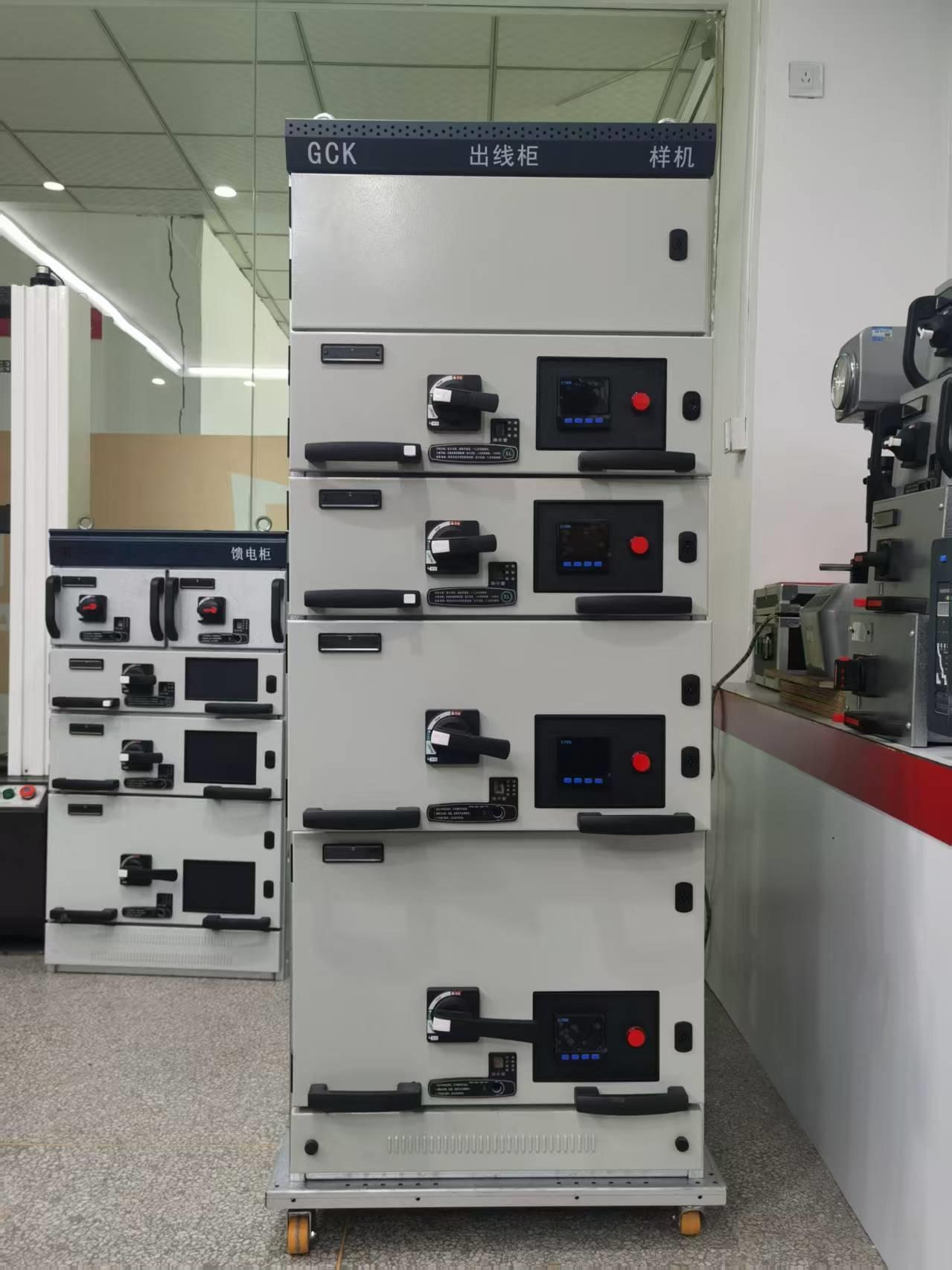
Start with a full physical survey rather than relying on as-built drawings. Use a laser distance meter and a bend-radius gauge to map the real clearance around corners, conduit entries, and existing cable bundles. Note where existing runs sag or have been pulled tight, because new work will inevitably interact with those spots first.
Route new cables along the side of the tray or conduit that already has the least congestion, even if that means a longer path. Where clearance is under 25 mm, plan for split loom or low-profile clips instead of standard saddles. Avoid crossing existing runs at right angles; parallel routing with a 15 mm gap reduces abrasion and makes future fault-finding easier.
Before pulling any cable, photograph the area and add temporary tags to existing circuits that might be disturbed. This extra ten minutes prevents hours of tracing later. Leave a small service loop at both ends of the new run, but keep it tucked behind the existing bundle so it does not create a new pinch point.
Paying for Actual Load Profiles Instead of Generic Ratings
Paying for actual load profiles flips the old settlement model on its head. Instead of compensating a site based on a nameplate capacity or a broad customer class, the money follows what the meter records hour by hour. That shifts the incentive from gaming a rating to controlling real usage patterns, which is precisely what a strained grid needs.
The operational difference is stark. A facility that peaks at 4 p.m. on a July weekday is no longer lumped with one that peaks at midnight in January. With interval data already streaming from modern meters, settlements can reflect the timing and shape of demand, not just its maximum. This pushes users to trim the right hours and opens room for aggregators to bid true flexibility into markets.
There are rough edges, of course. Data cleanup, baseline arguments, and the sheer volume of half-hourly reads can overwhelm a legacy billing system. But those are surmountable problems, and the alternative—paying for a sticker number that says little about system impact—keeps rewarding the wrong behavior.
Choosing Enclosure Materials That Handle Your Environment
When you're picking an enclosure, the environment isn't a background detail—it's the spec that will quietly destroy your hardware if ignored. I've seen units in coastal installations corrode within months, not because the stainless steel grade was wrong on paper, but because the morning fog mixed with salt and sat on the gaskets longer than anyone expected. That's why you need to map out the actual microclimate around the enclosure: wind patterns, shade, nearby chemical vents, even how often someone hoses down the floor.
The material choice often comes down to more than just corrosion resistance. A polycarbonate lid might be perfect for a clean indoor lab, but on a rooftop in Arizona, the UV exposure will turn it hazy and brittle within two seasons. Aluminum is light and dissipates heat well, but if you're near a wastewater treatment plant, hydrogen sulfide will pit it unless you specify a heavy conversion coating. And don't forget thermal expansion—mixing a stainless body with an acrylic window can cause the seal to gap when temperatures swing from freezing nights to full sun by noon.
One of the best moves is to test small material coupons in the exact location before committing to a full production run. Lab data from salt spray chambers doesn't account for the intermittent condensation, UV, and occasional power-washing that happens in the field. If you can't wait for months of exposure, look at what's already survived in that environment—old junction boxes, signage, outdoor lighting—and work backwards from the materials they used. That observational data often beats a datasheet.
Embedding Metering and Protection Without Extra Panels
Traditional electrical rooms often reserve wall space for a separate metering cabinet and a dedicated protection panel, which means extra enclosures, additional conduit runs, and more terminations to verify. Embedding metering and protection directly into existing switchgear or distribution boards removes that entire layer of hardware. Current transformers, voltage taps, and multifunction relays sit inside the same footprint that already houses the breakers, so the panel becomes a single point of installation rather than a cluster of add-on boxes.
The practical benefit shows up during both installation and daily operation. With fewer external panels, wiring is shorter, fault-finding is more direct, and the wall stays cleaner. A maintenance technician can read energy data or adjust protection settings from the front of the main panel without walking to a separate meter enclosure. Since the integrated components use the same bus and breaker layout, coordination between metering inputs and protective trip functions happens in one place, reducing the chance of mismatched settings or overlooked CT polarities.
From Approved Drawings to On-Site Commissioning Support
Approved drawings are not the end of the design phase—they're the starting gun for everything that follows on site. We treat the stamped set as a living document, comparing each layout sheet against the actual building conditions, existing service routes, and the equipment that's already on order. Discrepancies caught at this stage mean fewer emergency change orders later, and that's where our field engineers earn their keep.
Throughout the installation, our team works alongside the mechanical and electrical contractors. Instead of waiting for a formal query, we schedule short site walks every morning to review yesterday's progress against the drawings. If a pipe run needs to shift because of an undocumented beam, we mark it up, talk through the implications with the structural engineer, and issue a revised detail before lunch. That pace keeps the job moving without sacrificing the documented trail.
Commissioning support turns into a partnership rather than a hand-off. Our engineers stay on site through the initial energization, loop tuning, and performance verification. They carry the latest drawing revisions on a tablet, so any deviation from the approved sequence is immediately visible and either corrected or formally recorded. By the time we demobilize, the client has a system that runs exactly as the signed drawings promised—and a set of as-builts that reflect every field adjustment.
FAQ
It means the manufacturer handles the full design and engineering based on your power distribution requirements—everything from busbar sizing and breaker selection to enclosure layout and protection coordination. You're not picking from a catalog; the design starts with your load profile and site constraints.
A standard panel forces you to work within fixed dimensions, breaker arrangements, and current ratings. A custom design lets you specify the exact number of feeders, cable entry points, short-circuit withstand rating, and even the physical footprint. The result is a better fit for your facility's space, maintenance routines, and future load growth.
Common examples include unusual voltage levels, high fault current requirements, renewable energy integration, motor control centers with specialized starter configurations, and harsh environments needing higher ingress protection. ODM also handles situations where you need to combine metering, automatic transfer switching, and power monitoring in one assembly.
You'll want a single-line diagram, available fault current at the service entrance, load list with expected running and starting currents, cable sizes and entry directions, and any site-specific environmental factors like temperature, humidity, or corrosive atmospheres. The more complete this package is, the faster the design can be finalized without back-and-forth.
By tailoring the layout, you can place breakers and instruments at ergonomic heights, include visible isolation and grounding switches where needed, and add arc flash mitigation features from the start. This reduces the likelihood of operating errors and makes routine inspection or breaker racking safer for your team.
Yes, if you plan for it. A good custom design leaves spare breaker slots, reserved busbar capacity, and sometimes empty cable compartments. You can also specify a modular frame that accepts additional sections later, so expanding the switchgear doesn't require a full replacement.
The manufacturer should design to the standards applicable at your installation site—such as IEC 61439 or UL 891—and provide type-test certificates or design verification reports. Some projects also require third-party witness testing, which can be arranged before production starts.
It depends on the complexity. A simple custom layout may cost only slightly more than a standard panel because the core components are the same. Lead times are often longer due to engineering approvals, but this upfront investment usually pays off through reduced site modifications, easier installation, and fewer change orders later.
Conclusion
Standard switchgear often assumes a clean, spacious electrical room and predictable loads, which rarely matches the reality of aging plants or retrofit projects. Off-the-shelf panels force facility managers to work around mismatched breaker ratings, oversized busbars, and enclosures that cannot handle humidity, dust, or corrosive atmospheres. An ODM approach starts with the actual cable entry points and existing conduit runs, so the gear fits into tight clearances without costly demolition or re-pulling feeders. Instead of paying for generic current ratings that leave capacity unused, the design is based on measured load profiles, harmonic content, and future expansion needs, right-sizing every bus and breaker to actual demand.
Enclosure material selection moves beyond painted steel to stainless steel, fiberglass, or special coatings for washdown areas, coastal salt spray, or chemical exposure. Metering, protection relays, and communications can be embedded directly into the incoming and feeder sections, eliminating extra wall-mounted panels and reducing wiring errors. The process does not stop at drawing approval; the ODM partner stays involved through factory acceptance testing, delivery coordination, and on-site commissioning, addressing last-minute field changes without derailing the schedule. This end-to-end customization ensures the low voltage switchgear aligns with both the physical constraints and the operational rhythm of the facility, rather than forcing the facility to adapt to a standard product.
Contact Us
Contact Person: Hellen
Email: [email protected]
Tel/WhatsApp: 86-13634205622
Website: https://www.voltcabinet.com