

MCCB Supplier Selection Guide for Reliable Molded Case Circuit Breakers
2026-08-21
What separates a molded case circuit breaker that trips exactly when it should from one that fails silently? Often, it’s the supplier behind the component. Sourcing MCCBs isn’t just about matching amp ratings—it’s about trusting that every breaker will perform under fault conditions, every time. That’s where many procurement teams get stuck: datasheets look identical, but real-world reliability varies wildly. This guide breaks down the selection criteria that matter, with insights from ETEK and other field-tested manufacturers, so you can shortlist suppliers worth your confidence.
When a Bargain MCCB Becomes a Liability
A low-cost MCCB might look like a smart way to trim the project budget, but what you save upfront often comes out of the copper, contacts, and arc-quenching materials. The breaking capacity gets quietly downgraded, so when a real short circuit hits, the device either fails to open or welds itself shut. That turns a $20 saving into a burnt busbar, a smoked panel, or worse.
These bargain breakers also tend to drift. Thermal elements made from inconsistent alloys trip late under mild overloads, or nuisance-trip on a cool morning. Maintenance crews start distrusting the protection curve, bypassing interlocks, or swapping in whatever spare is on the truck. The result is a system where nobody knows if the next fault will be cleared or just passed along to the cable.
Then comes the invoice you didn't see: unplanned downtime, replacement hardware, maybe an insurance adjuster asking why the listed protective device didn't match the nameplate. The liability doesn't end at the failed component; it lands on the engineer who signed off, the contractor who installed it, and the owner who thought a bargain was the same as a deal.
Deciphering MCCB Datasheets: What Specs Actually Matter
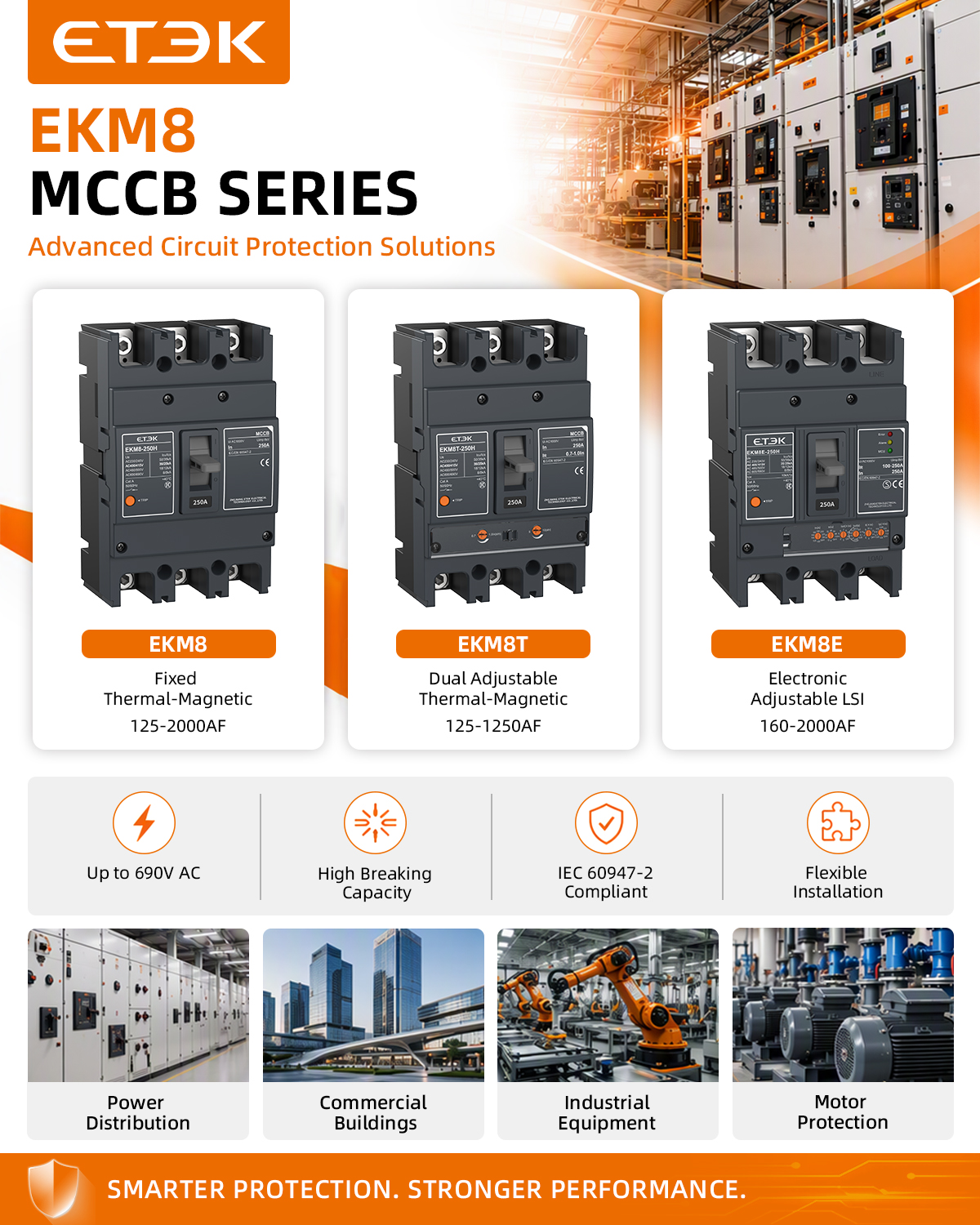
Most people flip straight to rated current and pole count, but those are just entry points. The real story is in the interrupting rating—if your available fault current exceeds that number, the breaker won't clear the fault safely. Look at the voltage rating too, because interrupting capacity drops at higher voltages, and a breaker listed for 240V might not handle 480V without a serious derating.
Trip curves are another spot where datasheets bury the lede. The curve tells you how long the breaker will hold at a given overload, and choosing the wrong one can mean nuisance tripping or letting a motor cook. Thermal-magnetic breakers behave differently from electronic trip units, so match the curve to the actual load profile, not just the nameplate amps. Also check the endurance ratings—some breakers are rated for thousands of operations, others for a handful, and that matters more than you'd think in a control panel.
Finally, don't ignore the fine print on temperature derating and altitude. A breaker rated at 40°C might lose 20% of its capacity at 55°C, and high-altitude installations need extra margin for cooling. The datasheet's ambient temperature range and derating tables are not optional reading; they're what separates a reliable design from a service call waiting to happen.
The Unseen Link Between Supplier Audits and Arc Flash Safety
Most arc flash discussions stop at personal protective equipment, labels, and training. What rarely enters the room is the chain of decisions that put electrical components on the floor in the first place. A breaker that doesn't match its specification, a relay sourced from an unverified refurbisher, or a fuse with slightly different time-current behavior can shift the fault clearing time just enough to turn a survivable event into a catastrophic one. Supplier audits are the quiet checkpoint that catches those deviations before they become part of an energized system.
During a supplier audit, what you're really verifying is whether the parts will perform the way the arc flash study assumed they would. Traceability records, test certificates, and change-control logs tell you if a vendor has substituted materials or altered tolerances without telling anyone. If a supplier changes a fuse curve or ships a batch of breakers with inconsistent trip settings, the calculated incident energy on the label no longer reflects the equipment in front of a worker. That gap between the study and the installed hardware is where the unseen risk accumulates.
Companies that treat supplier audits as a paperwork exercise miss a direct electrical safety payoff. Walking a supplier's facility, asking about counterfeit mitigation, reviewing calibration dates, and comparing incoming parts against approved submittals can prevent an arc flash incident years later. The audit isn't just about supply chain discipline; it keeps the assumptions behind arc flash labels honest. When those assumptions drift, the labels become decoration rather than protection.
Lead Times, Stock Levels, and the Art of Avoiding Downtime
Running out of stock while a machine sits idle is the kind of silent failure that never shows up in a quarterly report until it's too late. Lead times aren't just numbers on a supplier's invoice; they're promises about the future, and those promises break more often than most managers admit. When you treat stock levels as a fixed buffer rather than a living, breathing response to real-world variability, you're not managing inventory - you're gambling with production schedules.
The trick isn't hoarding more parts or chasing shorter lead times at any cost. It's about understanding the shape of your demand and the mood of your supply chain. A critical spare part that usually takes six weeks to arrive can suddenly show up in four, or disappear for ten. Smart operations don't try to predict the exact date; they build flexibility into the system so that a missed delivery doesn't cascade into a halted line. That means knowing which items genuinely need a safety net and which ones can afford a leaner approach without inviting disaster.
Avoiding downtime is less about perfection and more about preparation for imperfection. When lead times stretch and stock levels dip, the best defense is a clear-eyed view of what could go wrong next - and a willingness to act before the problem becomes visible on the factory floor.
Field Reports: Learning from Real MCCB Installation Outcomes
从现场安装报告里反复出现的一个教训是,环境因素比设备铭牌参数更能决定MCCB的寿命。在一家靠近海岸的化工厂,三台同型号MCCB装在户外箱体内,仅靠箱体通风。运行不到八个月,盐雾和湿度就让铜排连接面出现明显氧化,端子温升比初始值高出17°C。维护人员拆除后发现,厂家原配的镀锡端子早已失去保护层。后来他们改用镀银端子并加装防凝露加热器,才把温度压回正常范围。这类报告说明,手册上的防护等级只是起点,现场微气候必须单独评估。
扭矩控制是另一个容易被忽视的细节。不少安装队凭手感拧紧MCCB端子,结果造成接触电阻离散。一份来自数据中心改造项目的记录显示,一台400A框架断路器在负载仅210A时,B相端子温度升至88°C,而相邻两相只有62°C。查修后发现该相螺栓扭矩比规范值低了约30%。按厂商扭矩表重新紧固后,三相温差缩小到5°C以内,红外扫描再未报警。此后他们规定所有MCCB安装必须使用数显扭矩扳手,并在通电24小时后复检一次。
安装空间和散热路径同样经常被现场报告点名。某食品加工厂的新建配电柜为了节省占地,将两台250A MCCB并排安装,中间仅留15mm间距,且上方紧贴线槽。投入运行后,其中一台在夏季负载率达到85%时频繁热脱扣。拆柜测量发现,两台断路器周围的局部环境温度比设计值高出23°C,气流几乎不流通。重新排布母排、增加35mm间距并加装导流板后,连续两周满载运行未再跳闸。这些真实案例提醒我们,MCCB安装不是“装上能合闸”就结束,接线扭矩、环境防护、散热路径每一项都需要用实测数据验证。
Beyond the Purchase Order: Service, Support, and Spare Parts for MCCBs
A molded case circuit breaker rarely fails on schedule, and when it does, the conversation often shifts from ratings and trip curves to downtime and access. That is why the value of an MCCB extends well beyond the initial order. A responsive service network, clear maintenance guidance, and readily available spare parts turn a catalog component into a dependable part of your electrical infrastructure. Without that support, even a high-quality breaker can become a liability during an unplanned outage.
Field support matters most when conditions drift from the datasheet. Whether it is a question about selective coordination, thermal derating in a hot panel, or a retrofit into an older switchboard, having direct access to application engineers saves hours of guesswork. Likewise, spare parts such as trip units, arc chutes, and terminal kits should not require a six-week lead time. Stocking common components or knowing exactly where to source them keeps repair cycles measured in days, not months.
Finally, look for vendors that offer proactive support rather than just reactive fulfillment. Scheduled maintenance training, on-site inspections, and condition monitoring recommendations help your team catch wear before it escalates. When the purchase order closes, that ongoing relationship is what determines whether your MCCB investment protects your operation for years or becomes another line item on a replacement budget.
FAQ
Look at how they handle technical documentation and trip curve data. A solid supplier provides verified time-current curves, temperature derating charts, and short-circuit test reports instead of glossy brochures. They also tend to stock genuine spare parts and can explain coordination with upstream breakers without hesitation.
Ask for endurance test results beyond the minimum standard. Reliable suppliers often share data on mechanical and electrical life at different current levels. If they only quote the rated operations without context, dig deeper into how those numbers were produced and whether they reflect real switching conditions.
That depends on the installation region, but mature suppliers usually carry both IEC 60947-2 and UL 489 certifications. Having both means they have adapted internal designs and testing to different fault current expectations, which shows a deeper engineering capability than a single-market player.
Frame size tells you about physical dimensions, but breaking capacity determines whether the breaker can interrupt a worst-case fault without destroying itself. A smaller supplier may offer a compact frame with low kA ratings that looks cheaper, while a better partner will match or exceed the available fault current at your point of installation.
Beyond basic warranty replacement, look for application review, coordination studies, and access to engineers when a trip unit needs adjustment. A supplier that treats the sale as the end of the relationship rarely helps when you face nuisance tripping or need to reconfigure a panel for new load profiles.
Yes, primarily around testing philosophy and allowable temperature rise. IEC breakers often allow higher terminal temperatures and are selected for European or Asian installations, while UL-listed units follow North American wire sizing and enclosure practices. A supplier fluent in both can save you from misapplying a breaker across markets.
Ask whether shorter lead times come from pre-built stock or from skipping tests. Established suppliers usually have regional warehouses and semi-finished assemblies that can be configured quickly, but each unit still goes through routine verification. If a supplier promises unusually fast delivery, request the specific test records for that production batch.
Conclusion
Selecting a molded case circuit breaker supplier is rarely just a price negotiation. A unit that looks like a bargain can turn into a liability once it is installed in a distribution board, tripping unpredictably or failing to clear a fault. Reading datasheets with a critical eye matters more than comparing headline ratings: interrupting capacity at the actual system voltage, temperature derating, and endurance under real switching duty separate dependable hardware from paper specifications. Supplier audits also carry weight beyond paperwork because a manufacturer's assembly discipline and traceability quietly shape arc flash outcomes. If a breaker's internal clearances or torque settings drift, the energy released during a fault can be far higher than the label suggests.
Practical logistics deserve equal attention. Lead times and buffer stock are not just procurement metrics; they are what keep a production line or critical load from sitting dark while waiting for a replacement. Field reports from existing installations offer the clearest signal, showing how breakers behave after years of thermal cycling, dust, and occasional faults. Finally, the relationship should extend beyond the purchase order. Access to service engineers, firmware updates where applicable, and a dependable spare parts channel often determines whether a minor issue becomes a planned afternoon of work or a week of downtime.
Contact Us
Contact Person: Andy
Email: [email protected]
Tel/WhatsApp: +86 13356133008
Website: https://www.etek-china.com/