
MCM Soft Stone Powerful Manufacturer Delivers Premium Quality
2026-08-17
Most manufacturers promise quality, but few back it up with the kind of engineering muscle that turns soft stone into a true architectural asset. That’s exactly what you get with MCM Soft Stone from Magic Stone—a powerful production line paired with a relentless focus on premium quality. Whether you're an architect tired of subpar materials or a homeowner planning a standout facade, the details behind this manufacturer’s process might change how you spec your next project.
MCM Soft Stone: The Manufacturer Behind the Premium Finish
MCM Soft Stone didn’t build its name on marketing. The company earned it inside a factory where raw mineral composites are pressed, cured, and finished under conditions most suppliers would consider excessive. Every batch gets checked for surface uniformity, edge crispness, and color depth before it leaves the line. That’s why their panels carry a finish that looks carved rather than coated.
What separates MCM from generic lightweight stone is the layering work behind each sheet. They don’t just print a stone pattern onto a polymer base. Instead, they blend micronized stone with flexible binders, then treat the surface to preserve the subtle pores and mineral flecks you’d expect from quarried material. The result is a matte, low-sheen finish that doesn’t glare under spotlights and doesn’t turn plastic-looking after a few years outdoors.
Installers often mention the edges. While cheaper alternatives expose a plasticky core on the cut line, MCM’s material holds its color through the full thickness. That makes butt joints and inside corners much easier to detail cleanly. For architects who’ve been burned by panels that look good in a sample box but flat on a facade, MCM has become a quiet default—not because it’s the cheapest, but because the premium finish survives from the first mockup to the final punch list.
Inside the Plant Where Every Panel Is a Promise
Walking the production floor, you notice the silence comes in layers—machines hum a low, steady note, and between stations, workers run their hands over seams that will never be seen once the panels are mounted. Here, every piece is a handshake, not just a product.
The promise is pressed into each layer before the first bolt turns. A batch that fails the twist test, even by a hair, gets pulled from the line and broken down on the spot—no rework shortcuts, no "close enough" stamps. That's the quiet contract: what leaves this plant either holds up, or it doesn't leave.
By the time a panel reaches the loading dock, it carries a date, a line number, and the initials of the person who inspected it. If something fails in the field, they'll know exactly which hands touched it. That's not accountability theater; it's the only way a promise survives contact with weather, time, and load.
Lightweight Build, Heavy-Duty Performance
A tool that weighs less usually asks you to give up something in return—runtime, torque, or the ability to survive a hard fall. That's not the case here. The chassis is built from a high-grade composite that strips away unnecessary mass while keeping structural rigidity intact. Drop it, toss it in the truck bed, or let it rattle around the job box; it comes out ready.
The real surprise shows up under load. A carefully tuned brushless motor and a direct-drive gearbox deliver punch that feels closer to a corded tool than something you can hold with two fingers. Overhead work, tight spaces, or a full day of repetitive fastening—your arms won't tire before the job is done.
That balance between low weight and high output isn't an accident. Every internal component was selected for its power-to-weight ratio, from the magnesium gear housing to the slim-profile battery pack. The result is a tool you'll reach for first, not because it's the lightest option, but because it does the heavy lifting without punishing your hands.
Why Designers Choose Soft Stone for Bold Facades
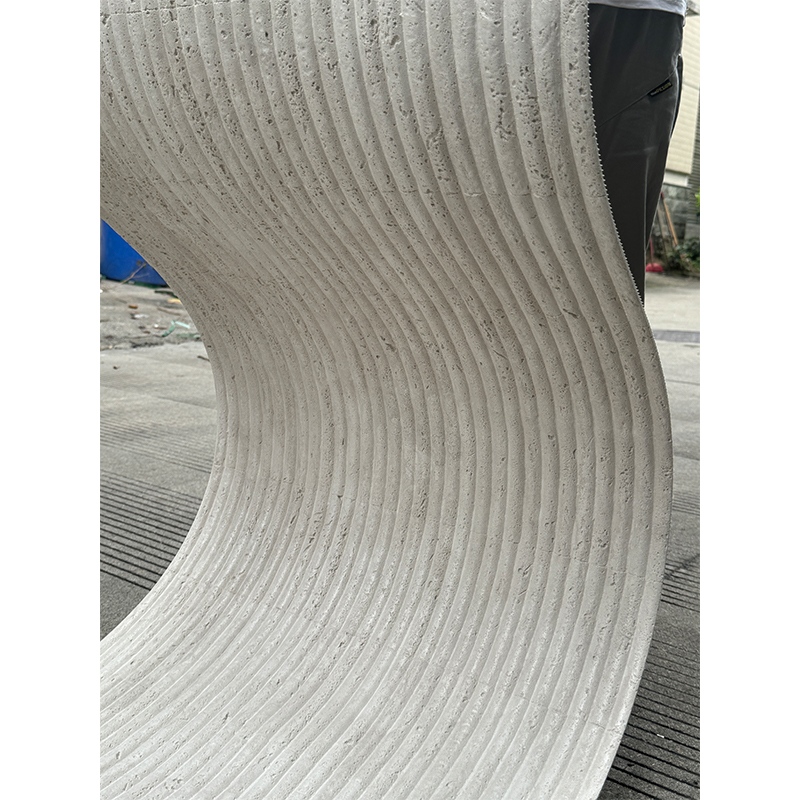
Soft stone gives architects a way to shape surfaces that rigid panels can't match. It can wrap curves, corners, and irregular geometries without visible seams or complicated substructures, so a facade can read as one continuous sculptural skin rather than an assembly of parts.
The material's light weight changes what's possible on renovations and upper floors. Designers don't have to reinforce existing walls or pay for heavy lifting systems, which means bold cantilevers, deep reveals, and large-format surfaces become practical even on older buildings or tight sites.
There's also a tactile quality that renders well in daylight and shadow. Soft stone has a matte, mineral finish that doesn't look synthetic, but it can be cut into sharp angles or layered for depth. That balance of natural texture and geometric control helps a facade stand out without relying on bright colors or oversized signage.
Quality That’s Measured in Millimeters, Not Marketing
A tenth of a millimeter never makes the headline, but it decides whether a drawer closes with a solid thunk or a cheap rattle. We spend more time chasing that difference than we do polishing adjectives. The fit between two surfaces, the alignment of a seam, the way a button settles into its recess—these are the details that get checked with a caliper, not a focus group.
There's a reason our tolerance sheets look like they belong in a metrology lab. Every critical gap is measured against physical reference points, not brand promises. If a radius drifts a fraction of a degree or a panel sits a hair too proud, it doesn't ship. No amount of clever copy can hide a misaligned edge once you run your thumb across it.
The payoff isn't just a product that feels right on day one. It's the one that still feels right after years of daily use, when the joints haven't loosened and the seams haven't wandered. That kind of consistency doesn't come from a campaign. It comes from measuring things most companies hope you'll never notice.
Real-World Proof: Soft Stone Panels in Action
A beachfront café in Malibu replaced its weather-beaten wood siding with soft stone panels two years ago. Salt spray and afternoon winds haven't dulled the finish or loosened a single corner. The owner now spends weekends serving customers instead of sanding and repainting.
In downtown Austin, a boutique hotel wrapped its lobby accent wall in the same material. Guests often run their hands over the surface, surprised it isn't quarried stone. The install took a single afternoon with basic tools—no mortar, no specialized crew, no lingering dust in the guest rooms.
A residential renovation in rainy Portland tells a similar story. The panels were cut with a circular saw to fit around irregular window openings, and they've held their color through two wet winters. The contractor noted that the lightweight sheets made the job safer and faster than hauling full-size stone slabs up a narrow staircase.
FAQ
MCM soft stone uses a flexible mineral-based core that bends without cracking, so it handles curved surfaces and thermal movement far better than rigid boards. Its surface texture is cast from real stone, giving it a natural look while remaining much lighter and easier to cut on site.
Every batch goes through a multi-stage inspection that checks thickness, color consistency, and flexibility before packing. The production line uses calibrated molds and controlled curing, so even large runs keep the same tone and texture from first panel to last.
Yes. The panels are designed for exterior use, with UV-stable pigments and a water-resistant surface that withstands rain, freeze-thaw cycles, and strong sun. Proper adhesive and sealant application is still required, but the material itself won't delaminate or become brittle quickly.
It works well for feature walls, commercial storefronts, renovated exteriors, and interior accent surfaces. Because it's thin and flexible, it's often chosen for curved columns, arched openings, and areas where natural stone would be too heavy or expensive.
Most installers find it straightforward. Panels are lightweight and can be cut with standard tools like a utility knife or circular saw. The key is using the recommended adhesive and following the layout guide, which avoids visible seams and keeps corners neat.
The manufacturer offers a wide range of standard stone finishes, from travertine to slate. Custom colors and surface textures are also possible for larger orders, allowing architects to match a specific project palette without switching materials.
Maintenance is minimal. A soft brush or low-pressure water rinse removes most dirt. For stubborn stains, a mild detergent with a non-abrasive sponge works fine. The surface does not require sealing or repainting under normal conditions.
It is significantly lighter, often reducing the load on the building structure and making handling faster on site. That lower weight also cuts shipping costs and allows installation on substrates that could not support full-thickness stone, without sacrificing the look of real masonry.
Conclusion
MCM Soft Stone earns its reputation not through glossy brochures but on the factory floor, where every panel passes through a line built around precision. Raw mineral composites are pressed, cured, and trimmed to tolerances tight enough that a single millimeter of variance sends a panel back for rework. The result is a finish that mimics quarried stone without the weight, the cost, or the installation headaches. That lightweight build doesn't mean a trade-off in toughness. Panels are tested for impact, moisture, and UV exposure, and they hold up under conditions that would crack conventional cladding. The plant operates on a simple rule: if a panel leaves the dock, it has already proven itself.
Designers turn to MCM Soft Stone for bold facades because it lets them work with deep reveals, sharp corners, and large-format layouts that heavier materials make impractical. The product's consistency from batch to batch is not a slogan; it's checked with calipers and documented on every pallet. Real-world projects from coastal hotels to mountain retail spaces show the same story: surfaces stay flat, color stays stable, and installation crews finish ahead of schedule. That's the powerful part of the manufacturer claim: not the loudest marketing, but the quiet confidence of a panel that performs exactly as promised, year after year.
Contact Us
Contact Person: Vito
Email: [email protected]
Tel/WhatsApp: 86 13088879266
Website: https://www.magicstonemcm.com