
OEM Rigid Chain Lift Systems: Key Benefits, Applications, and Design Considerations
2026-11-16
When precision lifting meets demanding industrial environments, standard actuators often fall short. OEM rigid chain lift systems are changing that—offering a compact, high-load alternative to hydraulic or screw drives. In this guide, we explore the key benefits, real-world applications, and critical design factors that engineers must weigh before integration. Whether you're automating a heavy workstation or refining a cleanroom process, understanding these systems can directly impact performance and total cost. At Homall Industry Limited, we've seen firsthand how the right rigid chain configuration eliminates misalignment headaches and extends service life. Read on to discover if this technology fits your next OEM project.
Compact Vertical Motion Without the Usual Tradeoffs
Most vertical motion systems force a choice: travel length, load capacity, or footprint. Either the stage becomes a bulky column, or precision suffers as the carriage extends. This design sidesteps that compromise by nesting the drive and guide elements within the same vertical plane, keeping the overall height no taller than the stroke itself demands. The result is a rise-and-fall platform that fits into enclosures where a conventional lift would crowd out adjacent components.
Instead of relying on a single lead screw or belt loop, the mechanism pairs a rigid linear rail with a counterbalanced spindle tucked behind the carriage. That split keeps bending moments off the bearing blocks, so the carriage stays square under off-center payloads. Users can mount a tool, sensor, or gripper near the front edge without watching the vertical axis wobble or lose repeatability over time. Acceleration profiles stay smooth because the counterweight cancels most of the static torque that normally slams a vertical stage at direction changes.
Maintenance is equally deliberate. The rail and screw share a common sealed channel, and the wiper system clears debris before it reaches the ball nut. A single lubrication port services both guides, cutting routine upkeep to a few minutes per quarter. For engineers tired of trading away z-axis stability for compactness, the arrangement offers a vertical stroke that behaves like a horizontal stage—minus the space penalty.
Why Load Placement Matters More Than Lift Capacity
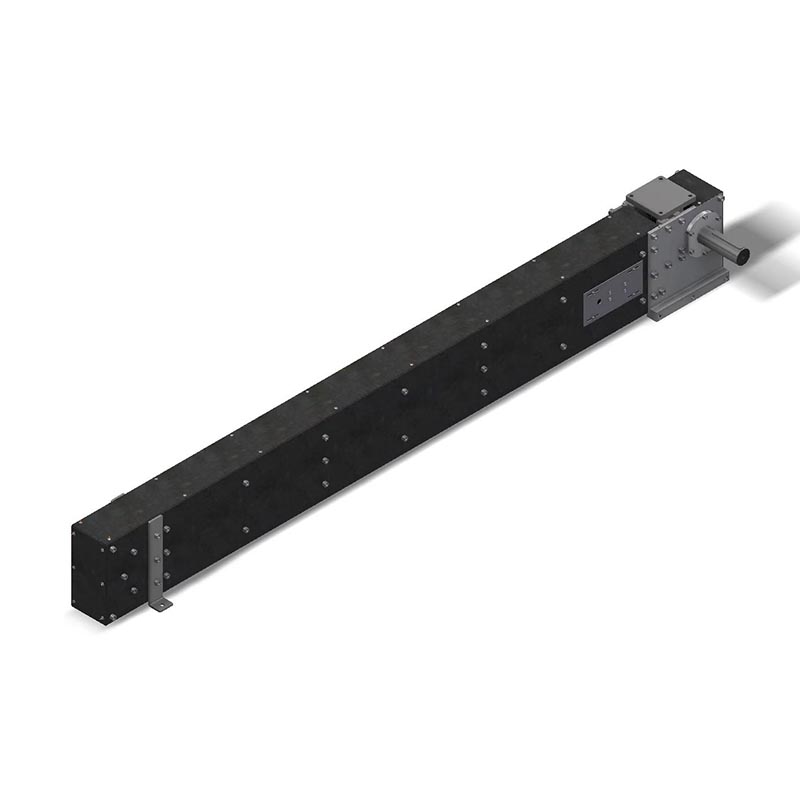
Most operators assume a machine's lift capacity is the number to watch, but placement is where real-world handling either falls apart or shines. A load centered close to the mast behaves far differently than one hanging out on the tips of the forks, even when the weight is identical. That shift in the load's center of gravity changes how much of the truck's stability is actually being used, and a few extra inches forward can silently eat into your safety margin.
Think of it like carrying a heavy box against your chest versus at arm's length. The box weighs the same, but your body has to work much harder the farther it gets from your core. Forklifts and telehandlers respond the same way. A rated capacity assumes a specific load center—often 24 inches—but pallets, odd-shaped crates, or long piping rarely cooperate. Ignoring that mismatch is how tip-overs happen even when the load is technically under the rated limit.
Smart operators read the data plate, then judge the actual load center before they ever lift. Shifting the load back, using the right attachments, or simply taking a smaller bite with the forks can bring the center of gravity back where it belongs. That's the difference between surviving a shift and just hoping nothing shifts.
OEM Applications Where Rigid Chain Outperforms Hydraulics
Rigid chain actuators slip into vertical lift duties where hydraulic cylinders once dominated, especially in clean manufacturing settings like medical device assembly or food packaging lines. Without fluid lines or reservoirs, there is no chance of a hose failure dripping oil onto a sterile work surface or a product batch. The chain column also holds its extended position without creep, so a raised platform stays put even if power drops for a moment.
Automated warehousing and material handling systems benefit from the repeatable positioning that rigid chain drives provide on mast lifts and transfer platforms. Hydraulics often need warm-up time and change speed as oil temperature shifts, but rigid chain motion stays consistent inside cold storage or temperature-controlled zones. That removes cycle time drift and lets OEMs spec tighter throughput numbers without adding complex compensation logic.
Mobile OEM equipment like scissor lifts, dock levelers, and ergonomic workstations get lighter and easier to integrate when the pump, hoses, and reservoir disappear. Instead of scheduling fluid changes and seal replacements, maintenance teams only need to lubricate the chain periodically. For manufacturers shipping machines to multiple customer sites, that simplicity cuts service calls and keeps downtime off the operator's daily routine.
Picking Stroke Length and Speed for Your Specific Build
When you're dialing in a switch for your build, stroke length isn't just a spec sheet number—it shapes how every keystroke feels from the moment your finger starts moving to the hard stop at the bottom. Shorter travel (think 3.0–3.5mm total) suits fast-paced gaming or rapid data entry where you want to bottom out less and reset quicker, but it can feel abrupt if you're used to a full 4.0mm press. If your build leans toward long typing sessions or you simply enjoy the sensation of a deeper, more deliberate press, a longer stroke gives your fingers room to breathe and reduces the jarring impact on joints.
Speed, often tied to spring weight and stem design, is the other half of the equation. A snappy return spring with a lighter actuation force can make a short-stroke switch feel almost telepathic in a rhythm game, but that same setup might cause accidental inputs when you're just resting your fingers on the keys. For hybrid work-and-play boards, try a medium travel length with a progressive spring that starts soft and firms up near the bottom—this gives you a controlled descent without sacrificing the quick reset you need for double-tapping. Don't chase the lowest numbers on a datasheet; experiment with a few switches in your actual case and plate combo, because acoustics and mounting style can shift the perceived speed more than any advertised spec.
Integration Snags That Show Up Only After Installation
Most integration testing happens on a clean, controlled setup. The moment your solution touches a real environment, things start to surface that no amount of pre-deployment checks could have predicted. It’s rarely the big architectural flaws—it’s the small, stubborn details. A library version that behaves slightly differently on the target OS. An environment variable that’s set in staging but missing in production. A firewall rule that worked for your test traffic but blocks the actual payload size. These aren’t catastrophic failures, but they eat hours of debugging time. They show up only after installation because that’s the first time all the real-world constraints collide with your code.
Another common snag is the assumption that installed dependencies will match the versions you locked in. Package managers can resolve differently depending on the registry mirror, cache state, or even the time of day. Then there’s the matter of paths and permissions—your code might expect write access to a directory that the production server deliberately makes read-only. Or a background service that starts automatically on your dev machine but needs explicit configuration through systemd or Windows services. Each of these feels small in isolation, but together they can turn a smooth rollout into a late-night firefight.
The trick is to stop treating post-installation issues as unexpected. Build a checklist of environment drift points: OS-specific file paths, network egress rules, environment variable precedence, and dependency resolution quirks. Also, run a smoke test that exercises not just the happy path, but the edge cases that rely on those environment-specific details. The goal isn’t to catch everything—it’s to make the first surprise less jarring and shorten the time from “it worked on my machine” to “it works here too.”
Designing for Decades of Duty Cycles With Minimal Upkeep
The real challenge in designing for decades of duty cycles isn't just choosing stronger materials — it's accepting that every component has a finite life and then engineering around that fact. By mapping the exact load path through each joint, bearing surface, and flex point, you can place sacrificial wear elements where they're easy to reach and leave the structural core untouched. Self-lubricating bushings, sealed-for-life gearboxes, and surface treatments that shrug off corrosion all do more than reduce friction; they remove the daily inspection ritual from the operator's list.
Minimal upkeep doesn't mean zero attention. It means the rare maintenance event is designed to be fast, foolproof, and impossible to get wrong. Threaded fasteners are replaced with captured pins. Filters and access panels are color-coded and tool-free. High-wear items like belts or contacts are rated for at least three times the expected service interval, so a missed check never turns into a failure. That's the difference between a machine that survives heavy use and one that stays boringly reliable for thirty years without drama.
FAQ
OEM here means the lift mechanism is sourced or built to fit a specific machine builder's platform rather than sold as a standalone retrofit kit. That matters most during integration: mounting geometry, stroke length, and control interface are tailored, so the lift behaves like a native subsystem instead of an add-on.
Hydraulics bring fluid maintenance, potential leaks, and temperature drift. A rigid chain lift stores its chain in a compact magazine, extends as a rigid column, and holds position without creep. It also avoids the messy auxiliary power pack and often fits better in tight, clean assembly lines.
Automated assembly stations, pallet handling, theater stage lifts, and material transfer in semiconductor or food processing lines. Anywhere you need a long vertical stroke from a low-profile base, or where a conventional telescoping cylinder would be too tall when retracted.
Typical units handle a few hundred kilograms up to several tons, but the real constraint is column stability under side load. Speed is usually moderate—around 100 to 400 mm/s—because the chain must engage and disengage cleanly. Exceeding either limit tends to introduce vibration and premature wear.
In washdown or cleanroom settings, the chain and guide channels need sealed housings, stainless steel or coated components, and food-grade lubrication. For dusty environments, you want positive pressure or bellows to keep particles out of the engagement area. Temperature extremes also affect chain preload, so the housing may need thermal compensation.
Define the retracted height, extended height, real payload including dynamic forces, side load from off-center parts, and duty cycle. Also clarify the control protocol—whether it's discrete I/O, analog positioning, or a fieldbus. These choices drive the chain pitch, guide rail design, and motor sizing, so retrofits later are costly.
Most failures trace back to neglected lubrication or allowed contamination. Inspect chain links for wear, check guide rail alignment, and listen for clicking during extension. Grease intervals depend on duty cycle but quarterly to semi-annual works for many systems. Don't ignore slight binding; it accelerates wear quickly.
Conclusion
Rigid chain actuators earn their keep by delivering long vertical strokes from a compact footprint—no deep pit or oversized cylinder required. The real differentiator, though, is how load placement shapes performance. A rating that looks generous on paper falls apart if the payload sits off-center or creates a moment arm the chain wasn't meant to handle. That’s why OEM teams spend as much time on mounting geometry and guide alignment as on raw force. Stroke length and speed follow the same logic: a pick-and-place module might demand quick, short cycles, while a lifting column in a cleanroom values smooth, precise positioning over raw acceleration.
Rigid chain shines in tight vertical lifts where hydraulics bring leaks, noise, and fluid maintenance. Equipment like automated storage, ergonomic lifts, and material handling stations often see fewer integration headaches once the chain’s straight-line actuation replaces hose runs and pump units. But integration snags rarely appear on a CAD model—cable management, chain sag under side load, and access for inspection only surface after first install. Designing for decades of duty cycles means choosing hardened chain links, sealed bearings, and a lubrication plan that doesn’t ask operators to remember a monthly service. When those details are locked in early, OEMs get a lift system that runs quietly for years with just occasional inspection.
Contact Us
Contact Person: Ryan
Email: [email protected]
Tel/WhatsApp: +85259582726
Website: https://www.robomast.com/