

Pharmaceutical Facility Contractor Questions to Ask Before Signing
2026-09-18
Choosing the right pharmaceutical facility contractor can make or break your project—and your compliance. Before you sign anything, you need answers that go beyond the glossy brochure. From cleanroom validation to regulatory track records, the questions you ask now will shape your facility for years to come. At GENO Pharmatech, we've seen too many teams discover critical gaps only after the ink dries. So let's cut through the sales pitch and dig into the questions that actually protect your investment—and your patients.
Can They Prove Cleanroom Experience Without the Buzzwords?
Ask someone to describe their cleanroom background and you'll often hear a parade of terms like ISO 14644, GMP Annex 1, unidirectional airflow, and HEPA filtration. But strip those words away and what's left? A seasoned professional should be able to explain, in plain language, how they actually behaved inside the controlled environment—how they moved to avoid disrupting airflow, why they chose a particular gowning sequence, or what they did when a particle counter suddenly spiked. If the only proof they offer is a vocabulary list, you're likely dealing with someone who has read about cleanrooms, not worked in one.
Real experience shows up in small, unglamorous details: the habit of wiping down surfaces from cleanest to dirtiest, the instinct to pause before opening a pass-through, the way they talk about the frustration of fogged-up goggles during a four-hour shift. These aren't things you learn from a training slide. They come from hours of repetitive, physically demanding work where one wrong move means a deviation report. So instead of asking for a definition of "aseptic technique," ask them to walk you through the last time they had to recover from a minor breach. Their answer—or their hesitation—will tell you everything.
The best cleanroom operators often struggle to remember the exact clause numbers of a standard, but they can describe the smell of the disinfectant, the feel of sticky mats underfoot, and the particular cadence of swapping gloves between tasks. That tactile, situational memory is the real credential. Buzzwords can be memorized in an afternoon; cleanroom instincts take years to build. If a candidate leans heavily on jargon, push them gently toward concrete examples. Those who have truly lived the environment will welcome the chance to talk about the work itself, not just the labels attached to it.
Which Past Projects Actually Resemble Your Facility?
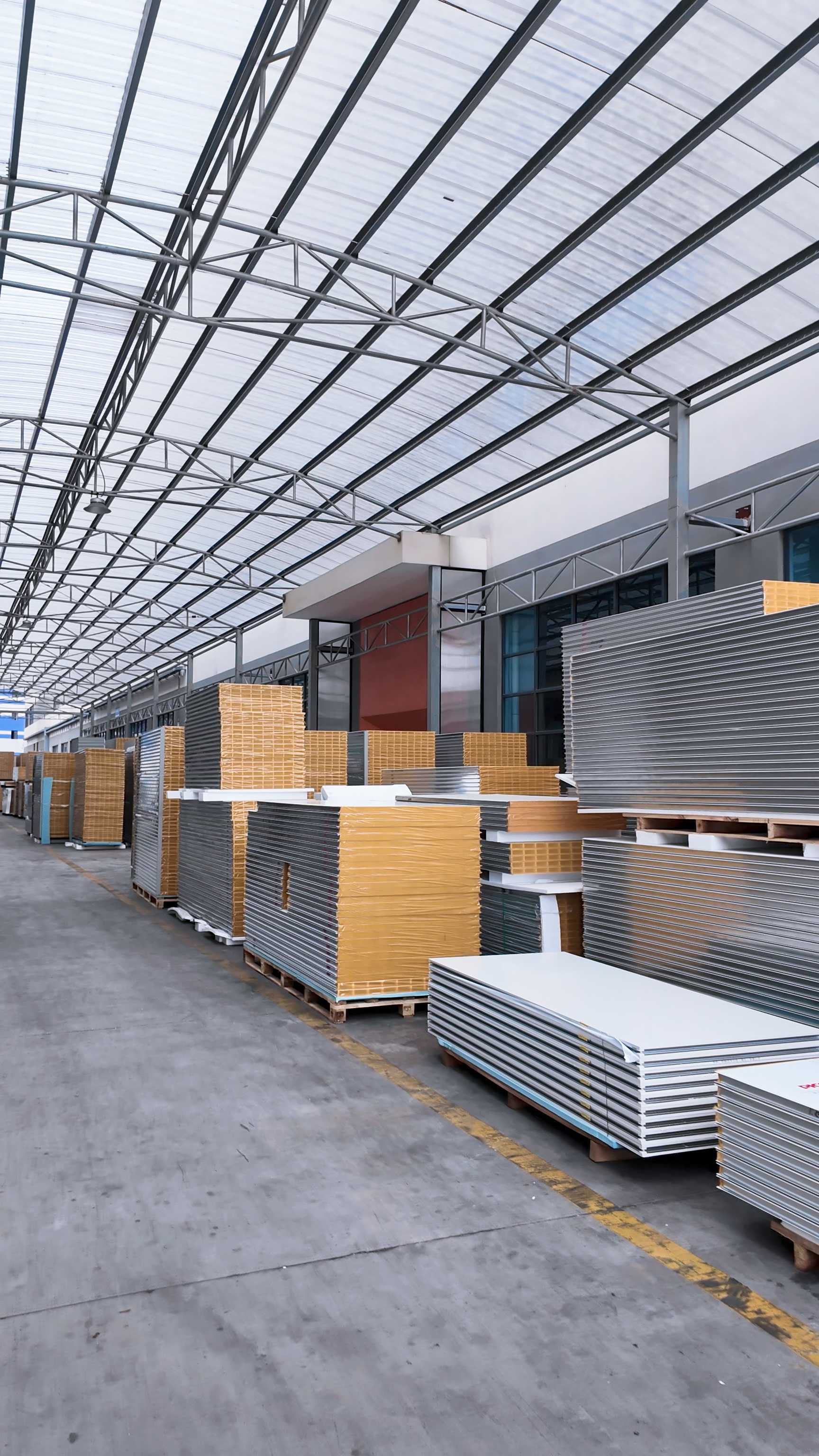
Most project galleries list building type and square footage, but that rarely answers the real question: has this team solved problems like mine? A 100,000-square-foot warehouse with standard docks has little in common with a same-sized facility running narrow-aisle racking, frozen storage, or continuous shifts. Instead of scrolling through photos, pull apart the previous jobs by looking at floor load, ceiling height, temperature bands, air changes, and how the building had to stay operational during construction.
The most useful comparisons come from projects with similar constraints rather than similar appearances. A contractor who has renovated a hospital lab might be more relevant to your pharmaceutical facility than one who has built ten tilt-up distribution centers. Pay attention to how they talk about past work: do they describe the sequencing, the shutdown windows, the utility tie-ins, or just repeat the project name and budget? That difference is usually the giveaway.
Who Will Be On-Site Every Day, Not Just at Kickoff?
The answer isn't a rotating cast of consultants who parachute in for the kickoff and vanish until the final demo. Our model keeps a dedicated implementation lead and a senior engineer embedded with your team from day one through go-live. They sit in on your stand-ups, learn your internal quirks, and adjust the build in real time. You won't have to re-explain your business rules to a new face every week.
Beyond the core pair, a data migration specialist stays on-site during the messy middle weeks when legacy records refuse to map cleanly. That person isn't dialing in from a call center; they're at the desk next to yours, cleaning duplicates and calming the inevitable "but our old system did it this way" panic. Their presence is the reason cutover weekends rarely turn into all-nighters.
We also keep a part-time product owner from our side in the building on Tuesdays and Thursdays, not just for show. They capture edge cases you didn't know you had, push quick fixes to the backlog, and make sure the features we promised at kickoff don't quietly slip into "phase two." If someone from our team isn't physically there on a random Wednesday, it's because they're sick, not because the engagement ended.
What’s Their Plan When Validation Timelines Slip?
Timeline slips in validation rarely happen without warning. Teams that handle them well don't just react—they already have a fallback sequence mapped out. The first move is usually to re-baseline the critical path, but smart groups also isolate which validation activities can run in parallel without compromising data integrity. Instead of panicking, they pull the risk register and say, "We knew this might happen, so here's the pre-approved adjustment."
Beyond the schedule, there's a human layer. When deadlines move, the strongest plans include a quiet renegotiation of scope with stakeholders—not a dramatic announcement, but a steady recalibration. They might trim non-essential test cases or shift resources from a lower-priority module to protect the high-risk areas. The goal isn't to hide the slip; it's to show that the slip was anticipated and that the response is already underway.
Finally, the best teams treat every slippage as a signal to update their estimation models. They log what actually caused the delay—often not the testing itself, but upstream document churn or equipment availability. That way, the next validation plan carries a built-in buffer based on real history, not optimistic guesses. The plan isn't just to catch up; it's to make the next timeline harder to break.
How Do They Keep Documentation Audit-Ready From Day One?
The simplest trick is that no document ever lives in a draft state for more than 24 hours without a named owner and a review deadline. Every piece of documentation, from a one-page process note to a full system spec, gets a unique ID and a status tag the moment it's created. If the status isn't 'approved' or 'superseded,' it triggers a weekly nag to the person responsible. This removes the all-too-common pile of 'almost finished' files that auditors hate.
Another habit that makes a real difference is treating documentation like code. Changes go through a lightweight version control flow: someone edits, someone else signs off, and the old version instantly becomes read-only. There's no 'final_v2_really_FINAL.docx' floating around. Because every change leaves a trace with a timestamp and a name, an auditor can reconstruct exactly what happened in any given week without needing to interview half the team.
Finally, they train everyone to answer one question before creating anything: 'If I got hit by a bus tomorrow, could a new person find this and understand why it exists in under three minutes?' That mindset kills the habit of writing cryptic file names or storing critical decisions in chat threads. Instead, each document starts with a one-line purpose and a link to the requirement or incident that spawned it. It sounds small, but it means the audit trail begins the day the document is born, not the week before the audit.
Do They Understand the Regulatory Pressure You’re Under?
Regulatory pressure rarely shows up as a single clear deadline. It seeps into every layer of a project, shaping timelines, budgets, and even the language you use in meetings. Those outside the compliance sphere often nod along, but their follow-up questions reveal the gap: they ask about launch dates while you're still untangling a web of reporting obligations that shifted twice this quarter.
The real test comes when you explain that a seemingly simple feature needs an extra six weeks for data residency review. Eyes glaze over. Someone mutters about market speed. You know that skipping the review isn't an option—the fines alone would dwarf the feature's revenue potential, not to mention the audit exposure. But conveying that weight without sounding paranoid or obstructive is its own skill.
What helps is finding people who've sat in the same chair: colleagues from heavily regulated industries, external counsel, even a board member who lived through an enforcement action. They don't need a long preamble about why you're asking for buffer time or why a vendor's security attestation matters. A short nod, a shared glance across the table—that's the currency of being understood.
FAQ
Look for a contractor who treats those as live performance specs, not afterthoughts. They should describe their temporary barriers, HEPA-filtered negative air machines, and how they verify pressure cascades before handing over the space. Ask for a recent project where they held ISO 7 conditions while adjacent areas were still under active demolition.
You're really probing their change-order behavior. A good contractor will show how they priced the change transparently, documented the impact on commissioning, and kept the qualification timeline intact. If they can't name a real example, that's a red flag.
This should be a named person, usually a project engineer or QC lead, with a clear process tied to construction milestones. You don't want as-builts assembled by a junior drafter from memory three weeks after completion. Ask how they capture field changes daily and how that data flows into the final turnover package.
Insist on a joint walkthrough with the contractor's superintendent, your quality lead, and the commissioning agent. The contractor should categorize findings by impact on product safety, not just cosmetic defects. Their system should force closure with photographic evidence and owner sign-off before they consider the space ready.
Look for a material control plan that includes submittal approval, incoming inspection, and storage segregation. They should be able to tell you how they prevent a standard silicone sealant from being used where a low-outgassing, cleanroom-rated product is required. Ask to see their receiving logs from the last project.
This is a tricky transition point. Good contractors will have a step-by-step isolation and cleaning procedure, often done under negative pressure, with air sampling after the utility removal. If they brush it off as 'just standard cleanup,' push harder because this is where latent contamination gets introduced.
They should have hold-point inspections tied to their quality plan, not a vague promise. Ask about specific examples: checking wall panel plumbness and sealant continuity before insulation, or verifying duct leakage tests before ceilings are closed. The contractor should provide photos and signed inspection records for each concealed space.
Conclusion
Before you commit to a pharmaceutical facility contractor, push beyond polished credentials and ask for concrete evidence of cleanroom work. Request specific project examples that mirror your own facility’s scale, classification, and process demands—not just a list of industry terms. Ask who will actually be on site day after day, because the lead team that wins the bid often disappears after kickoff. The daily supervisor, the lead HVAC technician, the person signing off on change orders: these are the individuals who will determine whether your project stays on track. If the contractor cannot name those people and their relevant experience, treat that as a warning sign.
Equally important is how the contractor handles slippage in validation timelines and keeps documentation audit-ready from the first drawing. A credible partner will have a written recovery plan for schedule misses, not a vague promise to work weekends. They should explain how they manage version control, material certifications, and as-built updates so that inspectors never find gaps later. Finally, gauge whether they understand the regulatory pressure you face—FDA observations, client audits, or internal quality gates. The right contractor doesn’t just build walls and run ductwork; they act as if your compliance record is their own. If they can’t speak fluently about these realities, keep looking.
Contact Us
Contact Person: Amy Yang
Email: [email protected]
Tel/WhatsApp: 008619330882686
Website: https://www.genopharmatech.com/