

Plate Freezer Manufacturer: Key Factors to Consider Before Making a Purchase
2026-07-09
Investing in a plate freezer is a critical decision for any seafood, meat, or prepared foods operation. But beyond just comparing technical specs, the real trap lies in choosing the wrong manufacturer—one that can’t deliver on promises or leaves you stranded without support. That’s why we’ve broken down the key factors you need to weigh before signing the contract. And if you’re looking for a partner that consistently ticks all these boxes, Worldbase is a name you’ll want to keep on your shortlist. Read on to make sure your next freezer purchase doesn’t become a costly mistake.
Beyond the Cold: What Sets a Reliable Plate Freezer Builder Apart
When evaluating plate freezer manufacturers, looking solely at temperature ratings misses the mark. True dependability emerges from how those machines hold up over thousands of cycles, in damp, corrosive environments where others fail. A builder who stands apart is one who sweats the details hidden beneath the stainless steel—precision welds that don’t stress-crack, hydraulic systems with fail-safes that prevent product loss, and a control logic refined through years of harsh, real-world feedback rather than lab simulations. Their engineers understand that consistency batch after batch matters more than a flashy specification sheet.
Support infrastructure often separates the exceptional from the merely adequate. A reliable partner doesn’t ship a freezer and vanish. They provide installation guidance that accounts for your site’s quirks, stock wear components locally, and take late-night calls when a seafood season peaks. Their design philosophy extends to ease of maintenance—hinged panels that don’t require a technician to open, seals that can be swapped in minutes. This commitment turns downtime from a crisis into a brief pause, safeguarding your throughput and trust with downstream clients.
Materials sourcing reveals another layer of rigor. The best builders use food-grade alloys that resist pitting from saline brines, and they verify every sheet of metal at incoming quality checks. They don’t compromise on insulation foam density, understanding that energy efficiency and structural rigidity are linked. Even the choice of refrigerants and their piping layout speaks to a deep understanding of thermal dynamics, minimizing frost buildup and ensuring uniform freezing without hot spots. These choices come from a culture of relentless improvement, where client feedback directly feeds into the next generation of design.
The Unseen Details That Influence Long-Term Freezing Performance
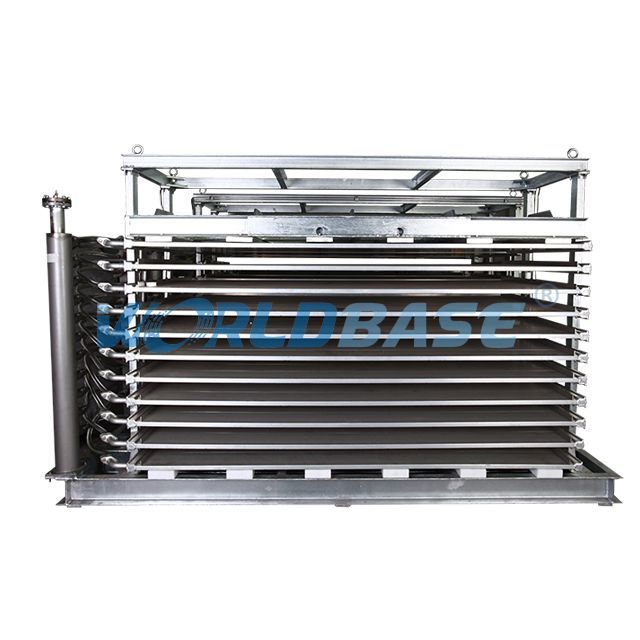
When it comes to preserving food over extended periods, the subtle factors often overshadow the obvious ones. The quality of the initial freeze isn't just about reaching a low temperature; it's about how quickly the core of each item passes through the critical ice crystal formation zone. Slow cooling allows large, jagged crystals to form, rupturing cell walls and leading to mushiness upon thawing. Conversely, a rapid, deep freeze locks in texture and nutrients almost instantly, but achieving this consistently depends on seemingly minor details—like the spacing between packages and the material of the storage containers.
Another invisible culprit is temperature fluctuation, which can silently degrade even the best-frozen goods. Every time the freezer cycles on and off, slight thawing and refreezing can occur at the surface, causing moisture migration and freezer burn. This is exacerbated by frequent door openings or overloading, which disrupts airflow and creates microclimates within the compartment. Surprisingly, the type of shelving and its arrangement can also play a role, as glass shelves retain cold better than wire ones, buffering against rapid temperature swings when the door is opened.
Lastly, the packaging itself is a battleground of unseen forces. Tiny pinholes or imperfect seals allow oxygen to slowly oxidize fats and degrade flavors, a process that accelerates over months. Even the choice between rigid containers and flexible bags matters: rigid containers minimize surface contact with cold, dry air, while vacuum-sealed bags remove the insulating layer of air altogether. These details work in concert—a freezer set to the ideal -18°C can still fail if the packaging betrays the effort, proving that longevity hinges on a chain of small, attentive decisions.
How Custom Engineering Solves Your Unique Processing Challenges
Off-the-shelf machinery often forces your production into someone else’s mold—literally. It might handle 80% of what you need, but that remaining 20% can throttle throughput, compromise quality, or demand constant workarounds. Custom engineering flips that equation. By designing equipment around your specific materials, throughput targets, and physical footprint, you eliminate compromises instead of managing them. The result isn’t just a machine that fits your process; it’s a system that anticipates where bottlenecks will emerge and neutralizes them before they ever form.
The real value surfaces in the details that generic solutions gloss over. Maybe your product requires a gentle handling mechanism that preserves surface finish, or a drying stage that adapts to humidity swings without manual adjustment. Standard lines aren’t built to care about those nuances—they’re built to be adequate for the widest possible audience. A custom approach lets you embed domain-specific expertise directly into the hardware and controls, turning tacit knowledge (the kind that lives in your senior operators’ heads) into repeatable, guardrailed steps that new hires can execute on day one.
Beyond day-one performance, there’s the long-term agility custom engineering provides. When formulation changes or a new product variant appears, a tailored system can be re‑tooled or expanded with far fewer constraints than a standardized one. You aren’t locked into a vendor’s upgrade roadmap or forced to scrap an entire line because one module no longer fits. Instead, you own a platform that mirrors your business’s evolution, not someone else’s market assumptions. That kind of alignment—between what you actually make and how you make it—isn’t something a catalog can ever deliver.
Why After-Sales Support is More Than Just a Warranty
After-sales support often gets boxed into the narrow definition of warranty repairs, but it's really the ongoing relationship that defines a customer's experience. It's the voice on the phone that doesn't just read a script but actually listens, the technician who shows up on time and fixes things without a fuss, and the company that remembers your last call and doesn't make you repeat everything. That kind of care builds trust that no advertising campaign can match—it turns a one-time buyer into someone who won't consider a competitor because they know they'll be taken care of long after the sale.
Beyond the immediate fix, great after-sales support educates and empowers customers in ways that a warranty document never could. Think about the unboxing guide that actually helps you set things up, the proactive check-in email that catches a small issue before it becomes a headache, or the online community where users swap tips the manual never covered. These touchpoints transform a product from a standalone purchase into a supported journey, making the customer feel like they're part of a brand that's invested in their success—not just their money.
Then there's the feedback loop that smart companies treat like gold. Every repair request, every question, every frustrated comment is a signal pointing to where the product or process can improve. When after-sales teams genuinely feed that information back to design and manufacturing, the whole product line gets sharper. That's something a warranty alone never achieves: it's not just fixing what's broken today, but making sure tomorrow's version breaks less, works better, and delights more. Customers might never see that internal magic, but they feel it every time their replacement part is already improved or the next model just feels smarter to use.
The Real Cost of Cutting Corners on Manufacturing Quality
When a production manager signs off on a cheaper alloy or loosens tolerance thresholds to shave a few bucks per unit, it feels like a win—on the spreadsheet, at least. The initial margin bump is seductive, and everyone walks away patting themselves on the back. But the moment those units leave the loading dock, a slow fuse ignites. It might burn for months before an uptick in field failures, a wave of warranty claims, or a quietly building resentment from once-loyal customers starts eating away at that short-term gain.
Beyond the direct line items of rework and legal exposure, the real damage runs into the intangible. Brand reputation, painstakingly built over years, can unravel with a single viral story of a preventable defect. Customer trust isn’t a line item that appears on a balance sheet, but its absence will sure scorch the P&L. And then there’s the internal cost: morale dips when skilled workers are forced to churn out junk, and process improvements get sidelined because “good enough” becomes the cultural standard.
In the end, the true cost is measured in lost futures—opportunities that never materialize because a reputation for quality was traded for a temporary cost reduction. Contracts that go to competitors, product lines that die premature deaths, and the quiet resignation of the engineers who knew better all add up to a bill that no single accounting period could ever fully capture. The choice to cut corners always collects its toll, often when it’s far too expensive to fix.
Future-Proofing Your Investment: Adaptability and Upgrades
When you commit resources to a new system or product, the last thing you want is for it to become obsolete within a few years. That’s why adaptability isn’t just a nice-to-have feature—it’s a core requirement. Modern solutions should be built on open standards and modular architectures, allowing for seamless integration with both current and emerging technologies. Instead of locking you into a rigid framework, they offer flexible configurations that can evolve as your needs change. Whether it’s scaling capacity, adding new functionalities, or pivoting to a different operational model, the right foundation ensures you can react quickly without starting from scratch. This approach transforms your initial outlay into a durable, long-term asset that grows with you.
A truly future-ready investment doesn’t just passively wait for change—it actively facilitates it through straightforward upgrade paths. Hardware components should be easily swappable, and software updates need to be delivered without disrupting your daily workflow. Look for platforms that support incremental improvements rather than demanding a complete overhaul every time a new capability arrives. By choosing a solution that prioritizes expandability—think plug-and-play modules, straightforward licensing upgrades, or cloud-based feature rollouts—you keep the bulk of your existing setup intact while staying current. This not only extends the lifespan of your investment but also protects you from the hidden costs of premature replacement.
Perhaps the most overlooked aspect of adaptability is the human element. Even the most advanced system will fall short if your team can’t adapt it to real-world conditions. Prioritize intuitive interfaces, comprehensive training resources, and a supportive user community that helps people unlock new capabilities as they emerge. When everyone can confidently configure and extend the system, internal innovation becomes a continuous process. Your investment then becomes a living part of your organization—one that adapts not just to technological shifts, but to the creative ways people use it to solve evolving challenges.
FAQ
Pay close attention to the materials used for the plates and the overall frame. Marine-grade aluminum or stainless steel plates resist corrosion better and last longer, especially in harsh environments. Welds should be smooth and continuous, without cracks or pinholes, as these can lead to refrigerant leaks. The frame needs to be rigid enough to handle repeated loading and thermal expansion without warping.
It's critical. You need to match the freezer's throughput to your daily production volume. Ask for performance data at your specific product thickness and target temperature, not just the maximum rating. A unit that freezes slightly faster may cost more upfront but can significantly reduce bottlenecks and labor costs over time.
The refrigerant affects both environmental compliance and long-term operating costs. Many regions are phasing out high-GWP refrigerants, so opting for natural refrigerants like ammonia or CO2 can future-proof your investment. The compressor type—whether reciprocating, screw, or scroll—impacts energy efficiency and maintenance intervals. For demanding applications, an open-drive compressor with a direct-coupled motor offers easier servicing than a semi-hermetic one.
Beyond the standard warranty, look for a manufacturer that stocks critical spare parts locally and can dispatch a technician quickly. Ask about remote monitoring capabilities and whether they provide training for your crew. A good supplier will also offer regular maintenance contracts and be willing to share performance benchmarks from similar installations in your industry.
Request a detailed case study or references from clients processing a similar product—whether it's fish fillets, ready meals, or chemical drums. Visit an existing installation if possible. Pay attention to how the freezer handles different tray sizes, product shapes, and packaging. A manufacturer with niche experience will have already solved many of the challenges you might face.
Perfectly flat plates ensure uniform contact with the product, which is the key to fast and even freezing. Even small deviations can create air gaps that drastically slow heat transfer. The hydraulic system must apply consistent pressure across all plates without over-compressing delicate items. Ask about pressure adjustment ranges and whether the system has sensors to detect misalignment or leakage.
Often yes. Factor in the cost of floor reinforcement if the freezer is heavy, electrical upgrades for the motor, and any necessary piping for refrigerant and water drains. The layout should allow easy forklift or trolley access. Some manufacturers offer modular, prefabricated systems that reduce on-site assembly time, but you should confirm that the design complies with local building and safety codes.
Conclusion
When investing in a plate freezer, the manufacturer's reputation isn't built on flashy claims but on the quiet, consistent delivery of reliable equipment that handles the unseen demands of your operation. A truly dependable builder goes beyond merely assembling components; they understand how subtle design choices—like plate surface finish, refrigerant distribution, and weld integrity—directly influence long-term freezing performance, minimizing downtime and preserving product quality year after year. The right partner also embraces custom engineering, not as an upsell but as a necessity, tailoring freezing solutions to your specific processing layout, product dimensions, and throughput goals, ensuring the equipment fits seamlessly into your workflow rather than forcing you to adapt around limitations.
Equally critical are the aspects that emerge only after the sale: robust after-sales support that functions as a true partnership, not just a warranty card tucked in a drawer. This means responsive technical guidance, readily available spare parts, and proactive maintenance insights that keep your line moving. Cutting corners on manufacturing quality might save a few dollars upfront, but the real cost reveals itself in erratic performance, energy waste, and premature failures that erode your bottom line. Finally, a forward-thinking manufacturer builds systems with adaptability in mind, allowing for upgrades or reconfigurations as your business evolves, future-proofing your investment so you're not locked into yesterday's technology when tomorrow's opportunities arrive.
Contact Us
Contact Person: Mr Yang
Email: [email protected]
Tel/WhatsApp: +8613809083091
Website: https://en.worldbase.cn