
Pop Roller Hearth Furnace: How It Works, Benefits, and Applications
2026-08-15
What if your furnace didn’t just heat parts, but actively controlled how they settle and roll? That’s the core idea behind a pop roller hearth furnace — and it’s quietly changing how manufacturers handle everything from small components to heavy loads. In this post, you’ll learn how the mechanism works, which benefits show up first on the shop floor, and where this furnace type is replacing older designs. For proven installations and deeper technical insight, THINKING-LONG has you covered.
The Heating Sequence Inside a Pop Roller Hearth Furnace
The heating sequence begins as soon as the pop roller hearth furnace reaches its initial setpoint, but the real story is how the material absorbs energy unevenly during the first few meters. Instead of a uniform ramp, operators often observe a slow thermal front moving from the edges toward the center of each can or sheet. This creates a subtle temperature gradient that, if left unchecked, can lead to micro-warping later in the line.
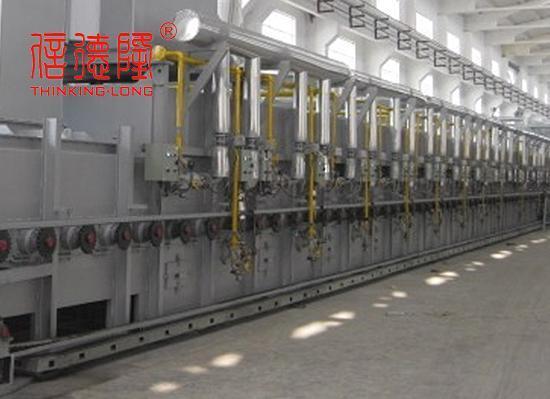
As the product advances, the upper and lower burner banks cycle in staggered pulses. The lower burners tend to deliver more radiant energy to the bottom face, while the upper zone compensates with convection from high-velocity air jets. The pop rollers themselves act as intermittent heat sinks, briefly pulling heat from the contact points each time a roller rotates into position. That repetitive cycling is what gives the furnace its name, but it also demands precise timing so that no single point stays too cool for too long.
The final stage of the sequence shifts from aggressive heating to controlled soaking. Here the temperature spread across the product narrows to within a few degrees, and the residual thermal momentum from the earlier zones finishes the job. Operators monitor the exhaust gas temperature more than the zone display, because a dip in exhaust heat often signals that a new batch is absorbing more energy than expected. This subtle feedback loop is what separates a stable run from one that drifts into overshoot or uneven coating adhesion.
How Roller Speed and Spacing Control Dwell Time
In continuous processing lines, dwell time rarely comes from stopping the product. It emerges from how quickly a roller drives the material forward and how much physical gap exists between consecutive rollers. When speed increases, the workpiece crosses each roller faster, shortening the window during which a given point remains over a heating zone, quenching bath, or coating spray. Conversely, slowing the rollers stretches that exposure without any physical pause. But speed alone is a blunt tool—if you go too slow on a long line, throughput collapses. That’s where spacing earns its keep.
Wider roller spacing forces the material to bridge unsupported gaps between rollers. Depending on the material’s stiffness and weight, this sag or vibration can extend the time a given section spends inside a treatment chamber—air knives, drying tunnels, or infrared arrays. For flexible webs or thin sheets, larger gaps also introduce a natural oscillation that repeatedly exposes different faces to the environment, effectively increasing dwell without reducing line speed. Tight spacing, by contrast, supports the material more rigidly and tends to produce a cleaner, more predictable pass-through with minimal extra residence.
The real control comes from pairing the two. Operators often adjust roller speed to set the baseline travel time, then fine-tune spacing to modify how the material interacts with the process zone. For example, in a coil coating line, slowing the rollers slightly while widening the gap just before an oven entry can hold the strip in the preheat section longer, without forcing the entire line to crawl. This combination gives a surprisingly smooth adjustment range—more nuanced than either parameter alone, and far less damaging to product surface than stop-and-go indexing.
Why Zone-Based Heating Prevents Thermal Shock
Sudden temperature swings are more than a comfort issue—they put real stress on materials, joints, and even your own body. Zone-based heating sidesteps this by letting each space warm at its own pace. Instead of blasting heat through the whole house at once, you bring rooms up gradually and only when needed. That removes the harsh cold-to-hot jolt that comes from firing up a single oversized system.
Think of it like easing into a hot bath rather than jumping straight in. A hallway, a seldom-used guest room, or a north-facing home office can all have different thermal needs. With zone control, the temperature shift stays gentle and local. Materials expand and contract less abruptly, which means fewer creaks, less drywall cracking, and a longer life for flooring and furniture.
Your body notices the difference too. Walking from a toasty living room into a freezing stairwell can send your blood vessels scrambling to adjust. By keeping zones within a closer range, you avoid that unpleasant shock. The result is a steadier indoor climate—one that feels natural, almost unnoticed, rather than a series of hot and cold slaps.
Energy Savings From Continuous Flow vs. Stop-Start Cycling
The assumption that shutting equipment off saves energy doesn't always hold when startup transients and system recovery costs are counted. Continuous flow setups can keep motors, pumps, or fans within their best efficiency range, avoiding repeated acceleration from zero that draws several times normal running current for a few seconds. Over many cycles, those surges add up, and so does the extra work needed to re-pressurize lines or re-establish thermal conditions.
Stop-start cycling can cut energy during long idle stretches, but it also introduces losses that are easy to overlook. Each restart can force seals, bearings, and valve seats through a brief period of reduced lubrication before fluid film returns, and variable speed drives must ramp the rotating assembly back to speed under load. Those losses, along with condensation or temperature swings after shutdown, often require a corrective energy input that erases part of the intended savings.
The real comparison comes down to duty cycle and system inertia. In short-gap applications, continuous flow may consume less net energy because the steady load avoids repeated startup inrush and keeps heat exchangers or fluid paths stable. In long-idle scenarios, a well-tuned stop-start strategy can still win if restart energy is minimized and the system can coast or unload instead of braking hard. Without measuring current draw and runtime patterns, guesses about savings tend to be wrong.
Typical Materials and Parts That Move Through Pop Roller Hearths
In everyday heat-treating operations, pop roller hearths move a mix of small discrete parts: high-volume fasteners, bearing races, gear blanks, spring clips, and forged steering or suspension components. Carbon and low-alloy steels dominate, but many lines also run 400-series stainless parts when the furnace atmosphere is controlled. The rollers keep these pieces separated enough to prevent shadowing, so quench and atmosphere contact stay predictable.
Shaft-like workpieces appear just as often. Axle shafts, camshafts, valve stems, chain pins, and cross joints ride either directly on the rollers or in simple alloy pockets. Because the parts sit proud of one another rather than piled in baskets, the hearth avoids contact marks and uneven case depth, which matters for carburizing and hardening.
Non-ferrous and powder-metal parts also pass through in lighter cycles. Sintered bushings, copper washers, brass fittings, and small aluminum housings are typical when roller surface coatings and zone temperatures are matched to reduce sticking, oxide pickup, or roller wear. The key is matching part weight, footprint, and metallurgy to the roller pitch and speed.
Maintenance Habits That Extend Roller and Belt Life
Most roller and belt failures start with something that seems too small to matter. A thin layer of dust around the bearing housing, a few grains of abrasive material lodged in a tail pulley groove, or a slightly sticky spot on the return side of the belt. Skipping the routine wipe-down because “it looked clean enough” is exactly how uneven wear begins. Use a soft brush or low-pressure air to clear material from frame gaps and idler joints, and never blast water directly into a sealed bearing—you will just push contamination past the lip and shorten the interval between rebuilds.
Lubrication is one habit where more is rarely better. Overgreasing blows out seals and creates a magnet for fine particles, while undergreasing leads to metal-on-metal contact. Follow the OEM schedule but also listen to the bearing: a sudden temperature rise after greasing often means too much was added. Check alignment at the same time, not once a season. A simple straightedge across the roller faces or a laser tool if you have one will reveal angular misalignment that forces the belt to scrub against side guides. Even a few millimetres of offset multiplies edge wear and adds unnecessary load to the drive.
Belt tension is the setting most people set and forget, but it changes as the belt stretches and temperature swings. Too tight and you overload both roller bearings and the belt carcass, leading to cracked covers and bearing spalling. Too loose and you get slip, heat buildup, and glazed pulley surfaces. Measure tension at the same point every week and log the readings—trends matter more than a single number. Also pay attention to wear patterns: if one edge of the belt is fraying while the other looks new, check whether the rollers are level; if the centre is worn smooth, you may be running with too much sag. A quick hand on each roller housing will catch abnormal warmth or vibration before it turns into a shutdown.
FAQ
It is a continuous furnace that moves trays, baskets, or loose parts through heated zones on powered ceramic or alloy rollers. It usually sits between loading and unloading stations, letting workpieces pass through preheating, soaking, and cooling sections without manual transfer.
Each roller is driven independently or in small groups, so speed can be tuned for gentle acceleration and deceleration. The rollers stay smooth and aligned, which prevents skidding and scratching even when carrying dense loads through long heating chambers.
Most designs cover 150°C to 1150°C, depending on the alloy and insulation. Lower ranges suit aging or tempering, while the upper end supports annealing, normalizing, and solution treatment for steel, copper, and nickel alloys.
They reduce handling because parts move continuously from charge to discharge. Throughput is more predictable, energy use is steadier, and temperature cycles are less severe on the lining. That leads to longer refractory life and more consistent part properties.
Automotive suppliers use them for springs, fasteners, and stampings. Aerospace and energy sectors run them for turbine parts and tubular goods. Ceramics and powder metal producers also use them because the roller bed supports flat or stacked products without sticking.
Burners or heating elements are split into multiple zones, usually above and below the rollers. Recirculating fans or radiant tubes distribute heat evenly, and side baffles prevent cold spots near the doors. Thermocouples in each zone trigger trim adjustments.
Regular checks of roller bearings, drive chains, and seals are essential. Operators should clean spilled scale or debris from the hearth, monitor roller straightness, and replace worn rollers before they cause jams. Scheduled calibration of zone thermocouples also prevents drift.
Yes. Hearth width, roller pitch, chamber height, and zone count can be tailored. Protective atmospheres such as nitrogen, hydrogen, or endothermic gas are common, and cooling sections can be added for controlled quenching or slow cooling.
Conclusion
A pop roller hearth furnace moves workpieces through a continuous tunnel on rotating rollers, with heating elements arranged in distinct zones above and below the load. The heating sequence begins in a lower-temperature entry zone, ramps up through the middle, and eases off near the exit, so parts never experience a sudden gradient. Roller speed and spacing are the primary levers for dwell time; slowing the rolls or widening the gaps gives longer soak periods for heavy sections, while faster, tighter spacing suits thin-gauge stock. Because the furnace stays hot and the line runs steadily, there is no repeated thermal cycling of the refractory and hearth components, which saves a noticeable amount of energy compared with stop-start batch operations. Zone-based control also prevents thermal shock by allowing operators to fine-tune each section to match a material's critical heating range, reducing cracking and distortion.
Common materials processed through these furnaces include steel bars, tubes, plates, wire coils, and some nonferrous or ceramic components that need uniform heating for annealing, normalizing, stress relieving, or pre-forging. The continuous design suits long production runs where consistent metallurgical results matter more than flexibility. Keeping the system reliable boils down to a few practical habits: checking roller alignment and bearing wear, clearing scale and debris that can jam the hearth, lubricating drive chains and gearboxes on schedule, and monitoring belt or roller surface condition before small issues become stoppages. Operators who track these details get longer roller and belt life, fewer unplanned shutdowns, and tighter temperature consistency across the furnace width. In short, a pop roller hearth furnace combines controlled zone heating, adjustable dwell time, and steady energy-efficient flow, making it a dependable choice for high-volume thermal processing.
Contact Us
Contact Person: Qian Xijun
Email: [email protected]
Tel/WhatsApp: 8613961736750
Website: https://www.thinkinglong.com/