

Private Label Rogowski Coil Current Transformers: Custom Precision for Modern Power Systems
2026-08-11
In the evolving landscape of modern power systems, precision current measurement is no longer a luxury—it’s a necessity. Rogowski coil current transformers have emerged as a go-to solution for their flexibility, wide bandwidth, and non-intrusive design. But what sets a truly exceptional solution apart is the ability to tailor it to your exact needs. Here’s where private label offerings come into play, combining custom engineering with rapid scalability. At the heart of this innovation is Xiasen, a brand synonymous with meticulous craftsmanship and forward-thinking design. In this post, we’ll explore how custom Rogowski coils are reshaping power monitoring, and why having a partner like Xiasen can make all the difference in achieving unmatched accuracy and reliability.
Beyond Traditional Current Measurement
For decades, engineers have relied on shunt resistors and Hall-effect sensors to gauge current flow. While these methods are well understood, they introduce compromises—heat dissipation, insertion loss, and in the case of shunts, galvanic isolation challenges at higher voltages. As systems push toward greater efficiency and compactness, the limitations of touching the conductor become increasingly difficult to ignore. The very act of inserting a sensing element alters the circuit, creates hotspots, and demands careful thermal management. This has led to a growing appetite for techniques that step back from physical contact and instead read the magnetic fingerprint that current leaves in its surrounding space.
Non-intrusive approaches like fluxgate and magnetoresistive sensing have carved out niches, yet they still demand precise mechanical alignment and struggle with stray field interference. The real shift is happening with coreless differential field sensing and array-based contactless solutions. These methods sample the magnetic field at multiple points around a conductor, then reconstruct the current with mathematical rigor—often using paired sensing elements and real-time subtraction to cancel external noise. The result is a current measurement that adds virtually no power loss, withstands kilovolts of isolation, and fits into geometries that would choke a traditional shunt. It’s not just an incremental improvement; it’s a fundamental rethinking of how we observe current without becoming part of the story.
What makes these sensor arrays particularly compelling is their adaptability. By adjusting the number and placement of sensing points, a single PCB trace can become a precision current monitor without breaking the copper path. The same principle scales from milliamps in battery fuel gauging to kiloamps in electric vehicle traction inverters. The drift and offset challenges that once plagued contactless sensing are now handled by dynamic calibration and chopping techniques integrated into tiny silicon packages. As we move further into the era of wide-bandgap semiconductors and dense power conversion, the question isn't whether we can measure current accurately—it's how elegantly we can do it without imposing ourselves on the system. The answer, increasingly, is written in magnetics and math, not metal and heat.
Engineered to Your Exact Needs
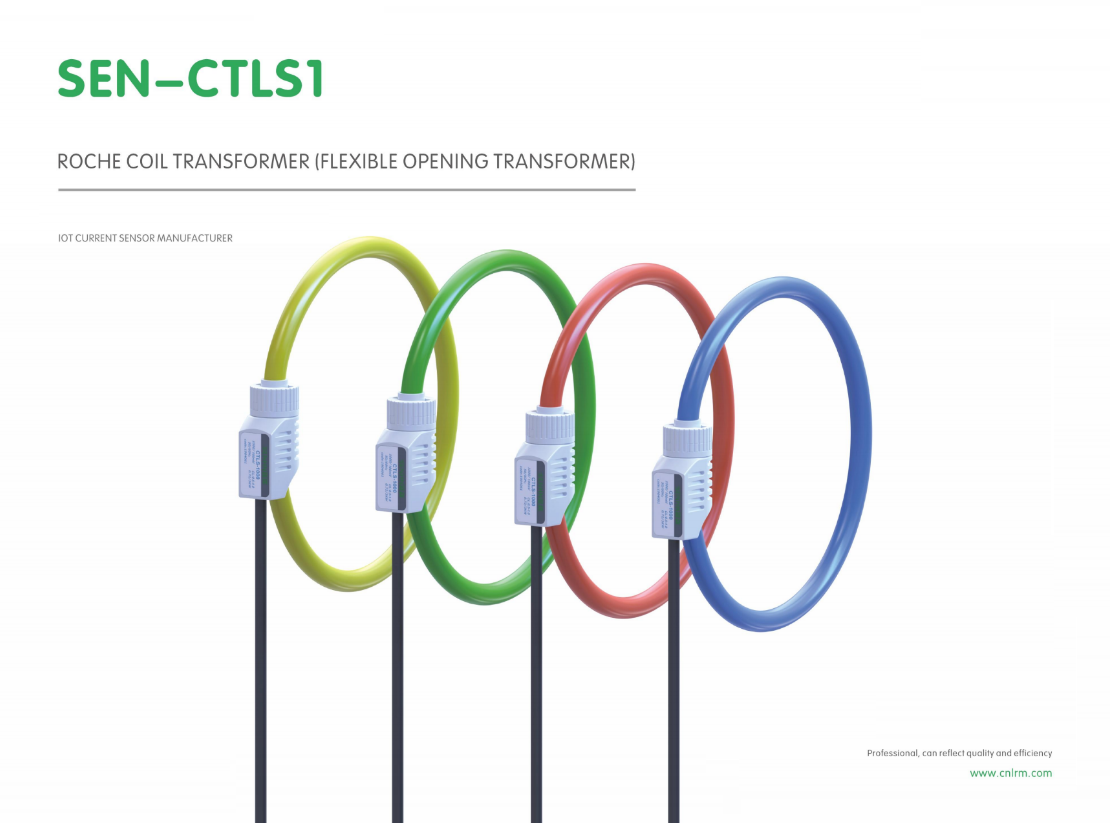
Everything we create starts with your reality—the way your team works, the space you occupy, the problems you face daily. Instead of offering off-the-shelf solutions and hoping they fit, we strip the process back to its essentials, asking the kind of questions that uncover what you actually need, not what a brochure suggests. This means each design is relentlessly practical, shaped around real workflows, genuine constraints, and the subtle details that matter to your operation.
Engineering to your needs goes beyond customization checklists. It’s about understanding the friction points that slow you down and the goals that keep you up at night. We build from the ground up, often using components and assemblies that are devised specifically for you, because a generic workaround simply won’t do. The result is something that feels almost invisible—it integrates so naturally that your people don’t have to adapt; the solution adapts to them.
We don’t believe in pushing features just because they exist. Instead, we obsess over performance that aligns with your definition of success. Whether it’s streamlining a single critical task or reinventing an entire process, the outcome is tailored, not templated. Every choice, from materials to interfaces, is made with your environment in mind, ensuring that what we deliver doesn’t just meet a spec sheet—it elevates how you work every day.
Unmatched Accuracy in Harsh Environments
Precision instruments often falter when temperatures swing wildly, dust clouds visibility, or vibrations rattle every component. But here, the core sensing architecture is built from the ground up to treat these extremes not as obstacles, but as the baseline. We’ve re‑engineered the feedback loop so that environmental noise becomes a data source the system actively compensates for in real time. The result is a measurement certainty that holds steady whether you’re on a sun‑baked factory floor or a freezing offshore rig.
You’ll notice this resilience in the details. The optical path is sealed and pressurized with inert gas, eliminating condensation and particulate interference without the bulk of external housings. On‑board algorithms continuously model thermal expansion and mechanical drift, applying corrections at a rate fast enough to catch transient errors that slower systems miss. It’s not just about surviving tough conditions—it’s about delivering the same crisp, repeatable readings you’d expect in a lab, even when the world outside is doing its worst.
What that really buys you is confidence in the data stream, month after month. Maintenance teams aren’t chasing phantom deviations caused by a passing forklift or a cold draft from an open bay. The system’s self‑diagnostics flag anything that genuinely needs attention, while ignoring the background chaos. In practice, that means decisions based on solid numbers, not guesses—and a deployment life that extends well beyond the typical lifespan of sensors forced into environments they were never truly designed for.
Seamless Integration Across Industries
Adapting to diverse industrial environments isn't about force-fitting a one-size-fits-all solution. It calls for a modular backbone that bends with the unique rhythms of each sector—whether that's synchronizing real-time sensor data on a factory floor or weaving through complex logistics networks. The magic lies in creating a connective tissue that doesn't demand a complete overhaul of legacy systems but instead layers on top, quietly translating protocols and smoothing data handoffs without disrupting day-to-day operations.
From healthcare platforms managing patient flow to retail ecosystems balancing inventory and demand, the same underlying principle applies: integration should feel invisible. Think of it as a universal adapter that speaks the native language of each tool it touches, letting disparate technologies collaborate like they were built together. This approach sidesteps the headache of rigid standardization, allowing niche software and hardware to fall into a cohesive workflow naturally, often unlocking efficiencies teams didn't realize were possible.
What truly sets this apart is the ability to scale without breaking stride. A renewable energy site might need to ingest weather forecasts alongside grid demand signals, while a logistics hub juggles fleet telemetry and customs documentation—yet the integration core remains the same, only the surface adapts. It's less about adding another layer of complexity and more about simplifying the underlying architecture so that new applications, devices, or partners can be plugged in with minimal friction. The result is an operational fabric that evolves with the industry rather than demanding the industry conform to it.
Empower Your Brand with Custom Solutions
Your brand deserves more than a template. Off-the-rack solutions might seem convenient, but they drown your identity in a sea of sameness. What truly resonates with your audience is an experience that feels crafted just for them — not a generic afterthought. Custom solutions let you weave your story, values, and vision into every touchpoint, turning casual browsers into loyal advocates.
We don't just tweak colors and call it personalization. It's about digging deep into what makes your brand tick — the quirks, the voice, the promise you make to customers. From bespoke interfaces to tailor-made backend workflows, every piece is engineered to reflect your DNA. No two brands are alike, so why should their tools be?
When your tools align with your ambition, growth becomes organic. Custom solutions scale with you, adapt to your shifting needs, and evolve without forcing you into rigid boxes. It's not about reinventing the wheel — it's about building the vehicle that gets you exactly where you want to go, with your name proudly on the hood.
Future-Ready Sensing for Evolving Grids
Modern power grids are undergoing a fundamental transformation, shifting from predictable one-way flows to dynamic, multidirectional systems. This evolution is driven by the proliferation of distributed energy resources, electric vehicles, and changing consumption patterns. Traditional monitoring solutions were designed for a static world and can no longer provide the granularity or speed required to maintain stability. Future-ready sensing flips this model entirely—it’s not just about tracking voltage and current, but about capturing real-time, high-resolution data that reveals the grid’s true behavior. Think of it as giving operators a living map of the network, where every fluctuation becomes visible before it can cascade into a problem.
What sets next-generation sensing apart is its ability to peer into areas that were once blind spots. By combining distributed fiber-optic sensing, non-intrusive IoT nodes, and advanced edge analytics, utilities can now monitor parameters like temperature, vibration, and partial discharge across entire corridors. This creates a continuous awareness that extends from central substations to remote feeders, making it possible to detect anomalies that traditional SCADA systems miss. The result is a sensing fabric that’s not only reactive but predictive—anticipating asset stress and environmental risks, and enabling proactive interventions. It’s a major leap from periodic inspections to a state of persistent vigilance.
Crucially, this approach is designed to scale with the grid’s own evolution. As grids integrate more renewables and face new weather extremes, sensing infrastructure must be both adaptable and resilient. Future-ready systems lean on modular, software-defined architectures that can ingest new data streams without wholesale hardware replacements. They also foster interoperability with existing operations platforms, sidestepping the trap of proprietary silos. In an era where grid complexity is accelerating, this kind of sensing doesn’t just keep up—it provides a foundational layer for smarter decision-making, from dynamic line rating to automated fault restoration. It’s about building a grid that can sense, learn, and respond on its own terms.
FAQ
A Rogowski coil is an air-core current sensor that uses a helical winding to measure alternating current. It works by sensing the magnetic field generated by the current flowing through a conductor, producing a voltage proportional to the rate of change of the current. This voltage is then integrated to obtain an accurate current measurement, making it ideal for applications where high bandwidth and linearity are essential.
Private labeling allows businesses to offer high-performance current transformers under their own brand, with customization options that align with specific application needs. It provides a competitive edge by delivering tailored solutions, maintaining brand consistency, and ensuring reliable performance without the overhead of in-house development.
Customization can include coil dimensions, output signal type, accuracy class, environmental protection, and integration with monitoring systems. This flexibility ensures compatibility with diverse setups like renewable energy inverters, smart grid sensors, and industrial automation, where standard components often fall short.
Their air-core design eliminates saturation and hysteresis issues common in iron-core transformers, offering excellent linearity over a wide current range. They are lightweight, flexible, and can be installed around existing conductors without disconnecting the circuit, making them perfect for retrofitting into digital substations or compact switchgear.
Rogowski coils typically achieve accuracy classes from 0.5 to 1 percent, rivaling many wound-type CTs, but with the added benefits of no saturation at high currents and a wider frequency response. When properly calibrated and integrated, they provide highly reliable measurements for both protection and metering purposes in demanding environments.
Major users include renewable energy (solar and wind farms), electric vehicle charging infrastructure, data center power distribution, and industrial motor control. These fields demand accurate, non-intrusive current sensing that can be adapted to unique form factors and communication protocols.
Yes, their low inductance design enables them to accurately capture high-frequency components and harmonics up to several hundred kilohertz. This capability is crucial for power quality analysis and fault detection in systems with non-linear loads, such as variable frequency drives and UPS installations.
Conclusion
Private label Rogowski coil current transformers redefine what's possible in electrical measurement, moving well beyond the limitations of traditional iron-core CTs. These flexible, split-core sensors are engineered from the ground up to match your exact specifications—whether you need a particular diameter, custom lead lengths, or specialized insulation for high-voltage environments. Their inherent linearity and lack of magnetic saturation deliver consistent accuracy even in the most punishing conditions, from extreme temperatures to high electromagnetic interference. This tailored approach ensures that your power monitoring, protection, or energy management system gets a sensor built precisely for the job, without compromises.
Designed for seamless integration, these transformers slip into existing setups across industries like renewable energy, data centers, industrial automation, and EV charging infrastructure with minimal disruption. By offering fully customizable branding and packaging, you can elevate your product line while maintaining a distinct market identity. As power grids evolve toward greater decentralization and smarter load management, Rogowski coils provide the future-ready sensing needed—capturing fast transients and wide frequency ranges with ease, so your solutions remain agile for whatever comes next.
Contact Us
Contact Person: Liu Mengyang
Email: [email protected]
Tel/WhatsApp: 8618727589233
Website: https://www.cnlrm.com/en/