

Reliable Chitosan Oligosaccharide Original Manufacturer Delivering Consistent Quality
2026-09-12
Sourcing chitosan oligosaccharide that actually meets spec every single batch shouldn't feel like a gamble. Yet too many buyers learn the hard way that 'manufacturer' means little without a proven record. That’s where MacroAlga stands apart—an original manufacturer focused on consistent quality from raw material to final shipment. In this post, we’ll explore what reliable supply really looks like and why it matters for your next formulation.
From Raw Chitosan to Reliable Oligosaccharide: The Path We Control
Raw chitosan arrives with a frustrating amount of variability—differences in molecular weight, degree of deacetylation, and residual protein or ash that quietly undermine reproducibility. We start by setting narrow specifications on the incoming material and then move directly into controlled enzymatic depolymerization. Instead of letting the reaction run on fixed time alone, we monitor viscosity and reducing-end formation in real time, adjusting enzyme-to-substrate ratios and temperature to steer the chain length distribution toward a target range rather than a broad average.
What happens after depolymerization matters just as much. The crude hydrolysate still carries buffer salts, inactive enzyme fragments, and a tail of unwanted short chains that many suppliers leave behind. We use a sequence of membrane filtration and ion exchange steps to strip those residuals, then verify the final oligosaccharide by more than a single colorimetric reading. Degree of polymerization, endotoxin burden, solubility clarity, and moisture content are all checked against tight internal limits, so the material you receive behaves the same way in solution from one lot to the next.
Why Batch-to-Batch Uniformity Is Non-Negotiable for Us
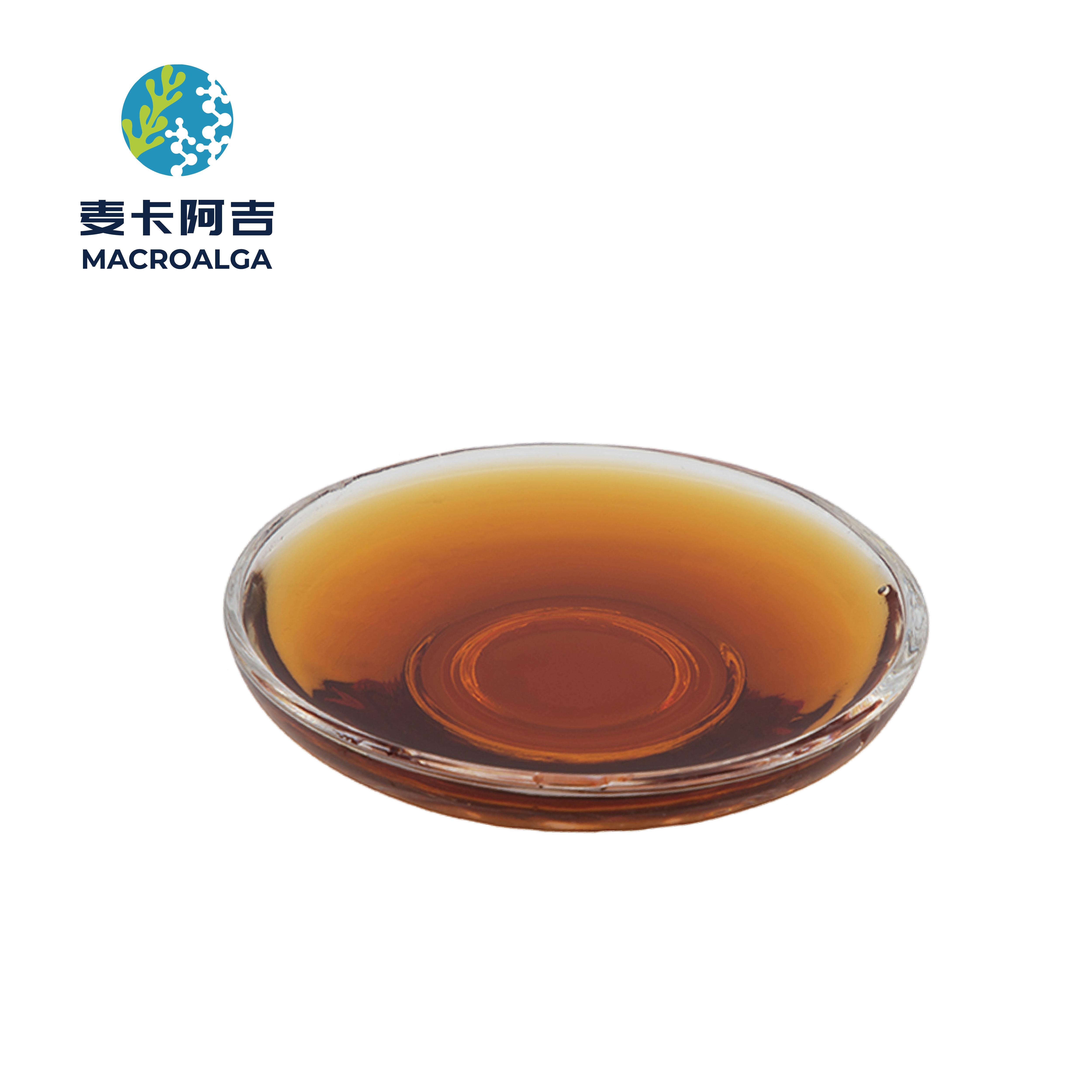
When you run a production line, the last thing you want is a surprise in the middle of a batch. We learned early on that even minor variations in raw material handling or mixing times can snowball into visible differences in the final product. That's why we treat batch-to-batch uniformity as a non-negotiable: it's the only way to guarantee that every unit leaving our facility performs exactly like the one before it.
Our customers don't just buy a product—they buy predictability. A bakery scaling up a recipe, a cosmetics lab running stability tests, or a pharmaceutical manufacturer validating a process all depend on the assumption that what worked yesterday will work today. Any drift between batches forces them to redo their own quality checks, and that costs them time and money. We refuse to put that burden on anyone.
From an operational standpoint, chasing uniformity after the fact is far more expensive than building it in from the start. We've invested in automated dosing, real-time viscosity monitoring, and strict raw material qualification not because they look good in a brochure, but because they prevent the kind of batch failures that quietly erode trust. For us, consistency isn't a selling point—it's the baseline we operate from every single day.
The Real Difference an Original Manufacturer Makes
When you work directly with an original manufacturer, the most immediate shift is in the depth of material knowledge. Instead of a reseller reciting a spec sheet, you get straight answers about alloy tolerances, heat-treatment quirks, and why a certain batch of steel behaves differently under load. That level of transparency isn't a marketing bullet point—it's a practical advantage that shows up in fewer field failures and faster prototyping cycles.
Customization stops being a polite phrase and becomes an actual engineering conversation. An original manufacturer can adjust die geometry, modify plating thickness, or re-sequence a machining step without routing your request through three layers of middlemen. You aren't limited to what's in a catalog; you're working with the people who wrote the catalog, and they can bend their own rules when a project genuinely needs it.
The most underrated difference, though, is accountability. When something goes wrong—and in manufacturing, something eventually goes wrong—you have one door to knock on. There's no finger-pointing between a trading company and an anonymous subcontractor. The original manufacturer owns the mistake, investigates the root cause, and fixes it. That kind of direct responsibility changes the entire tone of a supplier relationship, turning a transactional purchase into a long-term technical partnership.
How We Eliminate Variability in Chitosan Oligosaccharide Production
Instead of relying on conventional acid hydrolysis, where cleavage sites and final chain lengths shift with minor fluctuations in temperature or acid strength, we use a single recombinant chitosanase with strict specificity for beta-1,4 glycosidic bonds. The reaction runs at a fixed pH, ionic strength, and enzyme-to-substrate ratio, while real-time viscosity tracking triggers termination only when the target degree of polymerization is reached. This removes the guesswork from depolymerization and keeps the molecular weight distribution inside a narrow, repeatable window.
After enzymatic digestion, every batch passes through tangential flow filtration with a defined molecular weight cut-off. This strips away residual monomers, unreacted high-molecular-weight chains, and enzyme fragments. We then verify each lot with size-exclusion chromatography coupled to multi-angle light scattering and proton NMR to confirm average molecular weight, degree of deacetylation, and polydispersity index. Batches that fall outside the tight acceptance band are either reworked or discarded, so the oligosaccharide profile you receive does not drift between orders.
Quality Checks That Go Beyond Standard Specifications
Most suppliers stop at the listed specs, but we run our own gauntlet. A connector that works fine at room temperature can crack when moved from a cold warehouse to a warm office. So we cycle it between -40°F and 140°F a few dozen times, then check for micro-fractures under a microscope. That extra step has caught issues no datasheet would ever reveal.
Real-world abuse is part of the routine. We mount sample units on a shaker table and replay vibration data recorded from actual delivery trucks on rough roads. If a screw loosens by even a quarter turn after four hours, the design goes back. We also soak enclosures in a salt fog chamber for double the industry standard, then rinse and inspect for corrosion creep at every seam.
Sampling isn't left to chance. Every batch gets three random pulls, not just the first or last off the line. Those units go through a full teardown, and torque values on internal fasteners are checked against a log. One outlier means the entire batch is held. It slows things down sometimes, but it's why our return rate stays fractions of a percent.
Building Long-Term Supply Confidence Through Transparency
Transparency is the quiet engine behind long-term supply confidence. When buyers cannot see how a supplier manages capacity, raw materials, or unforeseen disruptions, doubt takes root. By proactively sharing production schedules, inventory buffers, and realistic lead times, a supplier turns uncertainty into a shared operational picture. This openness is not a sign of weakness but a deliberate strategy that signals control and invites customers to plan together rather than guess in isolation.
Practical mechanisms make transparency tangible. Live dashboards let customers track order status and stock levels in real time. Regular supply risk briefs lay out potential bottlenecks, from port congestion to component shortages, without sugarcoating. Joint business planning sessions align demand forecasts and reserve capacity upfront. These tools move the relationship from blind faith to shared evidence, making buyers feel like partners instead of spectators.
Over time, this culture of visibility creates a self-reinforcing loop. Customers who see the full picture rely less on panic ordering and safety stock hoarding, which dampens the bullwhip effect across the chain. Suppliers, in turn, receive cleaner demand signals and can schedule production more efficiently. The relationship matures from a transactional exchange into a risk-sharing alliance, where supply confidence rests not on promises but on daily observed facts.
FAQ
We use a controlled enzymatic hydrolysis process instead of acid or oxidative cleavage, which keeps the molecular weight distribution narrow and avoids harsh chemical residues. The typical product has a molecular weight below 1,000 Da, a degree of deacetylation above 90%, and remains fully water-soluble at neutral pH.
Each lot is tested for molecular weight profile, degree of deacetylation, moisture, ash, heavy metals, and microbial limits before release. We retain reference samples for at least three years and include a certificate of analysis with every shipment.
Most of our volume goes into agricultural elicitors, animal nutrition, functional foods, and biomedical materials. We also supply cosmetic formulators who need a low-viscosity chitosan derivative that stays clear in solution.
Yes. We routinely produce fractions from about 500 Da up to 5,000 Da and can target deacetylation values between 85% and 95%. If you share your intended application, our technical team will recommend a range that fits the solubility and bioactivity requirements.
The production site operates under ISO 9001 and HACCP, with halal and kosher certificates available for standard grades. Analytical methods follow USP and EP monographs where applicable, and we can supply full documentation for regulatory dossiers.
Standard grades usually leave the warehouse within seven to ten business days. Custom fractions may take two to three weeks. We pack in 1 kg, 5 kg, or 25 kg aluminum foil bags inside fiber drums, with desiccant and vacuum sealing for moisture-sensitive destinations.
Keep it sealed, away from direct sunlight and strong odors. Room temperature is acceptable for most grades, but 2–8°C storage can extend shelf life. Stability data support a 24-month shelf life under recommended conditions, with no significant change in molecular weight or color.
We offer free evaluation samples of 10 to 50 grams for qualified buyers. You cover the courier cost. Along with the sample, we provide a technical data sheet and suggested usage levels so you can run a meaningful trial.
Conclusion
As an original manufacturer, we don't inherit someone else's process—we own every stage from raw chitosan sourcing to the final oligosaccharide powder. That direct control is what lets us eliminate the inconsistencies that often creep in when supply chains involve multiple intermediaries. Batch-to-batch uniformity isn't a box we tick; it's the foundation of every production run. We adjust enzymatic depolymerization parameters in real time based on feedstock characteristics, so the molecular weight distribution and degree of polymerization stay tight, lot after lot. This hands-on approach means our customers aren't gambling on whether the next shipment will behave the same in their formulations.
Our quality checks go well beyond the usual certificate-of-analysis metrics listed on a standard datasheet. We verify bioactivity, residual protein levels, and solubility behavior under conditions that mimic real downstream use—not just theoretical specs. And we share that data openly, because long-term supply confidence comes from seeing the full picture, not a filtered summary. Over the years, this transparency has turned one-time buyers into decade-long partners. When you work with a true original manufacturer, you're not just buying chitosan oligosaccharide; you're securing a predictable, traceable pipeline that keeps your own product quality stable, even as market demands shift.
Contact Us
Contact Person: Kevin ZHANG
Email: [email protected]
Tel/WhatsApp: 8613505438449
Website: https://www.macroalga.com/