

Rogowski Coil Current Transformer Suppliers: Choosing the Right Partner for Precision Measurement
2026-08-13
Precision current measurement is the bedrock of modern power systems, and the Rogowski coil has become a go-to solution for engineers who demand accuracy without the bulk of traditional CTs. Yet even the best sensor is only as good as the supplier behind it. If you're sourcing Rogowski coil current transformers, you need a partner who understands your specs, offers consistent quality, and supports you long after delivery. That's where Xiasen comes in—a manufacturer known for blending technical expertise with responsive service. In this post, we'll explore what separates a reliable supplier from a risky one, and why choosing the right partner can make or break your measurement project.
Why Rogowski Coils Are Redefining Flexible Current Measurement
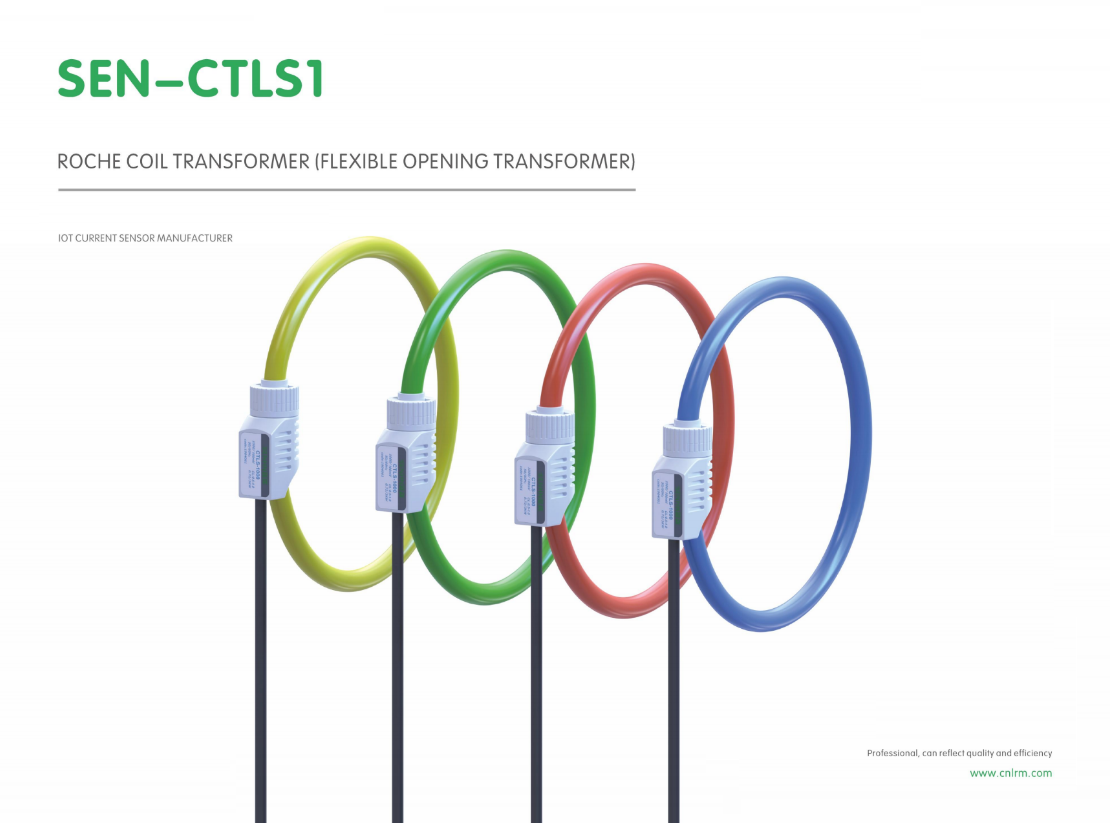
Traditional clamp meters and rigid current transformers force a compromise: you either get accuracy in a fixed form factor or flexibility with a loose fit. Rogowski coils break that trade-off completely. Their air-core design means the sensor can wrap around a conductor of almost any shape, size, or insulation thickness without magnetic saturation or core heating. Field technicians once had to carry several clamp sizes for different busbars or cables; now a single coil with a thin, bendable profile can snake into tight panels, around irregular bundles, and even through cable trays that would defeat a solid-core probe.
What makes this practicality remarkable is that the coil itself doesn't sacrifice measurement quality. The output is inherently linear across an extremely wide current range — from a few amps to hundreds of kiloamps — because there's no ferrite to saturate. This linearity, combined with the coil's immunity to DC offset drift, lets engineers capture fast transients and harmonic-rich waveforms that rigid CTs often distort. When paired with a modern integrator, the Rogowski approach delivers phase accuracy and bandwidth that suit everything from power quality audits to high-frequency switching converter testing.
The redefinition isn't just technical; it's about how maintenance and monitoring workflows change. Installing a Rogowski coil doesn't require disconnecting the primary conductor or shutting down a live panel. The coil's openable design clips around a cable in seconds, and its lightweight nature means it can stay in place for continuous condition monitoring without mechanical stress or heat buildup. For teams managing aging infrastructure or temporary test setups, this combination of non-invasive installation, broad range coverage, and rugged flexibility has turned current measurement from a specialized task into a routine, low-risk step.
The Hidden Costs of Choosing the Wrong Precision Measurement Supplier
Most procurement teams evaluate precision measurement suppliers on sticker price and delivery timelines, but the real expense often appears months after the contract is signed. A supplier that lacks rigorous calibration discipline or uses substandard reference standards can introduce subtle drift into your measurement data. That drift doesn't just stay in the lab—it propagates into production tolerances, quality control pass/fail decisions, and ultimately scrap rates or customer returns. The financial hit from those cumulative errors frequently outweighs any short-term savings on the purchase order.
Another hidden cost comes from inconsistent documentation and traceability. When a supplier cannot provide clear, auditable records for every gauge or instrument, your own compliance burden balloons. Internal teams spend extra hours reconciling missing certificates, chasing down revision histories, or re-qualifying tools that should have been ready on arrival. In regulated industries, this can stall audits or force expensive containment actions. Choosing a supplier based on a low bid often means inheriting a documentation mess that quietly drains engineering and quality resources.
Finally, there is the cost of lost expertise. A precision measurement partner with deep application knowledge can spot potential fixturing errors, suggest more robust measurement strategies, or flag environmental factors that affect repeatability. A generic supplier simply ships a device and walks away. Over time, the absence of that guidance leads to misapplied instruments, unnecessary rework, and slower problem-solving on the floor. What looks like a commodity purchase becomes a recurring operational tax—one that never appears on the supplier invoice but shows up clearly in your yield and downtime metrics.
How to Verify a Supplier's Calibration and Traceability Claims
A supplier's calibration claims mean little without documentation. Ask for recent calibration certificates that show the accredited lab's logo, the date, and the specific standards used. Look for measurement uncertainty values and any statements about traceability to national or international metrology institutes. If a certificate is missing or looks generic, push for the original record rather than a summary.
Traceability is only as strong as the chain behind it. Request the supplier to map out the entire calibration hierarchy from their instruments back to a recognized primary standard. Each link should reference a documented calibration event with a certificate number and date. Pay attention to whether intermediate labs are themselves accredited to ISO/IEC 17025, because an unaccredited lab can break the chain even if the final certificate looks official.
Don't stop at paper. Ask how the supplier handles calibration intervals, what happens when an instrument drifts out of tolerance, and whether environmental conditions during calibration match actual use. A credible supplier will have clear procedures and be willing to walk you through a recent example, including any corrections or recalls. If they resist or give vague answers, treat that as a red flag.
The Difference Between a Reseller and a True Rogowski Coil Manufacturer
A reseller typically sources Rogowski coils from various suppliers and sells them under their own name without any involvement in the design or production process. They often have limited knowledge about the coil's internal construction, material choices, or performance nuances. This means when a customer has a specific application—such as measuring high-frequency transients or operating in extreme temperatures—the reseller must rely on the original manufacturer for answers, which can lead to delays and miscommunication.
A true Rogowski coil manufacturer, by contrast, owns the entire development cycle from winding the coil and selecting core materials to calibrating the output and validating performance against international standards. Such manufacturers can customize coil geometry, sensitivity, and shielding to match precise measurement needs. They also maintain in-house testing facilities, allowing them to guarantee accuracy and phase shift under realistic operating conditions rather than merely quoting datasheet values.
Perhaps the most tangible difference emerges in technical support and long-term reliability. A manufacturer can explain exactly why a coil behaves a certain way at a given frequency or how it will perform after years of thermal cycling. They can provide traceable calibration certificates, suggest integration tips for protection relays or power analyzers, and even redesign a coil quickly if field tests reveal unexpected interference. A reseller, on the other hand, must forward every question upstream, creating a gap that can be costly in critical power monitoring or protection applications.
Questions to Ask Before Your Next High-Current Installation
Before you commit to a high-current setup, dig past the nameplate rating. Ask what the actual continuous load profile looks like—many installations fail because someone assumed a breaker or busbar sized for intermittent duty would handle a steady draw. Find out the expected duty cycle, peak inrush, and whether the load is resistive, inductive, or capacitive. These details change how conductors heat up and how joints age, and they rarely appear on a one-line diagram.
Then push on the environment itself. Will the gear sit in a dusty corner, a humid basement, or a spot with poor airflow? High-current connections are unforgiving when ambient temperature climbs or when thermal expansion works against poorly torqued lugs. Ask for the derating curve under your specific conditions, and don't accept a generic "good enough" answer. Also raise the question of future headroom: adding just twenty percent more load later can turn a marginal install into a chronic hotspot.
Finally, insist on evidence over reassurances. Request thermal imaging reports from similar installations, ask which torque values were actually used on each connection, and confirm whether the protection scheme was coordinated with the full available fault current—not just the normal operating current. A solid answer to these questions will tell you more than any cut sheet ever could.
Building a Long-Term Precision Measurement Partnership Beyond the Purchase
A precision instrument purchase rarely ends at the delivery dock. The real work begins when the equipment sits on your bench, interacting with your unique processes, tolerances, and operators. A supplier who only sells you hardware leaves you to figure out the rest alone. What makes a difference is a partner who understands your measurement challenges well enough to help you adapt the tool to your reality, not the other way around.
That adaptation often starts with calibration schedules and software configurations, but it grows into something more collaborative. When a new part design pushes beyond your current measurement range, or an audit demands tighter documentation, you need a partner who responds with practical advice rather than a fresh quote. Regular technical reviews, operator training sessions, and honest conversations about what the equipment can and cannot do keep small issues from becoming downtime.
Over time, this kind of relationship changes how you plan. Instead of reacting to failures, you anticipate them. You share upcoming production changes, and your partner suggests measurement strategies before you ask. That mutual understanding, built through repeated problem-solving, is the actual asset. It is not written into any warranty, but it is why some labs keep the same measurement partner for decades.
FAQ
Look for proven expertise in wide-bandwidth measurement, in-house calibration capabilities, and a track record of customizing coil length, sensitivity, and shielding for specific installation environments.
Request third-party test reports that show amplitude and phase error across the full frequency range, not just at 50/60 Hz. A trustworthy supplier will share this data without hesitation.
Yes, because the coil and integrator must be matched to avoid drift and phase mismatch. A single source that tests them together reduces integration guesswork and improves overall accuracy.
They should advise on avoiding nearby magnetic interference, proper coil closure and orientation, and cable routing. Field support or clear application notes are signs of a partner, not just a vendor.
In many cases, yes. Rogowski coils have no iron core to saturate, so they handle fault-level currents without damage and remain linear across an extremely wide range.
Even small phase errors can distort power factor and energy metering. A supplier that specifies phase displacement at multiple frequencies helps you predict real-world performance.
Ask whether they can adjust coil diameter, lead length, and connector type without compromising insulation ratings, and how they validate custom designs before shipping.
Very important. Because coils can be affected by mechanical stress or temperature over time, regular recalibration and a supplier that offers it ensures long-term measurement confidence.
Conclusion
Rogowski coils have changed how engineers approach flexible current measurement, but their performance is only as reliable as the company behind them. A coil that looks identical on paper can behave very differently in the field if the winding tension, shielding, or temperature compensation is not tightly controlled. This is where the distinction between a reseller and a true manufacturer becomes critical. A genuine manufacturer can trace every calibration step to national metrology standards, provide realistic uncertainty budgets, and explain what happens when the coil ages or is exposed to harsh environments. Before committing to a high-current installation, ask for documented traceability, test reports from similar applications, and details on how the supplier verifies phase shift and accuracy under actual operating conditions. The hidden costs of a poor choice rarely show up at purchase; they appear later as drift, unexplained readings, or premature replacement.
A long-term partnership should go beyond the initial sale. The right supplier will discuss recalibration intervals, offer failure analysis when something goes wrong, and suggest design improvements based on your field data rather than pushing the next catalog item. They will ask about your busbar geometry, ambient temperature swings, and harmonic content before recommending a solution. This level of engagement is what separates a precision measurement partner from a transactional vendor. Verifying calibration claims is not a one-time checkbox; it is an ongoing expectation that the supplier's metrology lab remains accredited and that their traceability chain stays intact. When you find a supplier who treats your measurement uncertainty as their own liability, you have found the right partner for precision measurement.
Contact Us
Contact Person: Liu Mengyang
Email: [email protected]
Tel/WhatsApp: 8618727589233
Website: https://www.cnlrm.com/en/