

Semiconductor Air Compressor for 24/7 Continuous Operation: A Comprehensive Guide
2026-08-01
In the high-stakes world of semiconductor manufacturing, even a momentary disruption in compressed air can lead to catastrophic yield losses. That's why 24/7 continuous operation isn't just a feature—it's a non-negotiable demand. Yet, not all air compressors are engineered to meet this relentless requirement without compromise. Enter Seize Air, a brand that redefines reliability with purpose-built solutions designed for the semiconductor industry's toughest challenges. This guide unpacks what it truly takes to keep your production line breathing around the clock, from advanced cooling systems to intelligent controls that anticipate failure before it strikes. If you've ever wondered whether your compressed air system is silently undermining your wafer quality, it's time to look closer.
What Keeps a Semiconductor Air Compressor Running Non-Stop?
Behind every uninterrupted fab line, there's an air compressor engineered to shrug off the things that kill ordinary machines. It starts with an oil-free core that avoids contamination risks entirely, but that's just table stakes. The real secret is in the thermal management—integrated cooling circuits that keep discharge temperatures low even when the ambient air is unforgiving. Add in variable-speed drives that match output to demand in real time, and you eliminate the wasteful cycling that wears components out. These aren't add-ons; they're baked into the architecture from day one.
Then there's the matter of internal cleanliness. Semiconductor-grade compressors don't merely filter air—they create an environment where particulates, moisture, and oil vapor find no quarter. Sealed bearings, non-shedding coatings, and condensate management systems work together to preserve purity. But hardware alone isn't enough. Predictive maintenance algorithms now analyze vibration spectra and current draw patterns, flagging bearing wear or valve distress weeks before a failure would occur. That's the difference between reacting to a breakdown and preventing one entirely.
Of course, none of this matters if the machine can't handle the load swings typical in chip fabrication. A compressor that's idling half the time or scrambling to catch up with pressure dips is a compressor on borrowed time. Smart storage strategies—sizing air receivers not just for buffer capacity but for system dynamics—mean the compressor operates in its efficiency sweet spot almost continuously. Pair that with remote monitoring that gives maintenance teams true visibility, and you've got a system that doesn't just run; it endures.
Design Choices That Minimize Wear in 24/7 Cycles
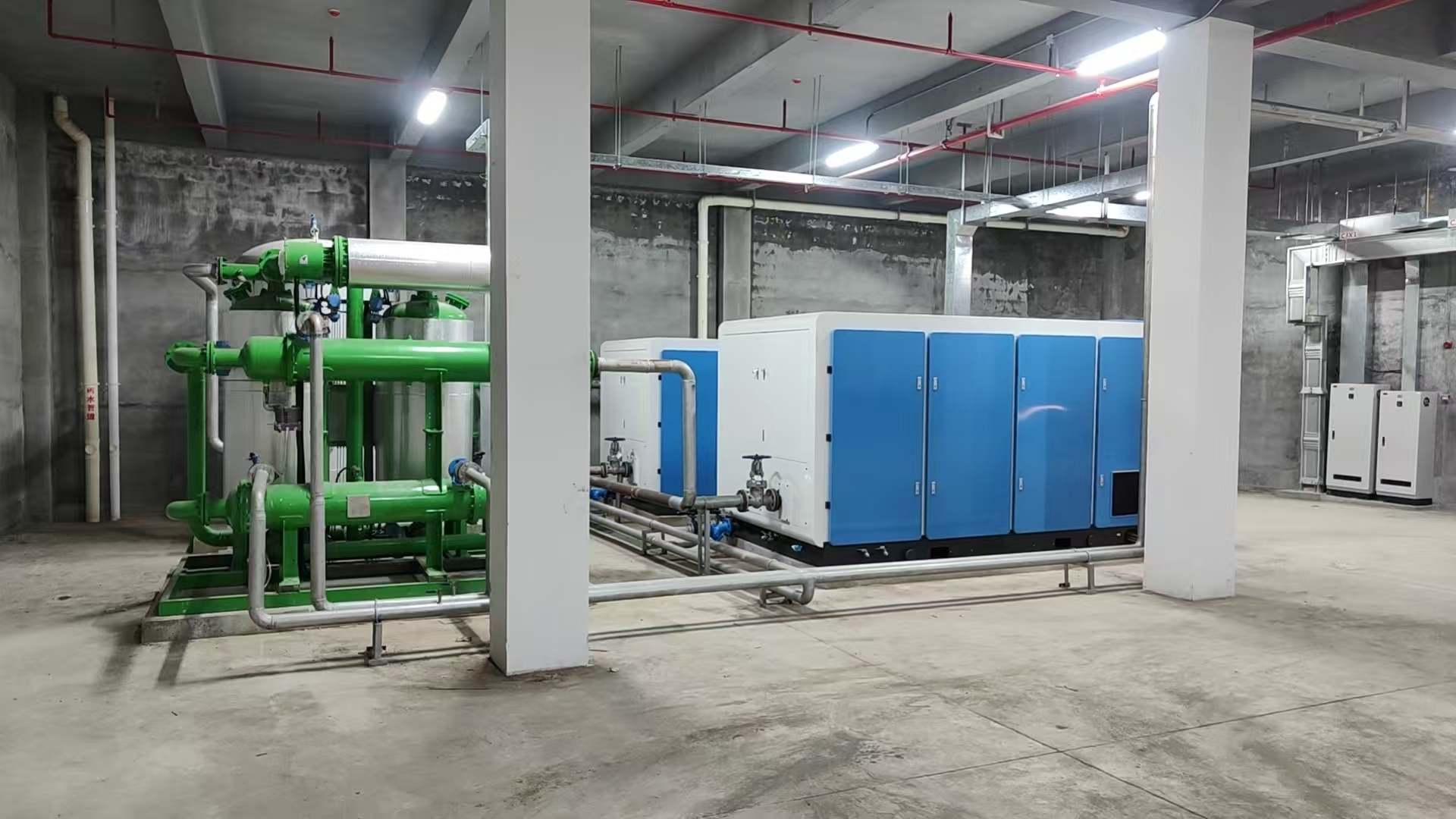
When equipment runs non-stop, every component choice ripples through the system's lifespan. Material pairings that might work fine under intermittent use can become failure points when there's no cool-down period. For example, opting for self-lubricating polymers over metal-on-metal interfaces in sliding parts eliminates the risk of lubricant breakdown over extended cycles, while also cutting maintenance access requirements.
Geometry matters just as much as substance. Subtle design tweaks—like adding generous fillets instead of sharp corners, or slightly crowning gear teeth—distribute stress more evenly and prevent fatigue cracks from starting. Even in high-speed rotating assemblies, balancing rotors to tighter tolerances than the application technically demands pays off by damping vibration that would otherwise hammer bearings into early retirement.
Thermal management often separates durable designs from the rest. Rather than bolting on bigger cooling fans as an afterthought, integrating heat paths directly into structural members—using finned housings or thermally conductive composites—keeps temperatures stable without adding points of failure. It's this kind of systemic foresight, where the design inherently rejects wear rather than fighting it with band-aids, that lets machinery thrive in 24/7 cycles.
Daily, Weekly, Monthly: A Practical Service Blueprint
Most service frameworks look great on a whiteboard but collapse under real-world pressure. That's why we built ours around the rhythms your team already lives by: daily stand-ups, weekly reviews, monthly retrospectives. No abstract theories, just practical checkpoints that fit into the cadence of actual work. Each layer—daily, weekly, monthly—serves a distinct purpose, yet they stack together to create a self-correcting system that improves service delivery without feeling like extra overhead.
Daily checkpoints focus on immediate signals: what broke, what got fixed, and where customers are getting stuck. It’s a five-minute pulse, not a meeting. Weekly syncs shift the lens slightly wider, spotting patterns and rebalancing workloads before minor hiccups turn into full-blown crises. And monthly reviews pull everything together—not just metrics, but the stories behind them. This is where you question whether the service itself still makes sense, and where you give teams permission to ditch processes that no longer serve anyone.
The real magic is in the handoffs between these levels. A daily fix might reveal a deeper flaw that only becomes visible during a weekly pattern review. A monthly insight might demand a new daily habit. By threading these together intentionally, you create a service blueprint that breathes—one that evolves with your users instead of fossilizing into a rigid playbook.
Energy Savings Tactics That Don’t Sacrifice Output
Trimming energy use without cutting into your core output starts with rethinking how equipment runs. Many facilities still operate machinery at full throttle even during light-load periods, burning power for no productivity gain. By installing variable frequency drives on motors and fans, you can dial back speed during off-peak cycles while maintaining necessary pressure or flow. This simple retrofit often slashes consumption by 20–30%, and because the adjustments happen automatically based on real-time demand, your team never has to manually intervene or worry about hitting production targets.
Another overlooked area is compressed air systems—notorious energy hogs that rarely get proper attention. Leaks alone can waste up to 30% of a compressor’s output, yet they’re invisible unless you actively hunt for them with ultrasonic detectors. Fixing leaks, right-sizing pipe diameters, and lowering system pressure to the minimum required for your tools can deliver immediate savings without affecting any tool’s performance. In many cases, a 10 psi reduction cuts energy use by 5%, and operators won’t notice the slightest difference in their equipment’s behavior.
Lighting and HVAC setpoints also hold potential that doesn’t hurt output. Switching to LEDs with occupancy sensors ensures light is only on exactly where and when people are working, while a modest adjustment to thermostat settings—like widening the deadband a few degrees—can significantly reduce heating and cooling loads. Since most industrial processes are unaffected by ambient temperature swings of a few degrees, this approach quietly trims the energy bill without ever entering the conversation about production capacity.
Spotting Early Signs of Overload Before It Halts Production
In many production environments, the first hints of system overload often go unnoticed until a sudden halt forces a costly investigation. Subtle shifts in equipment behavior or workflow throughput can serve as early indicators. For instance, a gradual increase in processing time, even by fractions of a second per unit, might suggest that mechanisms are straining under demand. Paying close attention to these minor fluctuations allows teams to intervene before a full-scale breakdown occurs.
Another overlooked signal is the pattern of minor faults or error codes that appear sporadically before escalating into critical failures. Machines might momentarily pause, reset, or require manual intervention more frequently as they approach capacity limits. Logging and reviewing these events regularly can reveal a growing trend that points toward overload. Additionally, monitoring power consumption and heat generation provides a physical window into strain levels, as higher-than-normal readings often precede mechanical or electrical stress.
Human elements also factor heavily into early detection. Operators may notice unusual vibrations, sounds, or variations in product quality that are not captured by automated systems. Establishing a culture where such observations are recorded and discussed can complement digital monitoring tools. By combining real-time data analysis with frontline experience, production lines can build a proactive defense, adjusting schedules or redistributing loads before overload brings everything to a standstill.
Matching Compressor Specs to Your Specific Manufacturing Flow
Choosing a compressor isn’t just about picking the most powerful model—it’s about understanding how each specification interacts with the unique rhythm of your production line. A compressor that excels in one environment might become a bottleneck in another if its flow rate, pressure capabilities, or duty cycle don’t match the actual demand pattern. Start by mapping out the peaks and valleys of your air consumption, not just the average, because momentary spikes can starve critical tools if the compressor can’t respond fast enough. The relationship between pressure and volume is especially delicate; a machine rated for high pressure but low flow may struggle with tasks that need sustained, moderate pressure over long periods. Instead of defaulting to familiar numbers, dive deep into the real-world usage data collected from existing equipment to identify the true working requirements.
Beyond basic ratings, consider how factors like ambient conditions and physical footprint shape your choices. A facility with high ambient temperatures or dust levels demands a compressor built with robust cooling and filtration—specs that aren’t always front and center in standard catalogs. Similarly, energy efficiency isn’t just a label; it’s a direct result of matching the compressor’s modulation range to your varying loads. Oversized units waste power through frequent cycling, while undersized ones lead to premature wear. The trick is to align the compressor’s control methodology—whether variable speed, load/unload, or start/stop—with how your demand fluctuates throughout a shift. For operations with multiple shifts or intermittent heavy use, a deeper look at recovery time and storage integration often reveals hidden mismatches that can cripple productivity.
Finally, don’t overlook the less glamorous specs like condensate management and noise levels, which can heavily influence where and how the machine fits into your workflow. A compressor that meets all technical requirements but exceeds safety noise limits or requires extensive ductwork might create unforeseen delays and costs. Match the unit’s serviceability and part availability to your maintenance team’s capability; some designs allow quick module swaps while others demand specialized service, impacting uptime in ways spec sheets rarely convey. By integrating these operational nuances into the selection process, you move from a mere spec comparison to a tailored solution that seamlessly supports your specific manufacturing flow without unnecessary compromises.
FAQ
Semiconductor air compressors are engineered with advanced oil-free mechanisms, reduced friction components, and robust cooling systems. This allows them to run continuously without the thermal buildup or mechanical wear that would cripple standard units. They also employ precision control electronics to maintain steady performance over long cycles.
In semiconductor fabrication, even slight interruptions in compressed air can ruin entire wafer batches. A compressor designed for 24/7 duty ensures a constant supply of clean, dry air, which is critical for pneumatic controls, wafer handling, and maintaining cleanroom overpressure. It eliminates production losses from unplanned downtime.
Despite being built for endurance, regular predictive maintenance is still vital. This includes monitoring vibration signatures, checking filtration stages, and analyzing oil-carryover (even in 'oil-free' designs) through air quality tests. Most units have telematic systems that alert technicians before a component degrades, allowing service during planned windows without stopping production.
Yes, modern semiconductor compressors use variable speed drive technology and advanced inlet valve modulation. They can adjust output from 20% to 100% capacity without starting and stopping, which not only matches fluctuating factory demand but also saves significant energy during low-load periods like maintenance shifts.
Even microscopic oil aerosols or moisture can short-circuit nanoscale circuits. These compressors employ multi-stage filtration, refrigerated or desiccant drying to -70°C dewpoints, and catalytic converters that strip hydrocarbons. Some models use water-injected screw elements to eliminate oil entirely, achieving ISO 8573-1 Class 0 certification.
A true non-stop setup typically involves N+1 redundancy—having one more compressor than the peak load requires. Seamless switchover controls, common receiver tanks, and parallel dryers ensure that if a unit goes offline for service or a fault, the others instantly compensate with zero pressure drop. Some facilities even install dual power feeds and backup generators for the compressor house alone.
They incorporate oversized aftercoolers, water-jacketed airends, and sometimes external heat recovery systems. The cooling circuit often ties into the plant's chilled water loop, keeping internal temperatures stable. Air-cooled models use high-efficiency radial fans with automatic speed control to match ambient conditions without wasting energy.
Absolutely, for any fab running three shifts. A standard compressor cycled on and off hundreds of times a week consumes more power due to inrush currents and often fails prematurely from moisture accumulation during idle periods. The purpose-built continuous unit lowers total cost of ownership through higher efficiency, fewer breakdowns, and protecting the incredibly expensive wafers that rely on consistent air quality.
Conclusion
Keeping a semiconductor air compressor running non-stop hinges on a blend of robust design and disciplined upkeep. At its core, the machine relies on precision cooling systems, high-grade bearings, and oil-free mechanisms that resist thermal stress even under relentless cycles. Engineers prioritize components like oversized coolers and duplex filtration, which drastically cut wear from continuous duty. Regular monitoring of temperature, vibration, and pressure trends becomes second nature, allowing operators to catch subtle overload signals—such as erratic motor currents or unsteady discharge temps—before they escalate into downtime. Pairing the compressor’s specs with the plant’s exact air demand avoids wasteful overwork; variable-speed drives and smart controls align output with real-time flow, slashing energy use without compromising performance.
A practical service blueprint makes all the difference: daily checks of condensate drains and filter differentials, weekly belt and lubrication inspections, monthly deep-cleans of heat exchangers and intake vents. This layered approach blocks the slow creep of contamination and keeps efficiency from fading. Energy-saving tactics go beyond just adjusting setpoints—reclaiming waste heat for facility use or deploying demand-side storage smooths peaks and lets the compressor stay in its optimal band. Ultimately, 24/7 reliability is less about any single innovation and more about how well the equipment is integrated into the manufacturing flow, supported by a vigilant routine that treats early warnings as urgent calls to action.
Contact Us
Contact Person: Mia
Email: [email protected]
Tel/WhatsApp: +86 19821985894
Website: https://www.seize-air.com