

Split Butterfly Valve Manufacturer: Expert Guide to Choosing a Reliable Supplier
2026-08-15
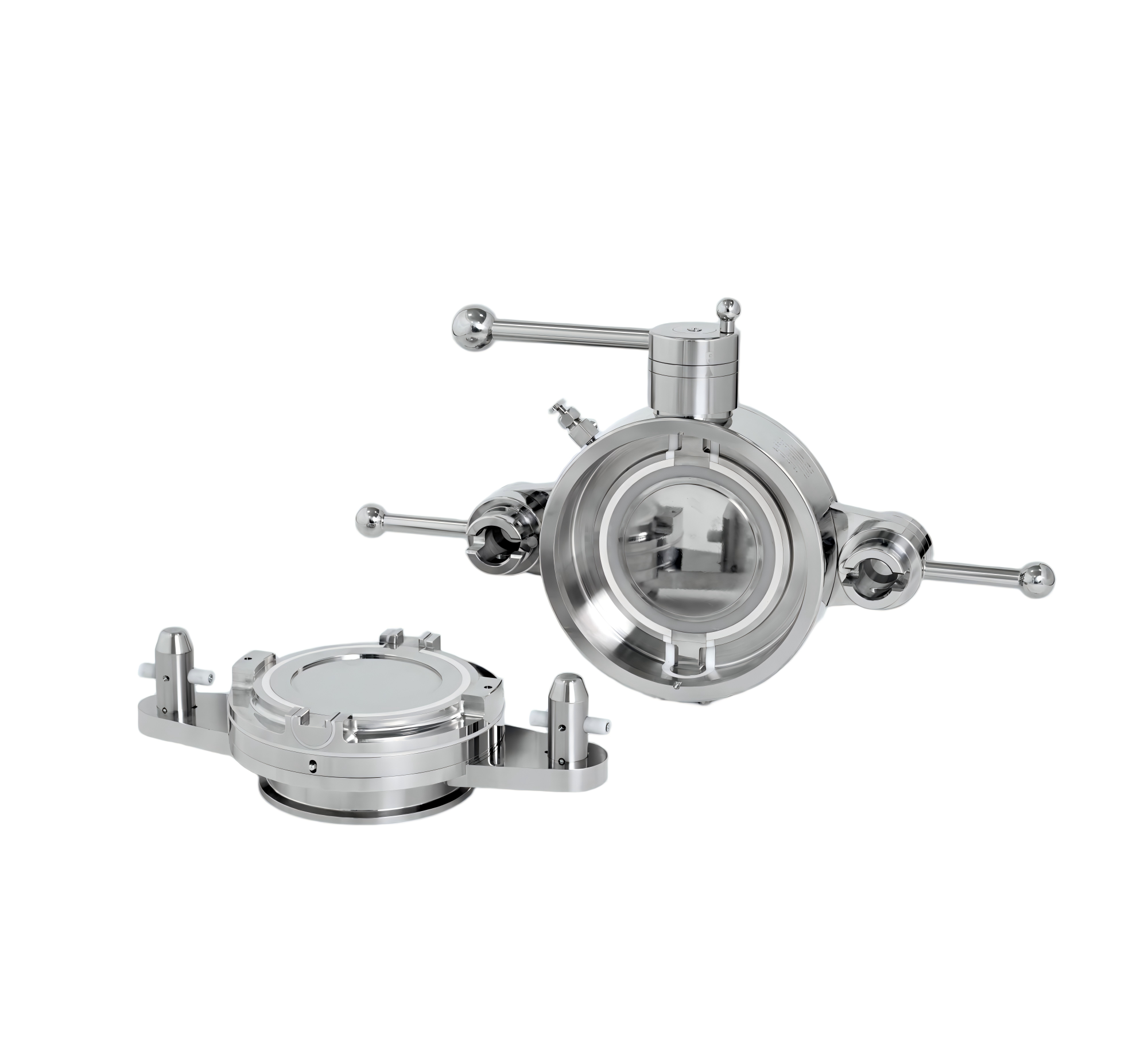
Choosing a split butterfly valve manufacturer isn't just about comparing price lists—it's about avoiding downtime, contamination risks, and costly retrofits. In this guide, we break down what actually matters: seat design, machining tolerances, material traceability, and the supplier's willingness to stand behind their product. If you want a partner who treats quality as a baseline rather than an upsell, AVM is one name worth having on your shortlist. Let's get into the details before your next purchase decision.
What Split Butterfly Valves Do Better in Closed-Loop and Slurry Systems
Split butterfly valves handle the abrasive punishment of slurry lines without the usual wear-and-tear headaches. Because the split-body design lets you pull the seat and disc without removing the entire valve from the pipe, maintenance stops feeling like a full shutdown event. In closed-loop systems where recirculation keeps solids suspended, that quick access means you can swap out worn elastomers or a chipped disc during a short planned window instead of waiting for a catastrophic leak.
Another quiet advantage shows up in how these valves seal under dirty conditions. The split housing creates a tighter clamp around the seat, so fine particles don’t wedge between the body halves and erode the sealing face over time. For slurry service with constant grit impingement, that translates to fewer fugitive emissions and a more stable pressure drop across the valve — not because of some fancy coating, but because the mechanical design simply leaves fewer places for solids to pack and harden.
Closed-loop setups also benefit from the valve’s lighter installed weight compared to lug or wafer patterns with heavy flanges. When you’re recirculating abrasive media through a compact skid or a mobile dewatering unit, every pound matters for support structure and vibration control. Split butterfly valves let you keep the piping rigid and the loop geometry tight, which helps maintain consistent flow velocity — the real key to keeping solids from settling out in the first place.
Manufacturer vs. Middleman: How to Verify Who Actually Builds the Valve
A lot of distributors will talk like they have their own foundry in the back room. The fastest way to cut through that is to ask for the manufacturer's name and address, then check if that name appears on the actual valve body or nameplate. If the supplier hesitates or says "our factory" without being able to show you a physical location you can audit, you are probably dealing with a middleman who is adding a markup and little else.
Another practical test is to request the original mill certificates and pressure test reports. A genuine manufacturer can pull these from their own records without needing to email someone else first. Middlemen often have to ask the real factory for documents, which leads to delays, redacted information, or a certificate with a different company name in the header.
You can also compare the brand on the quote with the trademark owner. Search the trademark registry for the name on the valve, then see who actually owns it and where their registered production facilities are located. If the trademark belongs to a trading company with no manufacturing license, that tells you all you need to know about who actually builds the product.
Seat Replacement Reality: Matching Elastomers to Chemicals and Temperature Swings
Swapping out a seat or seal because the original elastomer gave up rarely comes down to a simple dimensional match. What actually kills the part is usually the combination of aggressive fluids and thermal cycling that the catalog never mentions. Nitrile might hold up fine in a static oil bath at room temperature, but throw in a daily spike to 140°C with a splash of brake cleaner, and you'll start seeing cracks within weeks. The reality is that the same physical size can be had in a dozen different polymer families, yet only one or two will survive the specific chemical soup and temperature range your equipment actually runs.
Contractors and maintenance crews often learn this the hard way after replacing the same O-ring or gasket three times in a month. The common mistake is grabbing whatever the local supplier has in stock, assuming “rubber is rubber.” A better approach starts with writing down every chemical that touches the part, including trace amounts from cleaning solvents or process byproducts. Then check the maximum and minimum temperatures the seat experiences, not just the nominal operating point, because cold-soak startup can embrittle some materials just as surely as heat aging.
Field-proven pairings help cut through the guesswork. For hot water and mild acids, EPDM outlasts most other options but fails quickly in petroleum oils. FKM handles high heat and fuel blends, yet swells badly in ketones or polar solvents. Silicone offers excellent cold flexibility but poor tear strength, so it rarely suits dynamic sealing. And when the temperature swings more than 60°C between cycles, even a chemically compatible elastomer needs enough crosslink density to avoid compression set. Without that, you end up with a perfectly chemical-proof seat that simply relaxes and leaks by the next shutdown.
Seven Questions to Ask Before Approving a Split Butterfly Valve Drawing
Approving a split butterfly valve drawing without scrutinizing the details can lead to field fit-up problems, premature seal wear, or even a valve that cannot be installed in the intended piping class. Before signing off, check whether the drawing clearly specifies the body split configuration—horizontal versus vertical—and how the two halves are aligned and doweled. A vague note like “split as per manufacturer” is not enough; you need to see the actual flange bolt hole orientation, the seat retaining method, and the disc clearance at the split line.
Pay close attention to the interfaces that are often buried in the fine print. Confirm the stem seal arrangement matches the process temperature and chemical exposure, and that the specified seat material is compatible not only with the fluid but also with the cleaning or steam-out cycles. Ask if the drawing includes a full bill of materials for the split body O-rings and gaskets, because these are the first components to leak when the two halves are reassembled after maintenance. Also verify that the actuator mounting flange dimensions and shaft drive square or keyway are dimensioned against the actual automation package, not just a generic ISO pattern.
Finally, question whether the drawing captures the pressure-temperature envelope for the assembled valve, including any derating caused by the split body design. Many drawings show the body pressure class but omit the maximum allowable stem torque or the allowable vacuum rating. Request a sectional view that shows the disc in both full open and full closed positions, and check for any interference with the body split joint. If the drawing does not answer these seven questions with clear, traceable callouts and revision history, send it back for clarification rather than approving a potential assembly headache.
Lead Times Are Not Optional: Reading a Supplier's Production Schedule Like a Buyer
Many buyers treat lead times like a polite suggestion, but that's the fastest way to lose control of inventory. A supplier's production schedule tells you exactly where your order sits among dozens of others. If you're not reading it critically, you're simply hoping. Ask for the full run-down: raw material intake, cutting or molding dates, assembly slots, and the exact day goods hit the dock. Each line on that schedule is a commitment—or a warning sign.
Reading the schedule means checking for overbooking. If a factory has three customers crammed into the same line on the same week, someone's order will slip. Compare the promised finish date against the factory's known capacity per day. Does the math work? Buyers who spot the squeeze early can push for a dedicated shift or split the production across two lines before delays become excuses.
Lead times are not optional because every day late eats into your safety stock, your launch plan, or your shelf space. Treat the schedule as a living document: confirm weekly updates, tie payments to milestone completions, and always have a second source warming up. When you read a production schedule like a buyer, you stop reacting to missed dates and start owning them before they happen.
Why On-Site Support and Spare Parts Stock Matter More Than the Initial Invoice
When a production line halts unexpectedly, every hour of downtime erodes margins that no upfront discount can restore. The real cost of industrial equipment reveals itself months or years after purchase, when a critical component fails and the supplier's response time determines whether you lose a shift or a quarter. A lower invoice rarely compensates for a technician who needs three days to arrive, nor for a spare part that sits in a warehouse on another continent.
Local on-site support transforms breakdowns from crises into manageable interruptions. A technician who can reach your facility within hours—not days—carries more than tools; they carry the contextual knowledge of your specific machine's history and quirks. Meanwhile, a nearby spare parts stock means the difference between swapping a drive in an afternoon and waiting weeks for an international shipment while your output stalls. These logistical strengths compound over the equipment's lifespan, quietly protecting uptime in ways that a purchase price never reflects.
Smart buyers evaluate the full operational picture: what happens on day one after the warranty expires? What happens at 2 a.m. on a Sunday when a sensor fails? Suppliers who invest in regional service hubs and local inventory are essentially pre-paying your future uptime, and that premium is invisible on paper but glaringly obvious on the factory floor. In the end, the invoice fades from memory; the hours of lost production do not.
FAQ
The split body lets you pull the valve out without loosening or spreading adjacent pipe flanges. In a standard wafer design, the whole valve sits between flanges and often needs more lateral space to remove. This difference is crucial in tight installations or systems that can't tolerate much pipe movement.
It depends on your industry, but common credible ones include ISO 9001 for quality management, ATEX if the valve may be used in explosive atmospheres, and FDA-compliant materials for food or pharmaceutical contact. A manufacturer that can provide traceability documents and material test reports is usually a safer bet than one that only offers a generic certificate.
Ask for a factory tour or a live video walkthrough. Look at the range of CNC machines, testing benches, and whether they have in-house rubber lining or PTFE molding. Also check if they maintain stock of common body castings and seat materials. A company that outsources every major step may still produce good valves, but lead times and quality control become harder to verify.
Bodies are often cast iron, ductile iron, stainless steel, or aluminum depending on pressure and corrosion needs. Liners or seats are commonly EPDM, NBR, PTFE, or silicone. The choice depends on temperature, chemical compatibility, and whether the media is abrasive. A reliable manufacturer should help match materials to your specific media instead of pushing a one-size-fits-all option.
Yes, especially if your pipeline has non-standard flange drilling or requires a specific actuator interface. Customization shows the manufacturer has engineering depth. It also reduces the need for adapter brackets later. Just make sure they document the changes clearly and don't treat every custom request as a one-off with no repeatability.
Very important. The whole point of a split butterfly valve is quick maintenance, so the seat or liner should be replaceable without special tools or complete valve removal in many designs. Ask about the actual steps and whether they provide seat kits. A supplier that makes this vague likely hasn't thought through field service.
At minimum, every valve should undergo shell pressure testing and seat leakage testing according to standards like API 598 or EN 12266. For critical applications, look for additional tests such as cycle testing under load or fugitive emission checks. Ask for a copy of the actual test certificate for your order, not just a sample.
Lead times depend on whether the manufacturer keeps semi-finished components in stock or casts to order. Standard sizes with common liners can ship in 2-4 weeks, while custom materials or special coatings might take 8-12 weeks. A supplier who gives a realistic range and updates you on progress is more reliable than one that promises everything in five days without seeing the specification.
Conclusion
A split butterfly valve earns its place in closed-loop and slurry service by allowing inline access without breaking pipe connections, but that advantage only holds if the manufacturer understands how the body geometry and seal design behave under solids loading and pressure swings. Instead of trusting a polished brochure, buyers should trace the actual fabrication source—asking for weld procedure records, material heat numbers, and the name of the shop that machines the body halves. When the valve arrives, the seat material decision needs more than a generic EPDM or PTFE callout; the elastomer must match the specific chemical exposure and the thermal cycling expected during CIP or slurry settling. Before any drawing is approved, seven questions around face-to-face dimensions, lug alignment, disc edge clearance, and actuator mounting should be answered in writing, because a small mismatch here turns into a line shutdown later.
Lead time is not a wish; it is a window into how the supplier actually schedules castings, machining, and assembly. A manufacturer that cannot show you a live production queue or explain which components are stocked versus made to order is likely padding the date. Equally important is what happens after the invoice: on-site support, a regional spare parts shelf, and the willingness to send a technician during a slurry line upset often outweigh a lower initial price. The best supplier treats a split butterfly valve as part of a running process, not a one-time sale, and can prove it by referencing nearby installations, holding common seat kits in stock, and responding to a drawing approval request with a marked-up revision rather than a generic confirmation.
Contact Us
Contact Person: Ananda
Email: [email protected]
Tel/WhatsApp: 8619016718200
Website: https://www.wzaomi.com