

Stainless Steel Carriage Bolt Distributor: Your Guide to Finding Reliable Fastener Suppliers
2026-11-02
Sourcing stainless steel carriage bolts shouldn't feel like a gamble. Yet many buyers still end up with uneven threads, soft heads, or coatings that rust after the first rain. This guide cuts through the noise, helping you spot distributors who actually understand fastener metallurgy—and why Wanluo has become a quiet benchmark in the field. If you've ever wondered what separates a reliable supplier from a costly mistake, keep reading.
Reading a Material Test Report Without a Metallurgy Degree
Think of a material test report as a report card for metal, but you only need to check a few key grades instead of memorizing the entire syllabus. Tensile strength tells you how much pulling force the material can take before it snaps. Yield strength is the point where it bends and won't spring back. Elongation shows how far it stretches before breaking. Together, these numbers tell you whether the metal is brittle or tough.
The chemical composition table may look like a periodic table, but you don't need to be a chemist. Just watch a few elements that affect how the metal behaves in the shop and in service. Higher carbon usually means harder and stronger, but also harder to weld. Manganese adds strength without sacrificing too much ductility, and chromium plus nickel often show up in stainless steels for corrosion resistance. If any element falls outside the range on your spec sheet, that's a red flag.
Finally, check that the test standard cited on the report matches the one you asked for when ordering. Numbers like ASTM A370 or ISO 6892 don't require you to understand every detail, but they tell you the testing followed a recognized method. If the report is missing a lot number, heat number, or test date, ask for it. Most importantly, match the values on the report to the markings on the actual material you received, so you know you're reading about the same piece of metal.
The 304 vs. 316 Conversation Most Sales Reps Avoid
Most sales reps would rather talk about delivery times than admit they don't know the real difference between 304 and 316 stainless steel. It's the conversation that gets skipped because it forces them to either oversimplify or confess ignorance. So they say things like "both are food grade" and hope the customer moves on.
The actual difference isn't complicated, but it costs money. 316 contains molybdenum, which makes it far more resistant to chlorides—think saltwater, de-icing salts, or harsh cleaning chemicals. 304 handles everyday moisture and mild acids just fine, but pit it against a coastal environment and it will start rusting within months. Reps avoid this because explaining it means telling a budget-conscious buyer that the cheaper option might fail.
A good salesperson shouldn't sidestep the question. If you're buying for a marine application, a chemical plant, or anywhere with chloride exposure, 316 is worth the premium. If it's indoor furniture or a kitchen splashback, 304 is overkill. Ask directly, and if the rep squirms, find someone who knows their alloys.
How to Verify 'Stainless' Without a Magnet or a Lab
Most people reach for a magnet first, but that trick falls apart quickly because many stainless grades are non-magnetic while some cheap steels do attract. Instead, pick the item up and pay attention to weight and surface temperature. Stainless feels noticeably denser than aluminum and stays cooler to the touch for longer than thin plated steel. If the piece is light or warms up almost immediately in your hand, you are probably dealing with something else.
Try a hidden scratch or a mild acid test using things already in your kitchen. Scratch an inconspicuous spot with a key: real stainless will show a shallow, uniform-gray line with no copper, zinc, or flaking underneath. Then place a drop of lemon juice or white vinegar on a cleaned area and let it sit for ten minutes. Wipe it away and look for any dull spot, rust bloom, or discoloration. Solid stainless shrugs this off, while plated or low-grade steel often leaves a visible mark.
Finally, use sound and heat as quick checks. Tap the object with your knuckle and listen for a clear, sustained ring rather than a short, flat thud. That vibration behavior hints at a solid, dense alloy. Run the piece under hot tap water for a few seconds: stainless spreads heat slowly and unevenly, so one side may stay noticeably cooler, whereas aluminum and some coated metals heat almost instantly. Combined with the scratch and acid results, these home checks give you a practical verdict without any special equipment.
Packaging Details That Reveal Whether Your Bolts Will Arrive Rust-Free
Flip the carton open and look past the invoice. If the bolts are loose inside a plain cardboard box with no liner, you're already gambling on moisture that seeped in during transit. A serious supplier will wrap or line the interior with VCI paper—often brown or blue with a faint chemical smell—and the wrap should hug the bolts, not float like yesterday's newspaper. Any tear in that paper or a gap at the seam means the protective vapor couldn't do its job, and rust likely started before the box even left the dock.
Next, check the inner bag. Heat-sealed barrier bags with a desiccant pack tucked in the corner are a good sign; a flimsy poly bag with a strip of tape across the top is not. The desiccant should be fresh—if it feels rock-hard or the bag is puffed with air, moisture already won. Some suppliers use vacuum packing, which is even better, because it pulls the plastic tight against the bolt heads and leaves no room for condensation to form during temperature swings.
Finally, run your finger along a bolt head. A light, even film of oil is normal and actually protects the threads, but a thick, sticky goo usually hides pre-existing rust or cheap plating that failed. Also look at how the bolts are separated. If they're dumped in a pile and the zinc coating shows scuffs or scratches, that bare steel underneath will flash-rust within days. The best packs use corrugated dividers, foam trays, or individual sleeves—anything that keeps the sharp edges from grinding against each other and breaking the protective layer before you ever reach for a wrench.
Negotiating Bulk Orders Without Sounding Like a One-Time Buyer
When you reach out about a bulk order, anchor the conversation around replenishment rather than a single transaction. Instead of asking for the lowest possible unit price, mention how your current inventory cycle is set up for monthly restocking and ask whether they can hold pricing steady for the next few production runs. That shifts the vendor's assumption from one-off buyer to recurring account without you having to claim it outright.
Bring up practical details that only repeat buyers tend to care about. Ask about batch-to-batch color consistency, lead time variability during their peak season, or whether they can reserve raw materials for future orders. These questions signal that you are planning around their production schedule and not just trying to clear out a single discount.
Structure the negotiation around the relationship, not just the invoice. Propose a framework for staggered deliveries or a standing order with quarterly reviews instead of pushing for a deep cut on one large shipment. Even a simple line like, 'If this first run meets spec, we would likely set up a regular cadence,' gives the supplier a reason to offer terms that favor an ongoing partner rather than a bargain hunter.
When to Walk Away: Red Flags in a Supplier's Certifications
A glossy certificate is easy to fake. Look for the details that should be there but often aren't: a unique certificate number, the accredited body's full name, the exact standard and revision, a defined scope, and clear validity dates. If any of these are missing, blurry, or impossible to verify through the issuer's public database, treat the document as decoration, not evidence. Suppliers who legitimately pass audits are usually proud to share the full certificate and the accompanying audit report. When they start sending cropped screenshots or 'confidential' summaries, it's time to get suspicious.
Check whether the certification actually covers what you're buying. A supplier might hold ISO 9001 for their headquarters office while the factory making your product has no certification at all. Or the certificate might list a product category that doesn't match your order. Expired or suspended certificates are equally common—some suppliers leave old dates on their websites long after the certificate has lapsed. Always ask for the original certificate and cross-check the registration number against the certification body's online directory. A five-minute verification can save you from a costly quality disaster.
Not all certification bodies are equal. A certificate from 'Global Quality Assurance Council' with no recognized accreditation means very little. Legitimate certifications come from bodies accredited by members of the International Accreditation Forum or other recognized regional schemes. Be wary of suppliers who brandish certificates that were issued without any physical site audit, or who claim to hold a dozen certifications yet cannot explain their own quality management processes in a simple conversation. Real certifications come with evidence of audits, nonconformities, and corrective actions. If everything looks suspiciously perfect, walk away.
FAQ
Focus on how they handle material traceability. A dependable distributor will provide mill test reports showing the exact grade of stainless steel, usually 304 or 316, and won't hesitate to confirm dimensional tolerances. Also ask about their stocking depth for carriage bolt neck lengths and thread pitches, because backorders often hide in those details.
Ask about their relationships with forging and heading mills. Reliable suppliers can usually explain where the bolts are cold headed, how the square neck is formed, and what passivation or pickling steps are used. If they only talk about price and availability without knowing the manufacturing flow, treat that as a warning sign.
18-8 stainless, which covers grades like 304, works fine for most general outdoor use away from constant salt spray. For marine environments, coastal railings, or chemical exposure, 316 stainless holds up much better because the added molybdenum resists pitting and crevice corrosion. A good distributor will ask where the bolts will live before recommending a grade.
Many established distributors have strong custom programs and can work with a mill to alter the underhead length, neck square size, or thread length. The key is whether they have an engineering contact who reviews your drawing and gives feedback, not just someone who forwards a quote request. Expect longer lead times for custom runs, but the right distributor will give you a realistic schedule upfront.
It depends on the size and finish. For common diameters like 1/4-20 or 5/16-18 in 18-8 stainless, you can often buy boxes of 100 without any hassle. For larger diameters like 1/2-13 or 5/8-11, or for 316 stainless, distributors may require full cartons or a minimum dollar amount per line item. Always ask if mixed pallet pricing is available if you need several sizes.
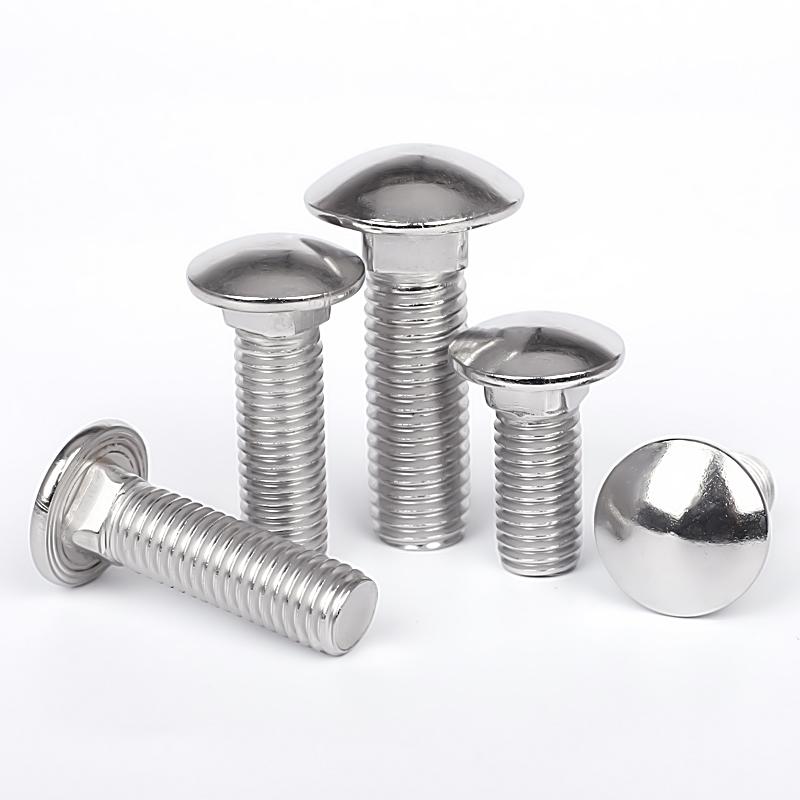
Check for a clean, uniform square neck with sharp edges that will bite into wood or lock into a square hole. Look at the dome head for cracks or rough tool marks, and inspect threads under a bright light for galling or torn crests. If the bolts arrive with inconsistent finishes or oily residue that feels gritty, send photos to the distributor and request a lot inspection before using them.
Give them the full description: diameter, threads per inch, length from under the head to the end, head style, and the grade of stainless you need. Mention the quantity, any finish requirement beyond standard passivation, and the application environment. If you have a drawing or a sample, include that. This cuts down on back-and-forth and helps the distributor catch mistakes, like a square neck that won't fit your punched hole.
Conclusion
A trustworthy stainless steel carriage bolt distributor does more than just forward a mill certificate. If you can't decode a material test report, start with the traceability: heat numbers on the paperwork should match the labels on the cartons, and the chemical ranges for chromium and nickel need to line up with the grade you actually ordered. Too many buyers assume "stainless" means 304, but for coastal or chemical exposure, 316's molybdenum content is often the only thing standing between a clean install and early pitting. And don't lean on a fridge magnet to prove corrosion resistance—some stainless grades are slightly magnetic, while a cheap coated carbon bolt can pass the magnet test and still rust within weeks. Instead, ask the distributor how they separate inventory and whether they can show photos of the actual packaging before shipment. VCI paper, desiccant packs, and sealed poly liners are not extras; they're signs the supplier understands what happens to damp threads inside a shipping container.
Negotiating a bulk carriage bolt order without sounding like a one-time buyer means asking about mill origins, minimum order flexibility, and repeat-run consistency instead of just quoting price per piece. A serious distributor will discuss how they handle mixed pallets, thread protection, and lot segregation—details that prevent you from receiving 304 bolts labeled as 316 because someone in the warehouse grabbed the wrong box. When it comes to certifications, don't accept a generic ISO 9001 certificate at face value. Request the actual material certification for your specific lot, and check if the distributor's name appears on it, not just the mill's. If a supplier gets defensive about test reports, can't explain the difference between 304 and 316 without stumbling, or offers a price that undercuts every other quote by twenty percent, walk away. A reliable fastener partner treats your rust-free arrival as a baseline, not an upsell.
Contact Us
Contact Person: Shane
Email: [email protected]
Tel/WhatsApp: 8613357785029
Website: https://www.wanluohardware.com