

Stand-Up Pouch Filling Machine Solutions for Efficient Packaging Operations
2026-11-16
Every packaging line wrestling with slow fill rates and inconsistent seals knows the hidden cost: downtime disguised as 'normal operations.' Stand-up pouches have transformed shelf appeal, but without the right filling machine, their potential leaks away—literally. That's where Wanying Machinery enters the picture. Our stand-up pouch filling solutions pair precision dosing with rugged construction, cutting waste and boosting throughput in one stroke. Curious how a single machine can handle powders, liquids, and granules without sacrificing speed? Read on.
Matching Filler Type to Product Flow Characteristics
Selecting a filler that performs well in a given process starts with measuring how the material actually moves under stress. Fine, cohesive powders and sticky granules tend to bridge or rat-hole in hoppers, while free-flowing coarse particles can flood or segregate if discharge rates are not controlled. Rather than relying on a single flow index, it helps to observe the product across a range of consolidation pressures and moisture levels, because a filler that flows acceptably at lab scale may behave very differently once it has settled in a storage vessel or been exposed to plant humidity.
For high-viscosity or paste-like products, the filler's particle shape and surface area influence wetting and dispersion more than dry flowability. Irregular or porous fillers can absorb liquid phase components and stiffen the mixture, which may be useful for sag resistance but problematic for pumping or spraying. In low-shear conveying, fillers with broad particle size distributions often pack more densely and resist air entrainment, yet they can create higher wall friction and require steeper hopper angles. Matching the filler to the flow path means considering not just the initial consistency, but how the material transitions from rest to motion and back again.
Field trials with small batches are still the most reliable way to confirm that a selected filler works under actual production conditions. A useful approach is to map the filler's flow function, bulk density, and permeability against the equipment's operating window—including screw speed, aeration pads, and vibration settings. When the filler is matched correctly, the product moves without excessive dust, build-up, or segregation, and the line starts up cleanly after a shutdown. Getting this right reduces downtime more effectively than chasing additives or redesigning equipment later.
Reducing Downtime with Tool-Less Changeovers and Guided Rail Adjustments
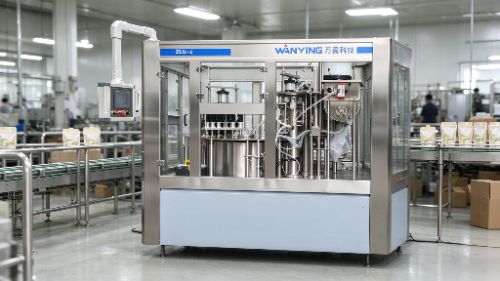
Tool-less changeovers eliminate the need to hunt for wrenches, hex keys, or specialized fixtures every time a product switch occurs. Operators simply twist a hand knob, flip a lever, or slide a locking collar, and the old setup releases in seconds. This not only shrinks the actual physical swap time but also removes the mental drag of dealing with loose hardware that can get dropped, lost, or cross-threaded. The result is a line that stays in motion instead of sitting idle while someone digs through a toolbox.
Guided rail adjustments take the guesswork out of repositioning conveyors, side guides, or lane dividers. Instead of eyeballing a measurement or making repeated trial passes, the rail itself features clear index marks, detents, or a digital readout tied to each product profile. An operator can set the rail to the exact width for a new package in one smooth motion, then lock it down with the same tool-less mechanism. No more wasting the first few units of a run on alignment tweaks or jams caused by a rail that is a few millimeters off.
Pairing these two concepts means changeovers that used to take twenty minutes can now be done in under five, with far less physical strain on the crew. Because the adjustments are repeatable and intuitive, even a newer operator can perform a full switchover without calling over a senior technician. Over a week of frequent product changes, the cumulative saved time adds up fast, directly boosting throughput and allowing the facility to take on more short-run jobs without sacrificing efficiency.
The Role of Deflection Control in Achieving Repeatable Seal Bar Pressure
Seal bar deflection is often the hidden variable behind inconsistent pressure distribution across the sealing face. When a bar flexes under load, the center may apply less force than the edges, or the deflection pattern may shift with every cycle due to thermal expansion or mechanical wear. Controlling this deflection means the pressure profile becomes predictable—not necessarily perfectly uniform, but repeatable enough that each seal receives the same mechanical work from one cycle to the next.
Practical deflection control starts with the physical design: thicker cross sections, strategic ribbing, and intermediate supports all raise the bar's bending stiffness without adding excessive mass. Beyond that, the actuation system matters just as much. Using paired cylinders or servo-driven linkages placed at calculated points along the bar can counteract the natural sag. Closed-loop force feedback then fine-tunes the applied load, compensating for small residual deflections that would otherwise drift over a production run.
The payoff shows up in seal quality data. With deflection held within a narrow band, peel strength and visual inspection results stabilize, and the need for manual pressure adjustments drops sharply. Tooling also lasts longer because the bar no longer flexes into uneven contact with the anvil. In short, deflection control is less about eliminating every micron of bending and more about making whatever bending occurs identical cycle after cycle.
Integrating Gas Flushing Without Complicating the Fill Cycle
Adding gas flushing often tempts engineers to insert an extra dwell station or slow the whole sequence. That rarely ends well. Instead, treat the flush as an extension of the existing headspace purge — push the gas through the same nozzle path that already clears air before sealing, but time it to hit the container just as product settles. This keeps the cycle intact while giving the inert gas a clear path to displace oxygen.
The trick is using a short, high-velocity burst rather than a low continuous flow. A sharp pulse right before lid application creates enough turbulence to sweep out ambient air without blowing lightweight product around or delaying the filler. Pair that with a nozzle geometry that directs gas along the container wall, and you get a rolling purge that leaves fewer dead zones. Validation then comes down to sampling residual oxygen at three or four spots across the line — not just one convenient can — and dialing the burst duration back until you hit your target without stretching the fill cycle.
Designing Pouch Grippers That Keep Lightweight Film from Wrinkling
Wrinkles in lightweight film often start at the grip point, where uneven pressure or a too-aggressive clamp deforms the material before the pouch even opens. The best grippers for these films use a distributed contact pattern, not a single pinch line. Think of it as supporting the film across a broader area so no one spot becomes a stress riser. By spreading the force, the film stays flat and true, letting downstream stations handle a smooth, predictable surface.
Another overlooked detail is the surface finish on the gripper pads. Polished metal or hard plastic can slide just enough to micro-bunch the film, creating tiny folds that grow into severe wrinkles. A slightly textured or soft durometer face—something around Shore A 50 to 60—grabs the film without stretching it. The texture gives just enough friction to hold position while the pad geometry gently backs off near the edges, leaving the film's tension field unbroken.
Finally, timing the release matters as much as the initial grip. Grippers that open too quickly let the pouch's own stiffness spring back unevenly, introducing wrinkles that hadn't been there during transport. A controlled, two-stage release—where the pad pressure drops slightly, pauses, then fully clears—allows the film to settle into its new position before letting go completely. This small dwell time often makes the difference between a clean pouch line and a batch of rejects headed for the scrap bin.
Why a Smaller Footprint Can Improve Line Layout and Operator Access
Production floors rarely have spare square footage to waste. When equipment sheds unnecessary bulk, the freed-up space can be turned into walkways, buffer zones for incoming materials, or even a small inspection table without moving walls. Line designers gain the ability to arrange machinery by actual material flow instead of forcing paths around oversized housings. That kind of flexibility often means a straighter, shorter route from raw input to finished output, with fewer conveyors or transfer points to maintain.
From an operator's perspective, a compact frame puts controls, loading points, and service panels within a few steps of each other. On a busy line where two or three units sit side by side, the difference adds up fast—less walking between stations, easier access to clear a jam, and enough clearance to kneel or reach without pressing against hot surfaces or sharp edges. Routine checks and cleaning also become faster when technicians don't have to squeeze behind a machine that was simply too wide for the aisle it occupied.
FAQ
It takes pre-made stand-up pouches through the full filling cycle automatically: opening the pouch, inflating it with air if needed, dosing product, optionally adding nitrogen or zipper closure, then sealing and dating the top. This removes manual handling errors and keeps fill weights consistent.
Powders, granules, liquids, pastes, and small solid pieces can all be handled as long as you pair the machine with the right dosing system. Common examples include coffee, pet treats, protein powder, sauces, detergents, and snack mixes.
Most units support flat-bottom, side-gusset, and spouted stand-up pouches, with widths from 100 to 400 mm and heights up to 350 mm. Some machines also handle resealable zippers or tear notches with a simple format change.
If you currently fill around 10 to 15 pouches per minute by hand or need better weight accuracy, a semi-automatic station often pays for itself within a year. Fully automatic lines make sense when you consistently need 30 or more pouches per minute and want to reduce direct labor.
Look for toolless format changes, servo-driven fill accuracy, no-pouch/no-fill detection, and recipe storage on the touchscreen. These features cut changeover time, reduce product waste, and let operators switch products without retraining.
Yes, if the design uses indexed adjustments and quick-release clamps rather than bolted change parts. An experienced operator can typically swap sizes and filling heads in 15 to 30 minutes, including setting new fill weights and seal temperatures.
Daily cleaning of seal bars and product contact areas, weekly lubrication of moving linkages, monthly checks of belt tension and vacuum filters, and quarterly calibration of load cells and temperature probes keep the line reliable. Keeping a log of these tasks helps spot wear before it stops production.
Base it on product flow and target accuracy. Augers suit fine powders, piston fillers handle liquids and pastes, and multi-head weighers work best for granules or mixed solids that need high speed with minimal giveaway. Some machines accept interchangeable heads if you run multiple product types.
Conclusion
Stand-up pouch filling lines thrive when the filler is chosen to match how the product actually moves. Free-flowing granules behave nothing like sticky powders or chunky sauces, and forcing one filler design across all of them creates bridging, dust, or inconsistent weights. The better machines let operators swap between auger, cup, or liquid nozzles without rebuilding the whole station. Changeover time matters just as much as fill accuracy, so tool-less clamps and guided rail adjustments have become standard on well-engineered equipment. When rails slide on calibrated tracks instead of being loosened and re-tightened by hand, the next pouch size can be dialed in within minutes, not half a shift. That directly cuts downtime and keeps small-batch runs profitable.
On the sealing side, deflection control is what stops leakers. If the seal bar frame bends slightly under load, pressure varies across the pouch width and weak spots appear. Machines with rigid bar support and adjustable pressure zones hold repeatable seal integrity run after run. Gas flushing can be layered into that same cycle without adding dwell time when the flushing lance is positioned inside the fill path rather than as a separate station. Pouch grippers also earn their keep with lightweight film; a gripper that only pinches the edges lets the face of the pouch sag and wrinkle before sealing, while full-surface gentle clamping keeps the film flat and improves shelf appearance. Finally, a smaller footprint is not just about saving floor space. Compact frames shorten the distance between loading, filling, and sealing, which means one operator can watch the whole line, clear a jam, or reload pouches without walking away from the critical sealing zone. That kind of layout thinking makes the difference between a machine that runs and one that runs efficiently all day.
Contact Us
Contact Person: Tyson
Email: [email protected]
Tel/WhatsApp: +8613396971296
Website: https://www.wanyingmachinery.com