

tFUS Transducer Company Drives Noninvasive Neuromodulation Innovation
2026-09-04
Transcranial focused ultrasound (tFUS) has long promised deep, noninvasive neuromodulation, but getting consistent, repeatable results depends on one overlooked component: the transducer. Siansonic is proving that transducer design isn't just a hardware detail—it's the difference between a promising lab demo and a reliable clinical tool. Here's why that shift matters for the next wave of noninvasive brain stimulation.
The Transducer Trick That Makes tFUS Work
Most people assume the challenge with transcranial focused ultrasound is raw power, but the real breakthrough lives in the transducer geometry. A tFUS device doesn't rely on a single vibrating crystal; it uses an array of dozens or hundreds of small piezoelectric elements. Each element can be fired with its own microsecond-scale delay. When those delays are tuned correctly, the individual wavefronts arrive at the target spot in phase, creating a sharp focus while cancelling out at other points. That steering trick—often called phased-array beamforming—lets the ultrasound bend around the skull's irregular density without needing a physical lens.
The skull, though, is the sneaky part. Bone is heterogeneous, so a naive delay pattern ends up blurry. Early systems used CT scans to build a model of the skull and then computed per-element corrections, almost like giving the beam a pair of glasses. Some newer devices take a simpler route: they place a hydrophone outside the head, send a test pulse from the target region, and record how the skull distorts it. Reversing that recorded signal in time tells each transducer exactly when to fire. This time-reversal trick turns the skull from a barrier into part of the focusing apparatus—and that's the detail most explanations skip.
Beaming Sound Through Bone Without Losing Focus
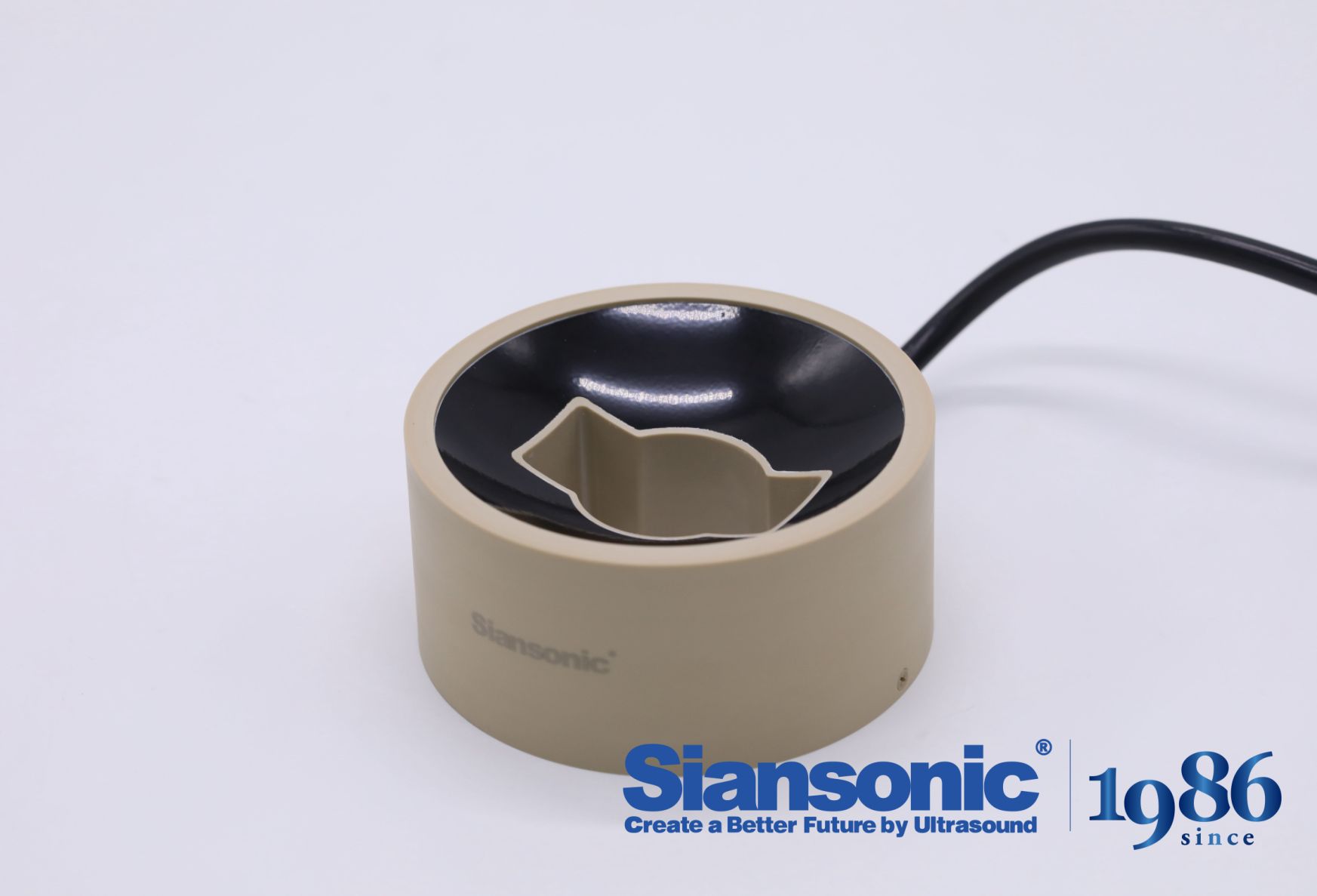
Most people think of bone conduction as a blunt instrument—vibrate the skull, fill the inner ear, spill sound everywhere. But there's a quieter trick emerging: shaping the vibration into a tight, steerable beam that stays locked on the cochlea while leaving the rest of the head acoustically dark. It begins with an array of transducers pressed against the mastoid or temporal bone, each firing microsecond-shifted pulses. Their wavefronts interfere constructively at a chosen point inside the bone and cancel out nearly everywhere else, like ripples meeting on a pond to form one sharp peak.
Keeping that focus intact is the hard part. Bone is not a uniform slab of glass; it's a layered, porous, living material with curved surfaces and unpredictable density shifts. As the wavefront travels, reflections from the jaw, sinus cavities, or even the opposite side of the skull can smear the beam and muddy the high frequencies. Real-time correction helps—tiny accelerometers placed near the transducer pick up the actual vibrational field, compare it to the intended pattern, and nudge the phase and amplitude of each element several hundred times per second. The result is a sound that seems to originate inside your head, yet doesn't bleed outward.
The payoff goes beyond private listening. Surgeons wearing bone-conduction arrays could receive crisp patient monitors while still hearing a nurse's warning. Divers might keep comms clear despite heavy helmets and noisy bubbles. And people with single-sided deafness could route sound from the deaf side to the good cochlea without muddying the healthy ear's natural hearing. None of this requires blocking the ear canal—just a beam that knows exactly where to land.
A New Kind of Brain Tool, No Incision Required
Until recently, peering into the brain's inner workings meant either wearing a bulky cap of electrodes or undergoing surgery to place sensors directly on the surface of the cortex. Both paths have their drawbacks: the cap picks up only blurred, summed signals from millions of neurons, while implanted grids carry the risks of infection, bleeding, and scarring. A different route is now emerging—one that slips a tiny, flexible net of electrodes through a blood vessel in the neck and parks it inside a narrow vein that runs along the brain's motor strip. No scalpels, no drilled holes, no need to open the skull at all.
The device, often described as a stentrode because it combines a stent with electrode contacts, is guided into place using the same catheter techniques cardiologists have relied on for decades. Once the mesh expands against the vessel wall, it sits close enough to brain tissue to record the electrical chatter of nearby neurons. Early trials in people with paralysis have shown that this signal can be decoded into commands for a computer cursor or even a robotic limb. Because the implant lives entirely inside the bloodstream, the body's immune system tends to leave it alone, and there is no open wound to nurse afterward.
What makes the approach feel different is its quietness. There is no dramatic operation, no wires emerging from the head. Patients go home the same day, often with little more than a mild headache. Over weeks, the device settles into place, and the brain simply continues firing as before—only now, those signals have somewhere useful to go. It is a strange thought: a tool that reads your intentions while hiding inside a vein, closer to a pacemaker than to a traditional brain implant.
Why This Company Is Betting on Sound, Not Surgery
For decades, the operating room has been defined by steel, sutures, and recovery wards. This company is wagering that the next breakthrough won't involve a blade at all. By focusing high-intensity sound waves with enough precision to destroy diseased tissue while leaving surrounding structures intact, they are turning a physics principle into a clinical tool. The appeal is straightforward: no incisions, no general anesthesia in many cases, and a patient who walks out the same day instead of spending a week in a hospital bed.
The economics are just as compelling. Hospitals face constant pressure to cut length of stay, reduce surgical complications, and stretch staff resources. A sound-based approach removes many of the expensive variables—operating theater time, sterile instrument trays, post-operative infection control—and replaces them with a single device and a trained operator. That shift, repeated across hundreds of procedures, changes the math for health systems and insurers.
Skeptics have long dismissed sound as too blunt, too diffuse, or too difficult to monitor in real time. But advances in imaging and transducer design have sharpened the beam to sub-millimeter accuracy. The company is betting that these technical leaps—not incremental improvements in surgical technique—will define the standard of care for a growing list of conditions, from liver tumors to nerve disorders.
Turning Ultrasound Into a Neural Switch
Acoustic signals have long been used for imaging inside the body, but their role is now being reimagined. By focusing ultrasound pulses on specific neural circuits, researchers can trigger or suppress electrical activity with millisecond precision. Unlike electrodes that require direct contact, this approach works through the skull and surrounding tissue, opening a path to non-invasive brain modulation that feels less like surgery and more like tuning an instrument.
The core challenge lies in translating mechanical force into a language neurons understand. Ultrasound waves create subtle pressure changes that can deform cell membranes, influencing ion channels that are naturally mechanosensitive. Some teams are engineering these channels to respond more readily to acoustic cues, effectively creating a genetic on-switch. The result is a neural interface that combines the reach of focused energy with the specificity of molecular tools.
What makes this promising is not just the absence of a scalpel. Traditional methods like deep brain stimulation require permanent implants and frequent battery changes, while optogenetics demands viral delivery and fiber optics. Ultrasound, by contrast, can be steered to different brain regions by simply adjusting the transducer array. The same device could one day treat epilepsy, depression, or paralysis without ever touching the brain, turning a diagnostic modality into a therapeutic switch.
The Clinical Push Behind Noninvasive Neuromodulation
Clinicians have long sought ways to adjust neural activity without opening the skull, and the past decade has turned that wish into a crowded field of techniques. Transcranial magnetic stimulation, focused ultrasound, and various forms of electrical stimulation now compete for attention in hospital corridors and outpatient clinics alike. What is less visible, yet arguably more important, is the steady shift in why these tools are being adopted. It is no longer just about treating a handful of drug-resistant conditions. The push now comes from physicians who see noninvasive neuromodulation as a way to intervene earlier, to avoid medication side effects, and to offer something tangible to patients who have run out of conventional options.
This clinical momentum is fueled by practical constraints as much as by scientific breakthroughs. Implanted devices require operating rooms, surgical teams, and long-term maintenance that many health systems cannot easily provide. Noninvasive methods, by contrast, can be delivered in a standard exam room or even at home with proper training. As evidence accumulates for conditions like chronic pain, depression, and motor recovery after stroke, the question has shifted from "does it work?" to "how do we make it work reliably across different patient populations?" That question has begun to drive protocol standardization, insurance coverage debates, and a wave of clinician education programs that barely existed five years ago.
Perhaps the most telling sign of the push is the changing conversation in peer-reviewed meetings. Researchers now routinely present head-to-head comparisons against sham stimulation, dose-response curves, and real-world adherence data. The old skepticism about "just a fancy placebo" is giving way to more nuanced discussions about parameter selection, individual variability, and combination with behavioral therapies. Hospitals are creating dedicated neuromodulation clinics, and referral patterns show that primary care providers are increasingly comfortable sending patients for these treatments before escalating to surgery or long-term pharmacotherapy. That is not a fad. It is a structural change in how clinical medicine approaches the brain.
FAQ
The company's transducers steer ultrasound through the skull with millimeter precision, so they can reach deep brain structures without surgery or implants. That opens up targets that were previously only accessible with invasive electrodes.
The transducer is what shapes and focuses the ultrasound beam. If it can't maintain a tight focus through bone, the whole approach falls apart. Their design uses phased arrays and real-time acoustic feedback to correct for skull distortions, which keeps the energy where it's needed.
Early work focuses on treatment-resistant depression and essential tremor, but there's also exploration in chronic pain and epilepsy. Depression makes sense because deep limbic areas like the subgenual cingulate are hard to reach without opening the skull.
They pair the transducer with MRI-based thermometry and cavitation detectors. Before each session, the system runs a low-power test pulse to map the acoustic path and ensure no unintended heating. That's a big part of why they've moved through regulatory review without serious adverse events.
It's not just a single device. They've built a platform where the transducer, software, and planning tools are modular. That lets researchers plug in new treatment protocols or target different brain regions without redesigning hardware, which speeds up clinical studies.
Yes, mainly in treatment frequency and duration. Ultrasound sessions are intermittent, so patients may need repeated visits. Implants can deliver continuous stimulation, but tFUS avoids surgery, lead erosion, and battery replacements. For many people, that trade-off is worth it.
They're exploring peripheral nerve modulation and blood-brain barrier opening for drug delivery. Because the transducer can be reconfigured for different depths and frequencies, the same core technology could address conditions like rheumatoid arthritis or even enhance chemotherapy uptake in brain tumors.
Conclusion
The tFUS transducer company has quietly solved one of the hardest physics problems in neuromodulation: getting focused ultrasound through the skull without scattering the beam into useless noise. Instead of relying on invasive electrodes or large magnetic coils, their engineers redesigned the transducer array itself, using phase correction algorithms and patient-specific skull models to refocus sound waves precisely onto deep brain targets. This transducer trick is what makes tFUS viable as a noninvasive tool. Early prototypes struggled because bone absorbs and defocuses ultrasound, but the company's latest iteration uses a conformal array with hundreds of independently driven elements. Each element gets a delayed pulse so that all wavefronts arrive in phase at the intended spot, compensating for skull thickness variations. By beaming acoustic energy through bone while preserving a tight focal spot, the device can reach structures like the thalamus or anterior cingulate cortex that were previously only accessible with surgery.
Clinically, that changes the calculus. The company is betting that sound, not surgery, will become the default way to modulate neural circuits. Their ultrasound pulses act like a temporary neural switch, either exciting or suppressing activity depending on the waveform and duty cycle. Early studies suggest applications in treatment-resistant depression, chronic pain, and movement disorders, with none of the infection risk or recovery time of implanted hardware. The clinical push is not hypothetical; several academic medical centers are now running feasibility studies with the company's device, comparing tFUS targeting to established surgical approaches like deep brain stimulation. Regulatory pathways are being mapped for conditions that currently have limited noninvasive options. If the ongoing trials hold up, this transducer company may well define the next decade of brain therapy without a single incision.
Contact Us
Contact Person: Ivy Zhang
Email: [email protected]
Tel/WhatsApp: +86 1081502288
Website: https://www.siansonic.com/