

Through Hole Resistor Excellence: Partnering with a High-Quality Manufacturer for Reliable Circuits
2026-07-20
In the world of electronics, the smallest component can make or break a circuit. Through hole resistors, often overlooked, are the quiet workhorses ensuring stability and performance in everything from industrial machinery to consumer devices. But not all resistors are created equal—sourcing from a manufacturer that prioritizes precision and durability is critical. That’s where Milliohm steps in, redefining what reliable component supply looks like. This blog explores how partnering with a high-quality manufacturer elevates your designs, and why Milliohm is the name engineers trust for through hole resistor excellence.
The Enduring Relevance of Through-Hole Resistors
Through-hole resistors might seem like relics in an age of surface-mount miniaturization, yet they stubbornly persist in industries where reliability and serviceability outweigh the race for compactness. Their leads, which pass through the board and are soldered on the opposite side, create mechanical anchors that withstand vibration, thermal cycling, and physical stress far better than their surface-mount counterparts. This makes them indispensable in aerospace, automotive, and industrial power supplies—environments where a cracked solder joint isn't just an inconvenience but a potential catastrophe.
Beyond ruggedness, through-hole resistors offer a practical advantage often overlooked by digital-first designers: they transform a printed circuit board into a serviceable, almost modular system. Tinkerers and repair technicians can easily swap a burnt resistor without specialized hot-air rework stations or microscope-guided soldering. In prototyping, their larger size allows clear color-code reading and easier handling, turning breadboarding into a tactile, intuitive process. It's no surprise that hobbyist communities and educational kits still favor them; they lower the barrier between an idea and a working circuit, fostering hands-on learning that surface-mount simply can't replicate.
There's also an analog soul to through-hole components that automated assembly lines cannot erase. In high-end audio and guitar amplifiers, designers often insist on them for their perceived sonic qualities—lower parasitic capacitance and inductance, a more forgiving thermal profile—arguments that blend engineering with lore but continue to command loyalty. Even in modern manufacturing, they carve a niche: when you need a power resistor that can dissipate heat away from the board via its leads, or when you're dealing with high-voltage isolation that demands physical spacing, through-hole remains not just relevant, but the only sensible choice.
Precision Manufacturing: The Heart of Resistor Quality
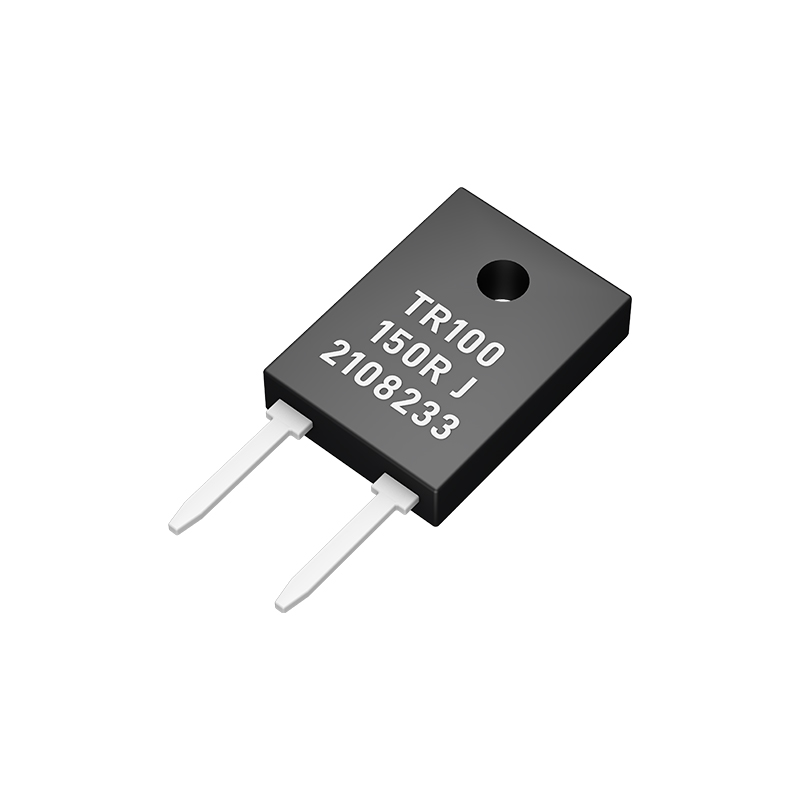
Resistors might seem like humble components, but their performance hinges on manufacturing processes that operate at the edge of what’s physically possible. Every step—from trimming the resistive element with laser precision to applying protective coatings—demands control tolerances that would seem obsessive in many other industries. A deviation of just a few microns during film deposition or a slight miscalibration in the curing oven, and the resistor’s temperature coefficient or long‑term stability can drift outside spec. It’s this relentless attention to detail that separates a generic part from one that will hold its value year after year in a precision instrument.
Behind the scenes, statistical process control and automated optical inspection systems work in tandem to catch imperfections invisible to the human eye. Resistance values are monitored continuously during production, not just at final test, so corrections can be made in real time—often by algorithms that learn on the fly from the subtle signatures of process drift. The equipment itself is often custom‑built, with vacuum chambers and sputtering targets designed for a single product family, because off‑the‑shelf solutions can’t deliver the repeatability required. This isn’t assembly‑line work; it’s closer to crafting scientific instruments at scale.
The result is a resistor that behaves predictably under stress: thermal cycling, vibration, humidity, and pulse loads. Such manufacturing rigor also means fewer batch‑to‑batch variations, so circuit designers can stop worrying about tuning their designs to accommodate component spread. In an age where electronic assemblies are pushed into smaller spaces and harsher environments, the quality of a resistor is less about the materials on the datasheet and more about whether the factory treats every single unit as a critical subsystem. That mindset is what transforms a simple resistive element into a reliable building block for the most demanding applications.
Robustness You Can Rely On: Circuit Reliability Demystified
Circuit reliability isn't just a nice-to-have feature; it's the quiet backbone that keeps everything from smartphones to satellite systems functioning without a hiccup. When we talk about robustness in circuits, we're referring to their ability to perform consistently despite the noisy, unpredictable real-world environments they live in. Think of it as designing a bridge that doesn't just stand up on a calm day but also holds firm against storms, heatwaves, and decades of relentless traffic.
At the heart of demystifying reliability is understanding the most common stressors: temperature swings, voltage fluctuations, and electromagnetic interference. These aren't abstract concepts—they're the everyday challenges that cause a capacitor to degrade, a signal to get lost in the noise, or a path to crack under thermal expansion. Robust design means building in margin for these variables from the start, not just adding a bunch of redundancy afterward. It involves careful material selection, thoughtful layout, and often a deep appreciation for failure modes that only experienced engineers tend to develop over time.
The payoff for all this behind-the-scenes discipline is huge. A truly reliable circuit means fewer field failures, less costly recalls, and most importantly, trust from the people who depend on these devices in critical situations—be it a pilot relying on avionics, a surgeon using a medical monitor, or simply a driver counting on their car's safety systems. By shifting the conversation from reliability as an afterthought to reliability as an integral part of the design ethos, we get circuits that don't just work in the lab but thrive out in the wild.
Tailored Partnership: Beyond Off-the-Shelf Components
We believe that true innovation never comes from a catalog. That’s why we don’t simply hand over standardized parts and hope they fit your vision. Instead, we immerse ourselves in your goals, your challenges, and the nuances of your project to co-create components that are engineered specifically for you. This means every dimension, material choice, and performance parameter is dialed in to match your exact requirements—not adapted from something that was designed for someone else.
The difference shows up in the details. Where an off-the-shelf solution might force you to compromise on layout, efficiency, or durability, our tailored approach eliminates those trade-offs. We work side by side with your team, iterating rapidly from early sketches to final validation, so that the end result feels like a natural extension of your product—not an afterthought. You get a partner who is as invested in your success as you are, bringing fresh ideas and technical depth without the constraints of pre-made limits.
Ultimately, this isn’t about selling you a widget; it’s about building a relationship that elevates what you can achieve. By moving beyond the one-size-fits-all model, we unlock new levels of performance, streamline your supply chain, and often reduce long-term costs. The result is a solution that doesn’t just meet a spec sheet—it propels your project forward in ways you hadn’t imagined possible.
Real-World Applications: Where Through-Hole Technology Thrives
Walk into any industrial facility or open up a vintage audio amplifier, and you’ll quickly see why through-hole components still command respect. In power electronics, where high currents and voltages are the norm, the sturdy leads and generous solder joints of through-hole parts create reliable connections that surface-mount alternatives struggle to match. Motor drives, welding equipment, and high‑voltage power supplies lean heavily on these rugged packages because they can dissipate heat more effectively and withstand constant thermal cycling without cracking loose from the board.
High‑reliability sectors like aerospace, military hardware, and medical life‑support systems also keep the through‑hole tradition alive. When failure is simply not an option, the physical anchoring of a lead poked through a hole and soldered on both sides provides a level of mechanical security that goes far beyond what a tiny surface‑mount pad can offer. You’ll spot through‑hole connectors, transformers, and large capacitors in satellite power modules and patient‑critical monitoring gear—not because it’s old‑fashioned, but because it works every time, decade after decade.
Beyond the factory floor and the stratosphere, through-hole technology flourishes in the hands of hobbyists, prototypers, and educators. The forgiving nature of hand‑soldering a through‑hole resistor on a breadboard‑friendly PCB makes learning electronics accessible. Repair technicians treasure the ease of swapping out a failed capacitor on a through‑hole board, keeping cherished guitar pedals and classic synthesizers singing for another generation. It’s in these tangible, human‑scale interactions that through‑hole truly thrives, bridging the gap between an idea scribbled on a napkin and a working circuit you can hold.
Sustainable Supply: Long-Term Stability for Your Designs
A design's lifespan depends on more than just upfront creativity—it relies on the uninterrupted flow of components and materials. By partnering with suppliers who prioritize ethical sourcing and resource longevity, you build resilience into your products from the ground up. These relationships aren't about quick wins; they're about ensuring that every resistor, textile, or coating you specify today will still be available and consistent in performance years down the line, shielding your work from sudden market shifts or scarce raw materials.
Stability isn't just a procurement concern—it's a design philosophy. When you know your supply chain values regeneration and reduced waste, you can make bolder choices without risking project delays or forced redesigns. That confidence translates into cleaner documentation, fewer reactive iterations, and an output that remains true to its original intent, all while treading lighter on the planet. In the end, sustainable supply means your work stands the test of time, both functionally and ethically.
FAQ
Despite the rise of surface-mount technology, through-hole resistors remain indispensable for applications demanding robust mechanical bonds and high power dissipation. Their larger physical size and leads allow for easier heat management and make them ideal for prototyping, educational kits, and high-reliability systems where component replacement is a consideration.
A reputable manufacturer employs rigorous material selection, stable film deposition processes, and extensive environmental testing—such as thermal cycling and humidity exposure—to guarantee minimal drift over time. Consistent process control and full traceability from raw materials to finished products further strengthen reliability.
Beyond competitive pricing, engineers should prioritize suppliers that offer comprehensive datasheets, demonstrated compliance with industry standards (like IEC and MIL-PRF), and a track record of delivering consistently low failure rates. Direct technical support and the flexibility to handle custom requirements are also valuable indicators of a committed partner.
Their larger physical construction allows for better thermal conductivity and higher voltage isolation. Leaded parts can be spaced appropriately on a PCB to prevent arcing, and the through-hole mounting provides a stronger mechanical anchor that withstands vibration and thermal expansion stresses better than many SMD counterparts.
Consolidating sourcing with a trusted manufacturer reduces the overhead of qualifying multiple vendors and minimizes the risk of counterfeit or substandard parts. It streamlines logistics, ensures consistent product specifications across batches, and often leads to more responsive service during supply fluctuations.
Testing verifies that every resistor meets its specified tolerance, temperature coefficient, and power rating before it reaches the assembly line. Burn-in and accelerated life testing help identify early failures, while ongoing lot testing ensures that production stays within strict quality boundaries, thereby safeguarding the end application's integrity.
Conclusion
Through-hole resistors remain indispensable in modern electronics, offering mechanical strength and reliability that surface-mount alternatives often can't match. Their leads anchored firmly through the board provide superior shock and vibration resistance, which is why they're still chosen for critical applications like aerospace, industrial machinery, and automotive systems. A high-quality manufacturer understands that this enduring relevance depends on precision engineering—tight tolerance control, low temperature coefficients, and consistent materials that stand up to thermal cycling. Without such meticulous attention to core manufacturing processes, even the most rugged-looking through-hole resistor can become a weak link, compromising circuit integrity over time.
True partnership goes beyond simply supplying parts. It means collaborating to customize resistive solutions for your specific demands, whether that involves bespoke form factors, non-standard resistance values, or specialized coatings for harsh environments. This tailored approach unlocks performance gains that generic components cannot provide. Moreover, a committed manufacturer ensures a sustainable supply chain with long-term availability, so your designs remain serviceable for years without frantic last-minute redesigns. From power supplies to industrial controls, through-hole technology thrives where robustness matters, and aligning with a partner who delivers both immediate quality and future stability transforms a simple component into a strategic advantage for reliable circuits.
Contact Us
Contact Person: Yuying Gao
Email: [email protected]
Tel/WhatsApp: +86 18926013721
Website: https://en.milliohm.net/