

Top 10 Sheet Metal Fabrication Techniques for Precision and Efficiency
2026-06-13
Every sheet metal project demands a blend of precision and speed, but not all fabrication techniques deliver both. In this guide, we break down 10 proven methods that consistently outperform—whether you're prototyping or scaling production. Drawing on real-world expertise from TPS, you'll find actionable insights to sharpen your process and avoid common pitfalls. Let's dive into the details that separate acceptable results from truly exceptional ones.
Laser Cutting: The Art of Light-Speed Precision
When a tightly focused beam of light can slice through steel with mirror-like edges, you’re witnessing more than just a manufacturing technique—you’re seeing physics choreographed into an art form. Laser cutting operates at the intersection of raw power and extreme delicacy, where a stream of photons, amplified and aligned, becomes a tool with no physical mass yet enough energy to vaporize matter. The process feels almost paradoxical: it’s contactless yet brutally effective, silent yet capable of piercing inches of metal. This is precision engineered at light-speed, where every pulse is timed in milliseconds and every micron matters.
Behind the curtain, the magic lies in how the laser’s wavelength is tuned to marry with the material it meets. A CO₂ laser might glide through acrylic and wood with a flame-polished finish, while fiber lasers dig into reflective metals like copper and brass without breaking a sweat. The beam doesn’t simply cut—it persuades the material to part ways, heating a pinpoint until it melts, burns, or sublimates, while a jet of assist gas sweeps the debris clean. What’s left is a kerf so narrow it can rival the width of a human hair, and edges so crisp they often need no secondary finishing. It’s a dance of thermodynamics and motion control, executed by a gantry that moves with robotic grace, tracing paths drawn from digital files.
Yet for all its high-tech glow, laser cutting rewards hands-on intuition. Operators learn to read the sparks as they spray—white-hot and trailing means oxygen cutting; a softer plume suggests nitrogen. The hum of the chiller, the faint ozone tang in the air, the subtle discoloration on a stainless edge—these are the whispers of a process that can make or break a piece. From intricate jewelry filigree to heavy-gauge ship parts, the same principles apply: speed, focus, and an almost obsessive control over heat input. It’s this blend of science and subtle craft that turns a simple cut into a work of light-speed precision, where the final product often emerges as flawless as the beam that shaped it.
CNC Punching: Patterns That Perfectly Align
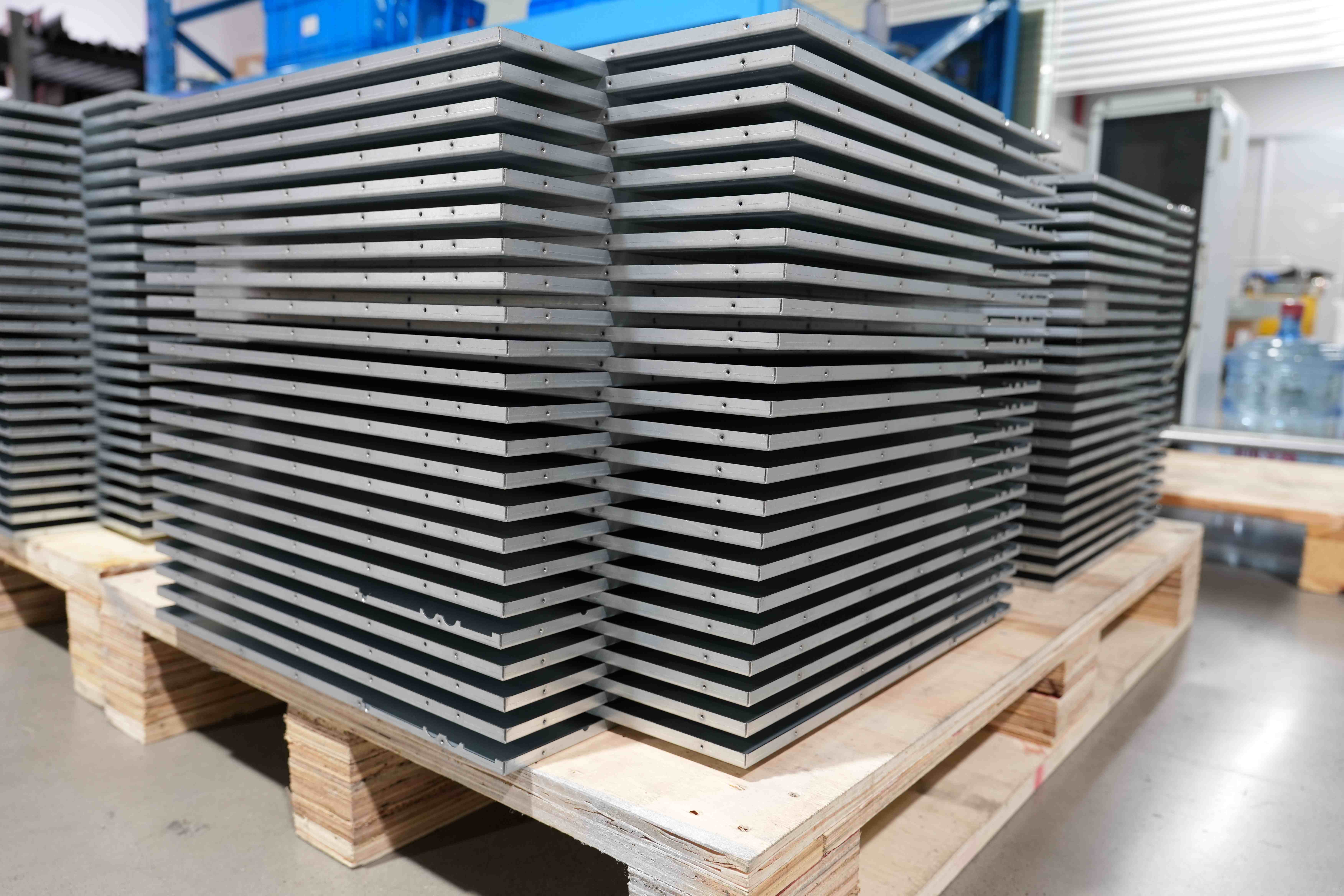
The magic of CNC punching lies not in the force of the strike, but in the silent precision between hits. When a pattern demands perfect alignment across a sheet, the machine's ability to position the toolhead within microns separates a crude perforation from a seamless design. It's the synchronization of servo motors, ball screws, and real-time feedback loops that ensures each hole, slot, or form lands exactly where the digital model dictates, even as the metal warps and springs back from previous punches.
Achieving this harmony requires more than just a rigid frame. The programming side is where true alignment begins. A clever sequence of hits, nesting patterns to distribute stress evenly, and using micro-joints or tabs to hold the workpiece steady all prevent cumulative drift. Skilled operators know that the order of punching isn't just about speed—it's a carefully choreographed dance that keeps the sheet flat and the reference edges consistent, so that the last feature aligns just as perfectly as the first, even on large, complex parts.
In practice, the results speak for themselves: interconnected parts that fit with zero clearance, decorative grilles where every line flows uninterrupted, and functional assemblies that come together like a puzzle. The alignment isn't just visual; it's structural. When the patterns line up, the material's integrity is preserved, stress concentrations are minimized, and the final product feels balanced to the touch. That's the quiet triumph of precision punching—patterns that don't just look aligned, but truly are.
Bending with Brains: Adaptive Forming Strategies
Modern sheet metal fabrication no longer relies on fixed tool paths and rigid setups. Instead, adaptive forming integrates real-time sensor feedback to adjust parameters like punch depth, backgauge position, and even bend sequence mid-operation. Laser-based angle measurement systems track springback as it happens, feeding data to closed-loop controls that compensate for material property variations—whether you're forming high-strength steel or a batch of aluminum with inconsistent temper. This eliminates the trial-and-error approach and dramatically cuts down on scrap, especially in high-mix, low-volume production where every piece counts.
The intelligence extends beyond single bends. By coupling predictive models with historical data, adaptive strategies learn from each cycle, refining the bending simulation over time. Instead of assuming a homogeneous blank, the system treats each sheet as unique, adjusting for local thickness deviations or residual stresses. This is particularly valuable when dealing with pre-coated or embossed materials where traditional CAD-based simulations often fall short. The result is a forming process that essentially “feels” the material, much like a skilled craftsman would, but at production speed and with repeatability impossible by hand.
Ultimately, this shift toward adaptive thinking changes how we approach part design. Engineers can now specify tighter tolerances knowing the process will self-correct, or play with unconventional bend radii that used to be off-limits due to variability. It also paves the way for lights-out manufacturing; once the system’s decision-making is trusted, operators can step back and let the press brake handle the cognitive load of precision bending.
Welding Without a Trace: Seamless Joint Mastery
Achieving a truly seamless joint goes beyond basic technique—it demands a deep understanding of material behavior and heat control. The core of mastery lies in preparing the edges with precision, ensuring they mate perfectly before the torch ever lights. Every micron of misalignment shows later as a ghost line, so the fit-up must be obsessive. Controlling the arc length and travel speed consistently prevents excess filler from piling up, while the subtle push or pull angle of the electrode dictates how smoothly the weld metal flows into the parent surface.
The real art emerges in the post-weld phase, where the weld transitions from visible bead to invisible bond. Instead of heavy grinding that risks thinning the material, skilled hands use a progression of abrasives matched to the metal’s hardness, blending the crown until it disappears under cross-lighting. For critical applications, a light pass with a TIG torch without filler can reflow the surface, erasing any lingering scratches. Mastering this means training your eye to detect the faintest shadow or texture change, then eliminating it without leaving a new imperfection behind.
Every material presents its own puzzle: stainless steel eagerly telegraphs heat tint, aluminum hides cavities beneath a smooth skin, and titanium demands gas coverage long after the arc stops. The master welder adapts instinctively, adjusting purge rates, trailing shields, and interpass temperatures to preserve the metal’s integrity. In the end, the true test is running a fingertip across the area and feeling nothing but the uninterrupted original surface—no ripple, no dip, no hint of the welder’s presence.
Hydroforming: Fluid Force for Flawless Shapes
At its core, hydroforming relies on hydraulic fluid pressure to coax metal blanks or tubes into intricate shapes that would be nearly impossible through conventional stamping. The process eliminates many of the weak points and stress risers that plague welded assemblies, yielding components with uniform wall thickness and superior structural integrity. As the fluid fills a die cavity, it pushes the material outward with steady, even force—no hard tooling impact, no abrupt deformations. This gentler approach allows designers to experiment with complex curves, sharp radii, and lightweight geometries without sacrificing strength, which explains its growing presence in automotive, aerospace, and high-end bicycle manufacturing.
What truly sets hydroforming apart is the way it leverages fluid’s inherent adaptability. Instead of relying on multiple die sets and secondary operations, a single hydroforming cycle can replace several traditional steps, trimming production time and cost. The hydraulic medium acts as a flexible punch, conforming effortlessly to the material’s surface and distributing pressure where it matters most. This means less springback, fewer wrinkles, and a finish that often requires minimal post-processing. Engineers appreciate the freedom to merge parts—turning what was once an assembly of stamped and welded pieces into a single, seamless unit that boasts both cleaner aesthetics and enhanced fatigue resistance.
Finishing Touches: Surface Treatments That Last
A surface treatment that stands the test of time doesn’t happen by accident. It’s born from precise material pairing and application technique. Think of anodized aluminum retaining its sheen through seasons of saltwater spray, or a powder-coated railing that still looks new after a decade of sun and rain. These results come from matching the treatment to the substrate—whether it’s metal, wood, or concrete—and ensuring proper preparation, like etching or degreasing, before the first coat even touches the surface.
The real secret to longevity often lies in the microscopic bond. Electroplating, for instance, fuses metal atoms to the base at a level that paint simply can’t match, while thermal spraying builds up a wear-resistant shell that reshapes rather than flakes under stress. Even simpler processes, like hot-dip galvanizing, embed a sacrificial layer that corrodes slowly, protecting the steel beneath for half a century or more. The trick is selecting a treatment that works with the environmental stressors—abrasion, moisture, chemical exposure—instead of just covering them up.
Maintenance, or the lack of it, often determines whether a finish becomes a fleeting improvement or a permanent upgrade. A high-quality clear coat on automotive exteriors can resist fading and micro-scratches for years, but only if it’s formulated with UV inhibitors and elastic polymers that self-heal in direct sunlight. Meanwhile, an interior wood finish might rely on penetrating oils that cure inside the grain, creating a moisture barrier that never peels. The best surface treatments don’t demand constant attention—they quietly do their job, leaving the material looking and performing better long after they’ve been applied.
FAQ
The material type, desired tolerances, and part complexity are crucial. For instance, laser cutting offers tight tolerances and clean edges, making it ideal for intricate designs, while stamping excels in high-volume precision but requires upfront tooling investment.
CNC punching is often faster for repetitive hole patterns and standard shapes because it uses mechanical force, whereas laser cutting is more flexible for complex contours. However, laser cutting doesn't require tool changes, reducing downtime for varied designs, so the choice depends on batch size and design variety.
Chemical etching or photo etching can achieve extremely fine details with tolerances down to ±0.01 mm, as it removes material without mechanical stress. It's ideal for electronics components and fine meshes, though it's slower than mechanical methods.
Yes, hydroforming uses pressurized fluid to shape metal, which distributes stress evenly and enhances structural integrity. It reduces springback and allows for complex geometries with smooth surfaces, making it a strong choice for automotive and aerospace parts where strength and precision are critical.
Automated loading systems, robotic bending cells, and integrated CAD/CAM workflows minimize manual handling and setup times. For example, automated press brakes can adjust tooling and bending sequences on-the-fly, dramatically cutting cycle times and errors in high-mix production.
Welding remains essential but can cause distortion. For precision, techniques like laser welding or friction stir welding offer minimal heat input and high accuracy. Alternatively, adhesive bonding or clinching can join metals without thermal deformation, preserving dimensional tolerances.
You optimize nesting layouts to reduce scrap, choose materials suited for the process (e.g., avoiding hard-to-form alloys if not necessary), and consider life-cycle costs. For instance, die casting may have higher upfront costs but yields near-net shapes, minimizing post-processing and waste in large runs.
Additive manufacturing combined with sheet metal, like 3D-printed conformal cooling channels in forming tools, is gaining traction. It enhances precision in forming difficult shapes and extends tool life, while techniques like electromagnetic forming enable high-speed shaping without contact, reducing tool wear.
Conclusion
Achieving precision and efficiency in sheet metal fabrication hinges on mastering a blend of advanced processes. Among the top techniques, laser cutting stands out, using focused light to slice through metal with remarkable speed and accuracy, leaving smooth edges that require little secondary work. Equally vital is CNC punching, where computer-controlled turrets create perfectly aligned hole patterns and complex cutouts in seconds, ideal for high-volume runs where consistency matters. Modern bending has also evolved beyond brute force: adaptive forming strategies now monitor material springback in real time, adjusting angles to ensure each fold hits the exact specification, dramatically reducing trial and error.
When components need to become one seamless assembly, welding techniques have advanced to the point of virtual invisibility—robotically controlled heat sources fuse joints with minimal distortion, producing clean, strong connections that often eliminate grinding or refinishing. For intricate hollow shapes, hydroforming uses high-pressure fluid to expand tubes and blanks into complex geometries with uniform wall thickness, pushing design boundaries without compromising structural integrity. Finally, lasting surface treatments—from powder coating to anodizing—protect against corrosion and wear while enhancing appearance, ensuring that every fabricated piece not only performs flawlessly but endures its environment. Together, these methods represent the core of modern fabrication, where smart automation and material science converge to deliver parts that are as accurate as they are durable.
Contact Us
Contact Person: Lily
Email: [email protected]
Tel/WhatsApp: +49 (0) 2161 49526-0
Website: https://tps-elektronik.com/en/