

Top Steel Formwork Systems for Efficient Concrete Construction
2026-11-02
Concrete construction rarely forgives a slow formwork cycle. Steel systems have become the quiet advantage on demanding jobsites—strong enough to reuse dozens of times, yet precise enough to cut finishing work. Among the names pushing this forward, GETO has built a reputation for formwork that handles complex geometries without turning the crew into specialists. If your next project hinges on pour speed, labor efficiency, and concrete finish quality, the right steel formwork choice matters more than most specs. Here's a look at the systems actually delivering on those promises.
Why Steel Formwork Beats Timber on Tight Deadlines
When a schedule shrinks to weeks instead of months, every hour on site becomes a battle against the clock. Steel formwork loses that battle far less often than timber. The panels arrive pre-engineered to exact dimensions, with no cutting, shimming, or guesswork required. A crew can erect, pour, and strike a wall in a single shift, then move the same modular system to the next floor without rebuilding from scratch. Timber, by contrast, demands constant measuring, nailing, and adjusting—and even then the surface quality varies from one pour to the next.
Speed alone isn't enough if the formwork fails mid-pour. Steel holds its shape under wet concrete pressure, resisting deflection and blowouts that often plague hastily assembled timber. That reliability means fewer re-dos and less time wasted on patching honeycombed edges or scrapping a section that shifted overnight. Contractors who need to pour multiple pours per day find that steel's quick-release mechanisms and reusable connectors cut cycle times down to a fraction of what timber can manage.
There's also the hidden cost of timber's supposed flexibility. On a tight deadline, every adjustment to a timber form eats into the very time you thought you were saving. Steel's rigidity becomes an asset: once the system is set, it needs almost no fine-tuning, and the same panels can be reused dozens of times without losing tolerance. When the final deadline looms, that predictability—not the upfront price tag—is what keeps the project on track.
Modular Steel Panels That Cut Assembly Time in Half
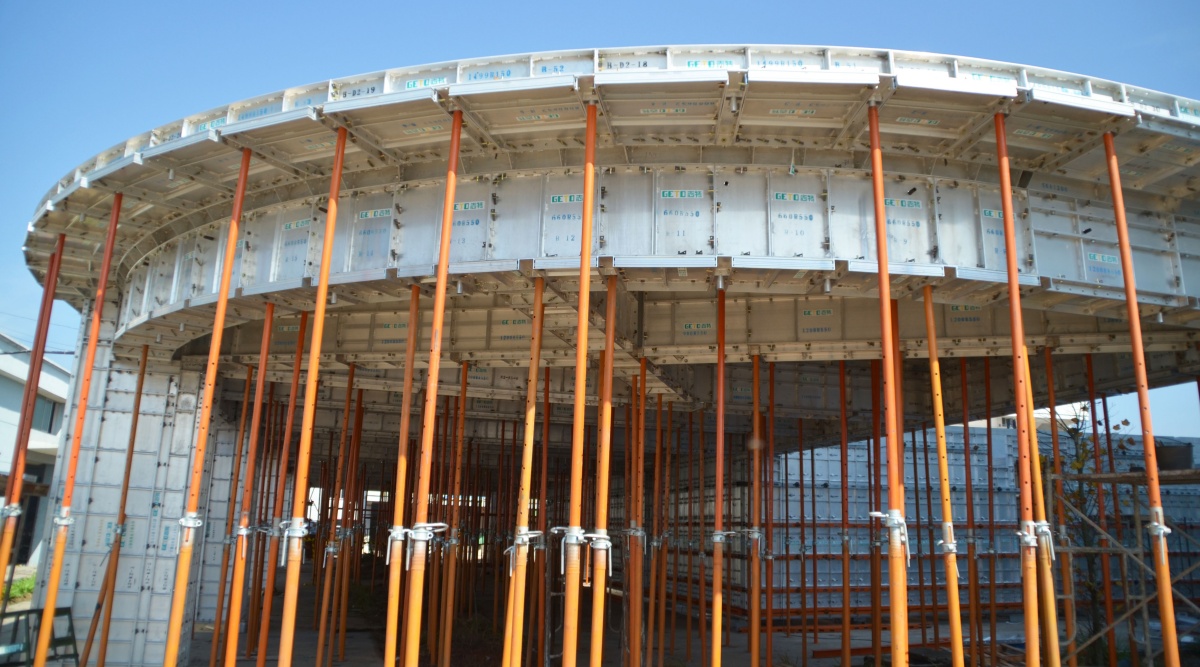
Conventional steel panel installation often turns into a drawn-out process of onsite measuring, cutting, and welding. Each piece must be manually adjusted to fit, which invites errors and slows the entire project. Workers spend hours aligning edges and reinforcing joints, leaving little room for flexibility when site conditions shift.
The modular alternative changes this by shipping panels with pre-formed connection points and uniform dimensions. Instead of fabricating from raw sheets, crews simply lock sections together using integrated fasteners and guide channels. Alignment becomes a matter of matching marked edges, not re-cutting steel. This pre-engineered approach removes most of the guesswork that typically eats up half the assembly schedule.
On active job sites, the time savings show up immediately. One team can position and secure a panel in minutes rather than hours. Fewer tools are needed, fewer adjustments are made, and the finished structure holds its tolerance without repeated checks. The result is a faster build cycle without compromising the rigidity or lifespan of the steel enclosure.
Load-Bearing Designs for High-Rise Concrete Pours
When concrete is placed several stories above ground, the fresh pour imposes more than its own weight on the formwork; the assembly below must also carry the cumulative stiffness of partially cured slabs and the live load of equipment. This means the load path rarely stops at the deck directly under the pour. Instead, engineers track how much each lower floor can accept based on its age, mix design, and support configuration.
A reliable approach uses backpropping or reshoring to distribute the new pour's weight across two or three levels. Instead of assuming equal sharing, the design should account for differential deflection between slabs, because the youngest concrete has not reached full modulus and will shed load upward to stiffer elements. Spacing and alignment of shores matter as much as their rated capacity; offset props can introduce unintended eccentricity into columns and walls.
Pour sequencing also drives the design. Breaking a large floor into segments lets the crew strike forms earlier and rotate the same shoring towers, but it changes the load path at construction joints. On fast-track projects, field measurements of early-age strength and slab temperature help decide when reshoring can be removed without cracking the supporting floors.
Reusable Steel Systems That Lower Cost Per Pour
Concrete crews often treat formwork as a disposable cost, but reusable steel systems flip that assumption. Steel panels and modular frames can survive hundreds of pours with only minor cleaning and occasional repairs. That durability spreads the initial purchase price across many jobs, so the actual cost per pour keeps falling. Once a crew gets used to handling the heavier panels, the savings become hard to ignore.
The reduction in labor is just as important as the material savings. Steel forms don't swell, warp, or soak up moisture the way wood does. You get the same dimensions on every lift, which means fewer uneven joints and less patching after the forms come off. Stripping and cleaning also go faster because concrete doesn't cling to steel the way it does to rough plywood. Those small time savings add up across a large slab or a multi-story wall.
The biggest advantage shows up on repetitive work. On projects with many identical pours, a single set of steel forms can replace several rotations of wood forms. Minor weld repairs and replacement of small hardware cost almost nothing compared to buying new plywood and lumber every cycle. For contractors who track their true costs, reusable steel almost always wins on the per-pour math.
Precision Alignment Tricks with Adjustable Steel Props
Getting a row of adjustable steel props to line up perfectly starts before you even extend the inner tube. Wipe down the threads and check the locking collar for grit—small debris there causes uneven bite and throws the plumb out just enough to notice once the beam lands. I always mark a reference line on the slab with chalk and set the base plate edge to it, not the center, because the plate edges vary more than you'd think. Then, when raising the prop, keep the inner tube facing the same direction on every prop; this keeps the pin holes and scale marks consistent and makes fine adjustments less of a guessing game.
For vertical alignment, don't trust a single spirit level placed on one side of the prop. Walk around and check two adjacent faces at least, because a prop can be perfectly plumb east-west while leaning a couple degrees north-south. A cheap trick is to hang a small plumb bob from the top fork and compare its string to the prop body at eye level and again near the base—if the gap changes, you have a twist or bend that needs a shim under the base plate, not just a nudge at the top.
When you're fine-tuning height under a beam, lower the prop a touch below the required mark, then bring it up slowly with a podger or spanner until the formwork just kisses the underside. Over-cranking and then backing off leaves the collar under uneven load, and the prop will settle after a few hours. Lock the collar firmly, then tap the prop body with a rubber mallet near the top and re-check the level—if it shifts more than a millimetre, reset it. Finally, re-tighten all props in a row after the first concrete pour starts, because vibration and initial loading will always find the one prop that wasn't fully seated.
Field Maintenance Tips to Extend Steel Formwork Life
Regular inspection is the first line of defense. Make a habit of checking your steel formwork before and after each use. Look for bent panels, worn edges, loose welds, or surface pitting. Even small defects can grow under repeated concrete pressure, leading to misalignment or leaks. Keep a simple checklist on site and train your crew to flag issues immediately rather than waiting for a major failure.
Cleaning and proper storage matter more than most contractors realize. After stripping, remove concrete residue promptly, as hardened build-up can scratch panels and reduce the quality of the next pour. Use wooden or plastic scrapers instead of metal tools that gouge the surface. If you must use release agents, apply a thin, even coat—too much creates a gummy film that attracts dust and weakens adhesion. Stack panels flat on level ground with timber spacers between them, and keep them covered when not in use to prevent rust.
Finally, invest in minor repairs before they become expensive replacements. Straighten minor bends with a hydraulic press, grind down rough spots, and touch up scratched areas with a zinc-rich primer. Replace worn wedge bolts and clamps on schedule, not just when they break. Keeping a small inventory of spare parts on hand means you can fix issues on the spot instead of pulling panels out of rotation. Over the long run, a proactive maintenance routine can double the usable life of your steel formwork and keep pour quality consistent.
FAQ
Steel panels resist deflection under the weight of wet concrete far better than plywood, so you end up with cleaner lines and less patching. On a 30-storey project, the same steel forms can often be reused 100 times or more, while timber starts showing wear after a dozen cycles.
Look first at the pour pressure your walls will generate and the panel stiffness required. After that, check how quickly the system can be stripped and reset—some modular steel frames use drop-lock wedges that cut stripping time by half compared to bolted connections.
The biggest time savings come from faster assembly and stripping. Large steel panels can be craned into position as one unit, and most systems let you strike after 12 to 18 hours instead of waiting a full day. That alone can pull a week out of a typical floor cycle.
For straight walls and slabs, modular steel frames with plywood or steel facing are the workhorses. Tunnel forms are hard to beat for repetitive apartment layouts because they cast walls and slabs in a single pour. Climbing systems suit cores and shear walls where crane time is limited.
Don't let concrete build up on panel faces—after each pour, scrape off residue while it is still slightly soft, then apply a thin, even coat of release agent. Check edge profiles and locking wedges weekly; a bent wedge can twist the whole assembly and show up as a step in the wall.
Treat every lifted panel as a suspended load. Use certified lifting eyes and never walk under a panel being craned. Before pouring, make sure all pins and wedges are fully seated—most blowouts happen because a single wedge was left loose, allowing the form to shift under pressure.
The higher upfront cost makes sense if you have enough repetition to absorb it. Even a mid-sized steel system can pay for itself after 40 to 50 uses when you factor in reduced timber waste, faster cycling, and lower finishing costs. For one-off pours, renting often beats buying.
One frequent mistake is using too much release agent, which stains the concrete and creates bug holes. Another is ignoring small dents or rust spots—they transfer to the concrete surface and get harder to fix later. Always store panels flat and protected; uneven stacking warps the frames.
Conclusion
When every hour counts on a high-rise pour, steel formwork consistently outperforms timber. Modular steel panels click into place with far fewer alignment headaches, often cutting assembly time by half compared to traditional framing. The real advantage shows up under load: hot-rolled steel faces and reinforced ribs handle the lateral pressure of deep concrete placements without bowing, which keeps wall lines crisp from slab to slab. Crews quickly learn that investing in a well-designed steel system removes the usual last-minute scrambling for shims and braces.
Cost per pour drops noticeably once the same panels cycle through multiple floors. Adjustable steel props let you dial in slab elevations and wall plumb with a few turns, killing the guesswork that eats up afternoon hours. A simple maintenance routine—scraping off concrete residue, oiling contact faces, checking wedge bolts and corner clamps—keeps the panels turning out smooth finishes job after job. Field crews that treat steel formwork as a long-term asset rather than a disposable form get straighter lines, faster cycles, and far less waste on site.
Contact Us
Contact Person: Quanhui Nian
Email: [email protected]
Tel/WhatsApp: 8618070545691
Website: https://www.getoglobal.com/