

Type B RCD Manufacturer Guide: How to Choose the Right Supplier
2026-11-03
Type B RCDs protect circuits where DC fault currents can blind standard AC-only devices—and that makes supplier selection a real engineering decision, not a procurement afterthought. Before you lock in a vendor, you need to know what separates a reliable manufacturer from one that just prints standards on a label. This guide walks through the key checks, with insights from ETEK's production floor.
The Type B RCD Questions Most Buyers Forget to Ask
Most buyers settle on a Type B RCD by checking the rated current and number of poles, then move on. That misses the questions that separate a device that works on paper from one that holds up under real fault conditions. For example, how does the unit respond to smooth DC residual currents below 6 mA? Some Type B models lose sensitivity in that range, which can leave parts of an installation unprotected without anyone noticing until an incident occurs.
Another overlooked area is the environment. A Type B RCD rated for 40°C may derate sharply in a sealed enclosure on a hot day. Ask for the full temperature derating curve, not just the headline figure. Also check the maximum operating frequency the device can handle without false tripping or loss of detection accuracy, especially when it sits downstream of variable speed drives that push leakage currents across a wide spectrum.
Finally, many buyers forget to ask about coordination and diagnostics. Will the Type B RCD stay stable when multiple drives start at once? Does it offer a built-in test function that can be triggered remotely, or do maintenance staff need to open the panel every time? The answers to these less glamorous questions often determine whether the protection works in day-to-day operation or quietly becomes a liability.
Why Your Shortlist Is Probably Too Short
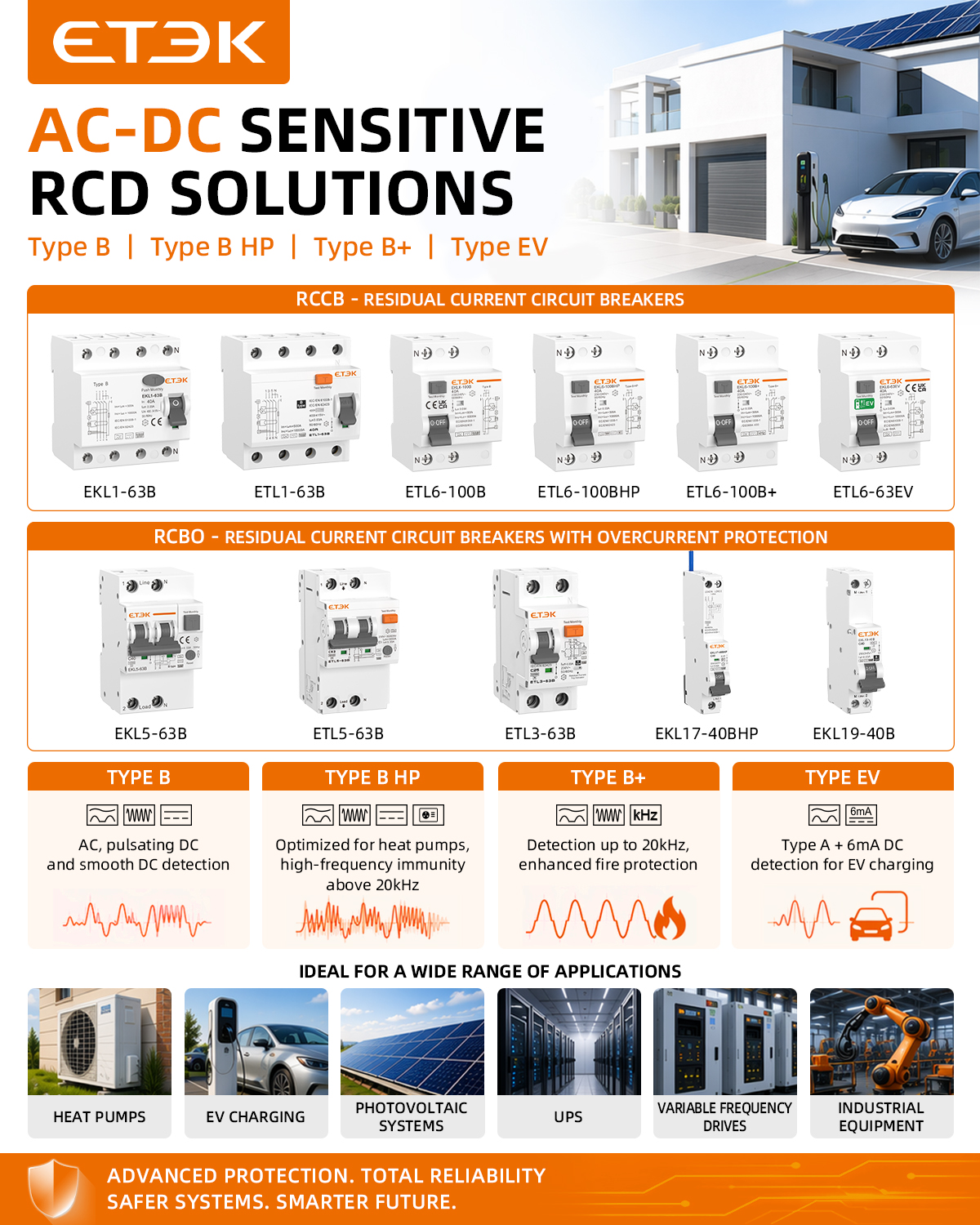
Most people stop searching once they find three or four names that feel safe. They convince themselves that a tighter list means higher standards, but what it usually means is a narrower view of the talent pool. Shortlists built from memory, past colleagues, or the first page of results tend to repeat the same profiles over and over. You end up comparing people who all come from the same handful of companies, schools, or backgrounds, which quietly narrows the range of skills and perspectives you actually consider.
The real cost shows up later, when every candidate on your list looks impressive on paper but none of them truly fit the role's hidden demands. A shortlist that's too short forces you into a corner: you either stretch the job description to fit the people you've already found, or you delay the hire and start the search again. Both paths burn time and weaken the team's confidence. Adding a few more names doesn't dilute quality; it gives you enough contrast to spot what really matters—like how someone handles ambiguity or whether they've built something from scratch, not just maintained someone else's system.
Widening the search also protects you from the echo chamber of your own network. Ask people outside your usual circle for referrals, look at adjacent industries, or revisit candidates who barely missed the cut last time. A longer shortlist doesn't mean lowering the bar—it means giving yourself room to make a choice rather than settle for the least awkward option among too few. The best hires often come from names you almost didn't include.
Beyond the Datasheet: What Really Separates Manufacturers
Numbers on a sheet rarely survive first contact with the factory floor. One supplier lists the same tolerance, the same alloy, the same cycle time as another, yet one delivers parts that drop into an assembly without a whisper and the other causes a line shutdown at 2 a.m. The gap isn't in the specifications—it's in how deeply a manufacturer understands the relationship between material behavior, tool wear, and the quiet drift of a process that no one thought to measure.
Ask a vendor how they handle a batch of steel that arrives slightly harder than the last one. A commoditized shop will shrug and run it anyway, relying on post-process inspection to catch fallout. A manufacturer that truly separates themselves adjusts the feed, the coolant concentration, maybe even the tool geometry before the first part is cut. That kind of responsiveness doesn't come from a quality manual; it comes from machinists who have scrapped enough parts to know when a machine sounds wrong, and from engineers who gave them the authority to stop and fix it.
Look for the things that don't show up on a certificate of conformance: how a shop documents its own mistakes, whether a customer's design feedback ever loops back into quoting, and if the person answering your call can actually walk you through what happened on the last run. Those are the signals that tell you whether a manufacturer is merely capable on paper or genuinely accountable when reality stops matching the print.
How to Spot a Supplier Who Actually Tests Their Own Products
Ask for the test log tied to the exact production date of your order, not a generic certificate from a previous batch. A supplier that runs real checks will have internal QC records showing sample sizes, failure counts, operator names, and what happened to rejected units. If they can only produce a marketing brochure or a third-party report from three years ago, treat that as a warning sign.
Get them on a live video call and ask to see the testing station in action. Pay attention to whether they use calibrated instruments or just a visual glance. A genuine tester can explain the specific standards they follow, the pass/fail limits they set, and how they handle borderline results. If they mumble about “basic checking” or can't show the equipment, they probably rely on the buyer to find defects.
One of the most reliable methods is to slip a known defect into a trial order and see what happens. A supplier who actually tests will catch the bad unit, document it, and ask how you want to proceed instead of quietly shipping it with the rest. That single test reveals more about their quality culture than any audit checklist.
The Hidden Risks of Picking a Type B RCD Partner on Price Alone
Choosing a Type B residual current device supplier based solely on the lowest quote often leads to compromises that remain invisible until the device is stressed under real fault conditions. A cut-price partner may source components with wider tolerances, reduce in-house testing, or skip the rigorous verification needed for smooth DC and high-frequency AC residual current detection. What appears as an initial saving on paper can quickly translate into nuisance tripping, false assurance during mixed-frequency faults, or outright failure to disconnect when electric vehicle chargers or three-phase drives demand precise protection.
Beyond the hardware itself, cheap partnerships frequently come with thinner documentation, slower technical support, and limited traceability for compliance audits. When an installation must satisfy evolving wiring regulations, a budget Type B RCD that lacks clear type-test reports or consistent batch performance puts the entire project at risk. Electricians and specifiers end up absorbing the cost of callbacks, replacement units, and damaged reputations—expenses that never show up in the initial purchase price but dominate the total cost of ownership.
Perhaps the least discussed risk is the lack of long-term engineering alignment. A supplier chosen on price alone has little incentive to stay current with emerging DC fault signatures or to collaborate on custom trip-curve adjustments. As renewable energy systems and variable-speed drives become more complex, the gap between a bargain RCD and a properly engineered one widens. The real danger is not that the device fails immediately, but that it quietly underperforms until the moment protection is genuinely needed.
A Field-Tested Approach to Vetting RCD Manufacturers
Most supplier assessments stop at a polished datasheet and a handful of certificates. A field-tested approach goes further: we request a teardown of three randomly pulled units from current production, then inspect solder joints, contact plating, and coil winding tension under magnification. We also run a 72-hour thermal cycling test at 85°C with intermittent fault injection to see whether the trip mechanism stays within tolerance.
The next step is quiet observation on the factory floor. We ask to see the rework station, not the showroom line, and compare incoming component inspection logs against actual batch traceability stickers. Talking to line operators about common defects usually reveals more than any quality manual. We also collect field return data from two or three long-term installers, focusing on nuisance tripping and mechanical wear after several thousand operations.
Finally, we place a blind order of unmarked samples through a distributor, then compare them against the same model bought directly from the manufacturer. Differences in potting compound, toroid core supplier, or calibration sticker placement often expose unauthorized cost-cutting. Only after this loop do we shortlist a manufacturer for production volumes.
FAQ
Type B units detect smooth DC residual currents, high-frequency AC faults, and mixed AC/DC leakage that Type A or AC models simply cannot handle. Since these devices protect circuits feeding three-phase rectifiers, EV chargers, PV inverters, and variable speed drives, a manufacturer must prove they understand the nuances of magnetic core design and transient response. Look for a supplier who can explain how their sensors remain stable under DC bias and won't nuisance-trip when harmonics are present.
At minimum, the manufacturer should have products tested to IEC 61008/61009 for RCDs and, where applicable, IEC 62423 for Type B behaviour. In Europe, CE marking alone isn't enough; ask for third-party test reports from labs like VDE, TÜV, or BSI. For North America, look for UL 1053 or equivalent recognition. If the supplier only provides in-house test data, that's a red flag—independent verification matters more than a wall of logos.
Request a documented quality management system certificate such as ISO 9001:2015, and if possible, IATF 16949 for automotive-grade consistency. Ask for batch traceability records, a sample of a recent production lot's test data, and evidence of ongoing reliability testing. A trustworthy manufacturer will share a detailed process flow, including automated winding, calibration, and final verification steps. You can also ask for a statistically valid sample from a recent shipment and have it independently tested.
Beyond general PCB assembly, they need in-house toroidal core winding, precision current injection test rigs capable of generating smooth DC and high-frequency waveforms, and environmental chambers for temperature cycling. Check whether they have experience with high-volume production of residual current devices, not just prototype builds. The ability to test every unit for tripping current, response time, and immunity to nuisance tripping is non-negotiable.
A serious supplier offers more than a warranty card. They should provide application engineering support for unusual load profiles, firmware or hardware revision control, and a clear process for failure analysis. Ask about their typical lead time for replacement units and whether they stock critical components. If they can't give you a named technical contact who understands how Type B RCDs behave in real installations, keep looking.
Yes—ask about custom current ratings, mounting styles, auxiliary contact configurations, and specific tripping thresholds. A flexible manufacturer will discuss how they adjust the magnetic core and winding ratios for your application. Also inquire about minimum order quantities for custom designs and whether they provide pre-compliance testing for your target market. The best suppliers treat custom work as a collaboration rather than a one-off product request.
Avoid choosing based on unit price alone. The real cost includes field failures, nuisance tripping callbacks, and potential liability from a device that doesn't trip when it should. Compare the total lifecycle: test coverage per unit, field return rates if available, and the manufacturer's willingness to stand behind their product. A slightly higher upfront price often reflects better core materials and more rigorous end-of-line testing.
Be wary of suppliers who claim compliance without showing test reports, who can't explain the difference between Type A and Type B tripping characteristics, or who offer unusually fast delivery for custom designs. Also watch for vague answers about DC sensitivity limits or response time under mixed frequencies. A lack of third-party certification, poor documentation control, or high staff turnover in engineering are signs that quality may be inconsistent.
Conclusion
Most procurement teams approach Type B RCD sourcing with a checklist borrowed from older AC or A-type specifications, which means they rarely probe the nuances that actually matter in modern installations. One of the first things forgotten is how a manufacturer validates performance under pulsating DC residual currents and smooth DC faults—conditions that generic datasheets often gloss over. Buyers also tend to keep their shortlists far too narrow, eliminating capable suppliers simply because they haven't encountered their brand at a trade show or in a familiar catalogue. That habit quietly shrinks the pool before any real technical comparison begins. Meanwhile, chasing the lowest unit price frequently backfires: a Type B RCD that fails to trip correctly on a mixed-frequency fault isn't a bargain, it's a liability waiting for an audit or an incident.
A more field-tested approach is to look beyond glossy datasheets and dig into how each manufacturer actually builds and proves its products. The companies that stand out are the ones that maintain dedicated in-house test rigs for DC and high-frequency residual currents, can explain their calibration procedures without hesitation, and are willing to share failure-mode test reports rather than just pass certificates. Ask what happens when a batch fails internal testing—if the answer is vague or defensive, move on. Also consider production consistency: a supplier who tests every unit, not just a sample, is far less likely to ship a Type B RCD that drifts out of specification after a few years in service. Ultimately, the right partner is not the one with the cheapest price or the most familiar logo, but the one whose engineering culture is transparent enough for you to verify before you buy.
Contact Us
Contact Person: Andy
Email: [email protected]
Tel/WhatsApp: +86 13356133008
Website: https://www.etek-china.com/