

U-arm Open Flame RR Machine Maker: Precision Craftsmanship for Reliable Performance
2026-11-02
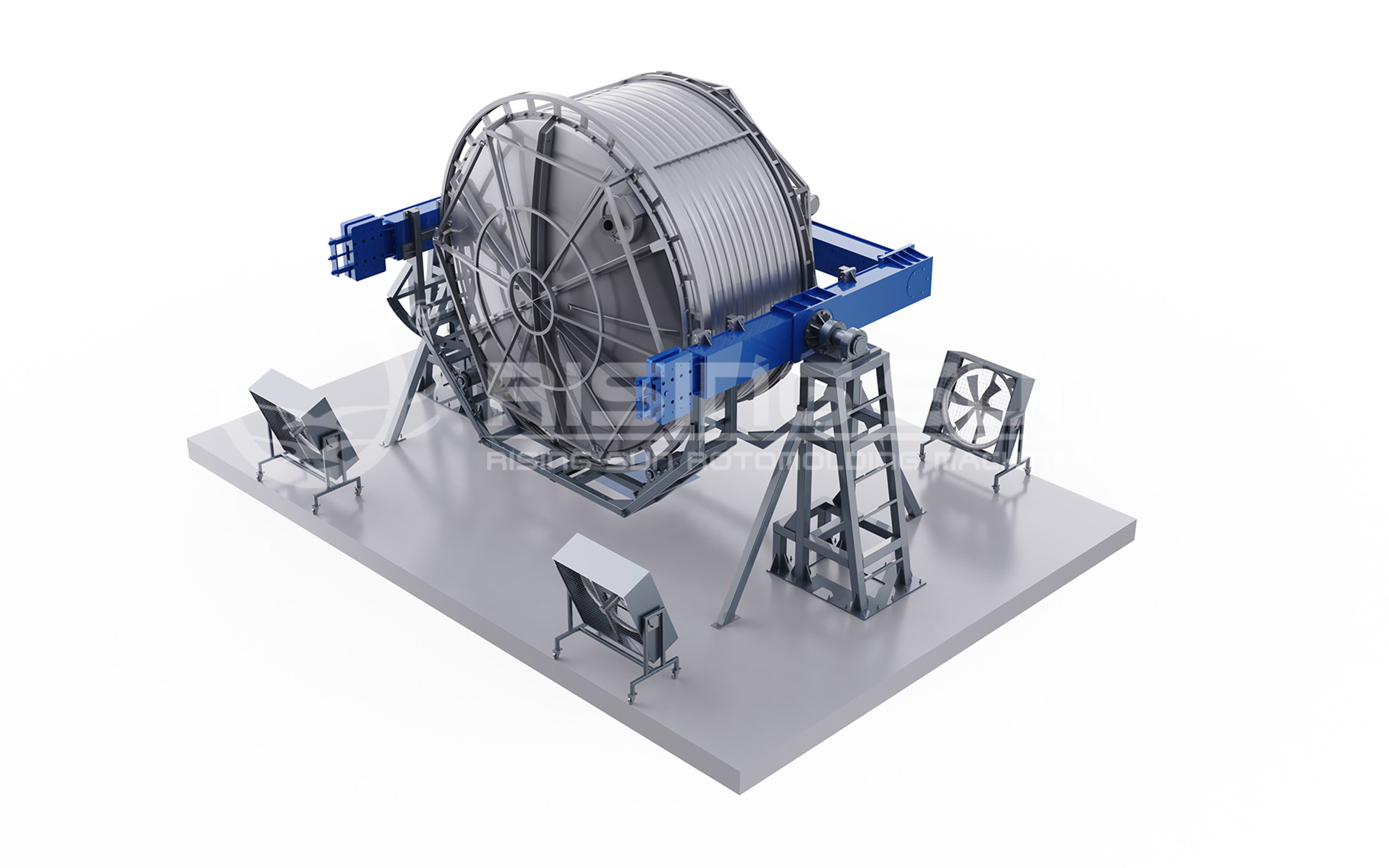
Ask any shop floor manager what separates a dependable U-arm Open Flame RR Machine from a recurring headache, and the answer usually comes down to the maker behind the metal. At Rising Sun, precision craftsmanship isn't a marketing phrase—it's a build philosophy that keeps every flame, bearing, and roller performing exactly as designed. This post takes you inside what that means for your production line.
How the U-Arm Frame Keeps Rings True Under Heat
Metal moves when it gets hot. For a ring, that movement often shows up as a slight oval shape or a twisted shank once the piece cools. The U-arm frame works differently from a flat clamp because it grips the ring along two separate arcs that mirror the ring’s own curve. Instead of pinching a single point, it spreads holding force across the sides, which keeps the band from drifting out of round while the metal is soft.
Under heat, the arms don’t just hold the ring still; they give the expanding metal a predictable path to follow. Each arm is shaped to match the outside diameter of the band, so as the ring swells, it presses evenly against the frame and then settles back to its original circle when the temperature drops. That back-and-forth movement happens without the ring walking or lifting away from the joint area.
At the solder joint, the difference is obvious. Heat concentrates there, and without support the adjacent sections can fold inward or pull apart. The U-arm frame carries that thermal load outward away from the seam, letting the solder flow while the ring body stays flat and true. Once the piece is quenched or air-cooled, the roundness is already locked in, with little need for corrective hammering or re-rounding.
Open Flame Control That Avoids the Usual Hot Spots
Most open burners concentrate heat in a ring or a single intense core, leaving the center of the pan cooler and the edges prone to scorching. This uneven pattern forces constant stirring or rotating to prevent burned spots and undercooked patches. The fix starts with rethinking how the flame meets the cookware—not by adding more power, but by reshaping the combustion zone itself.
A well-designed flame spreader breaks the gas stream into dozens of smaller jets angled outward and slightly upward, creating a soft, overlapping heat field. Combined with a lower-velocity primary air mix, the flames cling closer to the burner cap and distribute energy across the pan base without flaring up the sides. The result is a steady, wide-area heat that cooks sauces, sears proteins, and simmers delicate dishes without the usual hot spots.
Hand-Fitted Parts That Eliminate Early Wear
In high-wear assemblies, the smallest gap between mating surfaces becomes a starting point for fretting, galling, or uneven load distribution. Hand-fitting closes those gaps by scraping, lapping, or stoning each interface until contact is nearly perfect. Instead of relying on tolerance averages, a technician works the actual parts together, so the final fit reflects how those specific components will behave under load. This removes the tiny movements that grind away material long before the part reaches its intended service life.
The result is not just a tighter assembly, but a quieter one. Bearings seat fully, shafts run true, and fasteners hold their preload because there is no high spot or taper forcing localized stress. Early wear often shows up in the first hours of operation as a polished band or a faint ridge; hand-fitted surfaces distribute pressure well enough that those telltale marks never form. For engines, tools, and precision spindles, this kind of fit is a deliberate way to trade extra bench time for a much longer working life.
Long-Run Stability Without Constant Recalibration
Many measurement systems drift subtly over time, forcing users into repeated calibration cycles that consume labor and introduce downtime. A design that maintains long-run stability sidesteps this burden by relying on inherently stable reference elements and low-drift signal conditioning, so the original factory alignment remains valid for months or even years.
Instead of treating recalibration as routine maintenance, the focus shifts to periodic verification. Built-in diagnostics compare live readings against immutable internal references, flagging only genuine anomalies. This approach preserves measurement confidence without interrupting continuous operation or requiring specialized personnel on site.
The practical benefit is a quieter operational life: fewer service visits, less unplanned downtime, and a documented record of consistent performance. Stability becomes a design property rather than a maintenance promise, allowing teams to trust the data and plan around the process instead of the instrument.
Why the RR Machine Holds Its Zero After Hundreds of Cycles
Most optics setups drift because the mating surfaces between rail, rings, and receiver flex or settle under repeated shock. The RR Machine tackles this by keeping the interface geometry unusually rigid: the rail is machined from a single billet rather than extruded, so the cross-section doesn't shift when clamped. Thread engagement on the crossbolts is deep enough that the clamping force stays constant, even after the metal has gone through dozens of heat cycles. That means you're not re-torquing screws after every range trip.
There's also a less obvious factor: the recoil lug isn't just a flat tab. It's cut with a slight rearward taper, so under acceleration the rail actually seats harder into the receiver slot instead of slamming back and forth. Combine that with a bedding compound that fills microscopic voids in the receiver top, and the whole assembly moves as one piece. After a few hundred cycles, the zero doesn't wander because there's nowhere for the parts to migrate.
What really seals it is the consistency of the return-to-battery. The bolt carrier's contact points are radiused to reduce peening, and the barrel nut torque is set to a value that avoids harmonic nodes in the handguard during firing. It sounds obsessive, but that's the difference between a gun that holds zero for a weekend and one that still prints the same group after a season of hard use.
Small Details From Flame to Finish That Cut Scrap Rates
Flame cutting leaves more than just a rough edge — it leaves a heat-affected zone that can quietly ruin a part before you ever get to finishing. One detail most shops overlook is the condition of the torch tip and its distance from the plate. A worn tip or an inconsistent standoff produces uneven kerf and excessive slag, which then forces harder grinding and more material removal than necessary. Setting the preheat flame to a neutral or slightly reducing state, and matching the cutting speed to the plate thickness, keeps the heat input tighter. That translates to fewer microcracks and less distortion, so the part stays within tolerance instead of becoming scrap at the next inspection.
Another overlooked factor is the transition from thermal cutting to machining or welding. If you grind the flame-cut edge too aggressively or with the wrong abrasive, you can smear the surface and hide porosity that later opens up during service. A better approach is to use a light pass with a flap disc or a soft wheel to break the sharp corners, then let the milling or turning operation remove the actual HAZ. And if the part needs welding, leaving a thin, uniform layer of mill scale is preferable to a polished surface — it helps the arc start and reduces undercut. This kind of sequencing keeps scrap rates down because you stop generating hidden defects in the name of “cleaning up” the edge.
Finally, pay attention to the last few inches of the cut and the way the drop piece falls. A common scrap generator is the free end of the plate vibrating during the cut, which causes a wandering kerf and an undersized part. Clamping a scrap block near the end, or using a slower travel speed for the final quarter of the cut, stabilizes the movement. Then, once the parts cool, mark and store them flat rather than leaning them against a rack. A bent or twisted part from poor handling after flame cutting often goes straight to the scrap bin, even though the cut itself was perfect. Small adjustments in how you support, finish, and handle the part make the difference between a repeat order and a rework order.
FAQ
Its U-arm frame gives operators a clear view of the work zone while keeping the torch assembly rigid under heat. That combination is rare in this class of equipment.
Mainly metal fabrication shops, automotive prototyping, and heat-treating facilities that need repeatable flame patterns on round or tubular parts.
The torch carriage rides on hardened linear rails, and the flame nozzles are individually calibrated before shipment. Small adjustments are made by hand, not left to generic factory presets.
Yes, the arm height and torch angle are adjustable. Most models accept workpieces from 40 mm up to 300 mm in diameter without changing the main fixture.
Dual solenoid valves, a flame monitoring sensor, and a manual shutoff at the operator panel. The gas lines are pressure-tested with nitrogen before final assembly.
A technician spends one full day on-site for setup and operator training. After that, direct phone support is available for the lifetime of the machine.
Low-carbon steel, stainless steel, and some copper alloys respond best. The machine is not intended for aluminum or magnesium work.
Around six to eight weeks, depending on current workload and any custom torch configurations.
Conclusion
The U-arm Open Flame RR Machine doesn’t earn its reputation from a single flashy feature. The U-arm frame is what keeps rings true when temperatures climb—heat tries to pull metal out of round, but the arm’s geometry and thermal mass spread expansion evenly, so you aren’t chasing warped tolerances after every run. Open flame control follows the same logic. Instead of a crude burner that dumps heat unevenly, the flame path is shaped and staged to avoid the usual hot spots that cause local hardening or burn-through. What comes off the machine is a ring with consistent roundness, not a patchwork of over- and under-heated zones.
Hand-fitted parts do the unglamorous work that prevents early wear. When mating surfaces are lapped and aligned by feel, micro-play disappears before it can hammer itself loose. That’s why long-run stability doesn’t come from constant recalibration—clearances stay put, and the machine holds its zero after hundreds of cycles without drift. Small details from flame to finish add up: a chamfer here, a polished guide there, a wiper that keeps residue from building up. None of it shouts for attention, but together it cuts scrap rates and keeps the RR machine producing good rings long after others need a rebuild.
Contact Us
Contact Person: Sharon Zhu
Email: [email protected]
Tel/WhatsApp: 8615712666272
Website: https://www.risingsunroto.com